Roccia dell'Orso (Bear Rock), Palau: What to Expect Before You Go
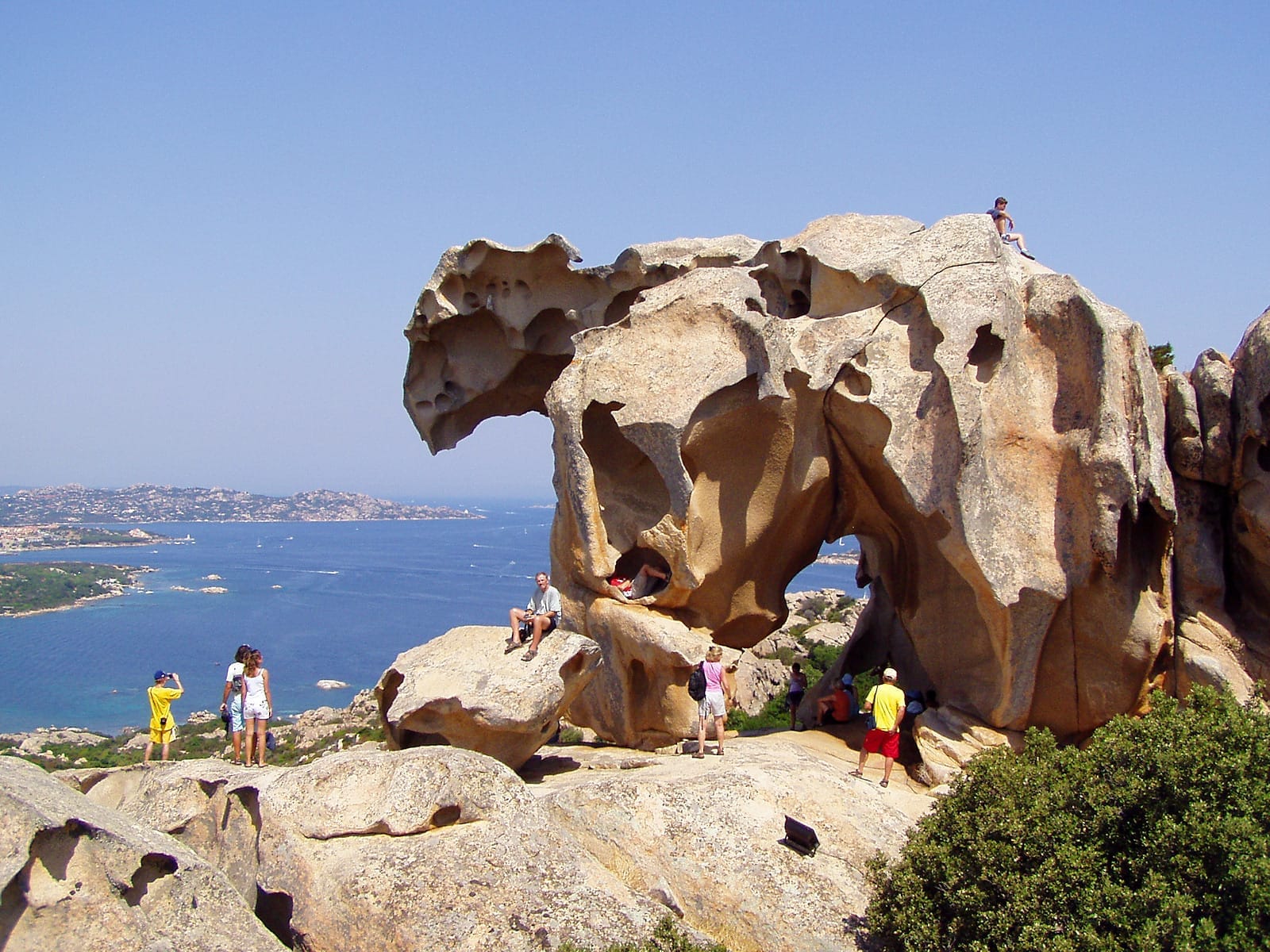
Roccia dell'Orso is a wind-sculpted granite formation above Capo d'Orso that really does look like a crouching bear. At roughly 120 metres above sea level, the viewpoint opens across Palau, the La Maddalena Archipelago, and on clear days, Corsica. It is one of northern Sardinia's most recognisable natural landmarks, declared a protected natural monument in 1993.
Quick Facts
- Location
- Via Roccia dell'Orso, località Capo d'Orso, 07020 Palau (SS), Gallura, Sardinia
- Getting There
- Drive from Palau town (approx. 5 km); limited public transport — a car or scooter is the practical option. Parking available at the Capo d'Orso car park.
- Time Needed
- 1.5 to 2.5 hours including the guided walk, viewpoint, and a relaxed descent
- Cost
- Paid entry (ticket prices vary by season; check rocciadellorso.com for current rates and concessions)
- Best for
- Geology enthusiasts, families with older children, photographers, and anyone touring the Gallura coast
- Official website
- www.rocciadellorso.com/en
What Roccia dell'Orso Actually Is
Roccia dell'Orso — officially designated the Monumento Naturale di Capo d'Orso — is a granite rock formation on the headland of Capo d'Orso, a few kilometres east of Palau in the Gallura region of northern Sardinia. The formation sits at approximately 120 metres above sea level and, from the right angle, the silhouette is unmistakably bear-shaped: a broad haunched body, a rounded head, and a posture that suggests the animal is looking north toward Corsica.
The rock has been shaped over roughly 300 million years, since the late Paleozoic era, by a combination of wind erosion, thermal cycling, and the chemical weathering of the dense Gallura granite. This type of erosion, known as spheroidal weathering, rounds off corners and layers of rock until a sculptural form emerges. The bear is not a coincidence of light or angle — it reads clearly from the approach path, and holds its shape from multiple directions.
In 1993, the Autonomous Region of Sardinia declared the site a natural monument. The bear image has since become the civic symbol of Palau, appearing on signs, local branding, and the town's visual identity. Access is managed, ticketed, and guided — this is not a spot you wander into off a trail.
The Visit: What the Path Looks and Feels Like
From the car park at Capo d'Orso, the walking route to the rock is roughly 500 metres. On paper that sounds brief, but the path climbs through granite boulders, scrub maquis, and open rocky ground. The vegetation smells of rosemary, cistus, and sun-warmed stone — the Gallura macchia at its most aromatic. On still mornings the only sounds are cicadas, the occasional sea bird, and the crunch of gravel underfoot.
The path involves a notable number of steps cut into the rock face, and some scramble sections where hands help. This makes the route inaccessible for visitors with significantly reduced mobility, prams, or young children who are not yet steady on their feet. The site's own documentation is clear on this point: many areas of the route are not accessible to people with severe reduced mobility or equivalent aids. Anyone with mobility concerns should check with the site directly before visiting.
💡 Local tip
Wear closed shoes with grip — not sandals or flip-flops. The granite steps can be smooth and warm by midday, and the descent requires more care than the climb. A small amount of water and sun protection are essential in summer.
Guided visits are included in the experience and are always available in Italian and English (except in rare cases of exceptional crowds), with French, German, and Spanish available on request in advance or depending on daily staff availability. The guides are knowledgeable about both the geology and the ecological context of the site. The route is designed so that the bear formation is revealed gradually — you approach the promontory from below and the full silhouette becomes visible only once you reach the upper viewing area.
Tickets & tours
Hand-picked options from our booking partner. Prices are indicative; availability and final rates are confirmed when you complete your booking.
Vineyard Guided Tour and 7 Wine Tasting in Palau
From 84 €Instant confirmationFree cancellationBoat Tour in the La Maddalena Archipelago From Palau
From 131 €Instant confirmationFree cancellationCatamaran excursion from Palau or La Maddalena
From 147 €Instant confirmationFree cancellationFull-Day Sailboat Tour in La Maddalena Archipelago from Palau
From 154 €Instant confirmationFree cancellation
The View from the Top
The panorama from Capo d'Orso is the second reason most people make the trip. From the rock's upper elevation, the view sweeps across the Straits of Bonifacio to the north, with Corsica visible as a clear ridge on days with good visibility. To the northwest, the islands of the La Maddalena Archipelago are spread across turquoise water in sharp detail — Caprera, La Maddalena itself, Budelli, and the smaller satellite islets.
The rock has functioned as a navigation landmark for sailors passing between Palau and the surrounding seas for centuries, and looking out from the summit, that role is immediately legible. The channel between Capo d'Orso and La Maddalena is narrow and busy with ferries and private boats. If you are planning to visit the archipelago itself, the view from here provides useful geographic orientation before you take the short ferry crossing from Palau — details on what awaits are covered in the La Maddalena Archipelago guide.
In the late afternoon, the light shifts from overhead white to amber, and the granite takes on a warm, almost orange tone that photographs dramatically. Morning visits have sharper light and fewer people. Both work well, but they offer different visual experiences.
When to Go: Time of Day and Seasonal Considerations
The site generally opens from the end of March through the beginning of November, with specific opening hours and dates varying by month and year. In the peak summer period (1 July to 20 August) the site is open daily from 09:30 to 20:00, allowing late-afternoon visits that avoid the worst of the midday heat. In spring and autumn, published closing times have often been around 18:00, though exact times vary by month (for example 18:00 in April–May and October, 19:00 in June and September, and 17:00 for late-October/early-November dates in a recent season). Recent schedules have included occasional selected winter opening dates in January to March, often 09:30 to 13:30 — always verify current hours via the official site before visiting, as these schedules are updated annually.
⚠️ What to skip
July and August bring peak visitor numbers. By 11:00 on a summer morning the car park fills quickly and the path gets crowded. Aim for the first entry slot of the day (09:30) or arrive after 17:00 if the later summer hours apply. Midday visits in August, on an exposed granite hillside, are uncomfortable in the heat.
May, June, and September offer the most pleasant conditions: warm enough to enjoy the exposed path, cool enough to stay comfortable, and noticeably quieter. The best time to visit Sardinia guide covers the broader seasonal picture across the island, which is useful context for planning a wider Gallura itinerary.
Geology and History: Why This Formation Exists
The granite of Gallura is among the oldest exposed rock in Sardinia. The formation at Capo d'Orso dates to the late Paleozoic, on the order of 300 million years ago, when magma crystallised deep underground into the coarse-grained granite typical of northern Sardinia. Over geological time, erosion removed the overlying rock, exposing the granite mass. Wind-driven particles, temperature fluctuation, and rain then sculpted the surface over millions of years into the rounded, layered forms seen today.
The bear form is the result of differential erosion: softer layers wore away faster, leaving the harder, more resistant volumes as the dominant mass. The same process has produced the dramatic tafoni formations and tor landscapes found throughout the Gallura coast and interior. Roccia dell'Orso is simply the most photogenic and most legible example of a geological character that defines this entire region.
Gallura's granite coast shapes everything from the shape of the headlands to the colour of the beaches. To understand how broadly this geology plays out across the landscape, the Gallura region guide is worth reading before you arrive.
Practical Logistics: Getting There and Booking
Roccia dell'Orso is located at Via Roccia dell'Orso, località Capo d'Orso, 07020 Palau (SS). From Palau town centre, it is approximately 5 kilometres by road, following signs toward Capo d'Orso. The road is paved but narrows toward the end, and parking at the site car park fills early on summer mornings. There is currently no public bus service signposted or scheduled directly to the site, making a rental car, scooter, or taxi the only realistic options for most visitors.
Admission is paid and managed through the official booking system. Ticket prices and concessions change seasonally and should be confirmed at rocciadellorso.com before your visit rather than assumed. Pets are permitted at the site, with the expectation that owners maintain consideration for other visitors and the environment.
Palau makes a practical base for this visit, and the town also serves as the main departure point for ferries to La Maddalena. If you are combining both in a single day, visit Roccia dell'Orso in the morning and take the afternoon ferry across. The Isola Caprera and the rest of the archipelago reward a full half-day, so plan accordingly.
Photography at Roccia dell'Orso
The bear profile reads most clearly from the northern approach path, roughly halfway up, before you reach the viewing platform. This is the angle most photographers use. At the summit, the compositional challenge shifts: you are now shooting across the sea and archipelago rather than the rock itself. A wide-angle lens handles the seascape; a short telephoto isolates individual islands or the bear's profile from a distance.
Early morning light comes from the east and is generally better for illuminating the rock face. Late afternoon gives warm tones and long shadows across the granite surface, which bring out the texture of the stone. Midday light in summer is flat and harsh. The sea views read well in almost any light, as the colour contrast between granite, macchia, and water is inherently strong.
ℹ️ Good to know
The formation is protected as a natural monument. Do not climb on, touch, or alter the rock surface. This applies to the bear formation specifically and to the broader granite landscape of the site.
Insider Tips
- Book tickets online in advance during July and August — the site has limited capacity and morning slots sell out. Arriving without a booking on a peak summer day risks being turned away.
- The best single photograph of the bear requires stepping off the main path slightly, just before the first large staircase. Linger here rather than rushing to the summit; the silhouette is clearest from this mid-elevation position.
- If the car park is full when you arrive, there is roadside space on the approach road, but add 10 minutes each way on foot. The access road is narrow, so avoid leaving a vehicle in a way that blocks passing traffic.
- The guided route is not marked for self-guided exploration — stay with or follow the guided path to avoid missing the best viewpoints and to respect the protected site boundaries.
- Combine the visit with a drive along the coast toward Capo Testa or south toward Porto Cervo. The Gallura granite coast changes character every few kilometres and Capo d'Orso sits conveniently midway along several worthwhile coastal routes.
Who Is Roccia dell'Orso (Palau) For?
- Families with children aged 8 and above who can manage steps and uneven ground independently
- Geology or natural history enthusiasts who want to understand the forces shaping the Gallura landscape
- Photographers looking for a strong subject combined with an exceptional panoramic backdrop
- Travellers combining a day visit to Roccia dell'Orso with a ferry trip to the La Maddalena Archipelago
- Visitors on a Gallura road trip who want a structured stop with clear payoff rather than an unmarked trail
Nearby Attractions
Other things to see while in Gallura:
- Basilica di San Simplicio (Olbia)
The Basilica di San Simplicio is the oldest surviving building in Olbia and one of the finest Romanesque churches in Sardinia. Built between the late 11th and mid-12th centuries on a site with origins in a Roman necropolis and a Palaeo-Christian church, it offers a rare, unhurried encounter with pre-medieval Gallura — around ten minutes' walk from the ferry port crowds.
- Capo Testa
Capo Testa is a rugged granite promontory jutting into the Strait of Bonifacio near Santa Teresa Gallura, in Sardinia's far north. The headland is free to visit and rewards exploration with wind-sculpted rock formations, secluded sea pools, and the eerily beautiful Valle della Luna. It is one of northern Sardinia's most distinctive natural landscapes.
- Coddu Vecchiu Giants' Tomb (Arzachena)
The Giants' Tomb of Coddu Vecchiu is one of Sardinia's best-preserved Nuragic funerary monuments, featuring a roughly 4-metre granite entrance stele that has stood in the Gallura countryside for roughly 4,000 years. Located about 10 km from the Gulf of Arzachena, it offers a absorbing encounter with the island's prehistoric past in under an hour.
- Costa Paradiso
Costa Paradiso is a striking stretch of northern Sardinian coastline where ancient red and orange granite cliffs drop into transparent turquoise water. Largely a seasonal holiday settlement with under 200 year-round residents, it offers raw scenery, natural rock pools, and sheltered coves without the infrastructure of larger resorts.