Museum Rietberg: Zurich's Window on the World's Art
Set in a parkland villa complex on the western shore of Lake Zurich, Museum Rietberg houses one of Europe's most significant collections of non-European art. From Indian temple sculpture to African ceremonial objects and East Asian painting, the museum rewards careful visitors with extraordinary depth. Founded in 1952 and substantially expanded underground, it is a serious art institution that deserves far more attention than it typically receives from first-time visitors to Zurich.
Quick Facts
- Location
- Gablerstrasse 15, 8002 Zürich (Enge district, near Lake Zurich)
- Getting There
- Tram 7 to Museum Rietberg stop; Bus 72 to Hügelstrasse; or S-Bahn to Zürich Enge then about a 10-minute walk
- Time Needed
- 2 to 3 hours for the collection; allow extra time for the park and temporary exhibitions
- Cost
- CHF 18 regular / CHF 14 concessions
- Best for
- Art lovers, architecture enthusiasts, travelers seeking a quieter alternative to Zurich's busier museums
- Official website
- www.rietberg.ch
What Museum Rietberg Actually Is
Museum Rietberg is Zurich's dedicated museum of non-European art, founded in 1952 and now holding a major collection of Asian, African, Oceanic, and pre-Columbian art. The name is easy to overlook on a Zurich itinerary, especially when landmarks like the Grossmünster or Kunsthaus dominate most travel lists, but that relative obscurity works in the attentive visitor's favor.
The collection spans Indian temple sculpture, Chinese bronzes, Japanese painting, sub-Saharan ceremonial objects, Himalayan thangkas, and Mesoamerican artifacts. Depth varies by region, but the South and Southeast Asian holdings are particularly strong. If you are also interested in Zurich's Swiss art traditions, the Kunsthaus Zürich covers that ground. Museum Rietberg occupies a very different cultural territory, and the two complement each other well.
ℹ️ Good to know
Verify current Zürich Card terms before your visit.
The Setting: Villa Park and Underground Extension
Part of what makes Museum Rietberg distinctive is where it sits. The museum occupies historic buildings in Rieterpark, a landscaped public park in the Enge district on the western edge of the city. The villa complex has notable cultural history and sits in Rieterpark in the Enge district on the western edge of the city.
Arriving on foot from Zürich Enge station takes around ten minutes through residential streets.
The museum's physical footprint expanded dramatically in 2007 with the addition of an underground extension called the Smaragd (Emerald). The extension is dug into the hillside below the villa and provides the kind of climate-controlled, naturally lit gallery space that the 19th-century building alone could not offer. The glass entrance pavilion at ground level, which marks the entrance to the underground section, has a quiet precision to it that suits the museum's character.
Tickets & tours
Live prices and dates from our booking partner. If you book, we may earn a commission at no extra cost to you.
Mount Titlis snow fun for first-time skiers from Zurich
From 212 €Instant confirmationFree cancellationSwiss ski experience from Zurich
From 321 €Instant confirmationFree cancellationBest intro tour of Zurich with a local
From 116 €Instant confirmationFree cancellationZurich Old Town guided walking tour
From 27 €Instant confirmationFree cancellation
What You Will See Inside
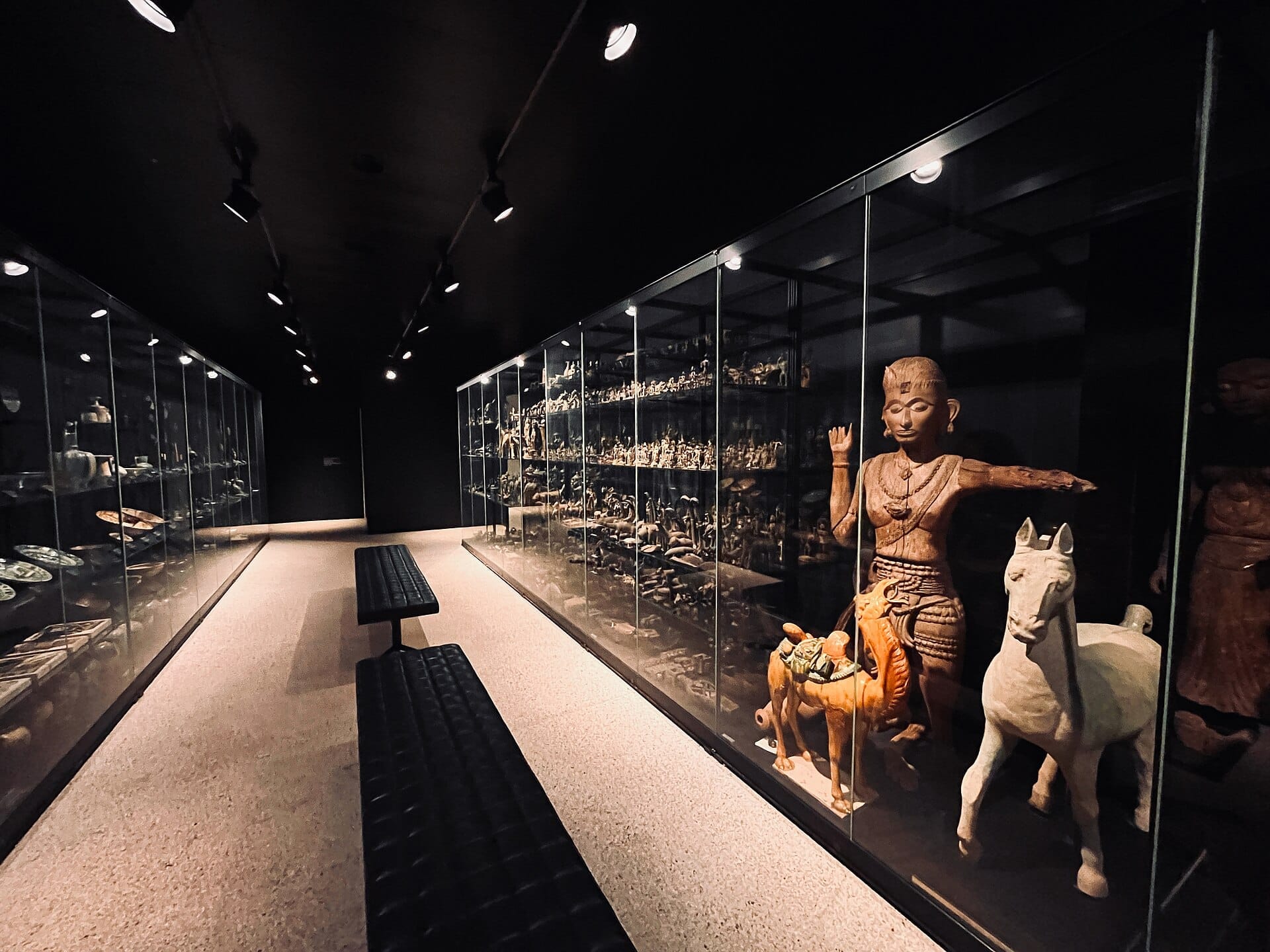
The permanent collection is organized thematically and regionally across multiple floors and buildings. The South Asian galleries are a starting point for many visitors because of their visual drama: stone carvings of Shiva, bronze temple deities from South India, and sculptural fragments from across the subcontinent that would anchor any major European museum's Asian holdings. The scale and condition of some pieces are remarkable, especially given that many were acquired in the early and mid-20th century before export restrictions tightened.
The East Asian collection covers China, Japan, and Korea across a range of media: ceramics, lacquerware, scroll paintings, and decorative objects. The Japanese scroll paintings reward slow attention. Chinese bronzes from ritual contexts are displayed with informative contextual notes that explain original function rather than treating the objects as purely aesthetic.
The African collection is smaller but thoughtfully presented, with pieces from West and Central Africa including masks, figures, and ceremonial objects that the museum situates within their cultural origins rather than purely as formal art objects. The Oceanic and pre-Columbian holdings are more selective, but there are individual pieces worth seeking out, particularly in the Mesoamerican section.
💡 Local tip
Pick up the free floor plan at the entrance and identify the rooms that match your interests before you start. The museum is spread across multiple levels and buildings, and it is easy to miss entire sections without a basic orientation.
How the Experience Changes by Time of Day
Museum Rietberg rarely feels crowded, which is one of its most consistent qualities. Weekday mornings between 10:00 and 12:00 are the quietest periods. You can spend extended time in front of individual pieces without navigating around groups, which matters when you are looking at objects that reward close examination.
Thursday evenings are worth knowing about. The museum stays open until 20:00 on Thursdays, later than any other day. Late afternoon light comes through the Smaragd pavilion at a low angle that changes how the underground galleries read, and the atmosphere after 17:00 on a Thursday tends to be calm, with mostly local visitors rather than tourists. It is one of the better ways to experience the museum.
Weekend afternoons between roughly 13:00 and 15:00 are the busiest periods, particularly when a major temporary exhibition is running. The park outside fills with families and picnickers on warm Saturdays, and the museum entrance sees a corresponding increase in traffic. If you are visiting on a weekend, arriving at opening time (10:00) gives you the clearest run through the permanent galleries.
Getting There and Getting Around
The most direct public transit option is Tram 7, which stops at Museum Rietberg directly. Bus 72 stops at Hügelstrasse, a short walk from the main entrance. If you are traveling by S-Bahn, the Zürich Enge stop puts you around ten minutes on foot from the museum. Zurich's public transit network is reliable and well-signed; for a broader orientation to getting around the city, the guide to getting around Zurich covers all major options.
Disabled parking is available on site. If accessibility is a concern, it is worth contacting the museum directly before your visit to confirm current arrangements.
Photography is permitted in the museum's permanent collection galleries, which is less common than it might seem among major art institutions. The lighting in the underground extension is controlled for conservation purposes, so flash and tripods are not appropriate, but a smartphone or compact camera handles the ambient light adequately in most galleries.
Practical Notes and Honest Limitations
Museum Rietberg is not a quick stop. If you try to rush through it in under an hour, you will leave with only a surface impression. The depth of the collection rewards visitors who have genuine interest in at least one of the major regional traditions it covers. If your time in Zurich is very short and you need to prioritize, the Swiss National Museum near the main station covers Swiss history with broader general appeal and is easier to integrate into a central Zurich day.
Visitors who come primarily for a scenic lake view or outdoor experience may be underwhelmed. The park itself is pleasant, but the lake views from Rieterpark are partially obscured by trees and not as open as the lakefront promenade areas. The museum is best appreciated on its own terms as a serious art institution, not as a backdrop for a walk.
The museum's café provides a reasonable break point mid-visit. It opens during regular museum hours and faces the park, which makes it a good spot in warmer weather. If you are planning a full afternoon combining the museum with a walk down to the lake, the Lake Zurich promenade is reachable on foot in around fifteen minutes from the museum entrance, making a combined visit workable.
⚠️ What to skip
The museum is closed on Mondays. Special holiday opening hours apply on certain public holidays. Verify the schedule at rietberg.ch before your visit, particularly around Swiss national holidays and the Christmas period.
The Museum in the Context of Zurich's Broader Cultural Scene
Zurich has a genuinely strong museum landscape for a city of its size. Museum Rietberg occupies a clear and distinct niche within it: few institutions in the city cover non-European art with this breadth or depth. For travelers working through Zurich's best museums, it belongs on any serious shortlist, particularly for those whose interests extend beyond European art history.
The museum also runs an active program of temporary exhibitions, lectures, and cultural events that engage with contemporary issues around provenance, restitution, and the display of non-Western objects in European institutions. These are not peripheral concerns for the museum's curatorial team. If you have interest in the ethics and politics of collecting, checking the current exhibition program before your visit often reveals programming that goes well beyond the permanent collection.
For travelers with more than two days in the city, Museum Rietberg fits naturally into a broader Zurich cultural itinerary. The two-day Zurich itinerary can accommodate it as a half-day on one of the main museum days, paired with time at the lake or a walk through the nearby Enge neighborhood.
Insider Tips
- Visit on a Thursday evening when the museum stays open until 20:00. After 17:00 the galleries thin out considerably, and you can spend extended time with individual pieces without interruption.
- The Smaragd underground extension is architecturally interesting in its own right. Look at how natural light enters the space through the glass pavilion at different points in the day; it changes the quality of the galleries noticeably.
- The park surrounding the museum (Rieterpark) is free to enter and worth a slow walk even if you are not going into the museum. The upper terraces have partial lake views and benches that are rarely occupied on weekdays.
- Temporary exhibitions at Museum Rietberg tend to be research-led and receive serious critical attention in the European art press. Check the current program on rietberg.ch before your visit as the temporary show often adds significant value beyond the permanent collection.
- If you are visiting with a Zürich Card, present it at the entrance clearly, as it covers both the permanent collection and the current special exhibition, which is not always the case at other Zurich institutions.
Who Is Museum Rietberg For?
- Art lovers with interest in Asian, African, or Oceanic traditions
- Travelers looking for a serious alternative to Zurich's more heavily visited museums
- Architecture enthusiasts interested in how the 2007 underground Smaragd extension integrates with the 19th-century villa
- Anyone with a Zürich Card looking to make full use of free museum access
- Visitors who want a quieter, more contemplative museum experience away from the city center
Nearby Attractions
Combine your visit with:
- Uetliberg Summit & Observation Tower
Uetliberg is Zurich's own mountain, rising to 869 metres at the city's western edge and reachable in under 30 minutes from the main station. A free summit viewpoint and a 72-metre steel observation tower deliver some of the clearest panoramas over Lake Zurich and the Alps you'll find without leaving the city limits.
- Zurich Zoo
Opened in 1929 on the wooded slopes of the Zürichberg, Zoo Zürich is one of Switzerland's well-known zoological attractions. Home to the extraordinary Masoala Rainforest pavilion and a wide range of habitats, it rewards both families and solo visitors who come prepared.
Planning a trip? Discover personalized activities with the Nomado app.