La Rosaleda del Retiro: Madrid's Rose Garden Inside Retiro Park
Located in El Retiro Park, La Rosaleda del Retiro is a formal rose garden containing more than 4,000 rose bushes set within the southeastern corner of Retiro Park. Entry is free, and the garden earns its visit in spring when color and fragrance peak together.
Quick Facts
- Location
- Inside Parque del Buen Retiro, near Jardines de Cecilio Rodríguez, Retiro district, Madrid
- Getting There
- Metro Retiro (Line 2). BiciMAD docking at Avenida de Menéndez Pelayo 69.
- Time Needed
- 30–60 minutes for the garden alone; allow extra time if combining with the wider park
- Cost
- Free. No ticket, no reservation required.
- Best for
- Spring visitors, photography, slow walks, couples, families with young children
- Official website
- www.esmadrid.com/en/tourist-information/la-rosaleda-de-el-retiro
What La Rosaleda del Retiro Actually Is
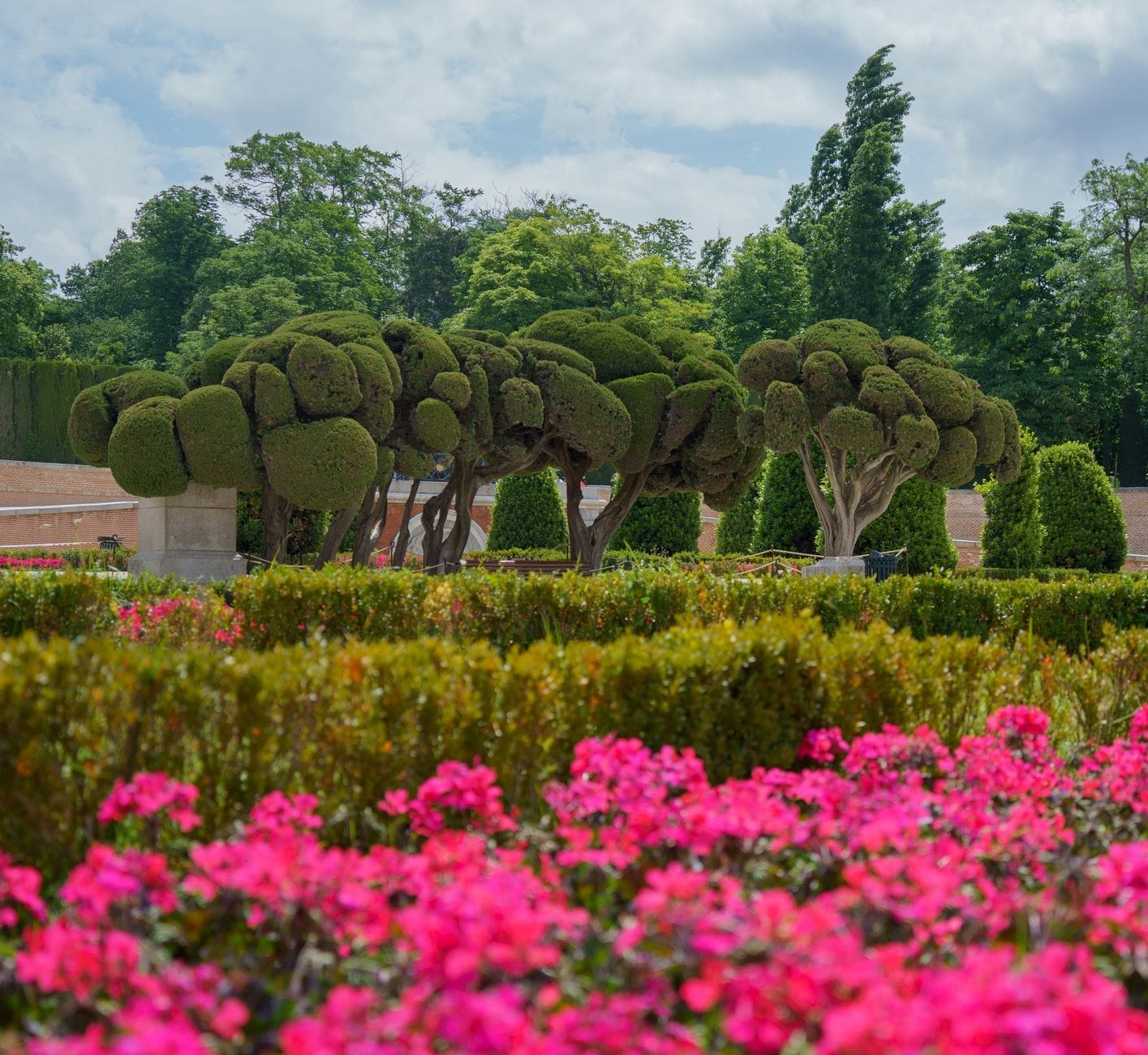
La Rosaleda del Retiro is a formal rose garden occupying a distinct enclosed section in the southeastern area of Retiro Park, not far from the Jardines de Cecilio Rodríguez. The garden holds more than 4,000 rose bushes spread across geometric beds arranged around a central fountain. It is entirely free to enter, open every day of the year on a seasonal schedule, and takes about thirty to sixty minutes to walk at a comfortable pace.
The layout follows the classical European rosaleda tradition: symmetrical paths, low hedging to frame individual varieties, and a clear focal point at the center. It is not a wild or naturalistic garden. The geometry is deliberate, and the overall impression is of a tended, purposeful space rather than a spontaneous one. That formality is part of its appeal.
💡 Local tip
Opening hours shift by season. April through September: 10:00–20:00. October through March: 10:00–18:00.
A Brief History: From Ice Pond to Rose Garden
The site has a layered past. Before the rose garden existed, this corner of Retiro hosted a statue of the Marquis of Salamanca, and before that, a pond used for ice skating during Madrid's colder winters. The transformation into a rose garden came in 1915, when Cecilio Rodríguez redesigned the space. Rodríguez, who also gave his name to the adjacent jardines, drew inspiration from contemporary rose gardens in other European cities.
Retiro Park itself has a much longer history as a royal pleasure ground dating to the 17th century, opened progressively to the public during the 19th century. The rose garden was a later civic addition, reflecting the early 20th-century taste for botanical formality in urban parks. That context matters: you are walking through a garden that was explicitly designed to elevate a corner of a royal park into something that could compete with the best gardens in Europe.
If you want to understand how the rose garden sits within the wider history of the park, the full context is covered in our guide to Parque del Retiro, which also includes practical orientation for navigating the park's many zones.
Tickets & tours
Hand-picked options from our booking partner. Prices are indicative; availability and final rates are confirmed when you complete your booking.
2-hour Private Segway Tour of Madrid and Retiro Park
From 45 €Instant confirmationFree cancellationRetiro Park private tour with local guide
From 35 €Instant confirmationFree cancellationGymkhana bike tour at the Retiro Park of Madrid
From 35 €Instant confirmationFree cancellationRetiro Park bike or e-bike tour in Madrid
From 0 €Instant confirmation
Peak Season: When to Come and What to Expect
The rose garden is at its best in May, when the largest number of varieties bloom simultaneously and the scent carries across the paths. Late April can offer early blooms, and June still holds significant color, but May is when the garden reaches full performance. Visitors who arrive in July or August will find a functional but largely post-bloom garden in the Madrid heat, with fewer petals and considerably more sun exposure.
Outside spring, the garden remains open and the geometric structure is always present, but the sensory experience changes dramatically. In winter, the pruned rose bushes look stark, and the garden has a quiet, almost architectural quality. It can still be a pleasant stop on a walk through the park, but it is not the reason to visit in January.
ℹ️ Good to know
Madrid's spring temperatures are usually mild, and summer heat can be intense, so morning visits are often more comfortable.
For a broader picture of when Madrid's outdoor spaces are most rewarding, the guide to visiting Madrid in spring covers park conditions, festival timing, and seasonal crowd patterns.
Time of Day: How the Garden Changes Hour by Hour
Mornings between 10:00 and 11:30 offer the quietest experience. The light at this hour comes at a low angle through the park's larger trees, casting soft shadows across the geometric beds and making photography straightforward. The fragrance is also stronger in the morning cool before midday sun intensifies and then disperses it.
By midday in peak spring season, the garden fills with a steady flow of visitors: families with pushchairs, couples, elderly regulars from the surrounding Retiro neighborhood, and tourists crossing the park from the Estanque. It is never as congested as the pond area, but it is not deserted either. Paths are wide enough that crowds do not significantly obstruct the experience.
Late afternoon, roughly between 17:00 and closing, brings a different atmosphere. The light shifts to golden tones that suit photography well, particularly for capturing the fountain at the center. Crowds thin slightly compared to midday. If you are combining the rose garden with a longer park walk, this is a good time to finish here before heading toward the park's western exits as the sun drops.
Practical Walkthrough: Navigating the Garden
The rose garden occupies a self-contained area within Retiro Park. Approaching from the metro Retiro station on Line 2, you enter the park from the northwest corner near Puerta de Alcalá and walk southeast through the park, passing the Estanque Grande before reaching the rose garden section. The walk from the metro station takes roughly 15 minutes at a relaxed pace. Alternatively, the Avenida de Menéndez Pelayo runs along the eastern edge of the park, and the BiciMAD docking station at number 69 is a convenient arrival point for cyclists.
The paths inside the garden are paved and flat, which makes the space accessible for pushchairs and suitable for visitors who have difficulty with uneven ground. No specific wheelchair accessibility data is provided in official city sources, so visitors with particular needs should consult current municipal accessibility information before visiting.
There are no facilities inside the rose garden itself: no café, no toilets, no seating beyond a few benches. The wider Retiro Park has all of these nearby. Plan your timing accordingly, especially with children or on hot days.
💡 Local tip
Photography tip: the central fountain framed by rose beds in full bloom is the signature composition. Shoot from a low angle near the fountain edge in morning or late afternoon light to separate the blooms from the background path.
Combining the Rose Garden with the Wider Retiro
La Rosaleda makes most sense as one stop within a longer Retiro Park visit rather than a standalone destination. The Estanque Grande del Retiro, the park's large rowing lake, is a short walk away and pairs naturally with the rose garden for a half-day visit. The Real Jardín Botánico sits just outside the park's southwestern edge and offers a deeper botanical experience for visitors interested in plant diversity beyond roses.
The Retiro district itself extends beyond the park. The Retiro neighborhood has good café options along Calle del Doctor Esquerdo and the surrounding streets, useful for a coffee stop before or after your garden visit.
If the Paseo del Arte museums are on your itinerary, note that the Museo del Prado is a fifteen-minute walk from the rose garden along the western side of the park. Combining a morning in the rose garden with an afternoon at the Prado is a logical and unhurried way to structure a day in this part of the city.
Who Should Skip This
If you are visiting Madrid outside April through June and your time is limited, the rose garden probably does not deserve a dedicated trip. The formal structure is pleasant but not spectacular when the roses are not in bloom, and there are parts of Retiro Park with more to offer year-round. The garden is also a quiet, unhurried space: visitors looking for something more active or culturally dense will find more to engage with elsewhere in the park or the surrounding city.
It is also worth noting that the rose garden, while genuine and well-maintained, is not one of the great rose gardens of Europe in terms of scale or botanical rarity. It is a good urban rose garden in a great urban park, and that framing is the right one. Visitors expecting something on the scale of a major botanical garden may find the size modest.
Insider Tips
- Visit on a weekday morning in mid-May for the fullest bloom with the fewest people. Weekend afternoons in May draw steady park crowds that spill into the rose garden.
- The garden's geometry is best appreciated from the small elevated point near the central fountain, where you can see the symmetrical bed layout extend outward. Most visitors stay at path level and miss this perspective.
- Roses are labeled by variety throughout the garden. If you are interested in identifying specific cultivars, bring a notes app or camera dedicated to signage shots before you start walking.
- The adjacent Jardines de Cecilio Rodríguez, named for the garden's original designer, offer shade and seating that the rose garden itself lacks. They make a good rest stop immediately before or after your visit.
- The BiciMAD dock on Avenida de Menéndez Pelayo places you at the eastern park entrance closest to the rose garden, cutting the walk from central Madrid to under five minutes by bike from that point.
Who Is Rosaleda del Retiro For?
- Spring visitors to Madrid who want a free, low-effort outdoor experience with genuine sensory payoff
- Photography enthusiasts, particularly those interested in botanical subjects and formal garden compositions
- Couples looking for a quiet, unhurried section of Retiro Park away from the busier pond area
- Families with young children: flat paths, open space, and no admission fee make logistics simple
- Travelers building a full Retiro Park day who want to cover the garden as part of a larger loop
Nearby Attractions
Other things to see while in Retiro:
- CaixaForum Madrid
CaixaForum Madrid is a striking cultural centre on Paseo del Prado, housed in a converted early-20th-century power station redesigned by Herzog & de Meuron. Alongside rotating international exhibitions, it features a celebrated vertical garden by botanist Patrick Blanc and sits within walking distance of the city's three great art museums.
- Estanque Grande del Retiro
The Estanque Grande del Retiro is a vast artificial lake at the center of Parque del Retiro, created in the 17th century for royal festivities and now open to everyone for free. Rent a rowboat, watch street performers, or simply sit on the surrounding promenade as the Alfonso XII monument reflects in the water.
- Museo Nacional del Prado
The Museo Nacional del Prado holds one of the most important collections of European art in the world, with around 7,000–8,000 paintings spanning five centuries of Western painting. Located on the Paseo del Prado in the Retiro district, it is the cultural centerpiece of Madrid and the reason many visitors come to the city at all.
- Museo Nacional Centro de Arte Reina Sofía
The Museo Nacional Centro de Arte Reina Sofía is Spain's national museum of 20th-century art, housed in a converted 18th-century hospital near Atocha station. Its permanent collection includes Picasso's Guernica and major works by Dalí and Miró, making it one of the most significant modern art institutions in Europe.