Redpath Museum: Montreal's Natural History Museum on McGill Campus
Set in a 19th-century building on McGill University's downtown campus, the Redpath Museum is Montreal's oldest natural history museum. Admission is a suggested contribution, the collections are impressive, and the Victorian architecture adds a layer of atmosphere that modern museums rarely match.
Quick Facts
- Location
- 859 Sherbrooke Street West, McGill University campus, Downtown Montreal
- Getting There
- McGill or Peel station (Green Line); buses 24-Sherbrooke and 144 stop nearby
- Time Needed
- 45 minutes to 1.5 hours
- Cost
- Suggested contribution: $12 adults, $5 children, $25 families
- Best for
- Curious adults, families with older children, architecture lovers, rainy-day visits
- Official website
- www.mcgill.ca/redpath
What the Redpath Museum Actually Is
The Redpath Museum is a natural history museum operated by McGill University, located at 859 Sherbrooke Street West in downtown Montreal. It is one of the oldest museums in Canada, and It is one of the oldest museums in Canada, and admission is offered through suggested contributions rather than a mandatory ticket price.. The collections span Egyptian antiquities, zoological specimens, geological samples, and paleontological finds, all displayed across three floors of a building that feels like it stepped out of a different century — because it largely did.
The museum's official name in French is Musée Redpath. It is open Tuesday through Friday from 9:00 a.m. to 4:30 p.m., and Saturday from 10:00 a.m. to 4:00 p.m. It is closed Sunday and Monday. Holiday closures apply, so confirm hours before making a special trip.
⚠️ What to skip
The Redpath Museum is not wheelchair accessible. There are no ramps or elevators. All three gallery floors and the washrooms are reached by a central staircase only. Visitors with mobility limitations should be aware of this before planning a visit.
The Building: Why Architecture Matters Here
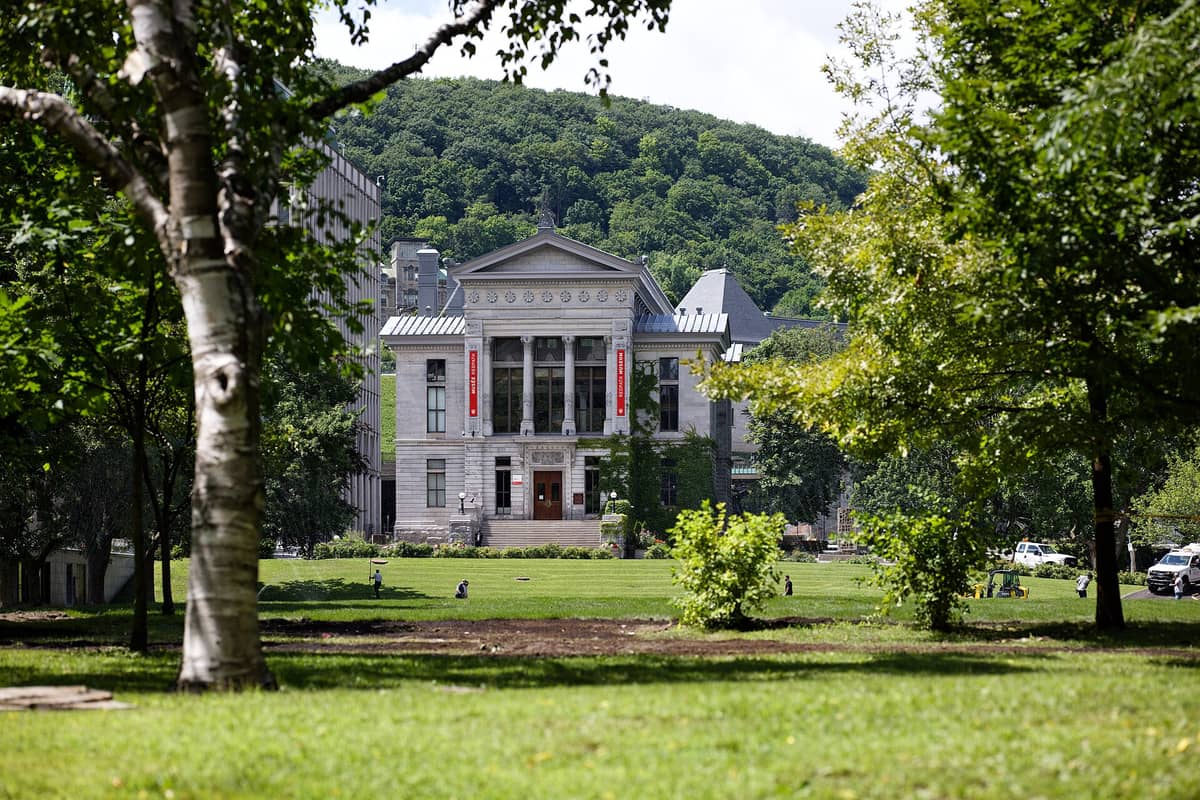
The building itself is part of the experience. The Redpath Museum is housed in a purpose-built Victorian structure on McGill's main campus, and it is one of the more striking pieces of institutional 19th-century architecture on Sherbrooke Street. The facade has a formal, neoclassical solidity to it, and the interior carries that same quality: high ceilings, natural light from tall windows, wooden display cases, and a central hall with the kind of vertical openness that invites you to look up.
This is not the kind of space you find in a modern science center with touchscreens and projected animations. The aesthetic is closer to what natural history museums looked like before the age of interactive installations. If you have visited the Montreal Museum of Fine Arts just a few blocks west on Sherbrooke and want a complete counterpoint in terms of scale and atmosphere, the Redpath provides exactly that contrast.
The McGill University campus that surrounds the museum adds to the mood. Walking in from the Roddick Gates on Sherbrooke, through the lower campus green, the institutional calm of the setting gives the visit a different character than arriving at a standalone tourist attraction. On weekdays, you share the pathways with students and faculty. On Saturdays, the campus is quieter and the pace of a visit slows accordingly.
Tickets & tours
Hand-picked options from our booking partner. Prices are indicative; availability and final rates are confirmed when you complete your booking.
Montreal evening cruise on the St. Lawrence River
From 54 €Instant confirmationFree cancellation3-hour e-bike guided tour in Montreal
From 68 €Instant confirmationFree cancellationWalking tour of Old Montreal
From 20 €Instant confirmationFree cancellationMontreal helicopter tour
From 156 €Instant confirmationFree cancellation
What You Will Find Inside
The collections at the Redpath Museum are organized across three floors and cover a notably broad range of natural history disciplines. The ground floor tends to anchor the visit with geology and zoology. Moving upward, the displays shift toward paleontology, and the museum holds a genuine fossil collection that is worth examining in detail, not just a single showpiece skeleton but a range of specimens that reward careful looking.
The Egyptian antiquities collection is a genuine surprise for first-time visitors. The museum holds several mummies and related artifacts, displayed with curatorial information that situates them historically. This is not a large collection by international standards, but the objects are authentic and the context provided is substantive. For a university museum funded by suggested contributions, the curatorial standard is higher than many visitors expect.
The zoological specimens include a range of taxidermied animals and skeletal mounts. The quality varies, as it does in any collection built over more than a century. Some displays look their age. But that unpolished quality is also part of what makes the Redpath distinctive. There is no pressure to move through at a prescribed pace, no timed entry, no crowds pushing you forward.
💡 Local tip
The Redpath Museum is small enough to visit without a plan. Start on the ground floor and follow the staircase upward. Budget at least an hour if you intend to read the exhibit text rather than simply glance at the specimens.
How the Experience Changes by Time of Day
Morning visits on weekdays, particularly Tuesday through Thursday, tend to be the quietest. The museum draws McGill students, school groups, and researchers alongside general visitors. Arriving at or shortly after opening at 9:00 a.m. means having the galleries largely to yourself. The natural light through the tall windows is best in the morning hours before the sun moves off the main facade.
Saturday mornings are a good alternative for visitors who cannot come on a weekday. The campus is calmer without the academic rush, and the museum opens at 10:00 a.m. School group visits are less common on Saturdays, which keeps the atmosphere quieter. The downside is that Saturday closing time of 4:00 p.m. is slightly earlier than weekday closing, so plan accordingly if you intend to combine this visit with other stops in the area.
The Redpath Museum sits in a part of downtown Montreal that rewards walking. After your visit, Sherbrooke Street leads east toward Quartier des Spectacles and west toward McGill University's broader campus. The campus itself has open green space that is pleasant in the warmer months, and the walk up to Pine Avenue connects to Mount Royal Park for anyone who wants to extend the afternoon.
Getting There and Practical Notes
The most straightforward approach is the Green Line metro. McGill and Peel stations are both walkable from the museum through the downtown area and McGill campus. Bus routes 24-Sherbrooke and 144 also stop nearby at Redpath-area stops for those coming from other parts of the city.
If you are arriving from further afield or combining this with other downtown stops, Montreal's metro system makes the logistics simple. The guide to getting around Montreal has full details on transit passes and route planning. Driving is possible but parking around McGill's campus is limited and can be expensive. Transit is the practical choice.
There is no coat check or bag storage at the museum. In winter, you will be carrying outerwear through the galleries. The building is heated, so this is not a comfort issue, just worth knowing if you are traveling with bulky gear. Photography is generally permitted in the galleries for personal use, though it is worth checking with staff on arrival regarding any temporary exhibits that may have restrictions.
Honest Assessment: Who Should Visit and Who Should Not
The Redpath Museum is excellent for what it is: a compact, free, genuinely curated natural history collection in a beautiful Victorian building. It is not, however, a destination that will occupy a full afternoon for most adults, and it is not designed to compete with large-format natural history museums in terms of spectacle or the scale of its collections.
Visitors expecting a major international-standard paleontology institution, or a fully interactive science museum experience, may find the Redpath modest by comparison. For that kind of hands-on, large-scale scientific display, the Montreal Science Centre in the Old Port offers a different register entirely. The Redpath works best as part of a broader downtown itinerary rather than a sole destination.
Visitors with mobility limitations should know clearly that this museum cannot accommodate wheelchair users. With no elevator or ramp access, the three-floor layout is only reachable by staircase. The washrooms also require navigating stairs. This is a genuine constraint, not a minor inconvenience, and it should factor into planning.
For families with curious older children, especially those with an interest in science, history, or archaeology, the Redpath is genuinely worthwhile and the free admission removes any financial calculation from the decision. It pairs well with a walk through the downtown Montreal area, where a number of cultural institutions are within easy walking distance. The free things to do in Montreal guide lists other no-cost options for visitors on a tight budget.
Insider Tips
- The museum follows McGill's academic calendar, not a standard tourist schedule. Check the official website for holiday closures around Christmas, Easter, and exam periods, when hours may differ from the regular schedule.
- The Egyptian mummies display on the upper floors is the most talked-about section and worth prioritizing. Arrive at opening on a weekday if you want to spend time in front of the cases without other visitors crowding in.
- Photography is generally allowed, but the tall windows create challenging backlit conditions in certain gallery sections, particularly in the morning. A visit later in the day can improve interior lighting for photography.
- The campus green between the Roddick Gates and the Arts Building is a pleasant place to sit after your visit. Bring a coffee from one of the cafes just off campus on Sherbrooke and take in the architecture before moving on.
- Because admission is a suggested contribution and no booking is required, the Redpath is an excellent contingency plan for rainy days when outdoor plans fall through. Keep it in reserve as a downtown backup rather than a fixed itinerary anchor.
Who Is Redpath Museum For?
- Travelers who want a free, unhurried cultural stop in downtown Montreal
- Families with older children interested in fossils, ancient Egypt, or natural history
- Architecture enthusiasts drawn to 19th-century institutional buildings on McGill's campus
- Visitors on a budget who want substantive cultural content without an admission fee
- Anyone caught downtown on a rainy afternoon looking for an indoor alternative
Nearby Attractions
Other things to see while in Downtown Montreal:
- Bell Centre
The Bell Centre is Montreal's premier indoor arena, home to the storied Montreal Canadiens and one of North America's highest-capacity NHL venues. Whether you're coming for hockey, a concert, or just to soak up the atmosphere outside, this guide covers everything you need to make the most of your visit.
- Canadian Centre for Architecture
The Canadian Centre for Architecture (CCA) is both a museum and an international research centre devoted to architecture and urbanism. Located on René-Lévesque Boulevard in downtown Montreal, it holds one of the world's most significant architecture collections and stages exhibitions that challenge how we think about cities, design, and space.
- Mary Queen of the World Cathedral
Standing at the heart of downtown Montreal, Mary Queen of the World Cathedral is a one-fifth-scale replica of St. Peter's Basilica in Rome, completed in 1894. Free to enter daily, it offers one of the most striking architectural contrasts in the city: solemn stone and gilded interiors set directly against glass towers and commuter traffic.
- McCord Stewart Museum
The McCord Stewart Museum on Sherbrooke Street West holds one of Canada's richest collections of photographs, clothing, Indigenous artifacts, and everyday objects tracing over 350 years of Montreal and Canadian life. Serious in scope but accessible in presentation, it rewards curious visitors who want more than architecture tours.