Printer's Alley: Nashville's Original After-Dark District
Tucked between 3rd and 4th Avenue North in downtown Nashville, Printer's Alley is a narrow, lantern-lit corridor that went from printing presses to jazz clubs without ever losing its edge. It's free to walk, rich in history, and a genuine alternative to the Broadway strip.
Quick Facts
- Location
- Between 3rd Ave N and 4th Ave N, Union St to Commerce St, Downtown Nashville, TN
- Getting There
- 10-15 min walk from Broadway; rideshare drops off on 3rd Ave N or Church St. No direct bus stop at the alley.
- Time Needed
- 30 min to browse; 2-4 hours if you stop for live music and drinks
- Cost
- Free to enter the alley; individual venues may charge cover
- Best for
- History buffs, nightlife seekers, and anyone wanting a quieter alternative to Lower Broadway
- Official website
- nashvilledowntown.com/post/whats-happening-in-printers-alley
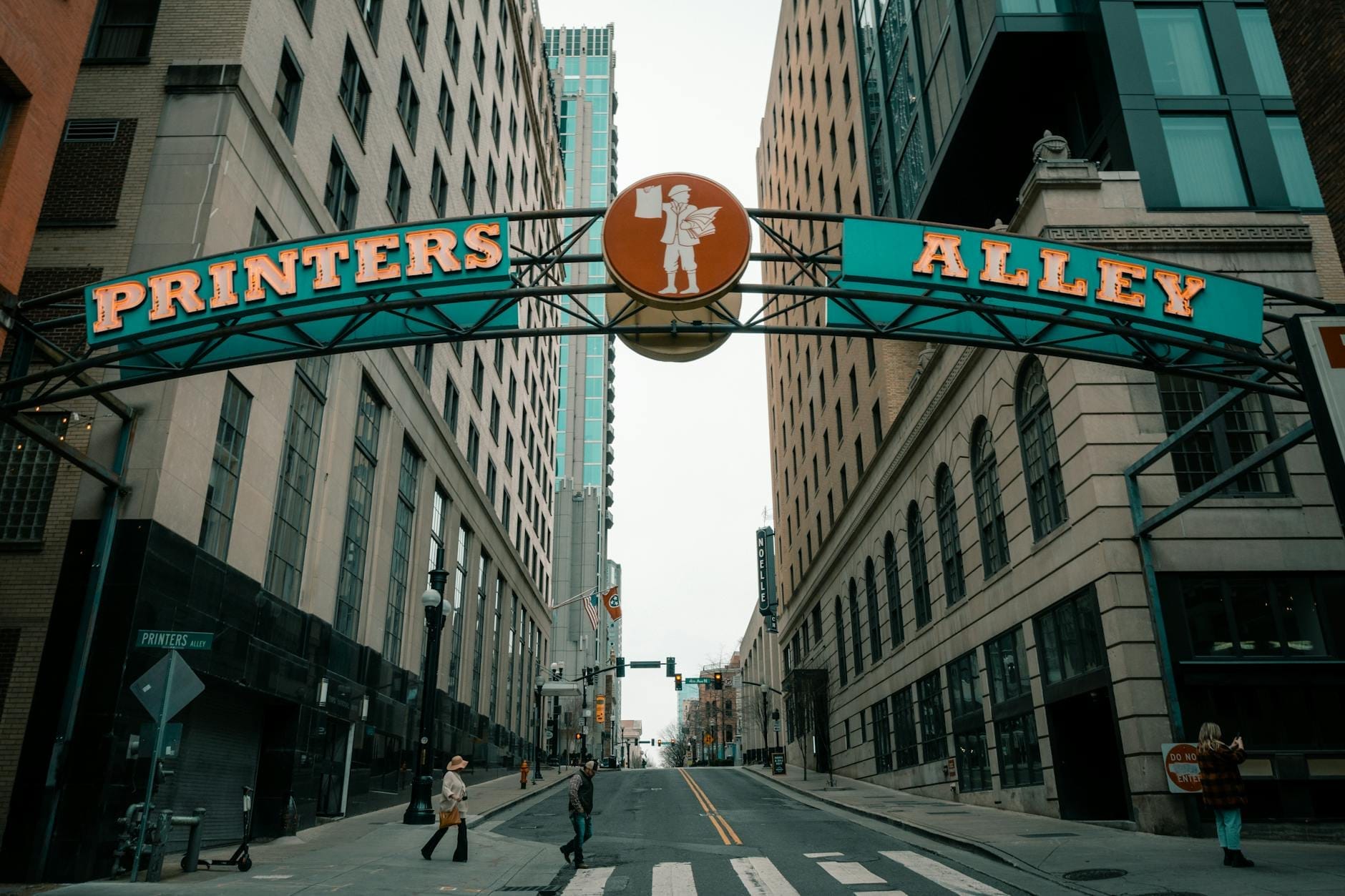
What Is Printer's Alley, Exactly?
Printer's Alley is a short, pedestrian-friendly alleyway in the heart of downtown Nashville, Tennessee, running roughly one block between Union Street and Commerce Street, sandwiched between 3rd Avenue North and 4th Avenue North. It's a public street, meaning there are no gates, no tickets, and no set hours for the alley itself. What lines its brick walls is a rotating cast of bars, music clubs, and late-night spots, each operating on its own schedule.
It was listed on the National Register of Historic Places as a historic district, a designation that reflects both its printing-industry roots and its later identity as Nashville's most storied nightlife corridor. In a city where new entertainment developments get announced every few months, Printer's Alley is one of the few downtown blocks that carries genuine layered history in its walls and pavement.
💡 Local tip
The alley is most atmospheric after dark when venue signage and string lights illuminate the narrow corridor. If you visit during the day, you'll see the architecture clearly but most businesses won't be open yet.
From Printing Presses to Jazz Clubs: The History
The alley earned its name from Nashville's printing industry, which dominated this block from the late 1800s into the early 20th century. In the early 1900s, the corridor housed operations connected to major publications including The Tennessean and The Nashville Banner, along with about 13 publishers and 10 printers working in tight proximity. The low rents, central location, and shared infrastructure of an alleyway made it a practical hub for an industry that ran on deadlines and ink.
The printing trade began migrating elsewhere by the 1940s, and the alley reinvented itself as a nightclub district. By the 1940s and 1950s, Printer's Alley was Nashville's answer to a jazz and supper-club row, drawing performers, politicians, and late-night crowds into a string of clubs that operated well past midnight. That tradition of staying up late and keeping the music going has never fully left.
The transformation from press to performance is part of what makes this block genuinely interesting to walk even before you step inside a single venue. For broader context on how Nashville's music culture developed across the city, the Nashville music history guide traces the threads from the Ryman era through to the present.
Tickets & tours
Live prices and dates from our booking partner. If you book, we may earn a commission at no extra cost to you.
Old Town trolley tour of Nashville
From 54 €Instant confirmationFree cancellationHatch Show Print guided tour
From 21 €Instant confirmationFree cancellationDowntown walking tour of Nashville
From 21 €Instant confirmationFree cancellationNashville Downtown Underground Donut Tour
From 46 €Instant confirmationFree cancellation
The Physical Experience: What You See and Smell and Hear
Printer's Alley is genuinely narrow. At certain points, two groups of people walking in opposite directions require a slight shoulder turn to pass. The buildings on either side are low-rise by downtown standards, mostly three to five stories of brick construction that dates from the late 19th and early 20th centuries. The upper floors include residential loft conversions that have brought a mixed-use character back to the block.
In the evening, neon bar signs cast color onto the pavement, and the competing sounds of live music from different venues create a layered audio environment that shifts as you move through the block. You'll catch bass from one direction, fiddle or keyboards from another. The smell of bar food and stale beer mixing with the occasional waft of a kitchen vent is all part of the atmosphere. During warmer months, some venues push tables or speakers toward the alley entrance, and the corridor takes on a more open, social feel.
In the daytime, Printer's Alley is quiet in a way that actually rewards attention. The brick detailing on the facades, the age of the signage on some of the older establishments, and the general compression of the space are easier to appreciate without a crowd. If you're interested in the architectural character of the block, a daytime walk followed by an evening return is the most complete way to experience it.
Printer's Alley vs. Lower Broadway: An Honest Comparison
The question most visitors have is whether Printer's Alley is worth the walk away from Lower Broadway's honky-tonk strip. The honest answer depends on what you're after. Broadway delivers scale, high energy, and a reliable sense of spectacle. Printer's Alley is smaller, less polished, and considerably less crowded on most nights.
If you find Broadway overstimulating or overly tourist-focused, Printer's Alley tends to draw a more local-adjacent crowd, particularly on weeknights. The venues are more intimate, the cover charges (where they exist) are generally lower, and the experience of simply standing in the alley feels more connected to a pre-theme-park version of Nashville's nightlife history.
That said, Printer's Alley has changed considerably over the years and is not immune to tourist-friendly packaging. Some of the rawer, older establishments have closed or been replaced. Visitors expecting something frozen in amber from the 1950s will need to recalibrate those expectations. What you do get is a preserved physical environment with genuine historical depth, even if some of the tenants have turned over.
When to Visit and How to Plan Your Time
Thursday through Saturday evenings, roughly from 9 p.m. onward, represent peak activity in the alley. Venues are open, music is live, and the foot traffic makes the narrow lane feel more active and social. Weeknights earlier in the week are quieter, which can be appealing if you want to look around without navigating a crowd, though some venues may have limited programming.
Plan for at least 30 minutes just to walk through and observe the architecture and signage. If you intend to stop at one or two venues for a drink and live music, budget two to four hours. The alley is compact enough that you're never far from the next option, which makes it easy to drift between spots at your own pace.
⚠️ What to skip
The historic cobblestone and brick pavement in and around the alley is uneven in places. Comfortable, flat-soled footwear is genuinely advisable, especially if you plan to be on your feet for several hours.
Printer's Alley is about a 10 to 15 minute walk from the main Broadway strip. If you're combining it with a broader downtown evening, the Nashville nightlife guide maps out how the different entertainment zones connect and how to pace a night that covers more than one neighborhood.
Getting There and Getting Around
The alley is located in the core of downtown Nashville, within walking distance of most downtown hotels and the convention district. From Broadway, walk north on 3rd Avenue or 4th Avenue North and look for the alley entrance between Union Street and Church Street. It's easy to miss the first time because it doesn't announce itself the way a major venue would.
Rideshare via Uber or Lyft is the most practical option if you're coming from outside downtown. Ask to be dropped on 3rd Avenue North or Church Street and walk from there. The alley itself is not a through-street for regular vehicle traffic. Parking is available in downtown garages nearby, with several options on Church Street and along 4th Avenue North, though rates and availability vary.
Nashville does not have a subway system. WeGo Public Transit bus routes serve the broader downtown area, but the most convenient access to Printer's Alley from most visitor hotels remains on foot or by rideshare. Accessibility within the alley depends on the specific venue. The alley surface is historic and not uniformly step-free, so visitors with mobility needs should check directly with individual businesses before visiting.
Photography and What to Expect Visually
Printer's Alley photographs well after dark, when the neon and string lighting creates a moody, compressed-space aesthetic that's different from anything else in the downtown core. Wide-angle shots from the middle of the alley looking toward either street entrance capture the scale well. The brick facades and narrow corridor make for strong compositional lines.
For context on what else in downtown Nashville photographs interestingly at night, Nashville's public murals are distributed across several neighborhoods and worth building into a broader visual itinerary.
ℹ️ Good to know
Flash photography inside venues is almost always unwelcome during live performances. Use available light where possible, and ask permission before pointing a camera at performers.
Who Might Want to Skip This
Printer's Alley is not the right destination for visitors primarily interested in country music venues or the iconic honky-tonk experience. The alley's musical programming tends toward a broader range of live music rather than strictly country. It is also a relatively short block, so visitors who need a full evening's worth of self-contained activity in one location may find it limited on its own.
Families with young children should note that this is a late-night bar district. The alley itself is a public space, but the atmosphere and hours skew toward adult-oriented nightlife. Those with significant mobility challenges should check venue accessibility in advance, as the historic nature of the buildings means step-free access is not guaranteed.
Insider Tips
- Walk the full length of the alley during daylight to read the historical markers and plaques before the evening crowds arrive. The context makes the nighttime visit more meaningful.
- Weeknight visits, particularly Tuesday and Wednesday, are significantly less crowded than weekends. You'll have more room in venues and often better access to the live performers.
- Look up as well as straight ahead. Several of the upper-floor facades retain original architectural details and signage that most visitors walking past at night never notice.
- If a venue has a cover charge, ask whether it includes a drink minimum. In smaller clubs, the economics sometimes work out in your favor.
- The alley is a short walk from the Ryman Auditorium and the Tennessee State Museum. Combining all three into a single evening or afternoon walk makes for a coherent tour of the historic downtown core.
Who Is Printer's Alley For?
- Nightlife seekers wanting something smaller and more atmospheric than Lower Broadway
- History and architecture enthusiasts interested in Nashville's pre-music-industry urban fabric
- Return visitors who have already done the main Broadway strip and want a different angle on downtown
- Photographers looking for a moody, compressed-urban setting after dark
- Solo travelers or small groups who prefer intimate venues over large multi-floor clubs
Nearby Attractions
Other things to see while in Downtown Nashville:
- 3rd & Lindsley
Since 1991, 3rd & Lindsley has been the venue where Nashville musicians play when they want to be heard, not just seen. Located half a mile south of Broadway in the SoBro district, it is an intimate, no-frills room that draws touring acts, local legends, and serious audiences in equal measure.
- Acme Feed & Seed
Housed in a landmark 1943 building at the corner of 1st Avenue and Broadway, Acme Feed & Seed is a multi-level bar, restaurant, and music venue with a rooftop overlooking the Cumberland River. It offers a more layered experience than the typical honky-tonk strip, with a rooftop that earns its reputation for views and a ground floor that still delivers the Broadway energy.
- Adventure Science Center
Adventure Science Center is Nashville's premier interactive science museum, offering 44,000 square feet of hands-on exhibits, a 75-foot adventure tower, and a 63-foot dome planetarium. It has served the city since 1945 and remains one of the most engaging family destinations near downtown Nashville.
- Bicentennial Capitol Mall State Park
Bicentennial Capitol Mall State Park is a free, 19-acre outdoor park in downtown Nashville built to commemorate Tennessee's 200th anniversary of statehood. Anchored by a 200-foot granite map of the state, a 95-bell carillon, and the Rivers of Tennessee Fountains, it doubles as one of the most informative and peaceful green spaces in the city center.
Planning a trip? Discover personalized activities with the Nomado app.