Peggy Notebaert Nature Museum: Chicago's Urban Nature Sanctuary
Tucked into the western edge of Lincoln Park, the Peggy Notebaert Nature Museum brings the natural world of the Chicago region indoors. Its centerpiece butterfly greenhouse alone is worth the trip, but there is enough depth here to reward curious adults and easily fill a family morning.
Quick Facts
- Location
- 2430 N Cannon Drive, Lincoln Park, Chicago, IL 60614
- Getting There
- CTA buses along Fullerton Ave; check CTA trip planner for current routes
- Time Needed
- 1.5 to 3 hours depending on interest
- Cost
- Paid admission (adults, children 3–12); under 3 free; Illinois residents free on select days. Verify current prices at naturemuseum.org
- Best for
- Families with young children, nature enthusiasts, rainy-day visits
- Official website
- naturemuseum.org
What the Peggy Notebaert Nature Museum Actually Is
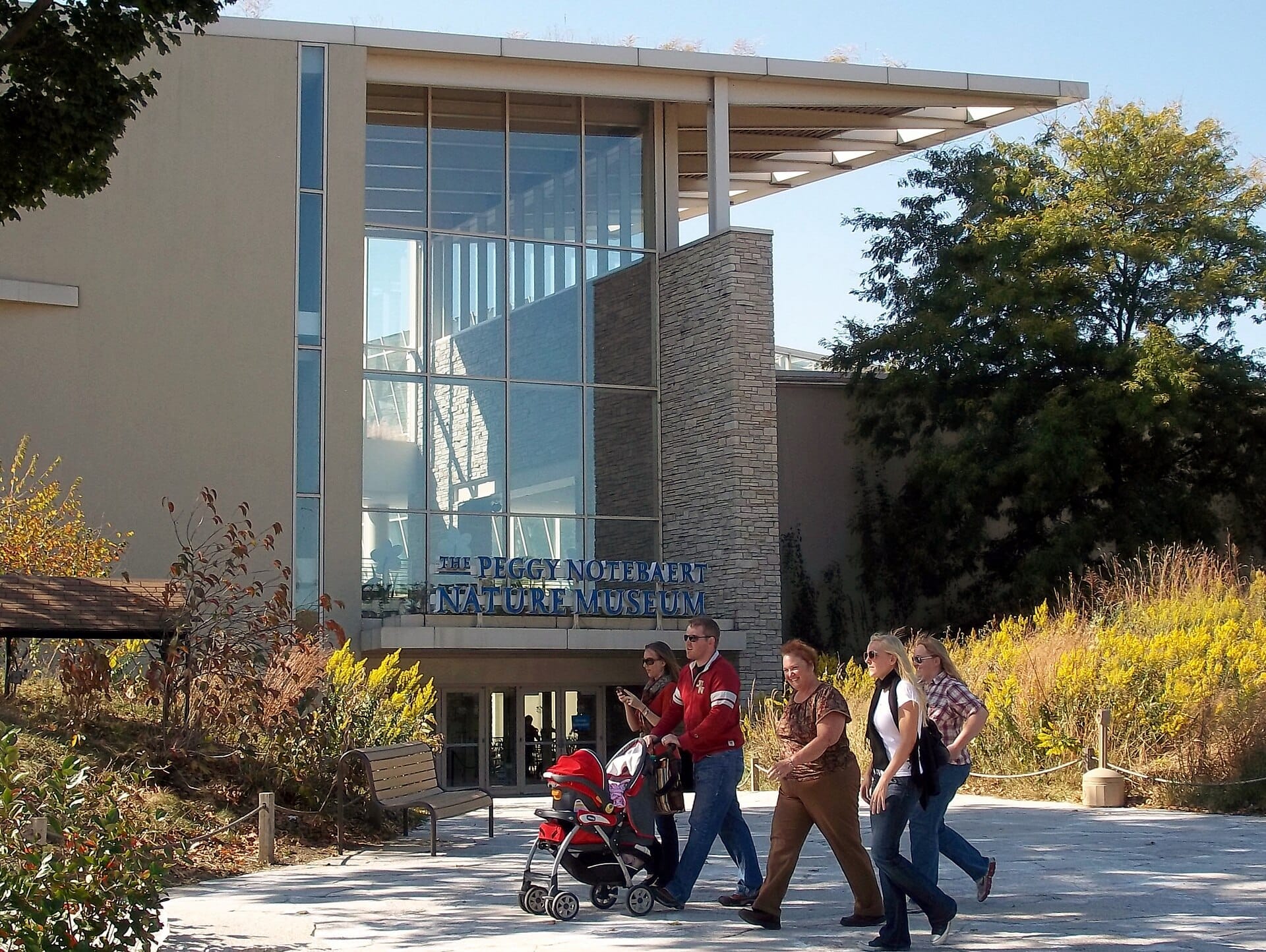
The Peggy Notebaert Nature Museum is not a natural history museum in the traditional sense. There are no dinosaur skeletons, no vast dioramas of African wildlife. The focus here is deliberate and local: the rivers, wetlands, prairies, and urban ecosystems of the Chicago region. The institution behind it, the Chicago Academy of Sciences, is one of the oldest scientific organizations in the Midwest, founded in 1857. The current building at Fullerton Parkway and Cannon Drive opened in 1999, its low-slung prairie-style architecture designed to blend into the Lincoln Park landscape rather than compete with it.
That regional focus is either the museum's greatest strength or its main limitation, depending on what you are looking for. If you want broad natural history spectacle, the Field Museum on Museum Campus will serve you better. If you want to understand the specific ecology of the place you are visiting, or if you have children between roughly three and twelve years old, the Notebaert earns its admission price.
The museum sits on the western edge of Lincoln Park, a few minutes' walk from the Lincoln Park Zoo and the Alfred Caldwell Lily Pool. Combining two or three of these into a single morning is easy and makes good use of the neighborhood.
The Judy Istock Butterfly Haven: The Reason Most People Come
The museum's signature exhibit is the Judy Istock Butterfly Haven, a 2,700-square-foot greenhouse that houses more than 1,000 free-flying butterflies at any given time. Stepping through the double-door airlock into the warm, humid interior is a genuine sensory shift: the temperature climbs, the air smells of tropical flowers and damp soil, and within seconds, wings are drifting past your face at close range.
Butterflies land on visitors with some regularity, particularly on bright clothing and anyone who stands quietly near flowering plants. Children who have been conditioned to approach insects with caution tend to freeze with delight rather than fear in this space. The greenhouse includes signage identifying species and their host plants, so there is genuine educational content alongside the spectacle, though you can also simply wander and watch.
💡 Local tip
Wear bright colors or floral patterns if you want butterflies to land on you. Dark clothing tends to attract less attention from the insects. Avoid sudden movements near the plants along the central path, where concentrations are highest.
Morning visits, when the greenhouse is freshly warmed and butterflies are most active, offer the best experience. By mid-afternoon, particularly on busy weekend days, the space fills with school groups and families, and the calm that makes the butterfly haven special can be harder to find. Weekday mornings, when school groups tend to visit in organized waves that arrive and depart on schedule, can be either wonderfully quiet between groups or noisier than a weekend, depending on timing.
Tickets & tours
Hand-picked options from our booking partner. Prices are indicative; availability and final rates are confirmed when you complete your booking.
Signature dishes of Chicago bike tour
From 68 €Instant confirmationFree cancellationField Museum of Natural History tickets and audio tour
From 44 €Instant confirmationGo City | Chicago All-Inclusive Pass
From 127 €Instant confirmationFree cancellationiFLY Chicago Lincoln Park indoor skydiving experience
From 126 €Instant confirmationFree cancellation
Beyond the Butterflies: The Rest of the Museum
The remaining exhibits cover Chicago-area ecology across several galleries. The Wilderness Walk recreates Illinois habitats including a reconstructed wetland and a prairie section, using native plants and ecological storytelling to explain the landscape that existed here before the city. The River Works exhibit focuses on Chicago's waterways, including the reversal of the Chicago River, one of the most audacious engineering projects in American urban history. These sections reward visitors who slow down and read the interpretive panels.
A significant portion of the museum is oriented toward children aged roughly three to ten. Interactive stations, hands-on science displays, and child-height exhibits make up a substantial share of the floor space. Adults without children may find some areas feel underutilized for them personally, though the butterfly haven, the naturalist's library, and the wetland sections offer genuine interest regardless of age.
If you are building a broader Lincoln Park itinerary, the museum pairs naturally with the Alfred Caldwell Lily Pool directly to the north, a quiet prairie-style landscape design that shares the Notebaert's ecological sensibility and is free to enter.
How Visits Change by Time of Day and Season
The museum is open daily from 10:00 to 16:00, though hours are subject to change for holidays and special programming. Arriving at opening on a weekday gives you the quietest experience, with the butterfly greenhouse nearly to yourself for the first thirty to forty-five minutes.
Seasonal variation matters here more than at many Chicago museums. In winter, the butterfly greenhouse becomes particularly compelling as a warm, living counterpoint to the cold outside. The contrast of walking from a gray Chicago January into a space full of tropical color and warmth is genuinely striking. Summer brings the largest family crowds, especially on hot or rainy days when outdoor Lincoln Park activities become uncomfortable.
Spring is when school group traffic peaks. From roughly late March through May, organized school visits can make the museum noisy and crowded during midday hours. If you visit during this period, target the 9:00 to 10:30 window or arrive after 14:30 when many groups have departed.
ℹ️ Good to know
Illinois residents can access free admission on select days each year. The museum announces these dates on its website. If you are a Chicago-area local or staying long-term, it is worth checking before purchasing tickets.
Getting There and Practical Logistics
The museum's address is 2430 N Cannon Drive, in Lincoln Park just off Fullerton Parkway. The nearest CTA bus routes serve Fullerton Avenue; use the CTA trip planner at transitchicago.com to identify the best current route from your starting point, as bus route numbering and stops can change. The museum is not directly on an L train line, making it one of the more bus-dependent major attractions in the city.
Driving is possible, but street parking in Lincoln Park is competitive, especially on weekends. Rideshare drop-off works smoothly on Cannon Drive. Cyclists can lock up at the museum entrance, and the Lakefront Trail is a short ride east if you want to combine a bike route with the visit.
The museum is fully wheelchair accessible, with elevator access between levels and accessible restrooms throughout. Strollers are accommodated without issue, which matters given the family-oriented programming. For a broader look at family-friendly options across the city, the Chicago with kids guide covers how this museum fits into a multi-day family itinerary.
Historical and Institutional Context
The Chicago Academy of Sciences, which operates the museum, predates many of the city's landmark institutions. Founded in 1857, it is one of the oldest continuous scientific organizations in the Midwest. Its original collections were destroyed in the Great Chicago Fire of 1871 and rebuilt over subsequent decades. The Peggy Notebaert Nature Museum building, which opened in 1999, represents the Academy's current chapter: a shift from specimen-based natural history display toward ecology education and urban environmental literacy.
The building itself, designed by Perkins and Will, was conceived with environmental sustainability in mind. Its low profile and prairie-influenced landscaping reflect the ecological themes inside. The choice to situate it within Lincoln Park rather than on Museum Campus was deliberate: the museum is meant to be a neighborhood institution as much as a destination attraction, connected to the green space around it.
Chicago's broader institutional commitment to natural history and science is covered in depth in the best museums in Chicago guide, which situates the Notebaert within the city's wider cultural landscape.
Photography, Accessibility, and What to Bring
The butterfly haven is the most photogenic space in the building. Natural light filters through the greenhouse ceiling, which is generally adequate for phone cameras without flash. Flash photography is discouraged in the butterfly greenhouse, as it can startle the insects. A macro or portrait mode on a phone camera works well for close-up shots when a butterfly has settled.
The greenhouse is warm year-round, typically maintained in the upper 70s Fahrenheit (around 25 to 27 degrees Celsius). In winter, dress in layers you can peel off before entering. Bags and coats are manageable inside, but a small daypack is more practical than a large winter parka.
⚠️ What to skip
Check your clothing carefully before leaving the butterfly haven. Staff will inspect visitors at the exit to ensure no butterflies have landed on bags or jackets, but a slow personal scan before heading to the exit prevents any awkward moments.
Insider Tips
- The 10:00 to 11:00 window on weekday mornings is often the quietest period in the butterfly haven. The greenhouse is freshly warmed and butterflies are at their most active, but crowds have not yet arrived.
- If you are visiting with children, the naturalist's lab area on the lower level often has staff-led activities that are not prominently advertised at the entrance. Ask at the front desk what is scheduled for the day.
- The museum's outdoor rain garden and native plantings along the entrance path are worth a slow look on the way in. They represent a real-world application of the ecological principles the interior exhibits explain.
- Illinois residents should check the museum website before visiting. Free days are announced in advance and offer significant savings for local families.
- Combining the Notebaert with a walk to the Alfred Caldwell Lily Pool, a few minutes north, makes for a coherent half-day focused on Chicago's native landscapes without requiring transit between stops.
Who Is Peggy Notebaert Nature Museum For?
- Families with children aged 3 to 12, who will find the interactive exhibits and butterfly greenhouse genuinely engaging
- Visitors on rainy or cold days who need a worthwhile indoor alternative to outdoor Lincoln Park activities
- Nature and ecology enthusiasts interested specifically in Midwest and Great Lakes habitats rather than global natural history
- Travelers seeking a quieter, less overwhelming museum experience compared to the larger institutions on Museum Campus
- Local Illinois residents who can take advantage of free admission days for a low-cost neighborhood outing
Nearby Attractions
Other things to see while in Lincoln Park & Old Town:
- Alfred Caldwell Lily Pool
Tucked inside Lincoln Park, the Alfred Caldwell Lily Pool is a 3-acre National Historic Landmark redesigned in 1936–1938 in the Prairie School style. Admission is free, crowds are thin, and the experience is unlike anything else on Chicago's standard tourist circuit.
- Chicago History Museum
Founded in 1856 as the Chicago Historical Society, the Chicago History Museum is the city's oldest cultural institution. Located at the edge of Lincoln Park, it traces the full arc of Chicago's story, from its earliest Indigenous inhabitants to the Great Fire, the labor movement, and beyond. It rewards curious visitors who want more than skyline photos.
- Green City Market
Green City Market is Chicago's only year-round sustainable farmers' market, drawing top chefs, local farmers, and serious food lovers to Lincoln Park on Wednesdays and Saturdays during the outdoor season. Free to enter at both its outdoor Lincoln Park and indoor winter locations and rich with seasonal produce, artisan goods, and chef demos, it's one of the most authentic food experiences the city offers.
- Kingston Mines
Founded in 1968, Kingston Mines on North Halsted Street is the largest and oldest continuously operating blues club in Chicago. Two stages run simultaneously on weekends, keeping the music going until 4 a.m. This is where the city's blues tradition stays alive on a weekend night.