Parque Nacional Natural Chingaza: Bogotá's High-Altitude Wild Frontier
Parque Nacional Natural Chingaza rises from the Eastern Cordillera just 50 kilometers from Bogotá's downtown, protecting one of the world's most biodiverse high-altitude ecosystems. This is where the city's drinking water comes from, where spectacled bears roam through sponge-like páramo grasslands, and where fog rolls through Andean forest so thick you can hear it before you see it.
Quick Facts
- Location
- Eastern Cordillera, ~50 km northeast of Bogotá; access via La Calera/Guasca or Fómeque
- Getting There
- Private vehicle or organized tour strongly recommended; access towns (La Calera, Guasca) reachable by road from Bogotá
- Time Needed
- Full day minimum (7–8 hours including transit); overnight camping available with reservation
- Cost
- Approx. 29,000 COP (Colombians/residents, adult); approx. 78,500 COP (foreign visitors); verify current rates before travel
- Best for
- Serious hikers, birders, wildlife lovers, nature photographers, and eco-travelers
- Official website
- www.parquesnacionales.gov.co/nuestros-parques/pnn-chingaza
What Chingaza Actually Is (And Why It Matters)
Parque Nacional Natural Chingaza is not a manicured city park or a scenic viewpoint with a parking lot. It is a federally protected natural reserve in Colombia's Eastern Cordillera, straddling a landscape so ecologically critical that it supplies the majority of Bogotá's drinking water through its páramo wetlands and reservoirs. That fact alone should tell you something about the scale and the seriousness of the place.
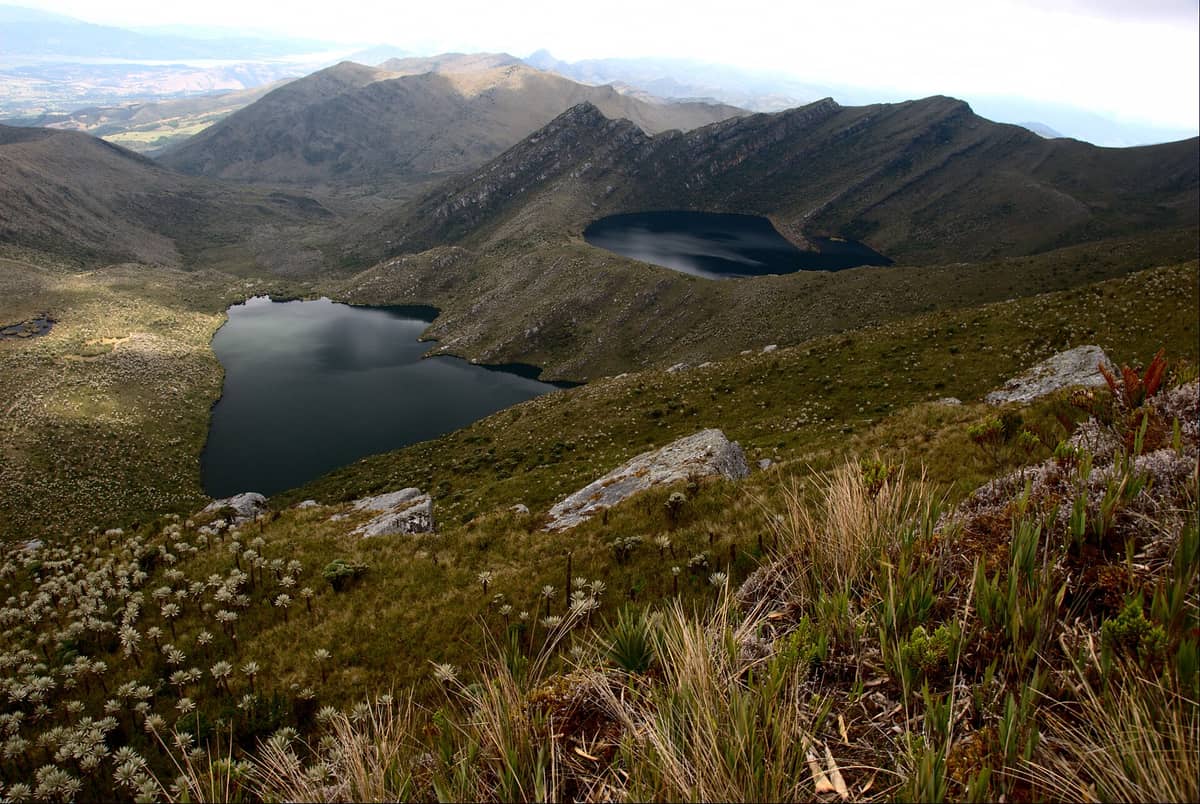
The park protects high-Andean páramo and cloud forest ecosystems, two of the most threatened habitat types on the planet. Páramo is a peculiar biome found only in the northern Andes and a few other equatorial highland zones: a treeless, fog-soaked grassland dotted with frailejones — tall plants with thick silver-green leaves that act like living sponges, drawing moisture from the air and funneling it into the ground. Standing in a field of frailejones at 3,500 meters, with the sound of water trickling somewhere underfoot and cloud racing across the hillside, is unlike anything you will find in Bogotá's urban fabric.
The park is also home to the spectacled bear, Colombia's only bear species, along with mountain tapirs, pumas, and hundreds of bird species. For context on how to approach wildlife areas like this responsibly, the day trips from Bogotá guide covers logistics for reaching remote natural sites.
The Reservation Requirement: Read This Before You Plan
⚠️ What to skip
Advance reservation is mandatory. Reserve at least three days ahead through the official Parques Nacionales form or by emailing reservas.chingaza@parquesnacionales.gov.co (mobile 316 5356228). Visitor numbers are strictly capped for conservation reasons. Do not show up without a confirmed reservation.
This is the single most important logistical fact about Chingaza, and the one most travelers overlook. The park operates under a strict visitor limit system. Reservations are handled through the official online form and the park email, and the reservation process requires advance confirmation. Tour operators who specialize in Chingaza handle this process for you, which is one reason organized tours are popular with visitors who want to avoid the administrative friction.
Entry hours at the main control points (Piedras Gordas and La Paila) are approximately 7:00 to 12:30, with exit by 16:00. The park generally accepts day visits Monday through Sunday, subject to reservation and certain holidays. Both the hours and the closure days can change, so verify current information with the park or your tour operator before finalizing travel dates.
💡 Local tip
Confirm current Sunday access when you reserve — a fact that catches many visitors off guard. Plan for a weekday or Saturday visit, and confirm the specific date with park staff when making your reservation.
Tickets & tours
Hand-picked options from our booking partner. Prices are indicative; availability and final rates are confirmed when you complete your booking.
Candelaria walking tour
From 35 €Instant confirmationFree cancellationCoffee farm guided tour
From 114 €Instant confirmationFree cancellationZipaquira Salt Cathedral guided tour
From 86 €Instant confirmationFree cancellationBogota full-day bike rental
From 19 €Instant confirmationFree cancellation
Getting There: Why a Car or Tour Is Non-Negotiable
Chingaza is accessible from two main directions. The northeastern approach, through La Calera or Guasca, reaches the Siecha and Piedras Gordas sectors. The southeastern approach, via Fómeque or San Juanito, reaches the La Paila sector. From central Bogotá, either route takes roughly 1.5 to 2.5 hours depending on traffic and road conditions.
Access roads beyond the towns are largely unpaved mountain tracks. In dry conditions a standard car can manage them, but after heavy rain they can become genuinely difficult. There is no reliable public transport that reaches the park control points directly. Travelers without their own vehicle should book through a registered tour operator, several of which run small-group day trips from Bogotá and include the reservation paperwork, transport, and a local guide. This is not a corner to cut.
If you are planning multiple nature-focused excursions around the capital, check the broader things to do in Bogotá resource to build a coherent itinerary around outdoor sites.
What the Experience Feels Like, Hour by Hour
Arriving at the control point early matters. The window between 7:00 and roughly 9:00 gives you the best chance of catching the páramo before cloud cover thickens. At that hour the light is cold and direct, the frailejones cast long shadows, and if you are lucky the highland lakes appear as flat silver mirrors before the wind picks up. Mornings in Chingaza are frequently clear at the trail level even when fog sits on the ridgelines above.
By mid-morning, mist tends to move in from the east. This is not a bad thing photographically, and it is entirely characteristic of páramo ecosystems, but it does reduce visibility on open ridges. The temperature at this altitude hovers between roughly 4°C and 15°C depending on cloud cover and time of day. Wind cuts through quickly. The shift from cold-and-clear to cold-and-wet can happen in under an hour.
Trail conditions underfoot are soft in many areas, particularly around the wetlands and smaller lagoons. Mud is not an occasional hazard here; it is part of the landscape. Your feet will be wet. Plan for this rather than trying to avoid it. Waterproof hiking boots with ankle support are not optional. Trekking poles help on the steeper descent sections.
💡 Local tip
Wear layers you can strip and re-add. A waterproof outer shell is essential regardless of the forecast. Sunscreen matters at high altitude even on overcast days — UV intensity at 3,000+ meters is significantly higher than at sea level.
Wildlife, Ecology, and What You Are Actually Looking At
The frailejones (Espeletia spp.) that carpet the open páramo are the defining visual of Chingaza, and they deserve more than a passing glance. These plants grow extremely slowly, sometimes only a centimeter per year, meaning a frailejón that stands two meters tall may be decades old. Their silver-grey leaves are covered in fine hairs that trap moisture from the fog, feeding the water table below. The entire water system that serves Bogotá depends on this biological mechanism functioning at scale.
Birdwatchers will find Chingaza genuinely rewarding. The park supports a high density of Andean species including the Andean condor, various hummingbird species, and numerous endemics. Early morning is peak activity. Bring binoculars if you have them — the grasslands offer open sightlines rarely available in the dense lower forest.
Sightings of spectacled bears or mountain tapirs are rare but documented. These are not animals that approach humans. If you encounter fresh tracks or signs, maintain distance and do not approach. Your guide will know how to read the terrain for wildlife signs in ways that a solo visitor cannot.
Chingaza sits within the broader Cerros Orientales ecosystem that defines Bogotá's eastern horizon. The Cerros Orientales form the visible boundary between the city and the high Andes, and Chingaza extends far beyond that ridgeline into deeper wilderness territory.
Admission Fees and What to Verify
As of the most recent tariff update (2026), entry fees at Parque Nacional Natural Chingaza are approximately 29,000 COP for Colombian nationals and foreign residents aged 25–65, and 24,500 COP for those aged 5–25 in the same categories. Foreign non-resident visitors pay approximately 78,500 COP. Vehicle fees apply separately: around 21,000 COP for a private automobile. These figures are in Colombian pesos and subject to change; always confirm the current rate through the official Parques Nacionales website or your tour operator before traveling.
Older price lists circulating online — some showing 16,500 COP for Colombians or 53,500 COP for foreigners — reflect outdated tariffs. The Parques Nacionales Naturales de Colombia website is the authoritative source, and tour operators who specialize in the park stay current with these changes.
Altitude, Physical Fitness, and Who Should Reconsider
Chingaza occupies high-altitude terrain, with many trails and viewpoints between 3,000 and 3,800 meters above sea level. Bogotá itself sits at 2,640 meters, so most visitors arriving from the capital are already partially acclimatized, but the additional elevation gain is real. Shortness of breath on uphill sections is normal. If you have arrived in Bogotá within the past 24–48 hours and are still adjusting to altitude, pushing further uphill is not advisable.
The Bogotá altitude guide covers how to manage acclimatization before attempting high-altitude hikes.
Wheelchair users and travelers with significant mobility limitations will find the park largely inaccessible. Trails are natural, uneven, and often wet. The access roads themselves can be difficult for any vehicle. There is no adapted infrastructure at the control points or along the main trails. This is not a failing of the park so much as an inherent quality of high-altitude natural terrain — but it is worth stating clearly.
Children can visit Chingaza, but the combination of cold, altitude, long walking distances, and potentially muddy terrain means this is better suited to older children who are comfortable with physical outdoor activity. Very young children or those prone to altitude sensitivity should be assessed carefully before the trip.
Photography and Best Conditions
The visual drama of Chingaza is at its peak in the dry seasons: December to March, and June to August. These months offer the greatest probability of clear mornings with the volcanic plains and lake surfaces visible before cloud cover arrives. That said, mist and fog are part of Chingaza's character year-round, and a foggy day in the páramo produces atmospheric photographs that a sunny day cannot replicate.
Wide-angle lenses suit the open grasslands and panoramic ridgelines. A telephoto is useful for birdwatching and for picking out frailejones silhouetted against cloud. Protect all gear from moisture; humidity inside the cloud bank is high enough to fog lens elements quickly. A dry bag or rain cover for your camera is worth carrying.
For context on the best seasonal windows for visiting sites around Bogotá, the best time to visit Bogotá guide maps the dry and wet seasons in detail.
Insider Tips
- Book your reservation at least a few days out — the official minimum is currently three days, but Saturday and dry-season slots still fill. Tour operators often hold allocations in advance.
- Bring cash in Colombian pesos for the entry fee. Card payment facilities at remote control points are unreliable, and ATMs are not available inside the park.
- If you are booking through a tour operator, ask specifically whether the guide is licensed by Parques Nacionales. Licensed guides know which areas are open on a given day and can adapt routes based on trail conditions after rain.
- Pack a hot drink in a thermos. The park does not have food or beverage vendors inside. Warming up mid-hike with something hot is a practical comfort that significantly improves the experience on cold, windy days.
- Start any trail by 8:00 if you want open-sky views. By late morning, cloud reliably descends on the upper sectors and visibility on ridge routes drops substantially.
Who Is Parque Nacional Natural Chingaza For?
- Hikers and trekkers who want genuine wilderness within striking distance of a major city
- Birders and wildlife photographers targeting Andean species and high-altitude ecosystems
- Eco-travelers and conservation-minded visitors interested in páramo ecology and water systems
- Travelers who have already covered Bogotá's urban attractions and want a full-day outdoor counterpoint
- Small-group tour participants looking for a structured introduction to Colombian national parks
Nearby Attractions
Combine your visit with:
- Cascada La Chorrera
Cascada La Chorrera is Colombia's tallest waterfall, plunging approximately 590 metres through cloud forest on the road to Choachí, less than an hour east of Bogotá. The hike to reach it is a proper half-day commitment, not a gentle stroll, but the payoff is one of the most dramatic natural sights within day-trip distance of the capital.
- Catedral de Sal de Zipaquirá
Carved 180 meters beneath a working salt mine, the Catedral de Sal de Zipaquirá is one of South America's most extraordinary architectural achievements. This guide covers what to expect underground, how to get there from Bogotá, and whether the trip is worth your time.
- Jardín Botánico de Bogotá
The Jardín Botánico de Bogotá José Celestino Mutis is one of Colombia's most important living plant collections, spread across a flat, walkable campus that includes the striking Tropicario greenhouse complex. It is a calm, well-organized space that rewards visitors who enjoy botany, photography, and a break from the city's pace without leaving it.
- Laguna de Guatavita
Laguna de Guatavita is a circular crater lake in the Cundinamarca highlands and one of Colombia's most significant sacred sites. Associated with the Muisca El Dorado ritual, it sits 75 km northeast of Bogotá inside a protected forest reserve managed by CAR. Access is by mandatory guided walk only, making every visit a slow, deliberate encounter with both Andean ecology and pre-Columbian history.