Pacific Mall: Inside North America's Largest Asian Shopping Mall
Sitting on the Toronto-Markham boundary at Steeles and Kennedy, Pacific Mall packs over 350 stores into one sprawling indoor complex. Free to enter and open every day of the year, it draws shoppers, food lovers, and curious visitors from across the Greater Toronto Area and beyond.
Quick Facts
- Location
- 4300 Steeles Ave E, Markham, ON — northeast corner of Steeles & Kennedy Road
- Getting There
- Milliken GO Station is adjacent to the mall; TTC buses also serve the area
- Time Needed
- 2 to 4 hours for a thorough visit; serious shoppers often spend a full afternoon
- Cost
- Free entry; spending depends entirely on what you buy or eat
- Best for
- Asian pop culture, electronics, fashion, street food, and cultural curiosity
- Official website
- www.pacificmalltoronto.ca
What Pacific Mall Actually Is
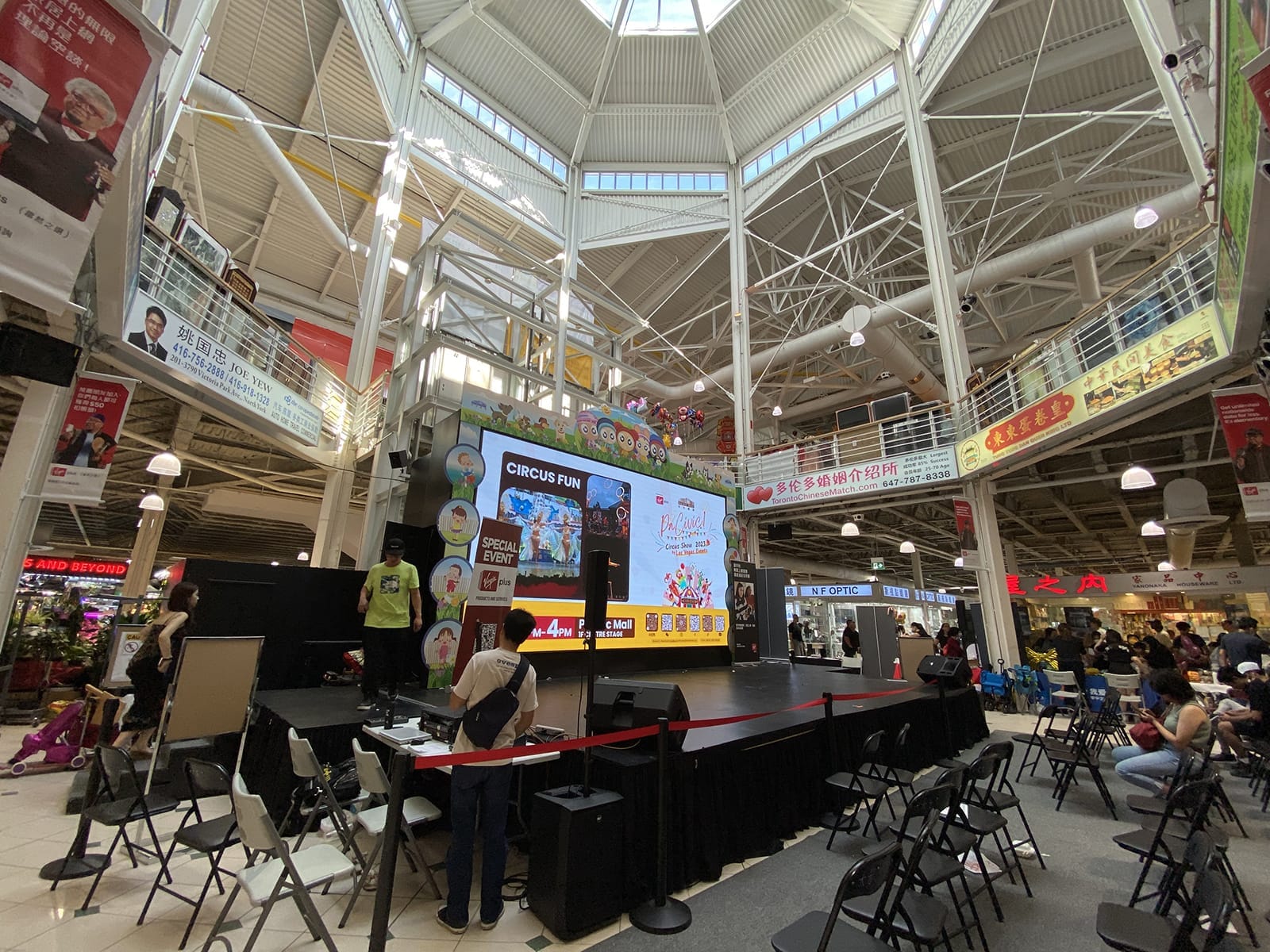
Pacific Mall opened in the mid-1990s in Markham, Ontario, and has since become something of a landmark in the Greater Toronto Area. It holds the distinction of being the largest indoor Asian shopping mall in North America, and by some accounts the largest in the Western world. That is not a casual boast: the mall contains over 350 individually operated stalls and shops packed into a single-level indoor complex, and was historically connected to an adjacent strip mall called Market Village that expanded the retail footprint further before its closure and redevelopment.
The tenant mix skews heavily toward Chinese-Canadian merchandise culture: electronics and phone accessories, K-pop and anime merchandise, jade and gold jewelry, traditional herbal medicine shops, bubble tea counters, Hong Kong-style bakeries, Taiwanese snack stalls, and fast-fashion imports. Chinese signage is as prominent as English throughout the corridors, and Cantonese and Mandarin are frequently the dominant languages you will hear. The official Chinese name of the mall, 太古廣場, appears on the official website alongside the English branding.
ℹ️ Good to know
Pacific Mall is not inside the City of Toronto proper. It sits in Markham, just north of the Toronto boundary along Steeles Avenue East. Budget extra time if you are traveling from downtown Toronto by transit.
How the Experience Changes by Time of Day
The mall currently opens at 11:00 AM daily, and the first hour is noticeably quieter. Stall owners are still arranging displays, some food counters are just warming up, and the corridors feel navigable. If you want to browse without shoulder-to-shoulder crowds, this is the window to use. The lighting inside is consistent regardless of the time of day — the mall relies on interior fluorescent and LED fixtures rather than natural light, so there is no atmospheric shift as the day progresses outdoors.
Weekend afternoons, roughly 1:00 PM to 5:00 PM, are when Pacific Mall reaches full intensity. The main corridors narrow perceptibly as foot traffic builds. Food court areas fill completely, lines form at popular bubble tea shops, and the sound environment shifts from low murmur to a constant overlap of music from competing stalls, vendor conversations, and the hiss of cooking equipment from food counters. This is the authentic Pacific Mall experience — chaotic and sensory-dense — but it is worth knowing in advance if you find crowded indoor spaces difficult.
Weekday afternoons are a middle ground: busier than a typical suburban mall but without the weekend peak. If you are visiting specifically to negotiate prices or spend real time comparing products at electronics stalls, a Tuesday or Wednesday afternoon will give you more space and more attentive vendors.
💡 Local tip
The mall is open 365 days a year, including statutory holidays, according to its official communications. Holiday weekends — especially Chinese New Year and long weekends in summer — bring exceptional crowds. If you are not specifically seeking that atmosphere, avoid these dates.
Tickets & tours
Live prices and dates from our booking partner. If you book, we may earn a commission at no extra cost to you.
Niagara Falls small-group day tour from Toronto
From 63 €Instant confirmationFree cancellationNiagara Falls small group walking tour
From 85 €Instant confirmationFree cancellationNiagara Falls Canada small-group walking tour with cruise
From 0 €Instant confirmationFree cancellationNiagara Falls small-group guided walking tour with boat experience
From 82 €Instant confirmationFree cancellation
What You Will Find Inside
Electronics and phone accessories dominate a significant portion of the stalls. You will find phone cases, cables, portable chargers, earbuds, and assorted tech peripherals at prices that are often lower than big-box retail. Cases for niche or older phone models that have disappeared from mainstream retailers turn up here regularly. Bargaining is not the norm at every stall, but prices at some vendors are negotiable, particularly when buying multiple items.
Jewelry is a major category. Several stalls specialize in jade pieces, and a cluster of shops sells 24-karat gold jewelry by weight rather than by design — a purchasing model more common in Hong Kong and mainland China than in typical North American retail. These shops tend to post the day's gold spot price prominently.
For younger visitors or anyone following K-pop, Japanese anime, or Taiwanese pop culture, Pacific Mall is one of the better physical retail destinations in the Toronto region. Merchandise that would cost significantly more through imported online retailers shows up here in quantity: photocard albums, lightsticks, figurines, manga, and character stationery. Several stalls stock secondhand and collectible items alongside new merchandise.
Food is distributed throughout the mall rather than confined to a single food court. Bubble tea shops appear at regular intervals. Hong Kong-style bakeries sell pineapple buns, egg tarts, and cocktail buns at low prices. Several stalls serve Taiwanese popcorn chicken, scallion pancakes, and grilled squid. For a more structured meal, the food areas near the center of the mall offer rice plates, noodle dishes, and other sit-down options. The smell of frying dough and sesame is essentially constant in the central corridors. If you are particularly interested in Toronto's food culture across different neighborhoods, the Toronto food guide covers the broader landscape, including Markham's restaurant scene.
Getting There from Downtown Toronto
Pacific Mall is located at 4300 Steeles Avenue East, Markham, at the northeast corner of Steeles Avenue and Kennedy Road. The most straightforward transit option from central Toronto is GO Transit: Milliken GO Station sits directly adjacent to the mall, making it one of the easiest mall-to-transit connections in the region. Trains on the Stouffville line connect Milliken to Union Station on weekdays and limited times on weekends; check current GO Transit schedules for exact journey times and frequency, as these vary by time of day and day of week.
The TTC also reaches the area via bus routes, and the mall's own directions page references TTC access, though a combination of subway and bus routes is typically required from downtown. Use the TTC trip planner for current routing. By car, the mall offers over 1,600 parking spaces including underground parking, and the surface lots are accessible from both Steeles Avenue and Kennedy Road. Arriving by car on a weekend afternoon should account for significant internal circulation time in the parking lots.
💡 Local tip
For accessibility: the mall advises that visitors requiring disabled, expectant maternity, or elderly assistance should use the north or underground parking areas for the easiest access points into the mall.
Cultural Context: Why Pacific Mall Matters
Markham has one of the highest concentrations of residents of Chinese descent of any municipality in Canada, and Pacific Mall both reflects and reinforces that demographic reality. The mall opened in the mid-1990s, during a period of significant immigration from Hong Kong ahead of the 1997 handover, and its retail culture carries the imprint of that origin: the preference for small, individually operated stalls over anchor department stores, the gold-by-weight jewelry model, and the Hong Kong snack culture all trace back to that era. Toronto's broader Chinese community is spread across several neighborhoods and districts, and the Chinatown in downtown Toronto offers a very different atmosphere, skewing older in its commercial mix and more concentrated in the Spadina-Dundas corridor. Pacific Mall represents a suburban, post-1990s expression of the same community.
The mall also functions as a social hub, not purely a retail destination. On weekends, families use it as a gathering point, teenagers congregate around the pop culture stalls, and older visitors move between the herbal medicine shops and the bakeries at an entirely different pace from the shoppers hunting for phone cases. Understanding this layered use makes the visit more interesting. For a broader sense of how Toronto's multicultural neighborhoods each developed their own distinct character, the guide to Toronto's multicultural neighbourhoods provides useful context.
Practical Details and Photography
Pacific Mall is open Monday through Sunday, 11:00 AM to 8:00 PM, and, according to its official channels, operates every day of the year including statutory holidays. Entry is free. No ticket or registration is required. Purchases inside the mall are in Canadian dollars (CAD). Many stalls are cash-preferred, and while some accept card payments, having cash on hand speeds up transactions considerably, particularly at food counters and smaller accessory stalls. There is at least one ATM inside the complex.
Photography inside is generally not restricted by the mall itself, but individual stall operators vary in their comfort with being photographed, particularly at the jewelry shops. Food stalls are generally fine with photos. The interior lighting is bright but fairly flat — standard artificial retail lighting — so phone cameras handle it well enough, but dedicated photography setups will not produce dramatically different results here than elsewhere indoors.
Wear comfortable shoes. The mall is single-level but large, and if you extend the visit into the adjacent Market Village strip, you will cover a meaningful distance. Dress practically: indoor temperature is controlled year-round, so summer heat and winter cold outside are not factors once you are inside. If you are planning a broader day trip that combines Pacific Mall with other Markham or Toronto experiences, the getting around Toronto guide covers transit logistics in more detail.
Who Should Think Twice Before Going
Pacific Mall is not for everyone, and being clear about this saves a wasted trip. If you are looking for a mainstream North American shopping experience with well-known retail chains, branded flagships, or a conventional food court, this is the wrong destination. The stall-based model means quality and reliability vary significantly between vendors, and there is no central customer service infrastructure. Returns and exchanges depend entirely on individual vendor policies.
Visitors who are sensitive to crowds, noise, or confined spaces should visit on a weekday morning or reconsider altogether. Weekend peak hours in the central corridors can feel genuinely overwhelming. There is no seating in abundance, no large open atrium to decompress in, and the sensory stimulation is continuous. It is also worth noting that the mall is not centrally located for tourists staying downtown: the transit journey from Union Station takes meaningful time, and this is not a venue to squeeze into a busy half-day itinerary.
Insider Tips
- Arrive at opening time (11:00 AM) on a weekday if you want to browse electronics or jewelry stalls without pressure. Vendors are more relaxed, more likely to explain products, and in some cases more open to negotiating on multi-item purchases.
- The food is better than it looks on first impression. Skip the most visible counters near the main entrance — which cater to passing foot traffic — and walk deeper into the mall or toward the central food section to find stalls with longer lines of regulars. Locals waiting in line is the most reliable quality indicator here.
- Milliken GO Station is essentially attached to the mall via a short covered walkway. If you are coming by GO Transit, this is by far the easiest and least stressful arrival method, avoiding the parking lot entirely on busy days.
- If you are shopping for K-pop or anime merchandise, check multiple stalls before buying. The same photocard albums and figures can vary in price by 20 to 30 percent between different vendors in the same corridor. A single walk-through to compare before committing is worth the extra ten minutes.
- The former adjacent Market Village strip mall used to share the parking lot and extend the shopping options, including some sit-down restaurants that offered a quieter alternative to eating inside Pacific Mall itself, but it has since been closed and redeveloped. It is easy to miss if you enter directly from the main Pacific Mall entrance.
Who Is Pacific Mall For?
- Shoppers looking for Asian pop culture merchandise, electronics accessories, or imported fashion at lower-than-retail prices
- Food explorers interested in Hong Kong bakery items, Taiwanese street snacks, and bubble tea in a concentrated setting
- Families with children who follow K-pop, anime, or gaming culture and want a physical retail experience for collectibles
- Visitors curious about the cultural geography of the Greater Toronto Area beyond the downtown core
- Anyone needing a practical, weather-proof destination that is open every day of the year including holidays
Nearby Attractions
Combine your visit with:
- Aga Khan Museum
The Aga Khan Museum in Toronto is one of North America's only institutions dedicated to the arts of Muslim civilizations. Housed in a purpose-built building designed by architect Fumihiko Maki, it holds over 1,200 masterpieces spanning 14 centuries. Whether you spend 90 minutes or a full afternoon, the experience rewards curiosity at every turn.
- The Village at Black Creek (Black Creek Pioneer Village)
The Village at Black Creek is a fully realized open-air living history museum in northwest Toronto, where around 40 restored historic buildings, heritage breed livestock, and costumed interpreters recreate rural Ontario life from the 1800s. Operated by the Toronto and Region Conservation Authority, it offers a rare, tactile experience of pre-industrial Canada that few urban attractions can match.
- Blue Mountain & Collingwood
Perched on the Niagara Escarpment above Georgian Bay, Blue Mountain and Collingwood form Ontario's most accessible four-season resort destination. Whether you come for winter skiing, summer hiking, or a weekend in the pedestrian village, the area rewards visitors who plan around the season.
- Canada's Wonderland
Canada's Wonderland is the country's largest amusement park, located in Vaughan just north of Toronto. With 18 roller coasters, more than 200 attractions, and a 20-acre water park, it's a full-day commitment that rewards planning. Here's how to make the most of it.
Planning a trip? Discover personalized activities with the Nomado app.