Ōtara Flea Market: Auckland's Most Culturally Rich Saturday Morning
Ōtara Markets — formerly known as the Ōtara Flea Market — is one of the city's most authentic cultural experiences. Expect Pacific Island food, live music, second-hand clothing, and a crowd that reflects the real demographic heart of Tāmaki Makaurau Auckland.
Quick Facts
- Location
- Car park behind Ōtara Town Centre, Watford & Newbury Streets, Auckland 2023
- Getting There
- Check Auckland Transport (at.govt.nz) for current bus routes to Ōtara Town Centre from the city centre
- Time Needed
- 1.5 to 2.5 hours; arrive by 7am for full experience
- Cost
- Entry appears to be free; verify with the operator. Budget NZD $15–40 for food and browsing
- Best for
- Pacific culture, street food, second-hand finds, Saturday mornings
- Official website
- www.otaramarkets.co.nz
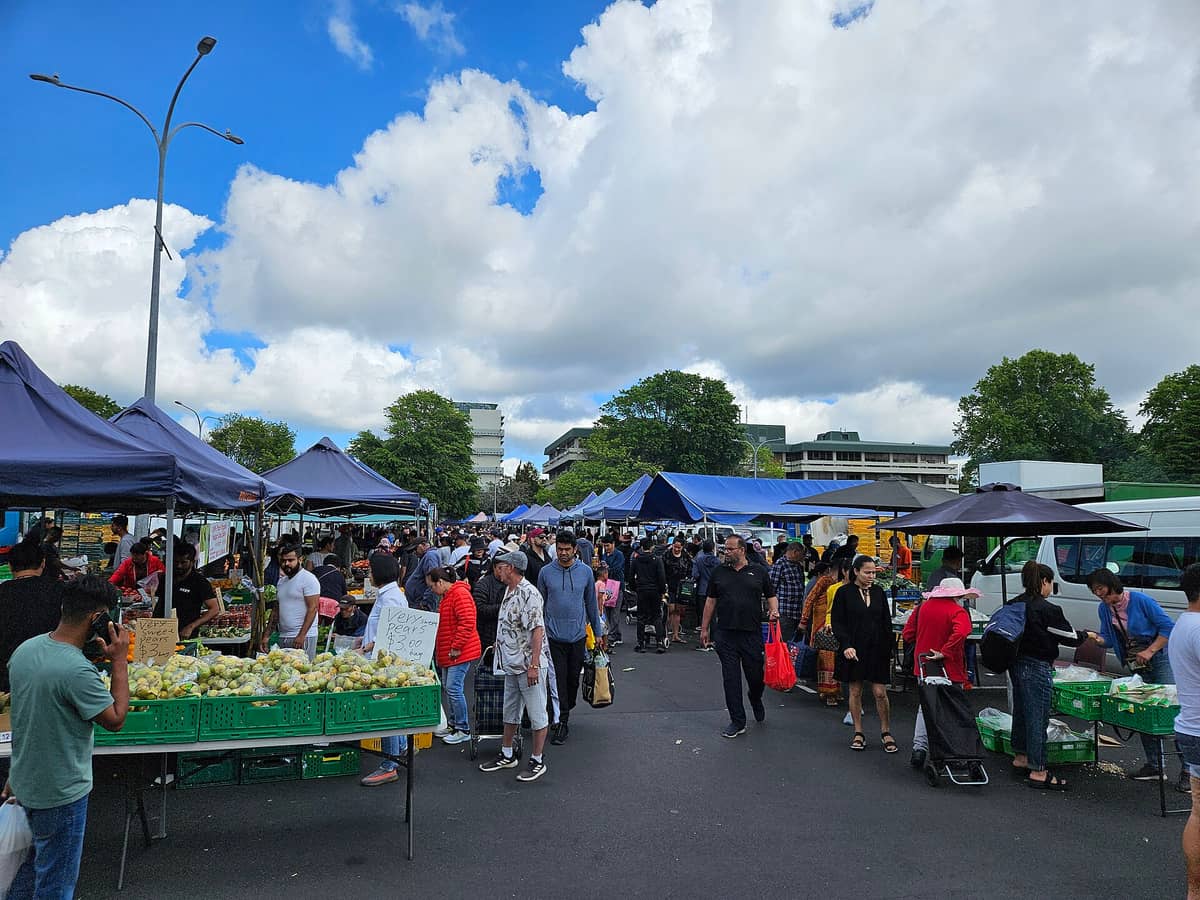
What the Ōtara Flea Market Actually Is
The Ōtara Flea Market, also known as Ōtara Markets, fills the open-air car park behind Ōtara Town Centre every Saturday from 6:00 a.m. to noon. It is one of the longest-running outdoor markets in Auckland, with the Otara Business Association citing an opening date of 1976. Whatever the precise founding year, it has become a fixed institution in South Auckland life.
This is not a curated artisan market with branded tote bags and cold-brew coffee. It is a working-class Saturday institution with roots in Pacific Island migration to Auckland. The stall mix reflects that history directly: Samoan umu-cooked food, Tongan crafts, Māori carvings, Filipino snacks, second-hand appliances, bolts of fabric, live gospel music, and vegetables sold in quantities meant to feed large families. Tourists are welcome, but the market runs primarily for the local community.
💡 Local tip
Arrive between 6:00 and 7:30 a.m. for the most active period. Cooked food stalls often sell out of specific dishes by 9 a.m., and the atmosphere is at its liveliest in the early morning coolness before parking fills up.
The Experience by Time of Day
At 6:00 a.m., the market is already fully operational. Smoke rises from hangi and grill stations. The smell of coconut cream, fried bread, and charcoal hits before you even see the stalls. Vendors are mid-flow, not setting up. Regulars move through with practiced efficiency, filling chilly bins and reusable bags. The soundscape is layered: Pacific language conversations at stalls, a gospel singer warming up somewhere in the middle, the clatter of commercial kitchen equipment.
By 8:00 a.m., the car park is well-populated but still navigable. This is the sweet spot for visitors who want to experience the full market without feeling pressed. Stalls are all open, the food queue lengths are still manageable, and there is enough ambient noise to give the place real energy without being overwhelming.
After 10:00 a.m., the crowd thins noticeably. Some food stalls begin to pack down as stock runs out. The second-hand section remains active later into the morning, and this is when bargaining on non-food items tends to be easier. If you arrive after 10:30, you will still find plenty to browse, but you may miss the most popular cooked food entirely.
Tickets & tours
Live prices and dates from our booking partner. If you book, we may earn a commission at no extra cost to you.
Luggage Storage in Auckland
From 5 €Instant confirmationFree cancellationNew Zealand West Coast discovery tour
From 100 €Instant confirmationFree cancellation13,000ft skydiving experience in Auckland
From 195 €Instant confirmationFree cancellationDiscover Auckland City Tour
From 88 €Instant confirmationFree cancellation
Food: The Main Reason to Come
The food at Ōtara Markets is the primary draw for most first-time visitors, and it earns that reputation. Samoan palusami (young taro leaves cooked in coconut cream), lu sipi (lamb flap in coconut cream), chop suey, boil-up, Māori rewena bread, and fried dough are common across multiple stalls. Filipino vendors typically offer pancit and adobo. The variety shifts depending on who is trading that week, so no two Saturdays are identical.
Portions are large and prices are genuinely low by Auckland standards. A full cooked plate with rice typically costs well under NZD $15. This is food made in the style of home cooking, not restaurant-plated dishes. Bring cash, as card facilities vary by stall.
For context on where this market fits within Auckland's broader food culture, the Auckland food guide covers the city's Pacific, Māori, and multicultural dining scene in more depth. The market also appears in overviews of Auckland's best markets, where it consistently stands apart from the more tourist-oriented alternatives.
ℹ️ Good to know
Bring cash in small denominations. While some stalls may accept card payments, many vendors prefer cash, and ATMs are not guaranteed to be nearby at 6 a.m.
Beyond Food: What Else Is at the Market
The non-food section of the market is substantial. Second-hand clothing dominates a large portion of the stalls, ranging from sorted vintage pieces to bulk bins where everything is the same price. You will find household goods, small electronics, tools, fabric, and Pacific craft items including woven products, carved pendants, and printed textiles. The quality and curation level varies enormously from stall to stall.
There are usually stalls selling fresh produce, including taro, breadfruit, coconut, and other Pacific staples that are harder to find at mainstream Auckland supermarkets. For anyone cooking Pacific dishes at home, this is a practical and affordable sourcing point.
Music is present on most Saturdays. Gospel and Pacific contemporary music performed live, or played through speakers, is part of the ambient texture of the market. It contributes to an atmosphere that feels community-rooted rather than commercially staged.
Cultural and Historical Context
Ōtara, the suburb that hosts the market, developed significantly from the 1950s onward as state housing expanded in South Auckland. Pacific Island migration to New Zealand accelerated through the 1960s and 1970s, and Ōtara became one of the primary settlement areas for Samoan, Tongan, Niuean, and Cook Island communities. The market grew out of that demographic reality, providing a space for community exchange, economic activity, and cultural maintenance.
Understanding this context changes how you experience the market. The food being sold is not novelty cuisine for tourists. It is the same food people eat at home, at church gatherings, at family events. Visiting with genuine curiosity and respect rather than as a passive spectator makes a meaningful difference.
If you are interested in Māori and Pacific cultural dimensions of Auckland more broadly, the Auckland Māori culture guide provides useful background on the city's indigenous heritage and cultural institutions.
Getting There and Practical Logistics
The market is located in the car park behind Ōtara Town Centre, accessed from Watford and Newbury Streets in the Ōtara suburb, postal area Auckland 2023. Ōtara is approximately 18 to 20 km south of the Auckland CBD. Driving is the most straightforward option for visitors staying in central Auckland, with parking available in and around the Town Centre.
Public transport options exist via the Auckland Transport network, but the early start time (6:00 a.m.) means you need to check current timetables carefully via the AT Journey Planner at at.govt.nz. Saturday early-morning services to South Auckland suburbs may be infrequent. Do not rely on assumptions about bus frequency at that hour.
⚠️ What to skip
The market runs from 6:00 a.m. to 12:00 p.m. on Saturdays, unless it is a public holiday. There is no Sunday equivalent. If you are visiting Auckland mid-week or on a Sunday, this market is not accessible.
Wear comfortable shoes suitable for an outdoor car park surface. Auckland's weather can change quickly, and an early Saturday morning in winter (June to August) can be cold and occasionally wet. A light waterproof layer is worth bringing from May through September. The market operates rain or shine as far as available information indicates, but a cold, wet morning significantly changes the experience.
For general guidance on navigating Auckland's transport network across the week, the getting around Auckland guide covers buses, trains, ferries, and driving in practical detail.
Who Will Love This Market (and Who Should Think Twice)
The Ōtara Flea Market suits travellers who want to experience a part of Auckland that does not appear in hotel lobby brochures. If you are interested in Pacific food cultures, authentic community markets, or finding genuinely unusual second-hand items at low prices, this market delivers in ways that more central Auckland options do not.
It is also a good option for families. The environment is open-air, the food is inexpensive and filling, and children are very much part of the normal Saturday crowd. There is no particular child-specific programming, but the atmosphere is accommodating.
Visitors who want polished presentation, a central city location, or primarily artisan goods will find the market a poor fit. Those markets exist elsewhere in Auckland — the Auckland markets guide includes alternatives closer to the CBD. Visitors with significant mobility limitations should also note that specific accessibility information — step-free routes, accessible parking, toilet facilities — is not confirmed in publicly available sources; contact the market operator directly before visiting.
The market is not overhyped in the traditional tourist sense, but it is worth calibrating expectations. It is a community market, not a food festival. The energy comes from ordinary Saturday life, not from event production. That is precisely what makes it worth visiting, but it is not a spectacle.
Insider Tips
- Target the cooked food stalls first, before 8:00 a.m. if possible. Dishes like palusami and lu sipi can sell out entirely before 9 a.m. on busy Saturdays.
- Bring a reusable bag. Many vendors sell produce in bulk, and navigating the stalls with a bag that fills quickly is easier with something purpose-made for shopping rather than handheld.
- If you are buying second-hand goods, a polite conversation with the vendor often leads to a better price than quoting a lower figure immediately. Many stall holders are regulars who appreciate genuine interest in what they are selling.
- The car park fills from around 7:00 a.m. onward. If you are driving, arriving before 7:00 a.m. gives you better parking options near the market entrance rather than on surrounding streets.
- The market runs in all weather, but bring a rain layer for winter months. An umbrella is less practical than a packable jacket in the narrow stall lanes.
Who Is Ōtara Flea Market For?
- Travellers wanting genuine Pacific Island food culture rather than a tourist-packaged version
- Early risers who want a culturally meaningful Saturday morning experience
- Budget-conscious visitors: a full cooked breakfast and market browse costs very little
- Families comfortable with an outdoor, informal atmosphere
- Second-hand shoppers and people looking for Pacific produce unavailable at mainstream supermarkets
Nearby Attractions
Combine your visit with:
- Auckland Botanic Gardens
Spread across 64 hectares in Manurewa, the Auckland Botanic Gardens offer free entry every day of the year, with themed garden collections, 10 hectares of native forest, and a visitor centre on site. It sits south of the city centre and rewards a longer visit than most people initially plan for.
- Auckland Zoo
Auckland Zoo has been part of the city's fabric since 1922, sitting in the Western Springs precinct with a collection that spans native New Zealand wildlife and international species. This guide covers everything from ticket prices and transit options to the best time of day to arrive and which exhibits deliver the most.
- Bastion Point (Takaparawhau)
Takaparawhau, known widely as Bastion Point, is a grassy headland in Ōrākei where Māori history, colonial conflict, and sweeping Waitematā Harbour views converge. It costs nothing to visit, carries centuries of significance, and rewards visitors who take time to understand what they are standing on.
- Bethells Beach (Te Henga)
Bethells Beach, officially Te Henga (Bethells Beach), is a raw, dramatic stretch of black-sand coastline about 45 minutes west of central Auckland. With rolling dunes, a freshwater lagoon, strong surf, and zero phone coverage, it delivers a genuine wilderness experience rare for a city of 1.6 million people.
Planning a trip? Discover personalized activities with the Nomado app.