Ordrupgaard: Copenhagen's Most Architecturally Remarkable Art Museum
Set in Charlottenlund, about 10 km north of central Copenhagen, Ordrupgaard Set in Charlottenlund, about 10 km north of central Copenhagen, Ordrupgaard is a state-owned art museum that layers a century of history into a single visit. that layers a century of history into a single visit. French Impressionist masterworks, a sculptural Zaha Hadid extension, a Snøhetta wing, and the preserved home of designer Finn Juhl all share the same wooded grounds.
Quick Facts
- Location
- Vilvordevej 110, 2920 Charlottenlund, Denmark (approx. 10 km north of central Copenhagen)
- Getting There
- Bus 388 to Vilvordevej from Klampenborg or Lyngby Station — about 2-min walk to entrance
- Time Needed
- 2–3 hours for the museum; 2–3 hours for the museum; allow extra time if adding Finn Juhl's House and the Art Park
- Cost
- 140 DKK adults; children under 18 free; Copenhagen Card holders free. Finn Juhl's House requires a separate ticket (museum admission included in that ticket).
- Best for
- Architecture lovers, Impressionism fans, design enthusiasts, and anyone wanting a quieter museum experience outside the city centre
- Official website
- ordrupgaard.dk/en
What Ordrupgaard Actually Is
Ordrupgaard is a state-owned art museum housed in a complex that has grown outward from a 1917 private residence into one of Scandinavia's most architecturally layered cultural sites. The original three-wing main house was designed by architect Gotfred Tvede and completed in 1917 for the shipping merchant and art collector Wilhelm Hansen and his wife Henny. Ordrupgaard is a state-owned art museum housed in a complex that has grown outward from a 1917 private residence into one of Scandinavia's most architecturally layered cultural sites. The original three-wing main house was designed by architect Gotfred Tvede and completed in 1917 for the shipping merchant and art collector Wilhelm Hansen and his wife Henny. When Wilhelm Hansen died in 1920, the estate passed to the Danish state, and Ordrupgaard formally opened as a public museum in 1918 during Hansen's lifetime, becoming state property thereafter.
The collection focuses on French Impressionism and Post-Impressionism — Monet, Renoir, Cézanne, Degas, Gauguin — alongside a strong representation of Danish Golden Age and 19th-century painters. This dual focus, French and Danish, reflects the taste of the Hansens, who were among the most significant private collectors in Northern Europe during the early 20th century.
ℹ️ Good to know
Opening hours: Tuesday–Sunday 11:00–17:00, Wednesday until 19:00. Art Park open daily 08:00–18:00. Finn Juhl's House has guided tours Tuesday–Friday and self-guided visits weekends 11:00–17:00. Closed 23–26 and 31 December, and 1 January. Verify hours at ordrupgaard.dk before visiting.
Three Buildings, Three Eras of Architecture
The architectural sequence here is genuinely unusual. The Tvede original is a formal Danish manor-style residence, its interiors still carrying something of the domestic quality of a private home. Wooden floors, measured proportions, and rooms that feel like rooms rather than gallery boxes make the experience of looking at a Monet here different from looking at one in a white-cube institution.
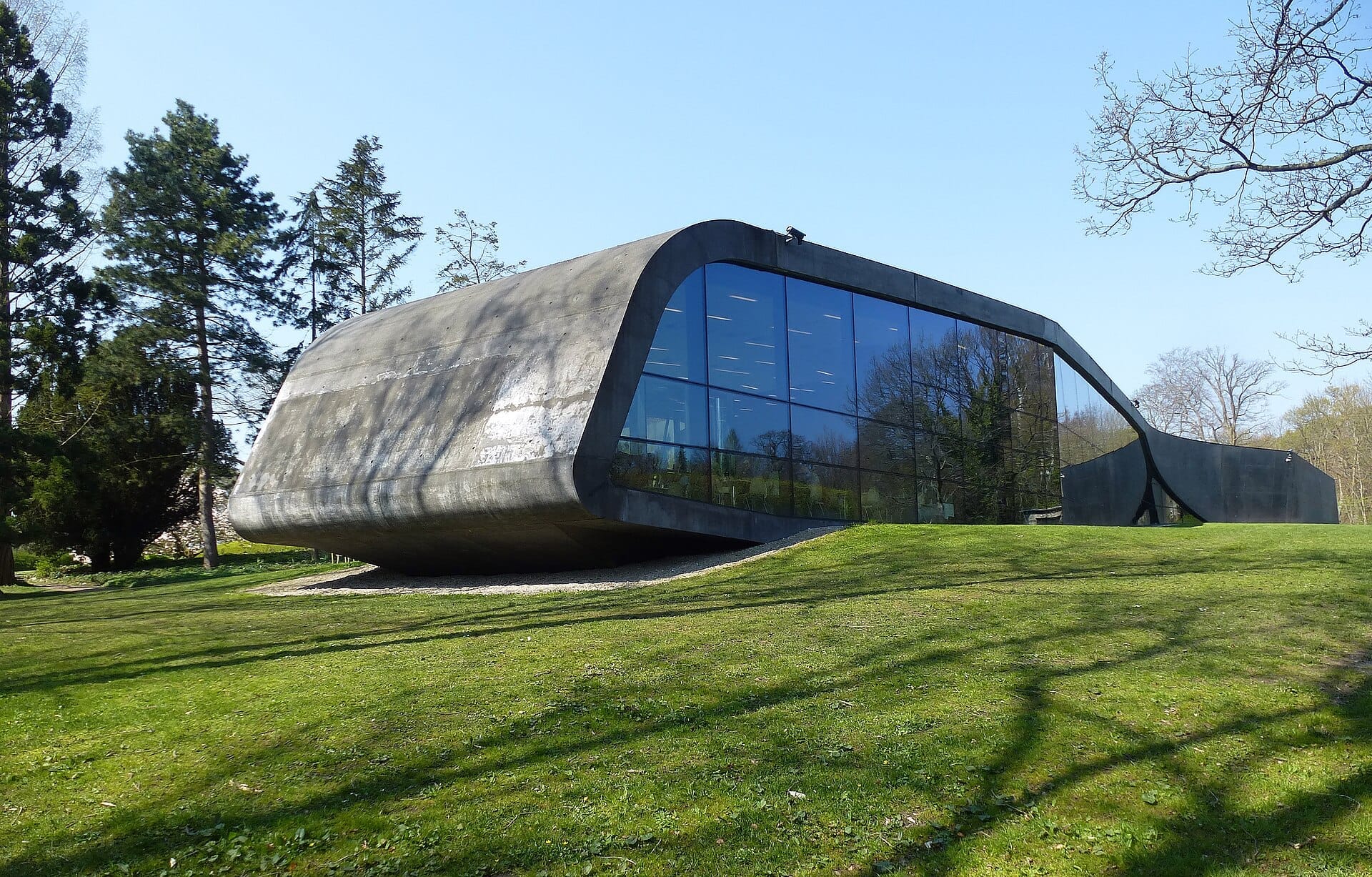
Zaha Hadid's extension, completed in 2005, provides the sharpest contrast. The addition is a flowing, cave-like structure in dark concrete and glass that hugs the ground rather than rising above it. From the garden it reads almost like a geological feature. Inside, the ceiling curves overhead in ways that make you aware of the shell you are moving through, not just the art on the walls. It is one of Hadid's smaller-scale completed works and one of the more intimate expressions of her formal language.
A further wing designed by Norwegian firm Snøhetta expanded the museum's gallery and facilities space. The result is a campus that rewards visitors who slow down and pay attention to how each section connects to the next. If you are interested in the history of contemporary architecture in Scandinavia, the Copenhagen design and architecture guide provides useful context for situating Ordrupgaard within the broader city.
Tickets & tours
Hand-picked options from our booking partner. Prices are indicative; availability and final rates are confirmed when you complete your booking.
1-hour boat harbour tour in Copenhagen
From 26 €Instant confirmationFree cancellationSmall group 3-hour walking tour in Copenhagen
From 45 €Instant confirmationFree cancellationCopenhagen to Malmo one-day tour
From 56 €Instant confirmationFree cancellationFull-day tour to Forest Tower and Forgotten Giants from Copenhagen
From 110 €Instant confirmationFree cancellation
Finn Juhl's House: The Separate Ticket Worth Buying
On the museum grounds, a short walk from the main building, stands the house that furniture designer Finn Juhl designed for himself in the 1940s. Juhl is one of the defining figures of Danish functionalist furniture design — his organic forms influenced mid-century design globally, and his work appeared at the United Nations Headquarters in New York. His house is a working demonstration of his philosophy: that furniture should sculpt space rather than simply fill it.
The interiors are preserved with extraordinary care. His own pieces occupy positions he intended them to hold, alongside ceramics, textiles, and art he collected. The color choices in particular — deep greens, warm yellows, carefully considered contrast — read as more adventurous than most 1940s Danish interiors. Guided tours Tuesday through Friday follow a set schedule; on weekends, self-guided visits run 11:00–17:00. The interiors are preserved with extraordinary care. His own pieces occupy positions he intended them to hold, alongside ceramics, textiles, and art he collected. The color choices in particular — deep greens, warm yellows, carefully considered contrast — read as more adventurous than most 1940s Danish interiors. Guided tours Tuesday through Friday follow a set schedule; on weekends, self-guided visits run 11:00–17:00. A separate Finn Juhl's House ticket is required, and it includes museum admission, so if you plan to see Finn Juhl's House, buy that ticket rather than the standard museum entry.
💡 Local tip
If you are visiting on a weekday, check the Finn Juhl's House guided tour schedule in advance at ordrupgaard.dk. The guided format gives access to details about the collection and interiors that are easy to miss on a self-guided pass.
The Art Park and Grounds
The surrounding grounds function as an open-air sculpture garden and walking space. The Art Park opens daily from 08:00 to 18:00, making it possible to walk the grounds before the galleries open. In warmer months the landscape is properly green, with mature trees and a scale that feels more like a private estate than a public park. Sculpture placements are deliberate without being crowded.
On overcast or rainy days the park loses some of its appeal, though the interiors of the museum remain fully engaging regardless of weather. Winter visits to the grounds are quieter and colder; the light in the Hadid extension at low winter angles has its own quality, but you should dress warmly if you plan to spend time outside.
Time of Day and Crowd Patterns
Ordrupgaard's location outside central Copenhagen keeps crowds consistently manageable. This is not a museum where you will stand three people deep to see a painting. On weekday mornings, particularly Tuesday and Thursday, the galleries can feel almost private. The Wednesday extended hours until 19:00 are worth using: late-afternoon light comes through differently in some gallery sections, and the visitor count drops noticeably after 17:00.
Weekend midday is the busiest window, though even then it rarely feels overwhelming. School groups occasionally move through in the late morning on weekdays, which can briefly change the atmosphere in certain galleries. If you are particularly interested in slow, uninterrupted looking, arriving when the museum opens at 11:00 on a Tuesday or Thursday gives the best conditions.
The museum's distance from the city centre is part of what preserves this quality. Travelers who are planning a longer stay and working through multiple museums will find Ordrupgaard pairs well with a visit to the Louisiana Museum of Modern Art, which sits further north along the same coastal rail line. Both are state-level institutions with serious collections and distinctive architecture, and both are undervisited relative to their quality.
Getting There: The Transit Reality
The journey from central Copenhagen takes roughly 30 to 40 minutes depending on your starting point. Take an S-train toward Klampenborg or Lyngby and then board Bus 388. The bus stop on Vilvordevej is about a two-minute level walk from the museum entrance. The route is straightforward and well-signed. Copenhagen Card holders travel free on public transport, which makes the journey cost-free if you already have the card.
Copenhagen Card holders also get free museum admission, which makes Ordrupgaard one of the better value stops on the card given its distance from the city and the depth of its offer. If you are calculating whether the card is worth buying for your trip, the Copenhagen Card guide breaks down the math in practical terms.
The museum is wheelchair accessible, and the bus stop is a short, mostly level walk to the entrance. Finn Juhl's House involves some interior navigation with period fixtures; confirm current accessibility details with the museum directly if this is a priority.
⚠️ What to skip
Do not assume you can walk from Klampenborg or Lyngby station — both are a longer distance than the bus makes comfortable, particularly with children or in bad weather. Bus 388 is the intended connection, and it runs regularly. Check current schedules at rejseplanen.dk.
Who Should Think Twice
Ordrupgaard is a focused collection, not an encyclopedic one. If you are looking for a broad survey of art history or the monumental scale of a major national museum, the collection may feel narrow. The French Impressionist works are genuinely excellent, but the total number of pieces is not large, and some visitors who make the journey from the city expecting something on the scale of the SMK (National Gallery) leave feeling the trip was longer than the visit warranted.
Travelers with only one or two days in Copenhagen who are prioritizing maximum coverage of the city's core attractions should weigh the transit time carefully. The 2-day Copenhagen itinerary focuses on attractions within central reach and may be a better starting point for short trips. Ordrupgaard rewards visitors with specific interests in Impressionism, Danish design, or contemporary architecture more than it serves general first-time visitors trying to see the city broadly.
Insider Tips
- Buy the Finn Juhl's House ticket rather than the standard museum ticket — it costs more but includes museum admission, so you are paying for the additional house experience rather than being charged twice.
- Wednesday evenings until 19:00 offer the museum at its least crowded. The shift in light through the Hadid extension in the late afternoon is a specific visual payoff that midday visits miss.
- The museum café uses the building's domestic character well. If you are doing both the museum and Finn Juhl's House, plan a break between them rather than trying to absorb both in a single uninterrupted stretch.
- If the weather is good, arrive when the Art Park opens at 08:00 and walk the grounds before the museum opens at 11:00. The early morning light in the gardens around the Hadid extension is notably different from midday.
- Combine Ordrupgaard with the nearby Jaegersborg Dyrehave park and the Klampenborg beach area for a full day out of the city that does not feel like a museum-only excursion.
Who Is Ordrupgaard For?
- Architecture enthusiasts who want to study three distinct building eras on a single site
- Impressionism-focused art travelers seeking a quieter alternative to crowded city-centre museums
- Design fans with specific interest in Finn Juhl and mid-century Danish functionalism
- Copenhagen Card holders looking for high-value inclusions outside the city centre
- Visitors pairing a cultural stop with a day along the northern coastal corridor toward Louisiana
Nearby Attractions
Combine your visit with:
- Amager Strandpark
Amager Strandpark (Amager Beach Park) is Copenhagen's largest beach, offering a total of 4.6 km of sandy shoreline along the city's southeastern coast. Free to enter and easily reached by metro, it combines a natural shoreline with a 2 km artificial island and sheltered lagoon opened in 2005, making it a genuine summer destination for locals and a quiet surprise for visitors expecting a landlocked Scandinavian capital.
- Arken Museum of Modern Art
Located on the Ishøj coastline south of Copenhagen, ARKEN Museum of Modern Art combines a dramatically sculptural building with a serious contemporary art program. The journey out of the city is part of the experience, and the landscape setting changes everything about how you engage with the art.
- Bakken
Dyrehavsbakken, known simply as Bakken, has been drawing visitors to the forests north of Copenhagen since 1583, making it the oldest operating amusement park on earth. Unlike polished theme parks, it mixes rickety roller coasters, carnival stalls, and open-air restaurants inside a UNESCO-recognized deer park, with free entry to the grounds.
- The Blue Planet – National Aquarium Denmark
The Blue Planet, Denmark's National Aquarium, sits in Kastrup on the Øresund coast with 7 million liters of water, 450 species, and a striking spiral building that's worth examining before you even step inside. This guide covers what to expect from the exhibits, the best times to visit, and how to get there without confusion.