Oka National Park: The Day Trip That Outperforms Its Distance
Just over an hour from Montreal, Oka National Park packs 23.7 km² of beach, forest trails, and wetland wildlife into one of Quebec's most accessible national parks. Whether you're after a quiet morning paddle or a full summer beach day, it rewards visitors who plan ahead.
Quick Facts
- Location
- 2020 chemin d'Oka, Oka, Québec J0N 1E0 — approx. 60 km northwest of downtown Montreal
- Getting There
- Navette Nature shuttle from Montreal; or car via Highway 640 (beach entrance, May–Oct) or Route 344 (main entrance, year-round); also reachable via Oka–Hudson ferry
- Time Needed
- Half day minimum; full day recommended for beach and trail combination
- Cost
- From C$10.10 per adult (18+); children 17 and under free. Verify current rates before visiting.
- Best for
- Families, swimmers, hikers, cyclists, fall foliage seekers
- Official website
- www.sepaq.com/pq/oka/index.dot?language_id=1
What Oka National Park Actually Is
Parc national d'Oka, to use its official French name, is a provincially managed national park run by Sépaq, the organization that oversees Quebec's network of national parks. Covering 23.7 km² with a 32 km perimeter, it sits in the town of Oka on the north shore of Lac des Deux Montagnes, off the Island of Montreal and separated from the city by the lake. The park was established in 1990 and has been classified as a national park since 2001.
The landscape is a mosaic of oak forest, marshland, rolling hills, and a long sandy beach. That combination is rarer than it sounds this close to a major city. Most urban-adjacent parks deliver one or the other; Oka delivers both within easy walking distance of each other. The beach alone draws large crowds in summer, but the park's trail network and water access give it year-round value that purely recreational beach parks lack.
ℹ️ Good to know
Oka is managed by Sépaq, not the federal Parks Canada system. Passes and reservations work through Sépaq's website or at the park entrance. A National Parks of Canada Discovery Pass does not apply here.
The Beach: What to Expect and When to Go
The park's main beach on Lac des Deux Montagnes is the primary draw from late June through August. On a clear July weekend, the parking lot fills early, the sand fills by late morning, and the water — calm and freshwater — is comfortably swimmable. The lake has a wide, gently sloping entry, making it well-suited for children. The smell of sunscreen and cedar from the tree line drifts together on warm days in a way that feels unmistakably Canadian summer.
Arriving before 10:00 a.m. on weekends makes a noticeable difference. The beach is noticeably quieter in the first two hours after opening, the picnic tables nearest the water are still available, and the shallow entry is uncrowded enough for young kids to wade without the chaos of peak afternoon hours. By 1:00 p.m. on a hot Saturday in July, the scene shifts considerably: the main beach area is full, parking attendants are redirecting cars, and finding shade requires walking further along the shoreline.
Weekday visits in July and early August offer a substantially calmer experience without sacrificing the weather. If your schedule allows a Tuesday or Wednesday trip, the difference is sharp. The Highway 640 entrance, which provides direct beach access, is open only from May 1 through October 31. In winter, this entrance closes; check Sépaq’s current access information for available routes.
💡 Local tip
Water shoes are worth bringing. The sandy beach is pleasant but the entry transitions to some pebbled sections depending on water level. A pair of lightweight water shoes also opens up the rocky shoreline areas further from the main beach.
Tickets & tours
Hand-picked options from our booking partner. Prices are indicative; availability and final rates are confirmed when you complete your booking.
Montreal evening cruise on the St. Lawrence River
From 54 €Instant confirmationFree cancellation3-hour e-bike guided tour in Montreal
From 68 €Instant confirmationFree cancellationWalking tour of Old Montreal
From 20 €Instant confirmationFree cancellationMontreal helicopter tour
From 156 €Instant confirmationFree cancellation
Trails, Forest, and the Calvaire d'Oka
The trail network gives Oka depth beyond its beach. The park includes routes through oak forest and along wetland edges, where you'll hear red-winged blackbirds and frogs before you see the marsh. The L'Érablière and La Sauvagine trails are designed to be accessible with large-wheel strollers and adapted equipment, which makes them practical options for families with younger children who can't manage more rugged terrain.
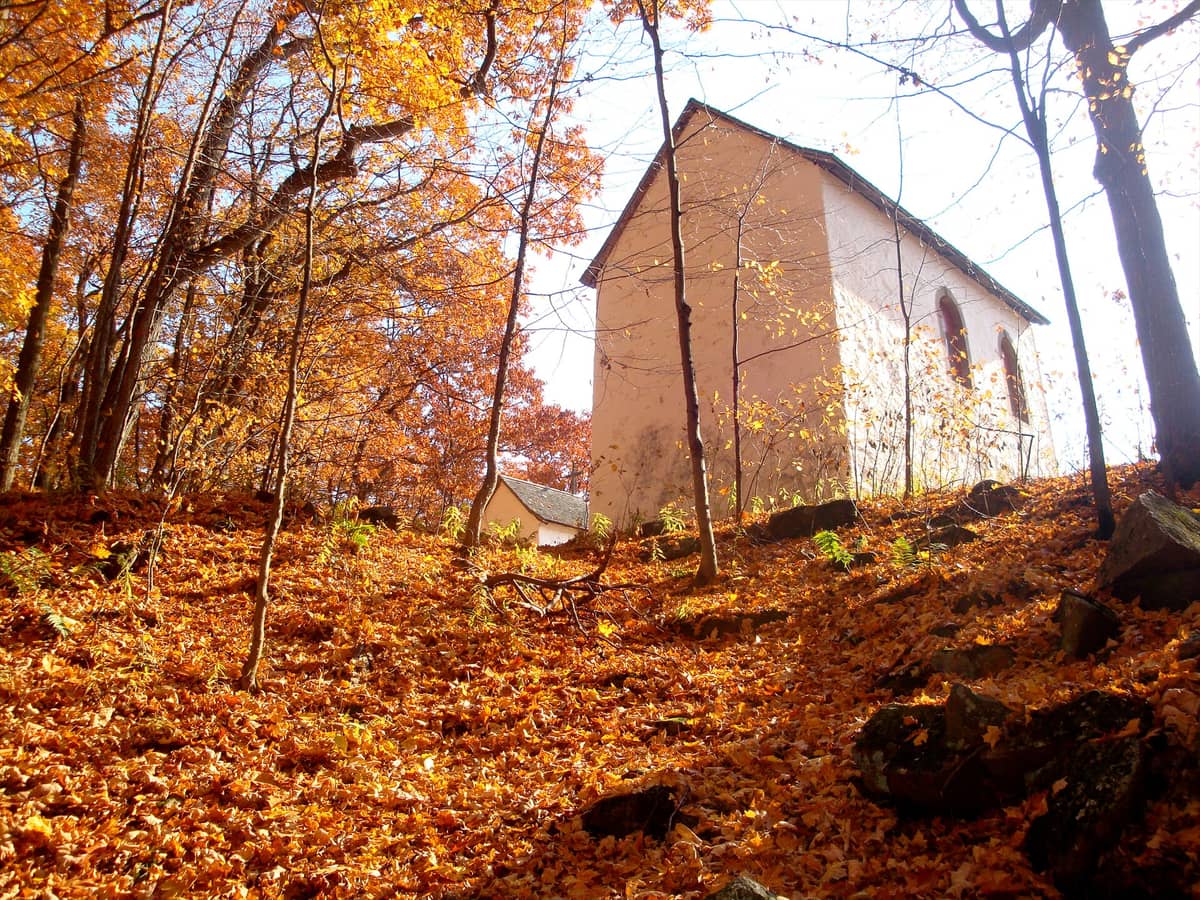
The most historically striking element in the park is the Calvaire d'Oka, a series of outdoor chapels built by the Sulpician order in the early 18th century along a hillside path. These stone oratories, largely intact, give the forest trail an unexpected meditative quality. The light filters differently on that hillside — darker and cooler than the open beach — and the stone structures have a rough, aged texture that photographs well in overcast conditions. This is one of the few places near Montreal where outdoor religious heritage and natural landscape occupy the same trail.
Fall is arguably the strongest season for trail use. The oak and maple forest turns in mid-to-late October, and unlike the peak foliage crowds at Mont-Tremblant, Oka sees lighter autumn foot traffic at trail level while still delivering genuine colour. Morning light on the wetland edges in October has a particular clarity that summer haze erases. Bring layers: temperature swings between 7:00 a.m. and 1:00 p.m. in October can span 10 degrees.
Water Activities Beyond Swimming
Kayak and canoe rentals are available within the park, and paddling on Lac des Deux Montagnes is a genuinely different experience from the beach scene. Early morning on the lake — before the recreational boats appear and when the water is glassy — offers the kind of quiet that's hard to find within an hour of a city of nearly two million people. The marsh edges accessible by paddle are worth seeking out specifically: herons stand motionless in the reeds, and the sound insulation of the cattails muffles the distant noise of the park entirely.
Cycling is also well-supported at Oka, both within the park and as a way to arrive. The park connects to regional cycling infrastructure, and for those interested in extended rides, it ties into the broader context of cycling routes around Montreal. Bike rentals are available inside the park for those who arrive by shuttle or car.
Getting There: Your Realistic Options
Driving is the most flexible option. From central Montreal, take Highway 40 West to Highway 640 West toward Oka. The beach entrance off Highway 640 operates from May 1 through October 31. Year-round, the main park entrance is on Route 344 at 2020 chemin d'Oka. Journey time from downtown is typically 55 to 70 minutes outside of peak traffic, but plan for longer on summer Friday afternoons when westbound traffic on the 40 can extend the trip significantly.
For those without a car, Navette Nature offers a shuttle service from Montreal directly to the park. This is the most practical car-free option; verify current schedules and booking requirements on the Navette Nature website before planning, as seasonal service details change. A third option involves taking commuter rail or bus to the area and connecting via the Oka–Hudson ferry across the Ottawa River, after which the park entrance is roughly 2.8 km along Notre-Dame Street. This route works but requires coordination and more time.
⚠️ What to skip
Parking fills quickly on summer weekends. Arrive before 9:30 a.m. or be prepared to wait in a queue at the entrance. The park does not always pre-sell beach day passes online for same-day access; check the Sépaq website for current reservation options before your visit.
Accessibility, Families, and Practical Logistics
Oka makes a genuine effort on accessibility. The park provides a Hippocampe all-terrain recreational wheelchair free of charge, which allows visitors with reduced mobility to access the beach and some trail sections. Companions of disabled visitors receive free admission under Sépaq's Companion Leisure Card policy; the visitor with a disability pays the regular entry fee. The L'Érablière and La Sauvagine trails accommodate large-wheel strollers. These are concrete provisions, not token gestures.
For families specifically, Oka works well as a full-day outing. Children aged 17 and under enter free under Sépaq's family offer, which takes the edge off admission costs for larger families. Picnic areas are adequate and the beach has facilities including washrooms. If you're planning a trip with children and want to compare options, the Montreal with kids guide covers a range of family-appropriate outings across the region.
The park is open year-round, with operating hours generally listed as 8:00 a.m. to 8:00 p.m. Winter access is limited to Route 344, and while the beach and water activities close with the season, the trails remain usable for snowshoeing and cross-country skiing. Winter visits are quiet to the point of solitude — a completely different experience from the summer crowds.
Honest Assessment: Limitations Worth Knowing
Oka is not a wilderness park. The infrastructure is well-developed, the beach area at peak times has an organized recreation-facility feel, and the proximity to the highway means ambient noise is present in parts of the park. Visitors looking for true backcountry solitude will not find it here. The trails are rewarding but modest in elevation and challenge — experienced hikers seeking technical terrain should look further afield.
The park's distance from central Montreal means it doesn't combine naturally with a city-day itinerary. It functions best as a standalone day trip rather than a half-day add-on. If you're looking for nature closer to the urban core, Mount Royal Park or the Lachine Canal offer accessible outdoor time without requiring transit planning or a car.
Weather matters more here than at an indoor attraction. A cool, overcast day in July is still workable for hiking, but if the main reason for the trip is beach swimming, a poor forecast makes the 60 km drive feel like a longer commitment. Check conditions before committing, and have a backup plan.
Insider Tips
- Book your day pass or campsite reservation on the Sépaq website well in advance for summer weekends — the beach capacity is managed and the park can reach quota before noon on busy days.
- The marsh trail section in the early morning is far richer for wildlife than the same walk at midday. Bring binoculars if you have them; the wetland edges host a variety of wading birds that retreat to the reeds by late morning.
- The Oka–Hudson ferry crossing is worth doing once for the experience of arriving by water. It's a pleasant ride across the Ottawa River and sets a different tone for the day compared to arriving through the parking lot entrance.
- If you're visiting in fall specifically for foliage, aim for the second or third week of October. The oak forest holds colour later than maple-dominant areas, meaning Oka's peak often comes after the region's main foliage rush has passed and crowds have thinned.
- The Hippocampe all-terrain wheelchair must be reserved in advance. Contact the park directly before your visit if you need adapted equipment — walk-in availability is not guaranteed.
Who Is Oka National Park For?
- Families with young children who want a full beach-and-nature day outside the city
- Cyclists looking to combine a regional ride with a destination park
- Fall foliage seekers who want to avoid the Mont-Tremblant crowds
- Paddlers and canoeists who want flatwater access to a managed lake with wetland edges
- Winter visitors interested in snowshoeing in a quiet, well-maintained park setting
Nearby Attractions
Combine your visit with:
- Eastern Townships
The Eastern Townships (Cantons-de-l'Est) stretch across the rolling hills south of Montreal, reaching the U.S. border. With lavender fields, gorge walks, vineyards, and covered bridges, this is one of the most rewarding escapes from the city, especially in autumn when the hills turn amber and rust.
- Îles-de-Boucherville National Park
Parc national des Îles-de-Boucherville is a five-island nature reserve in the St. Lawrence River, reachable from Montreal in under an hour. Cyclists, kayakers, birdwatchers, and families find quiet trails, shoreline views, and genuine wilderness just minutes from the city's eastern suburbs.
- Maison Saint-Gabriel
Maison Saint-Gabriel is one of the oldest intact structures on the Island of Montreal. Originally a working farm connected to Marguerite Bourgeoys and the Filles du roi, it is now a museum and National Historic Site where guided tours walk visitors through three centuries of Quebec's colonial and religious history.
- Marché Maisonneuve
Marché Maisonneuve is one of Montreal's official public markets and one of its least crowded. Free to enter, open seven days a week, and genuinely rooted in its neighborhood, it rewards travelers who venture beyond the tourist circuit.