Niguliste Museum: Tallinn's Gothic Church of Medieval Masterpieces
Housed in a restored 13th-century Gothic church in the heart of Tallinn's Old Town, Niguliste Museum holds Estonia's finest collection of medieval religious art. From a haunting fragment of the Dance of Death to ornate silver altarpieces, the building and its contents together tell the story of a city that survived both war and occupation.
Quick Facts
- Location
- Niguliste tn 3, Tallinn Old Town (Kesklinna linnaosa)
- Getting There
- Roughly 3-minute walk from Town Hall Square via Kullassepa and Niguliste streets
- Time Needed
- About 1 hour for the permanent collection; allow extra time for temporary exhibitions or an organ concert
- Cost
- €15 adult / €10 reduced
- Best for
- Medieval history, Gothic architecture, religious art, photography, quiet cultural immersion
- Official website
- nigulistemuuseum.ekm.ee/en
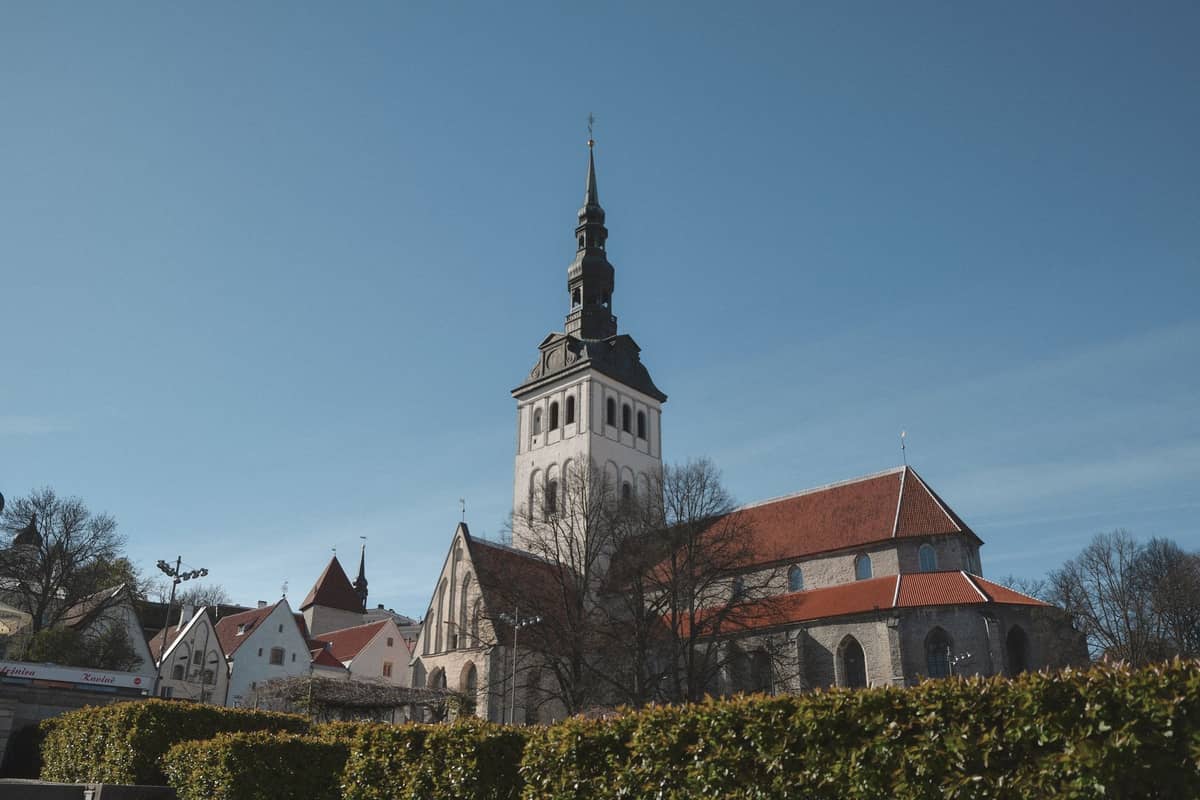
A Church That Outlived Its Congregation
Niguliste Museum occupies St. Nicholas' Church, a Gothic structure whose origins date to the 13th century. For most of its existence it served the German merchant community of medieval Tallinn, accumulating an extraordinary collection of altarpieces, silverware, and devotional objects over several hundred years. Then, on the night of 9 March 1944, Soviet bombing struck the city and the church burned. Restoration work stretched across decades, and in 1984 the building reopened not as a place of worship but as a museum of medieval and early modern ecclesiastical art, administered today under the umbrella of the Art Museum of Estonia.
That long arc of destruction and careful reconstruction gives the museum a particular atmosphere you do not find in purpose-built galleries. The stone walls are thick, the light inside is cool even on a bright summer afternoon, and the proportions of the nave remind you constantly that this was designed to inspire awe, not simply to display objects.
ℹ️ Good to know
Opening hours change by season. May to September: open daily 10:00–18:00. October to April: open Tuesday to Sunday 10:00–18:00 (closed Mondays). Special shortened hours apply on 22 June and 23 December. Check the official website for public holiday closures before you go.
What You Actually See Inside
The permanent collection is organized around the church's original interior spaces. Walking in from Niguliste street, your eyes adjust slowly from the bright cobblestones outside to the dimmer nave. The first thing most visitors notice is the scale: the ribbed vaulting overhead, the pale stone, and the way the silence feels physical rather than just quiet.
The most celebrated single work is Bernt Notke's Dance of Death (Danse Macabre), painted around 1500. Only a fragment survives, roughly three meters of what was once a much longer frieze, but even this portion carries considerable force. Skeletal figures lead people of every social rank toward death, from the Pope and the Emperor down to merchants and peasants. It is one of the few surviving examples of this once-widespread medieval genre in Northern Europe, and seeing it in the building for which it was made adds a layer of context no gallery reproduction can replicate.
Beyond the Dance of Death, the collection includes carved wooden altarpieces, gilded retables, and an impressive accumulation of guild silverware. The Altar of the Brotherhood of Blackheads deserves particular attention: richly detailed and still vivid in its coloring, it represents the kind of civic piety that defined merchant-class Tallinn in the late medieval period. Those interested in the Blackheads' broader history can explore more at the nearby House of the Blackheads on Pikk street.
The collection sits well alongside Tallinn's other medieval religious sites. Visitors building a day around the city's ecclesiastical heritage often combine Niguliste with the Holy Spirit Church and Tallinn Cathedral on Toompea hill, each of which offers a different angle on the same centuries of history.
Tickets & tours
Hand-picked options from our booking partner. Prices are indicative; availability and final rates are confirmed when you complete your booking.
Self-guided Discovery Walk of Tallinn city contrasts beyond the medieval walls
From 26 €Instant confirmationFree cancellationTallinn's art and culture tour with a local
From 62 €Instant confirmationFree cancellationHistorical walking tour of Tallinn with a local
From 599 €Instant confirmationFree cancellationIntroductory walking tour of Tallinn with a local guide
From 109 €Instant confirmationFree cancellation
The Building Itself as an Exhibit
It would be a mistake to treat the architecture as mere backdrop. St. Nicholas' Church was founded by German merchants, probably in the late 1200s, and expanded repeatedly through the 14th and 15th centuries. The result is a layered Gothic structure with a wide nave designed for large congregations and side chapels added as various guilds and fraternities competed to demonstrate their wealth and piety.
The 1944 bombing destroyed the roof and gutted the interior, but the exterior walls survived. Postwar restoration was meticulous if slow, with conservators working to preserve surviving original elements while carefully reconstructing what had been lost. The organ is still used for concerts today, giving the space an acoustic life that purely visual museums lack.
The church sits on a gentle slope at the edge of the Lower Town, close to the medieval city wall. Combine a visit with a walk along the Tallinn city wall to understand how St. Nicholas' once sat within the fortified urban fabric of a prosperous Hanseatic trading city.
Organ Concerts and the Sound of the Space
One of the most distinctive features of Niguliste Museum is its regular program of organ concerts, typically held on weekends. The acoustics of the Gothic nave were designed to amplify and sustain sound, and hearing the organ in this space is a markedly different experience from the usual museum visit. Concerts are usually short, and they are ticketed separately from general admission.
If you are visiting on a Saturday or Sunday, it is worth checking the museum's current concert schedule when you arrive or booking in advance. The concerts tend to draw a quieter, more attentive crowd, and the combination of candlelit-effect lighting, medieval surroundings, and live music makes for an unusually atmospheric afternoon.
💡 Local tip
Arrive at least 10 minutes before a concert starts. Seating is limited and latecomers may have to stand at the back or miss entry entirely. The museum shop near the entrance sometimes has concert schedules printed out when the website is not up to date.
How the Experience Changes Through the Day
Niguliste Museum is quieter than most Old Town attractions, but timing still matters. Mornings, especially on weekdays, are the calmest. Between roughly 10:00 and noon, you may have sections of the nave almost to yourself, which makes a real difference when standing in front of the Dance of Death fragment or studying the fine carving on an altarpiece. The quality of contemplation changes when you are sharing a small chapel with a tour group.
Cruise ship days, typically between May and September, bring an influx of group tours into the Old Town between 11:00 and 14:00. Even then, Niguliste receives far fewer visitors than the Tallinn Town Hall Square or the Alexander Nevsky Cathedral on Toompea. Arriving before 11:00 or after 15:00 on those days is enough to avoid the largest groups.
The interior lighting is relatively stable throughout the day because the windows are small and the nave relies heavily on artificial light. Rain or cloud outside makes almost no difference to the experience indoors, which makes this an excellent option on a grey or wet Tallinn afternoon when outdoor attractions lose their appeal.
Practical Details for Your Visit
The museum is at Niguliste tn 3, within easy walking distance of the Old Town's main squares. From Raekoja plats (Town Hall Square), follow Kullassepa street south and then turn onto Niguliste street; the church tower is visible almost immediately. The walk takes about three minutes at a relaxed pace.
There is no dedicated parking adjacent to the church. Visitors arriving by public transport or on foot from elsewhere in the Old Town will find the location straightforward; those coming from the Kalamaja district or other areas outside the medieval core can consult the getting around Tallinn guide for tram and bus options into the Old Town.
The museum is listed under the Museum for All accessibility program, which indicates that accessibility information is available for the venue. Specific details about wheelchair access, lifts, or step-free routes are not comprehensively documented in publicly available sources, so visitors with mobility requirements should contact the museum directly before their visit.
If you are planning several museums in a single trip, the Tallinn Card covers entry to a broad range of city attractions and may reduce per-site costs depending on your itinerary. It is worth calculating whether the card makes financial sense for your specific plans before purchasing.
⚠️ What to skip
Ticket prices quoted here (approx. €15 adult / €10 reduced) come from a third-party travel guide and could not be verified against the museum's official site at time of writing. Confirm current prices at nigulistemuuseum.ekm.ee/en/ or at the door before budgeting.
Photography Inside the Museum
Photography is generally permitted for personal use in the permanent collection, but flash is not. The low ambient light means a steady hand or a surface to brace against is helpful; the stone pews and window ledges in the nave work well for this. The Dance of Death fragment is typically lit well enough for handheld shots at a slow shutter speed, though the reflective glass covering it can catch overhead lights at certain angles. Positioning yourself slightly off-center reduces that problem.
The exterior of the church, with its Gothic tower and the quiet cobbled street running alongside, photographs well in the soft morning light. The narrow lane means wide-angle shots are the most practical option; telephoto compression from a slightly greater distance on Rüütli street can isolate the tower against the sky.
Is Niguliste Museum Worth Your Time?
Straightforwardly, yes, for anyone with an interest in medieval history, religious art, or Gothic architecture. The collection is not enormous, and a focused visitor can see the main exhibits in about an hour. But the combination of an authentic Gothic interior, genuinely significant artworks including the Notke Dance of Death, and the relative calm compared to other Old Town sites makes it one of the more rewarding cultural stops in the city.
Visitors who prefer outdoor experiences, contemporary art, or fast-paced sightseeing will find the pace and subject matter less engaging. For a broader picture of what Tallinn's museums offer across different styles and periods, the best museums in Tallinn guide provides a useful overview before you commit to a full itinerary.
The museum is not a place for young children unless they have a particular tolerance for quiet indoor spaces and medieval religious iconography. Families with younger kids will generally find more engagement at hands-on venues elsewhere in the city.
Insider Tips
- The organ concert schedule is updated seasonally and not always reflected immediately on the English-language website. Ask at the ticket desk when you arrive, or check the Estonian-language events section of the official site, which tends to be more current.
- The side chapels off the main nave are easy to overlook if you follow the main crowd flow. Slow down and look into each one: some of the most detailed silverwork and smaller altarpieces are displayed there with less competition for viewing space.
- The church tower offers a viewing platform. It is not always open and operates on a separate schedule from the main museum, but if access is available when you visit, the elevated view over the Lower Town rooftops toward the sea is worth the climb.
- Bring a layer regardless of the season. The interior stays cool year-round, and even on a warm summer day the temperature inside drops noticeably compared to the street. Stone walls and high vaulting retain cold effectively.
- If you are visiting multiple Old Town churches in a single day, save Niguliste for the afternoon. The quality of the museum experience holds up later in the day when tour groups have largely dispersed, and the cooler interior is a welcome contrast to walking the sun-warmed cobblestones.
Who Is Niguliste Museum For?
- Travelers with an interest in medieval Northern European history and art
- Architecture enthusiasts who want to see a restored Gothic church used as a functioning cultural space
- Visitors seeking a quieter, more contemplative alternative to the crowded Town Hall Square area
- Music lovers who can time their visit to coincide with a weekend organ concert
- Photographers looking for dramatic interior light and authentic medieval surroundings
Nearby Attractions
Other things to see while in Tallinn Old Town:
- Alexander Nevsky Cathedral
Rising above Toompea Hill with five gilded onion domes and a facade that dominates every Old Town panorama, Alexander Nevsky Cathedral is Tallinn's most visually assertive building. Built between 1895 and 1900, it remains an active Orthodox place of worship and a window into the city's layered Russian and Estonian history.
- Danish King's Garden
Tucked into the western slope of Toompea hill, the Danish King's Garden is a small, free public park woven into Tallinn's medieval fortifications. Open around the clock and steps from the Old Town's main streets, it offers a rare moment of calm alongside ancient towers and stone walls with an 800-year-old backstory.
- Fat Margaret
Fat Margaret (Paks Margareeta) is a squat, round cannon tower that has guarded the northern gate of Tallinn's Old Town since the early 16th century. Today it houses the Estonian Maritime Museum, with exhibits on seafaring history and a rooftop terrace overlooking the harbour. It is one of the few surviving medieval structures in Tallinn where you can explore both the architecture and a well-curated permanent collection under the same roof.
- Freedom Square
Freedom Square sits at the southern edge of Tallinn Old Town, anchoring the city's civic identity with the striking War of Independence Victory Column. Open around the clock and free to enter, it serves as a gathering point for national celebrations, winter markets, and everyday Tallinn life.