Night Safari Singapore: What to Expect After Dark at the World's First Nocturnal Zoo
Opened in 1994, Singapore's Night Safari spans 35 hectares of secondary rainforest and houses over 900 animals from roughly 100 species. Unlike any daytime zoo, it operates exclusively after sundown, using specially calibrated lighting to let animals behave naturally while visitors watch. Here is everything you need to decide if it belongs on your Singapore itinerary.
Quick Facts
- Location
- 80 Mandai Lake Road, Singapore 729826
- Getting There
- MRT to Khatib or Yishun, then Bus 138 or 926
- Time Needed
- 2.5 to 4 hours
- Cost
- Adult S$55 / Child (3-12) S$37 / Senior (60+) S$37
- Best for
- Families, wildlife lovers, unique evening experiences
- Official website
- www.mandai.com/en/night-safari.html
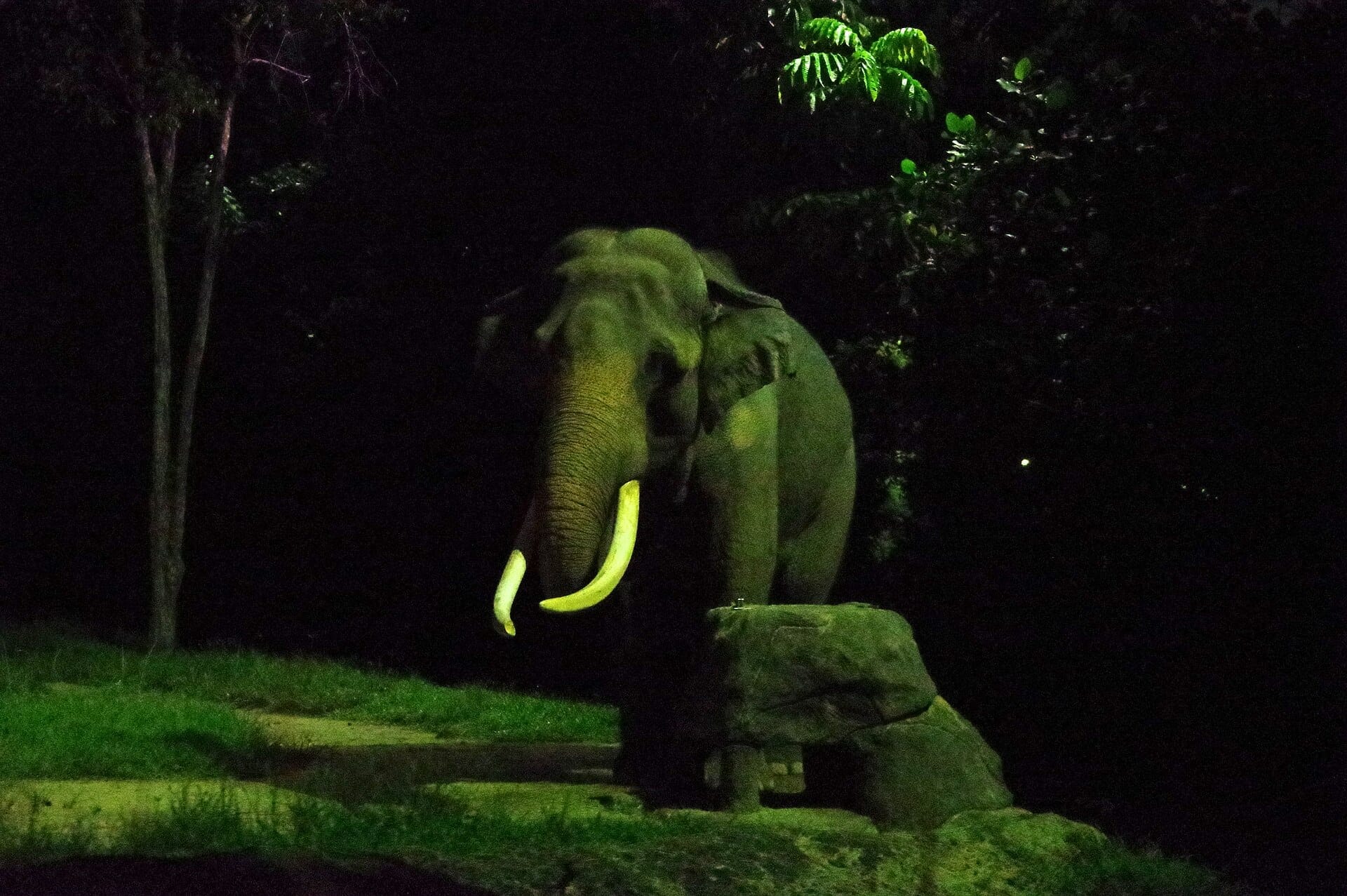
What Makes the Night Safari Different
When the Night Safari opened on 3 May 1994, officially inaugurated by Prime Minister Goh Chok Tong on 26 May that same year, it was the first park in the world built entirely around nocturnal wildlife viewing. The concept was straightforward but radical: instead of forcing nocturnal animals to perform under harsh daylight, let humans adjust their schedule instead. Nearly three decades later, it remains one of the few attractions in Southeast Asia that genuinely cannot be replicated elsewhere.
The park sits within the Mandai Wildlife Reserve alongside the Singapore Zoo and River Wonders, covering 35 hectares of secondary tropical rainforest on Singapore's northern edge. The lighting throughout is calibrated to mimic moonlight at around 3 to 5 lux in viewing areas, low enough that animals ignore it almost entirely, yet sufficient for human eyes to adjust. Do not expect vivid, high-contrast photos on a smartphone. The low light is a feature, not a flaw.
ℹ️ Good to know
Opening hours: 7:15 PM to 12:00 AM (last entry 11:15 PM). Last tram departs at 11:30 PM. The park does not open during the day and there are no seasonal closures noted, but always verify on the official Mandai website before visiting, as prices and hours can change.
Arriving and Getting Oriented
The fastest public transit route is the MRT to Khatib station (North-South Line), followed by Bus 138 or the Mandai Khatib Shuttle directly to the Mandai Wildlife Reserve entrance. From Yishun MRT, Bus 138 also works. Journey time from the city centre is roughly 45 minutes by transit. Taxis and ride-hail apps like Grab are quicker at around 25 to 35 minutes from Orchard Road, but expect a queue for return trips after 10 PM.
Ticket counters open at 6:30 PM and the gates open at 7:15 PM. If you arrive at opening time, you will find a short queue for the tram. By 8:30 PM, the tram queue can stretch to 40 minutes or more. The smarter strategy: skip the tram first, walk one of the four trails while others queue, then join the tram line closer to 9:30 or 10 PM when crowds thin. The park's atmosphere actually improves later in the evening as the initial rush moves through.
💡 Local tip
Book tickets online in advance at mandai.com to skip the ticket counter entirely. During school holidays and long weekends, the park fills quickly and online-only slots sometimes sell out by mid-afternoon.
Tickets & tours
Hand-picked options from our booking partner. Prices are indicative; availability and final rates are confirmed when you complete your booking.
Singapore Night Safari park entrance ticket including tram ride
From 34 €Instant confirmationBig Bus panoramic night tour of Singapore
From 37 €Instant confirmationFree cancellationTickets for the Wings of Time Night Show
From 12 €Instant confirmationAdventure Cove Waterpark™ e-ticket
From 27 €Instant confirmation
The Tram Ride: What You Actually See
The guided tram journey runs for approximately 40 minutes and covers the majority of the park's seven geographical zones, each themed around a different part of the nocturnal world: the Himalayan Foothills, the Indian Subcontinent, Equatorial Africa, the Indo-Malayan Region, the Nepalese River Valley, the Burma Hills, and the East Indies. Commentary is available in English, Mandarin, Japanese, and Korean.
Animals you are likely to spot from the tram include fishing cats, spotted hyenas, Asian elephants, tapirs, babirusa, Malayan pangolins (one of the few facilities where you might see them), and multiple deer species grazing along the verge. Predators like lions and spotted hyenas are separated from prey animals by concealed ditches rather than visible fences, which adds to the open-landscape feel. Some encounters are brief, a silhouette disappearing into the undergrowth. Others are long and close, particularly around waterholes.
The tram is wheelchair accessible and includes audio commentary for visitors with visual impairments. Sensory-friendly maps are available at the entrance for visitors who find the nighttime environment or crowd noise difficult to manage.
Walking Trails: The Part Most Visitors Underuse
Four walking trails branch off the tram route and collectively offer the best close-range encounters in the park. The Leopard Trail (about 1 km) is the most popular and passes the fishing cat enclosure and the giant flying squirrel habitat. The Forest Giants Trail highlights larger mammals. The East Lodge Trail and the Wallaby Trail are shorter loops that most visitors skip entirely, which is precisely why they feel calm even on busy nights.
Walking the trails after 9 PM, once the initial tram rush has moved on, is a genuinely different experience. The ambient sound of the rainforest, insects, distant hornbills, the smell of damp earth and tropical vegetation, makes it feel less like a zoo and more like a guided walk through secondary forest. Wear closed-toe shoes. The paths are paved but uneven in places, and there are short stretches under dense canopy where it is nearly pitch dark between lamp posts.
⚠️ What to skip
Flash photography is strictly prohibited throughout the Night Safari. It disorients nocturnal animals and will get you asked to leave. Use night mode on your phone without flash, or simply focus on the experience rather than the photo.
Shows and Presentations
The Creatures of the Night show runs multiple times each evening at the amphitheatre near the main entrance. It features a rotating cast of animals including binturongs, civets, and other nocturnal species in short demonstrations focused on natural behaviors. The seating fills fast. Arrive at least 15 minutes before showtime to get a reasonable position. Check the show schedule at the entrance gate when you arrive, as showtimes vary.
There is also a fire show near the Entrance Plaza on select evenings, drawing heavily on the Tribal area theming near the park entrance. It runs for roughly 15 minutes and tends to attract large standing crowds. If you have young children, this makes a useful waiting activity before or after the tram.
Planning Around Singapore's Attractions
The Night Safari pairs well with a full Mandai day if you plan your timing carefully. The Singapore Zoo and River Wonders are on the same reserve, so you could visit one of them in the afternoon and transition to the Night Safari after a break for dinner at the Mandai reserve's dining options. This avoids a second return trip to the north of the island.
If you are building a broader wildlife and nature itinerary, the MacRitchie Treetop Walk and Singapore Botanic Gardens offer contrasting daytime natural experiences elsewhere in the city. For a practical overview of how to structure your days, the Singapore itinerary guide covers multi-day planning in detail.
Parents travelling with younger children should also consider the broader context of Singapore with kids, which ranks the Night Safari among the top evening activities for families with children aged 4 and above.
Honest Assessment: Is It Worth It?
At S$55 per adult, the Night Safari is one of Singapore's pricier single attractions. Whether it justifies that depends heavily on what you want from it. If you approach it as a leisurely two to three hour evening walk through a genuinely atmospheric forest setting with occasional animal encounters, it delivers consistently. If you expect non-stop wildlife action or the ability to photograph everything sharply, you will likely leave frustrated.
Visitors who focus exclusively on the tram and skip the walking trails often feel the experience was thin for the price. The trails are where the park earns its reputation. Budget at least 3.5 hours to do it properly. Heavy rain, which is common in Singapore year-round, can dampen the experience considerably since the walking trails become slippery and many animals take shelter. The tram still runs in light rain, but full tropical downpours disrupt operations. Checking the weather forecast before departure is genuinely useful here.
Solo travelers and couples without strong wildlife interests may find the experience is pleasant but not transformative. Families with children aged 5 to 12, wildlife photographers using appropriate low-light equipment, and visitors who have already covered Singapore's urban highlights will get the most out of it.
Insider Tips
- Arrive right at 7:15 PM opening, walk the Leopard Trail first while tram queues build, then join the tram line around 9 PM when wait times drop significantly.
- Bring a light rain jacket. Singapore's evening rain showers can appear with almost no warning, and the walking trails have limited shelter. The tram provides some cover but not on the sides.
- The restaurant near the entrance (Ulu Ulu Safari Restaurant) is expensive and mediocre. Eat before you arrive, either at a nearby hawker centre or at one of the dining options within the broader Mandai reserve complex.
- For the tram, sit on the left side of the carriage for slightly better sightlines to the African savanna section and the waterholes where animals congregate.
- If you are a keen wildlife photographer, a compact mirrorless camera with a fast prime lens (f/1.8 or wider) and ISO pushed to 3200-6400 will yield far better results than any smartphone. Tripods are not permitted, but image-stabilized bodies help significantly.
Who Is Night Safari For?
- Families with children aged 5 and above looking for a memorable evening activity
- Wildlife enthusiasts who want to observe nocturnal animals in a naturalistic setting
- Visitors who have already done Singapore's main daytime sights and want something genuinely different
- Low-light photographers with appropriate gear who can work within the no-flash rules
- Anyone combining a full day at Mandai Wildlife Reserve with an evening extension
Nearby Attractions
Combine your visit with:
- Boat Quay
Boat Quay stretches along the south bank of the Singapore River, its two- and three-storey shophouses packed with restaurants, bars, and cafes. Once the beating commercial heart of colonial Singapore, the strip today offers one of the city's most atmospheric settings for an evening meal or a morning walk with history underfoot.
- Clarke Quay
Clarke Quay lines the Singapore River with five blocks of conserved warehouses and shophouses, now packed with restaurants, rooftop bars, and clubs. Free to enter and active from dusk until well past midnight, it rewards visitors who arrive after dark when the neon reflects off the water and the crowds find their rhythm.
- Fort Canning Park
Standing 48 metres above the city centre, Fort Canning Park packs more history per square metre than almost anywhere else in Singapore. From ancient Malay royalty to British colonial command, the hill has shaped this island for over seven centuries — and today offers a genuinely peaceful escape just minutes from Orchard Road.
- Henderson Waves
Henderson Waves is Singapore's tallest pedestrian bridge at 36 metres above Henderson Road, connecting Mount Faber Park and Telok Blangah Hill Park along the Southern Ridges trail. Free to access at any hour, the 274-metre-long structure is equally rewarding at dawn, midday, and after dark.