New-York Historical Society: Four Centuries of American History on Central Park West
Founded in 1804, the New-York Historical Society is New York City's oldest museum, located on the Upper West Side across from Central Park. Its permanent and rotating collections span over 400 years of American history, from colonial-era documents to Tiffany lamps, making it a serious alternative to the blockbuster institutions nearby.
Quick Facts
- Location
- 170 Central Park West at Richard Gilder Way (77th Street), Upper West Side, Manhattan
- Getting There
- Subway B/C to 81st St–Museum of Natural History, then 4-minute walk south along Central Park West
- Time Needed
- 1.5 to 2.5 hours for the main galleries; longer if using the research library
- Cost
- Adults $24, Seniors/Educators/Military $19, Students $13, Kids 5–13 $6, Under 5 free. Fridays 5–8pm: pay-as-you-wish
- Best for
- History enthusiasts, families with older children, anyone looking for a quieter alternative to the Met or AMNH
- Official website
- www.nyhistory.org
What the New-York Historical Society Actually Is
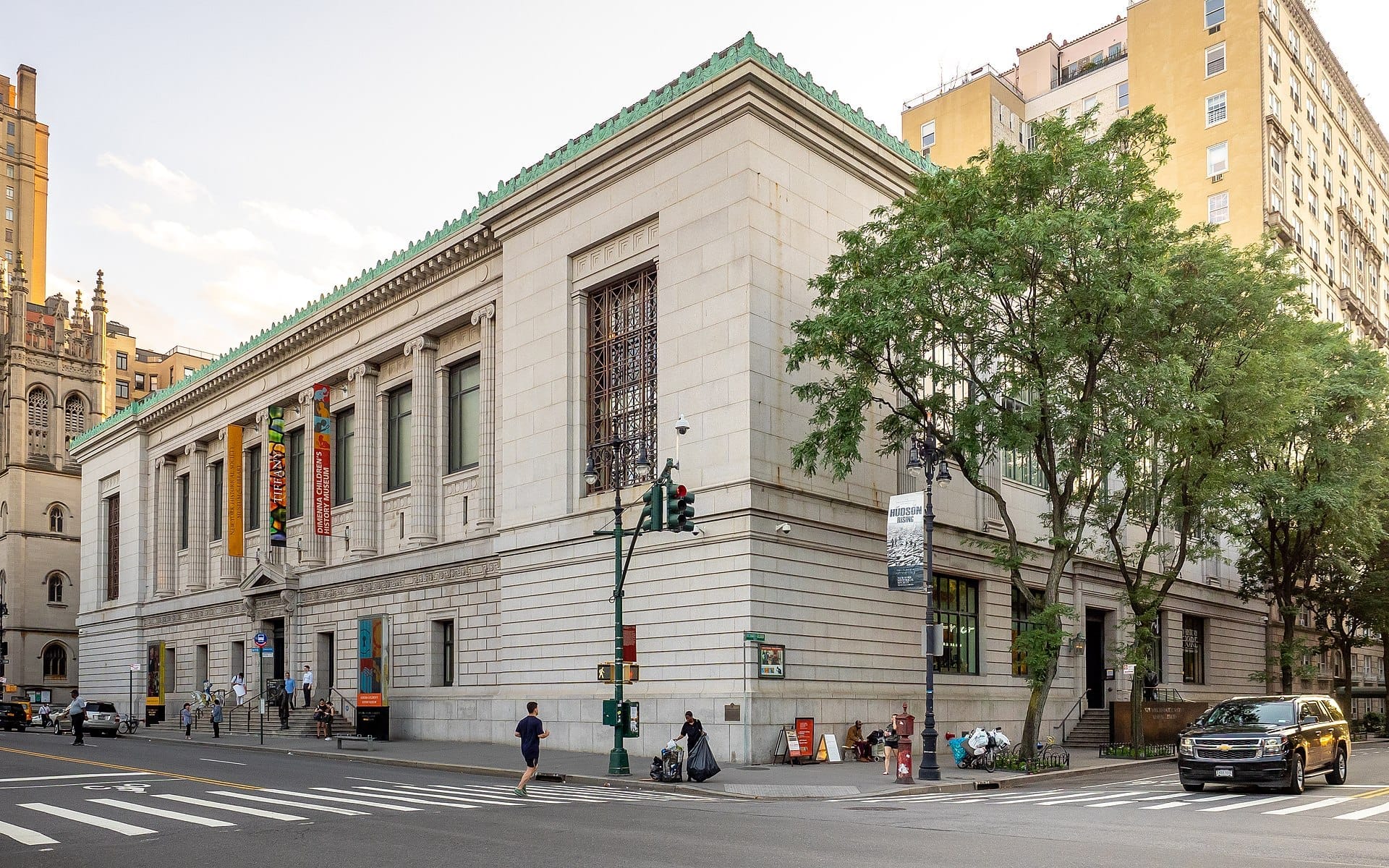
The New-York Historical Society, often styled simply as The New York Historical, is not the kind of institution that shouts for your attention from a billboard. It sits on Central Park West at Richard Gilder Way (77th Street), a handsome Beaux-Arts building that most pedestrians pass on their way to the American Museum of Natural History a block north. That tendency to overlook it is, frankly, the museum's best-kept quality. Inside, one of the country's most significant collections of American history, art, and material culture awaits with short queues and room to breathe.
Founded in 1804, the New-York Historical Society holds the distinction of being New York City's first museum. That is not a marketing claim. It predates the Metropolitan Museum of Art by 66 years and the American Museum of Natural History by 65. The collection reflects that depth: original Audubon waterbirds, Revolutionary War artifacts, documents tracing the arc of American democracy, and one of the largest collections of Tiffany lamps in existence. The scope is genuinely surprising for visitors expecting a local history society with a few dusty maps.
💡 Local tip
Fridays from 5pm to 8pm, admission is pay-as-you-wish. This is the single best value window in the building's weekly schedule, and the galleries are noticeably less crowded than weekend afternoons.
The Building and Its Setting
The current structure was completed in stages between 1908 and 1938, designed by the architecture firm York and Sawyer in a dignified Neoclassical style. The facade of Indiana limestone presents a restrained grandeur that fits comfortably on a block already anchored by some of Manhattan's finest prewar apartment buildings. The entrance on Central Park West is framed by columns and a broad stairway, but the scale stays human rather than monumental.
The position directly across from Central Park is a practical advantage: the green expanse across the street means the museum never feels hemmed in.
Tickets & tours
Hand-picked options from our booking partner. Prices are indicative; availability and final rates are confirmed when you complete your booking.
Spirit of New York Dinner Cruise
From 161 €Instant confirmationFree cancellationNew York City Highlights bike tour
From 70 €Instant confirmationFree cancellationNew York Statue of Liberty and Ellis Island tour by ferry
From 55 €Instant confirmationNew York 9-11 Memorial Tickets and In-App Audio Tour
From 60 €Instant confirmation
What You Will Find Inside
The permanent collection covers American history from the colonial period through the twentieth century, but its strength is in a handful of specific areas that reward close attention. The Audubon collection is perhaps the most visually arresting: John James Audubon's original watercolor studies for 'The Birds of America' are held here, and when they are on display, they stop visitors in their tracks. The brushwork is precise and the compositions unexpectedly dramatic for what were essentially scientific illustrations.
The Tiffany lamp collection, assembled from the estate of Egon Neustadt and donated to the museum in the 1980s, is one of the most comprehensive anywhere. Dozens of lamps are displayed in a darkened gallery that allows the colored glass to glow with the kind of intensity that photographs never quite capture. The dragonfly, wisteria, and peony designs are represented, and the variety of scales, from small desk lamps to large hanging fixtures, shows the full range of the Tiffany Studios' output.
Beyond these signature holdings, the galleries trace New York City's own development through maps, portraits, furniture, and everyday objects. There are items related to slavery in New York, the history of immigration, and the growth of American civic institutions. Rotating exhibitions tend toward serious historical topics rather than crowd-pleasing blockbusters, which suits the institution's curatorial identity. Check the current exhibitions page before visiting, as programming changes several times a year.
ℹ️ Good to know
The museum is closed on Mondays. Hours Tuesday through Thursday and Saturday through Sunday are 11am to 5pm. On Fridays the museum stays open until 8 pm. Always verify current hours and exhibition schedules at nyhistory.org before your visit.
How the Experience Changes by Time of Day
Weekend mornings between 11am and 1pm see the steadiest flow of visitors, drawn by the combination of proximity to the park and family schedules. The galleries are not crowded by New York standards, but you will share the Tiffany room with other people. Midweek afternoons are the quietest windows in the building: on a Tuesday or Wednesday around 2pm, it is possible to stand in front of Audubon watercolors with no one else nearby, which is a genuinely rare quality for a Manhattan institution.
Friday evenings after 5pm occupy a different character. The pay-as-you-wish policy draws a younger, more diverse crowd, including locals who might not otherwise pay full admission. The atmosphere shifts slightly, feeling more like a neighborhood institution and less like a tourist destination. Background noise increases, but the galleries are still manageable, and the sense of a living, used museum is refreshing.
Getting There and Getting Around
The most direct subway option is the B or C train to 81st Street–Museum of Natural History. From the station exit, walk south along Central Park West for about four minutes and the museum entrance is on your right. The American Museum of Natural History is visible from the museum steps, making orientation straightforward. Alternatively, the American Museum of Natural History is visible from the museum steps, making orientation straightforward. Alternatively, the 1 train stops at 79th Street on Broadway, roughly a five-minute walk west across 77th Street.
For those combining the visit with a broader Upper West Side day, the neighborhood offers one of Manhattan's most walkable corridors. The Upper West Side runs from Columbus Circle at 59th Street north through Morningside Heights, with bookshops, food markets, and cafes dense along Broadway and Amsterdam Avenue.
Accessibility: the museum has elevator access to its floors, but visitors with specific mobility requirements or needs related to hearing or visual impairment should contact the museum directly before visiting, as current accessibility service details are best confirmed through official channels at nyhistory.org/about/contact-us.
Photography and Practical Logistics
Non-flash photography is generally permitted in the permanent collection galleries, but exhibition-specific rules vary. The Tiffany lamp gallery rewards wide shots that capture multiple lamps in a single frame, with the glass backlit from within. The room is dim, so a phone camera will struggle with noise unless you brace against a wall or railing. Dedicated cameras with wider apertures handle the low light significantly better.
The museum shop near the entrance carries a reasonable selection of books on American history, New York City architecture, and decorative arts, along with Tiffany-themed goods that are considerably less tacky than the typical museum store fare. There is a cafe on site, though hours and availability vary. The neighborhood has no shortage of better alternatives within a five-minute walk if you want a proper coffee or lunch.
⚠️ What to skip
The research library, which holds an extraordinary archive of manuscripts, photographs, and printed ephemera, operates on a separate schedule and has its own access requirements. It is not automatically accessible with a museum ticket. Check nyhistory.org for current library availability before planning a research visit.
Context: Where This Fits in New York's Museum Landscape
New York's museum ecosystem is dense, and the Museum of the City of New YorkMetropolitan Museum of Art,New-York Historical Society occupies a specific niche. It is not a comprehensive art museum like the Metropolitan Museum of Art, nor a natural history institution like its neighbor. It is closer in spirit to the Museum of the City of New York at the top of Fifth Avenue, but with a broader national scope and a more distinguished research collection. Visitors choosing between the two will find that the New-York Historical Society has the stronger permanent collection and the more significant archival holdings, while the Museum of the City of New York has a tighter geographic focus on New York itself.
For those building an itinerary around American history specifically, the New-York Historical Society pairs well with a visit to the Tenement Museum on the Lower East Side, which handles immigration history through a completely different format: preserved apartment interiors and guided tours. Together, the two institutions cover complementary timescales and perspectives on how the country and city were shaped.
If your interest extends to the city's architectural and cultural identity, our New York City architecture guide covers the broader built environment that surrounds the museum on the Upper West Side, including the prewar residential blocks and civic buildings that define the neighborhood's character.
Insider Tips
- Friday evenings from 5pm to 8pm offer pay-as-you-wish admission. This is the most economical time to visit, and the crowd skews toward local residents rather than tourists, which changes the atmosphere noticeably.
- The Tiffany lamp gallery is the single most photogenic space in the building, but phone cameras struggle with the low light. If photography matters to you, bring a camera with manual settings or accept that you will be shooting wide to capture multiple lamps rather than sharp close-ups.
- The museum's permanent collection is rarely fully displayed at once. Before you visit, check the current exhibitions page on nyhistory.org to understand which galleries and objects are currently accessible, so you are not caught off guard by a closed section.
- If you are planning a combined Upper West Side afternoon, visit the museum first when your attention is freshest, then walk into Central Park. Trying to do it in reverse tends to leave the museum feeling like an afterthought.
- The museum is closed Mondays. This is easy to overlook when planning around a neighborhood visit, especially since the American Museum of Natural History next door operates on different days.
Who Is New-York Historical Society For?
- History enthusiasts who want depth over spectacle, particularly anyone interested in American political history, decorative arts, or the Audubon wildlife illustration tradition
- Visitors seeking a quieter museum experience on the Upper West Side without the scale and crowds of the American Museum of Natural History or the Metropolitan Museum of Art
- Families with children aged 10 and older who can engage with historical context and documentary material
- Researchers and academics, particularly those with access to the library's archival collections of manuscripts, photographs, and printed documents
- Budget travelers visiting on Friday evenings, when the pay-as-you-wish policy makes this one of the most accessible serious museums in Manhattan
Nearby Attractions
Other things to see while in Upper West Side:
- American Museum of Natural History
One of the largest natural history museums in the world, AMNH spans 21 interconnected buildings and 45 permanent exhibition halls on the Upper West Side of Manhattan. From the 94-foot blue whale to the Rose Center for Earth and Space, it rewards several hours of focused exploration.
- Lincoln Center for the Performing Arts
Lincoln Center for the Performing Arts is New York City's premier cultural campus, packing the Metropolitan Opera, New York Philharmonic, New York City Ballet, and the Juilliard School onto a single 16-acre campus on the Upper West Side. The outdoor plazas are free to visit any time, while ticketed performances range from affordable rush seats to full-price orchestra tickets at some of the world's most storied venues.