Lincoln Center for the Performing Arts: What to Expect Before You Go
Lincoln Center for the Performing Arts is New York City's premier cultural campus, packing the Metropolitan Opera, New York Philharmonic, New York City Ballet, and the Juilliard School onto a single 16-acre campus on the Upper West Side. The outdoor plazas are free to visit any time, while ticketed performances range from affordable rush seats to full-price orchestra tickets at some of the world's most storied venues.
Quick Facts
- Location
- 70 Lincoln Center Plaza, Upper West Side, Manhattan, NY 10023
- Getting There
- 66 St–Lincoln Center station (1 train); buses M5, M7, M11, M66, M104
- Time Needed
- 30–60 min to walk the campus; 2–4 hours for a performance
- Cost
- Free to walk the public plazas; performance tickets vary by event and venue
- Best for
- Classical music lovers, architecture enthusiasts, culture seekers, date nights
- Official website
- www.lincolncenter.org/home
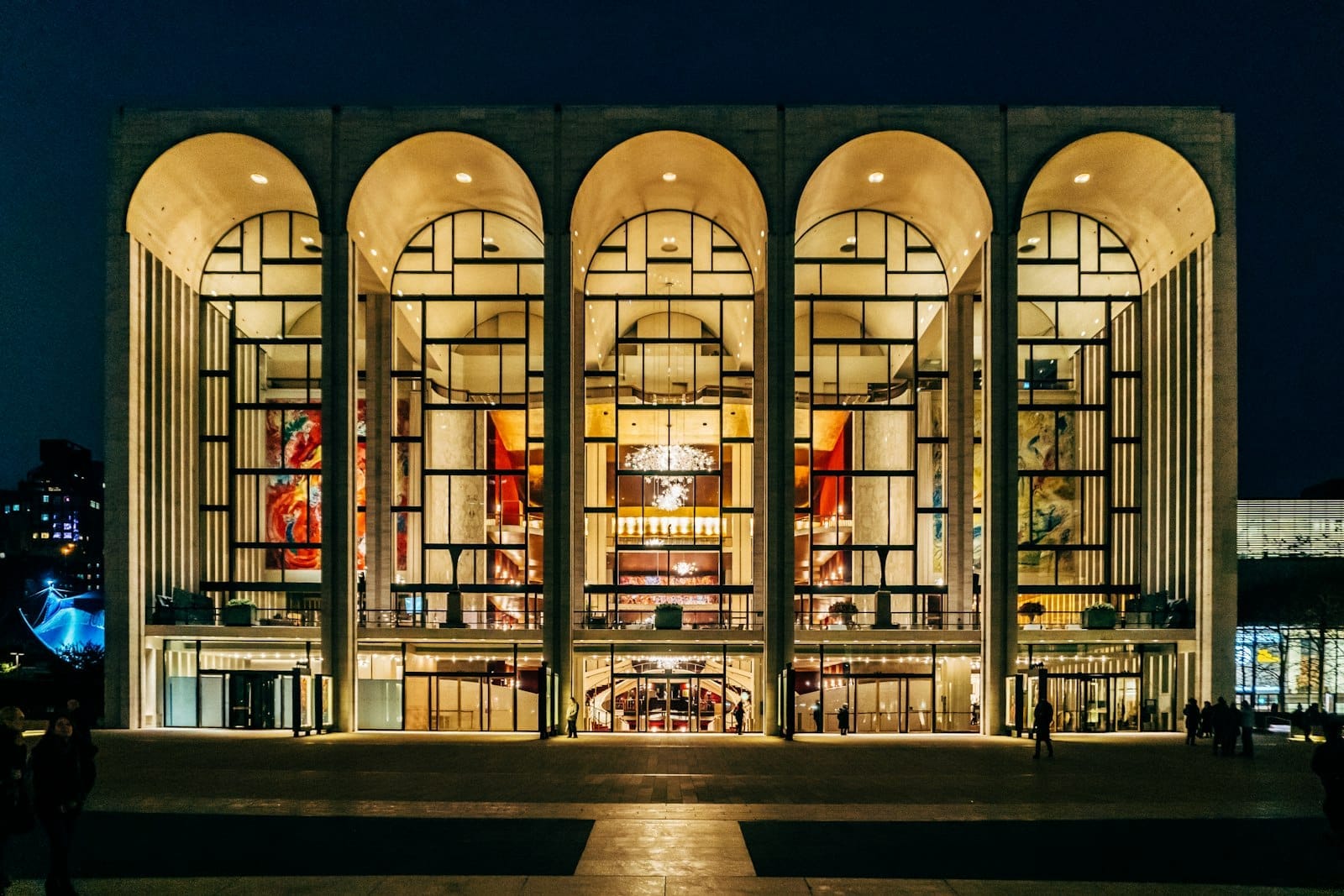
What Lincoln Center Actually Is
Lincoln Center for the Performing Arts is not a single theater. It is a 16-acre campus of interconnected buildings, plazas, and fountains that functions as the cultural spine of Manhattan's Upper West Side. Opened incrementally beginning in 1962 with the inauguration of Philharmonic Hall (now David Geffen Hall), the complex was conceived as part of a sweeping urban renewal project and eventually became home to some of the most important performing arts institutions in the world.
The resident organizations include the New York Philharmonic, the Metropolitan Opera, the New York City Ballet, the Chamber Music Society of Lincoln Center, Lincoln Center Theater, the Film Society of Lincoln Center (now known as Film at Lincoln Center), the School of American Ballet, and the Juilliard School. Each organization operates its own ticketing, scheduling, and season calendar, which is why there are no single campus-wide opening hours or prices. What unifies them is the shared outdoor space: the Josie Robertson Plaza at the center of it all, anchored by a large illuminated fountain that serves as the campus's informal living room.
ℹ️ Good to know
You do not need a ticket to visit Lincoln Center. The outdoor plazas are publicly accessible. Walking the campus costs nothing and takes about 30 minutes at a relaxed pace.
The Architecture: More Coherent Than It Looks at First
The original campus was designed in the early 1960s by a committee of architects that included Philip Johnson, Eero Saarinen, and Pietro Belluschi, among others. The result is a travertine-clad ensemble that critics at the time found too formal and others found too institutional, but which has aged into something recognizable and even calming. The arched colonnades and pale stone give the campus a vaguely Roman civic character that stands apart from the surrounding street grid.
The Metropolitan Opera House, designed by Wallace Harrison and completed in 1966, is the most visually dramatic building. Its five massive arched windows illuminate lobby interiors hung with murals by Marc Chagall, which are visible from the plaza at night when the building is lit. David Geffen Hall, redesigned in a major renovation completed in 2022, occupies the northern corner. The renovation by Diamond Schmitt Architects and Tod Williams Billie Tsien Architects significantly improved the acoustic experience and opened the lobby to street-level sightlines, making it feel considerably less fortress-like than before.
If architecture is a primary interest, pair a Lincoln Center visit with a walk through the broader Upper West Side, where pre-war residential buildings and cultural institutions create one of Manhattan's more coherent architectural streetscapes.
Tickets & tours
Hand-picked options from our booking partner. Prices are indicative; availability and final rates are confirmed when you complete your booking.
Rockefeller Center Guided Walking Tour With Optional Top of the Rock
From 33 €Instant confirmationFree cancellationSt. Patrick's Cathedral skip-the-line tickets audio tour and Rockefeller Center walking tour
From 32 €Instant confirmationFree cancellationRockefeller Center guided tour
From 25 €Instant confirmationFree cancellationLEGOLAND Discovery Center Westchester tickets
From 28 €Instant confirmationFree cancellation
How the Campus Changes by Time of Day
During the day, the plaza belongs mostly to office workers eating lunch, students from Juilliard cutting across to the subway, and tourists photographing the fountain. The travertine reflects sunlight intensely in summer, so the space can feel bleached and exposed at midday. Mornings are the quietest window for photography: the stone is cool, the fountain is running, and the crowds are thin.
The campus transforms completely in the evening before a major performance. Starting about an hour before curtain, the plaza fills with ticket holders in a range of dress from formal evening wear to jeans. The illuminated fountain becomes a gathering point. The Chagall murals glow through the Met Opera's arched windows. There is a particular quality of anticipation in the air, a low, expectant hum of conversation, that is genuinely different from other parts of the city at that hour. If you are not attending a performance, simply arriving around 7 p.m. on a night when the Met or the Philharmonic is playing gives you the ambient experience of Lincoln Center at its most alive.
Summer brings the free outdoor series Lincoln Center Out of Doors, which transforms the plazas into concert venues for several weeks in late July and August. Crowds are younger and less formal than at indoor performances, and the atmosphere is closer to a neighborhood festival than a concert hall event. Verify current schedules with the official site before planning around it.
💡 Local tip
For the best evening atmosphere without buying a ticket, arrive around 7:00–7:30 p.m. on a performance night and sit near the fountain. The plaza energy before an opera or symphony performance is worth experiencing on its own.
Attending a Performance: What to Know Practically
Tickets for Lincoln Center performances are sold through each resident organization's own website, not through a central campus box office. The Metropolitan Opera, the New York Philharmonic, and the New York City Ballet each manage their own pricing tiers, rush programs, and student discounts. Prices vary widely depending on the production and seat location. Rush and student-rush tickets are typically available on the day of the performance and represent the most accessible price point for visitors on a budget.
For a broader overview of how to approach ticketed culture in New York City, the best museums and cultural institutions in New York City guide covers strategy for planning across multiple venues.
Dress code is not strictly enforced at any Lincoln Center venue, but the Met Opera audience skews more formal than the Philharmonic, and both skew more formal than Lincoln Center Theater. Jeans are common at all venues. Coats can be checked at most halls for a fee. Performances start on time: late arrivals at the Met Opera are held at the doors and seated only at an appropriate break in the music.
The Alice Tully Hall and David Rubenstein Atrium (on Broadway between 62nd and 63rd Streets) also host performances, the latter offering free programming on select days. The Atrium doubles as a free public space with seating and is a useful stop if you want to orient yourself before exploring the main campus.
Getting There and Getting Around the Campus
The 1 train stops directly at 66 Street–Lincoln Center station, just south of the main plaza. The walk from the subway exit to the fountain is about two minutes. Multiple bus routes (M5, M7, M11, M66, M104) also serve the immediate area from different directions, making this one of the more transit-accessible major attractions on the Upper West Side.
The campus is compact enough to navigate without a map. From the main plaza, the Metropolitan Opera House is directly ahead (west), David Geffen Hall is to the right (north), and the David H. Koch Theater (home of the New York City Ballet) is to the left (south). Avery Fisher Hall was renamed David Geffen Hall in 2015 following a major gift; some older maps and signs may still use the previous name. The Juilliard School building is a short walk north along Broadway at 65th Street.
💡 Local tip
Accessibility: All major Lincoln Center venues include wheelchair-accessible seating, elevators, and assistive listening devices. Contact individual venue box offices in advance to arrange specific accommodations.
The Surrounding Neighborhood and Where to Eat Nearby
Lincoln Center sits in the Lincoln Square section of the Upper West Side, a neighborhood with a long association with the performing arts and with residential stability. Broadway and Columbus Avenue in the surrounding blocks have a dense concentration of restaurants at multiple price points, which makes pre- and post-performance dining straightforward. The area is also within easy walking distance of Central Park, whose southern end is about a 10-minute walk east.
For a longer evening, combining a Lincoln Center performance with a late walk through Central Parkpark or a visit to the American Museum of Natural History on a late-hours night makes for a full Upper West Side itinerary.
Weather affects the outdoor experience more than most visitors anticipate. In winter, the plaza is exposed and wind-channeled, and waiting outdoors between performances or before doors open is genuinely cold. In July and August, the fountain provides some relief but the stone radiates heat. Autumn (September through November) is the most comfortable season for extended outdoor time on the campus, and it coincides with the opening of the Metropolitan Opera's new season, typically in late September.
Who Should Skip It (And Why)
Visitors looking primarily for free or low-cost indoor entertainment may find the campus underwhelming without a performance ticket. The outdoor plazas are pleasant but not deeply engaging for more than 30 to 40 minutes. If the performing arts are not a particular interest, the architecture and fountain are worth a brief stop, but this is not a destination that rewards a half-day visit on campus aesthetics alone.
Travelers who want high-impact culture without performance-schedule constraints may find the Metropolitan Museum of Art or the Museum of Modern Art more immediately satisfying for a single afternoon.
Insider Tips
- The David Rubenstein Atrium on Broadway between 62nd and 63rd Streets hosts free performances on select Thursday evenings. Check the Lincoln Center calendar; these events draw smaller crowds than main-stage performances and are a genuinely accessible entry point to the campus.
- The Metropolitan Opera's HD Live broadcasts, screened in cinemas worldwide, offer an alternative to attending in person, but the lobby experience before a live performance (Chagall murals, pre-show drinks, the fountain view) is not replicable on screen. If you can get to the building itself on a performance night, do it even without a ticket.
- Day-of rush tickets for the New York Philharmonic are sometimes available online through their website starting at a specific time in the morning. Set an alert: these sell out quickly but cost a fraction of standard pricing.
- The best vantage point for photographing the Met Opera's Chagall murals through the arched windows is from the center of the plaza at dusk, when the exterior light and interior illumination are nearly balanced. Bring a steady hand or a surface to brace against.
- If you are visiting with children, the New York City Ballet offers special family matinee performances during its season. These are shorter and specifically programmed for younger audiences, and the Koch Theater's acoustics are excellent even from upper-tier seats.
Who Is Lincoln Center for the Performing Arts For?
- Classical music and opera enthusiasts who want to see the New York Philharmonic or Metropolitan Opera in their home venues
- Architecture and design lovers interested in mid-20th-century civic planning and the 2022 David Geffen Hall renovation
- Couples looking for a refined evening out, whether attending a performance or simply enjoying the plaza ambiance before dinner nearby
- First-time visitors to New York City who want to see the cultural institutions that define the city's international reputation
- Budget travelers willing to target day-of rush tickets or free outdoor programming to experience world-class performance at low cost
Nearby Attractions
Other things to see while in Upper West Side:
- American Museum of Natural History
One of the largest natural history museums in the world, AMNH spans 21 interconnected buildings and 45 permanent exhibition halls on the Upper West Side of Manhattan. From the 94-foot blue whale to the Rose Center for Earth and Space, it rewards several hours of focused exploration.
- New-York Historical Society
Founded in 1804, the New-York Historical Society is New York City's oldest museum, located on the Upper West Side across from Central Park. Its permanent and rotating collections span over 400 years of American history, from colonial-era documents to Tiffany lamps, making it a serious alternative to the blockbuster institutions nearby.