Necropoli di Tuvixeddu: Cagliari's Ancient City of the Dead
Carved into a limestone hill on the edge of Cagliari, the Necropoli di Tuvixeddu is the largest Punic necropolis in the Mediterranean. More than 1,700 rock-cut tombs spanning nearly a millennium of burial history sit within a free public park that most visitors to Cagliari walk right past.
Quick Facts
- Location
- Via Falzarego 49, Sant'Avendrace quarter, Cagliari
- Getting There
- CTM buses 1 and 9 serve the area near the necropolis; stop near Grotta della Vipera
- Time Needed
- 1 to 2 hours
- Cost
- Free entry (ingresso libero)
- Best for
- History enthusiasts, archaeology lovers, quiet morning walks
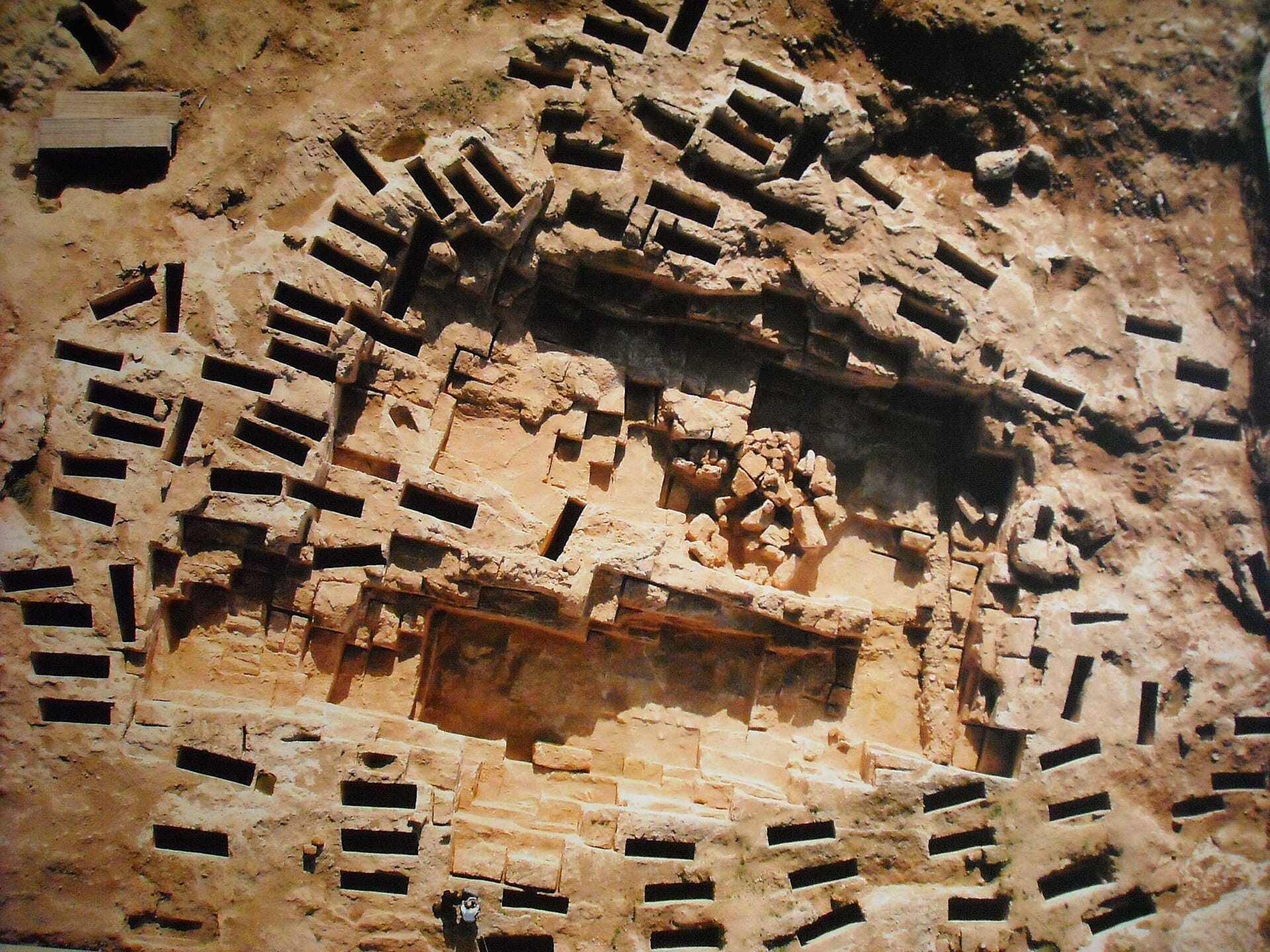
What Is the Necropoli di Tuvixeddu?
The Necropoli di Tuvixeddu is a Phoenician-Punic burial ground cut directly into the soft limestone flanks of the Tuvixeddu hill, on the northern edge of Cagliari's Sant'Avendrace quarter. Surveys have identified more than 1,700 shaft tombs here, of which many remain in good condition. That figure makes it, by scholarly and ministerial consensus, the largest Punic necropolis in the Mediterranean world — larger than comparable sites in Tunisia, Sicily, or Sardinia's own west coast.
The site was in active use from roughly the 6th century BC through the early Roman Imperial period, with funerary objects dated as late as the mid-1st century AD. That is close to a thousand years of continuous burial on a single hill. The original necropolis stretched across some 80 hectares — from the Santa Gilla lagoon to Via Is Maglias and between Viale Sant'Avendrace and Viale Merello. Urban development in the 20th century consumed most of that land. The current Parco di Tuvixeddu protects about 3.5 hectares of the most intact section.
ℹ️ Good to know
The park has two entrances: the main one on Via Falzarego and a secondary access from Via Is Maglias. Both are free. No ticket booth, no reservation system — just walk in.
The Experience: Walking Among 2,500 Years of Burial
From the Via Falzarego entrance, the hill reveals itself slowly. The path climbs through Mediterranean scrub — rosemary, wild fennel, and a few old olive trees — before the limestone cuts begin to appear at the edges of the trail. The tombs themselves are vertical shaft graves, often square or rectangular in plan, dropped straight down into the rock. Peer into the closest ones and you can see the narrow cut leading to a small chamber below. The scale is initially hard to grasp: these shafts repeat, almost rhythmically, across the exposed rock face, dozens visible at any one point along the upper paths.
Elevated wooden walkways at certain points allow you to look down into tomb clusters without disturbing the rock or the fragile soil around each shaft. The park is compact, but the density of graves visible from those walkways is striking. On a clear morning, the view over Cagliari's skyline to the south and the faint glimmer of the Santa Gilla lagoon to the west adds an unexpected spatial dimension — this hill stood at the edge of ancient Caralis, and the Punic inhabitants buried their dead just outside the city walls, as was customary.
The park is quiet on weekday mornings. You are likely to share the space with dog walkers from the neighbourhood, the occasional jogger, and perhaps a handful of other visitors. There is no interpretive museum on site, and signage in English is limited, so coming with some background knowledge — or a downloaded reference — makes a real difference to what you take away from the visit.
Tickets & tours
Hand-picked options from our booking partner. Prices are indicative; availability and final rates are confirmed when you complete your booking.
Vineyard Guided Tour and 7 Wine Tasting in Palau
From 84 €Instant confirmationFree cancellationFull-Day Sailboat Tour in La Maddalena Archipelago from Cannigione
From 112 €Instant confirmationFree cancellationHiking excursion to the Devil's Saddle
From 35 €Instant confirmationFree cancellationExcursion to the Archaeological site of Nora
From 70 €Instant confirmationFree cancellation
How the Experience Changes Through the Day
Morning is the best time to visit, both for temperature and for light. Between 8:00 and 10:00, the low sun rakes across the limestone surfaces at an angle that picks out the texture and depth of every cut tomb. The rock itself changes colour through the morning: pale cream in early light, warming to ochre by mid-morning. Photographers will find this window far more productive than midday, when the light flattens and the exposed rock creates harsh glare.
In summer, midday temperatures on the unshaded upper paths can reach 35°C or above. The park's vegetation provides some cover on the lower trails, but extended visits between 12:00 and 16:00 in July and August are uncomfortable. Late afternoon, from around 17:00, brings shade to most of the site and a significant drop in heat. The park stays open until 22:30 in the peak season (April through September), and an evening walk at dusk has its own atmosphere — the city sounds soften, and the limestone takes on a warm amber tone as the light fades.
💡 Local tip
Wear closed shoes with grip. The paths are mostly paved or compacted earth, but there are sections with loose gravel and uneven limestone near the tomb shafts. Sandals are workable but less comfortable.
Historical and Cultural Context
Phoenician traders established Caralis — the ancient name for Cagliari — as a commercial settlement, and it later became one of the key Punic cities on the island during Carthaginian control of Sardinia (roughly 510–238 BC). The necropolis on Tuvixeddu hill was the primary burial ground for the city's population during most of that period and continued into the Roman era, when new burial rites coexisted with older Punic traditions at the same site.
The tombs follow a standard Punic form: a vertical shaft (the 'pozzetto') leading to a small burial chamber, sometimes with painted walls or carved niches. Grave goods recovered from the site — pottery, amulets, scarabs, and glass objects — are now held at the Museo Archeologico Nazionale di Cagliari, where the most significant pieces from Tuvixeddu are on display. Visiting the museum before or after the necropolis creates a logical sequence: the objects give meaning to the empty shafts, and the shafts give scale to the objects.
The Punic connection to Sardinia is one of the island's less-publicised historical layers. Most visitors know about the earlier Nuragic civilisation — the Bronze Age culture responsible for the island's thousands of stone towers — but the Phoenician and Punic periods that followed represent a distinct cultural chapter that Tuvixeddu makes viscerally real. Here, the abstract history of Mediterranean trade and colonial settlement becomes a hillside full of graves.
For broader archaeological context across the island, the guide to Sardinia's major nuragic sites covers the Bronze Age period that preceded the Punic era, giving useful chronological grounding.
Practical Walkthrough: What to See and in What Order
Enter from Via Falzarego. The main path leads uphill from the gate, with the rock-cut tombs becoming visible within the first 200 metres. The upper plateau offers the broadest views and the most exposed tomb clusters. The wooden observation walkways are positioned to give overhead angles on some of the best-preserved shaft groups — spend time here rather than rushing past.
On your way out, or as a separate short detour nearby on Viale Sant'Avendrace, you can visit the Grotta della Vipera — a Roman-era tomb carved into the cliff face of the same hill, featuring Latin inscriptions in verse. The two sites are close enough to combine in a single visit without a car.
Tuvixeddu fits naturally into a half-day itinerary that includes the nearby Castello district — Cagliari's walled hilltop quarter — and the archaeological museum. Together, these three stops trace Cagliari's layered history from the Punic period through the medieval.
Opening Hours and Getting There
The Parco di Tuvixeddu is open every day of the year. Seasonal hours vary: January through February 06:00 to 21:00; March 06:00 to 21:00; April through September 05:30 to 22:30; October through December 06:30 to 22:00. These are the hours published by the Comune di Cagliari, but it is worth checking locally for any temporary closures or modifications.
CTM city buses 1 and 9 serve the Sant'Avendrace area and stop near the site. From Cagliari's central Piazza Matteotti, the journey takes under 15 minutes. The site is also reachable on foot from the city centre in around 25 to 30 minutes along Viale Sant'Avendrace. Parking on Via Falzarego is limited; arriving by bus or on foot avoids frustration.
⚠️ What to skip
There is no café, drinking fountain, or shaded seating within the park. Bring water, especially in summer — the exposed upper paths get full sun from mid-morning onward.
Who This Attraction Is Not For
Visitors looking for a polished heritage experience with audio guides, multilingual panels, and a gift shop will be disappointed. Tuvixeddu is a lightly managed public park, not a curated archaeological centre. The tombs are real and unrestored, which is part of their power, but the lack of interpretive infrastructure means that without preparation, many visitors walk through without understanding what they are seeing.
Families with very young children or visitors with significant mobility limitations should note that while parts of the park are accessible, the terrain near the tomb clusters involves uneven ground and some inclines. The municipality does not provide detailed step-free access information, so it is worth contacting the Comune di Cagliari directly to confirm current path conditions before visiting.
If you are building a wider itinerary around Cagliari, the day trips from Cagliari guide covers how to combine the city's historical core with sites further afield.
Insider Tips
- Download a PDF or screenshot of the Comune di Cagliari's site plan before you go. In-park signage is minimal and mostly in Italian, and having a map on your phone helps you identify which tomb clusters are the most intact.
- Visit the Museo Archeologico Nazionale di Cagliari first. The Punic grave goods displayed there — scarabs, terracotta figurines, glass vessels — come largely from Tuvixeddu, and seeing them before the necropolis makes the empty shafts far more legible.
- The Grotta della Vipera, a Roman tomb with carved Latin elegies, is a short walk from the Via Falzarego entrance along Viale Sant'Avendrace. It is almost always empty of tourists and takes 15 minutes to see. Combine the two sites in one outing.
- The best photographic angles are from the upper wooden walkways looking down into the shaft clusters, particularly in the first two hours after sunrise when the light is directional and the shadows define the cuts in the rock.
- Weekday mornings between October and April offer the site at its quietest and coolest. Summer evenings (after 18:00) are the next best option — the heat subsides, the neighbourhood comes alive, and the hill is almost always uncrowded.
Who Is Necropoli di Tuvixeddu For?
- History and archaeology enthusiasts who want context on Sardinia's pre-Roman past
- Photographers looking for ancient texture and geometry in morning light
- Travellers who have already visited the Museo Archeologico and want to see the source of its Punic collection
- Walkers wanting a quiet, off-the-main-circuit half-morning in Cagliari
- Anyone researching Phoenician and Punic civilisation in the western Mediterranean
Nearby Attractions
Other things to see while in Cagliari:
- Anfiteatro Romano di Cagliari
The Roman Amphitheatre of Cagliari is the most significant Roman monument in Sardinia, partially carved into the limestone hillside of Colle di Buoncammino. With a capacity estimated at 10,000 spectators, it dates to the late 1st or early 2nd century AD. Ongoing restoration limits what you can explore, but the scale of the structure and its setting repay the modest entrance fee.
- Bastione di Saint Remy
Standing at the southern edge of the Castello district, the Bastione di Saint Remy is a monumental Belle Époque terrace that offers some of the most commanding views in Cagliari. Free to enter and, as a public terrace, generally accessible at all hours, it rewards visitors who time their ascent right — especially at dusk, when the city lights begin to compete with the last colour in the sky.
- Castello District
Perched about 100 metres above sea level on a fortified limestone hill, the Quartiere Castello is the oldest and most historically layered part of Sardinia's capital. Enclosed by 13th-century Pisan walls, it holds the city's cathedral, major museums, and some of the best rooftop views in the Mediterranean. Entry is free, and the streets can be walked at any hour.
- Cattedrale di Santa Maria (Cagliari)
Rising above the Castello quarter on Piazza Palazzo, the Cattedrale di Santa Maria e Santa Cecilia is Cagliari's most important religious monument. First documented in the mid‑13th century and remodelled across several centuries, it layers Pisan Romanesque, Gothic, Baroque, and Neo-Romanesque styles into a single compelling structure. Entry is free, and the interior rewards anyone willing to look closely.