Museo Lázaro Galdiano: Madrid's Most Underrated Fine Art Collection
Housed in a early 20th-century mansion on Calle Serrano, the Museo Lázaro Galdiano holds one of Spain's most remarkable private art collections, spanning medieval ivories, Old Master paintings, Renaissance jewellery, and decorative arts. With a free weekday lunchtime entry hour and almost no queues, it rewards curious visitors who look beyond the 'Golden Triangle' museums.
Quick Facts
- Location
- Calle Serrano 122, Salamanca district, Madrid
- Getting There
- Gregorio Marañón or Rubén Darío (both approx. 7 min walk)
- Time Needed
- 1.5 to 2.5 hours
- Cost
- €8 general / €5 reduced / Free Tue–Fri 14:00–15:00
- Best for
- Fine art lovers, history enthusiasts, quiet culture-seekers
- Official website
- www.museolazarogaldiano.es
What Is the Museo Lázaro Galdiano?
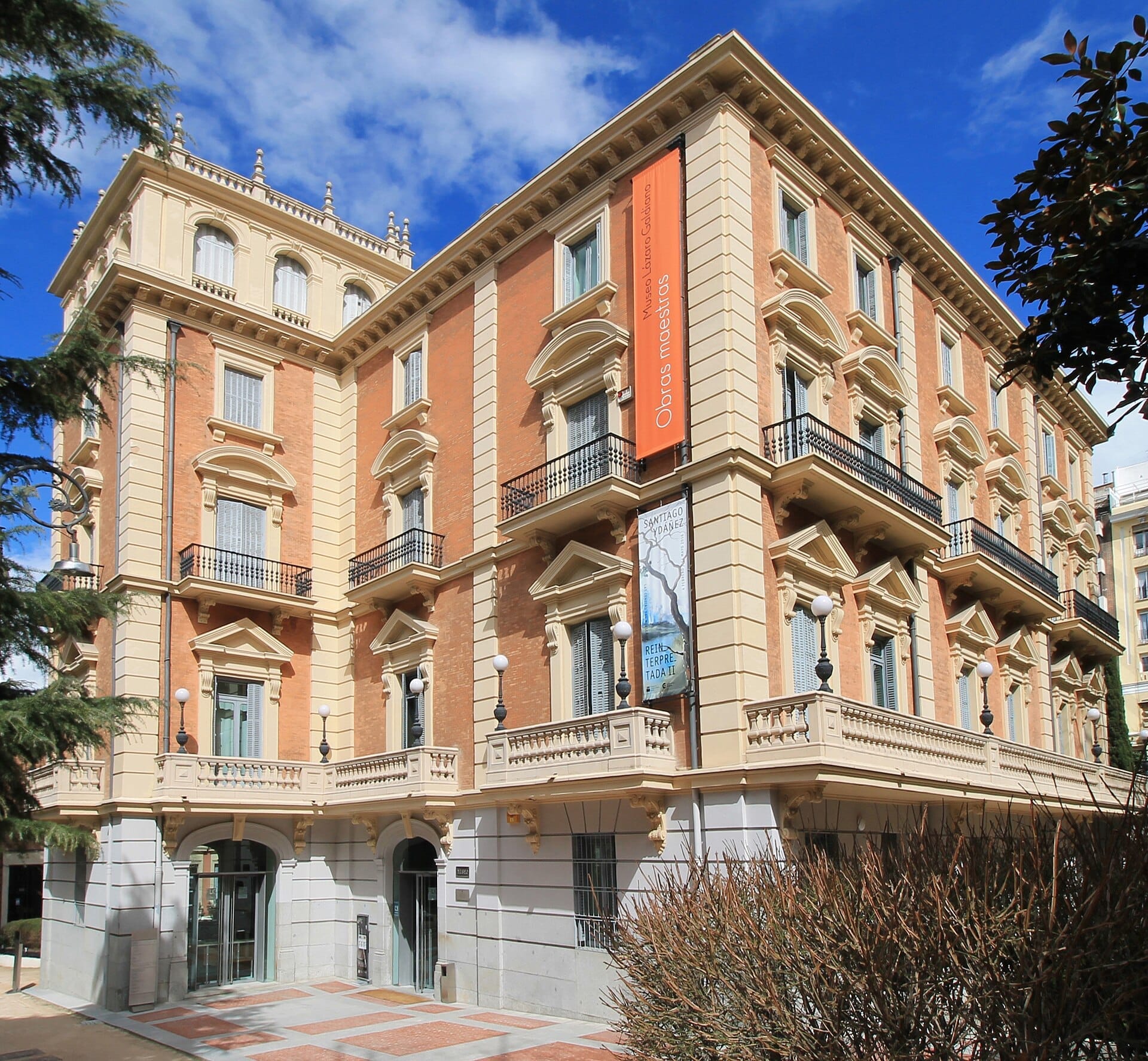
The Museo Lázaro Galdiano is a fine and decorative arts museum occupying the former private residence of José Lázaro Galdiano, a Spanish publisher and collector who spent decades assembling one of the most eclectic and extraordinary private art collections in early 20th-century Europe. When he died in 1947, he bequeathed the entire estate to the Spanish state: the four-storey Italianate mansion known as Parque Florido, over 12,600 works of art, and a library of some 20,000 volumes. The Lázaro Galdiano Foundation was created in 1948 to manage it all, and the museum opened to the public on 27 January 1951.
What makes this museum unusual is its breadth. Lázaro Galdiano was not a specialist collector. He pursued quality and rarity across centuries and continents, acquiring medieval ivories, Limoges enamels, Flemish panel paintings, Spanish Golden Age canvases, Renaissance jewellery, Persian textiles, Moorish metalwork, Goya portraits, and English silverware in the same lifetime. The result is a collection that resists easy categorization, which is exactly what makes it worth two hours of your attention.
💡 Local tip
Free entry runs Tuesday through Friday between 14:00 and 15:00. Arrive at 13:45 to browse the ground floor first, then head upstairs as the lunch crowd thins. This is the quietest the museum gets all week.
The Mansion Itself: Architecture and Atmosphere
Before you look at a single painting, take a moment to register the building. Parque Florido was constructed in the early 1900s as Lázaro Galdiano's private home, and the architecture is unapologetically aristocratic: a pale stone facade, ornamental ironwork, and a garden that shields it from the noise of Calle Serrano. Inside, the ceilings are coffered or painted, the floors are hardwood, and the proportions of each room feel domestic rather than institutional. That domestic scale is the museum's greatest asset: you are looking at art in the rooms where one man chose to live with it.
The mansion sits in the upper stretch of Calle Serrano, well north of the luxury shopping stretch that most visitors know. The surrounding blocks of Barrio de Salamanca are quiet, residential, and lined with early 20th-century apartment buildings. You are unlikely to encounter large tour groups anywhere near the entrance.
Tickets & tours
Hand-picked options from our booking partner. Prices are indicative; availability and final rates are confirmed when you complete your booking.
Lazaro Galdiano Museum E-Ticket with Audio Tour
From 17 €Instant confirmationFree cancellationN.A.M. and Lazaro Galdiano tickets with El Retiro Park and Madrid audio tour
From 23 €Instant confirmationFree cancellationArt & Brunch at Museo Nacional Thyssen-Bornemisza tickets
From 50 €Instant confirmationFree cancellationPaseo del Arte pass for Museo Nacional Thyssen-Bornemisza, Reina Sofia Museum and Prado Museum
From 37 €Instant confirmation
The Collection: What to Expect on Each Floor
The museum spreads across four floors, and the curators have organized the collection roughly by category and period rather than strict chronology. Ground floor rooms cover decorative arts including enamels, arms and armour, and applied metalwork. The upper floors move through painting, sculpture, and more personal objects from Lázaro Galdiano's life.
The painting collection is the headline draw. There are attributed works by Hieronymus Bosch, Lucas Cranach the Elder, Rembrandt, El Greco, Zurbarán, and Goya, including a small but striking group of Goya portraits and cabinet pictures. Spanish Golden Age painting is particularly well represented. These are not second-tier works from those artists: several pieces would hold their own in any major European museum.
The decorative arts rooms are where the museum surprises visitors who arrive expecting only paintings. The Limoges enamels collection is considered one of the finest in Spain. The medieval and Renaissance ivories are exceptional in their preservation. The jewellery cases include Renaissance pendant pieces of genuine rarity. These objects draw fewer visitors than the paintings, which means you can often examine them at close range with no one else in the room.
ℹ️ Good to know
Guided visits with a museum guide cost €12 for adults and €8 for children. Free accessible guided visits for visitors with visual disabilities are offered on Tuesdays at 10:45, but advance reservation is required. Contact the museum directly to book.
How the Experience Changes by Time of Day
Morning sessions, particularly on weekdays, are the calmest. The museum opens at 09:30, and the first hour tends to attract only dedicated visitors: researchers, art students, and travelers who have done their homework. Light enters the upper floor rooms from the east and casts long, warm angles across the paintings between 10:00 and 11:30, which makes this the best time for photography of the painted interiors.
The free entry window between 14:00 and 15:00 brings a modest uptick in visitors, but the museum never reaches the density of Madrid's major institutions. By 14:30, the rooms are typically still quiet enough to hear your own footsteps on the parquet. Weekend mornings between 10:00 and 12:00 are the busiest the museum gets, though 'busy' here is relative: you are unlikely to queue for more than a few minutes at the ticket desk.
The Tuesday to Friday afternoon session (16:30 to 19:30) is an option that many visitors overlook. If you are spending the morning at the Prado or the Thyssen, the Lázaro Galdiano makes an efficient afternoon second stop without requiring you to rush.
Practical Guide: Getting There, Tickets, and What to Bring
The museum is at Calle Serrano 122, well north of the Serrano metro station. The most convenient access is from Gregorio Marañón (Lines 7 and 10) or Rubén Darío (Line 5), both about a seven-minute walk. From Gregorio Marañón, walk south along Calle de Serrano; the museum entrance appears on your right, set back slightly from the pavement behind iron gates. From Rubén Darío, walk north along Paseo de la Castellana and then cut east on Calle de María de Molina.
If you are combining this visit with a broader tour of the area, the best museums in Madrid guide covers how the Lázaro Galdiano fits into a multi-day itinerary alongside the Prado, Thyssen, and Reina Sofía.
Standard admission is €8 for adults and €5 for reduced rate (students, seniors, and other eligible groups with relevant documentation). Children under 7 enter free, as do teaching staff, unemployed visitors, and ICOM cardholders. The free weekday window (Tuesday to Friday, 14:00 to 15:00) requires no documentation.
Accessibility: the museum describes itself as accessible, with ground-floor facilities near reception. Visitors using wheelchairs or with mobility needs should note that the mansion's original layout means some areas involve stairs; contact the museum in advance to confirm current accessible routes through the full collection.
⚠️ What to skip
The museum is closed on Mondays, and also on 24, 25, and 31 December; 1 and 6 January; Maundy Thursday; Good Friday; and 1 and 15 May. Always check the official website before visiting, as closure dates are subject to change.
Photography and Sensory Notes
Photography is generally permitted in the permanent collection without flash. The rooms are well-lit with directed artificial lighting over the paintings and display cases, supplemented by natural light from tall windows. The decorative arts rooms, with their glass cases and enamelled surfaces, are particularly photogenic in the morning when side-light enters from the east. The building itself, from the painted ceilings of the main salon to the carved stair balustrade, is worth photographing on its own terms.
The atmosphere inside is noticeably hushed. There is no café on the premises, which keeps foot traffic purposeful. The smell of old wood and floor polish is present throughout the upper floors in a way that no modern museum replicates. It is one of those places where the building reinforces the collection rather than competing with it.
What to Expect
For travelers who have already visited or plan to visit Madrid's major institutions, the Museo Lázaro Galdiano offers something distinctly different: intimacy, breadth, and the coherence of a single collector's vision. It is not a substitute for the Museo del Prado or the Thyssen-Bornemisza, but it functions as an excellent complement, particularly for visitors interested in decorative arts, medieval objects, or the history of collecting itself.
Visitors who find large museums tiring will appreciate the scale here: two hours is enough to see everything without fatigue. Those looking for a single blockbuster painting or a famous sculpture as the centrepiece of a visit may find the format less satisfying, since the Lázaro Galdiano rewards attention distributed across many objects rather than focused on one or two.
Travelers on tighter schedules who are visiting Madrid for only one or two days and have not yet seen the Prado or the Reina Sofía should prioritize those first. This museum earns its place on a three-day or longer itinerary, not a rushed 48-hour overview.
Insider Tips
- The free entry hour (14:00 to 15:00 on weekdays) is not widely advertised in English-language guides. Arriving at 13:45 lets you buy a ticket if needed or confirm free entry and head straight to the upper floors where the major paintings are, before others arrive.
- The decorative arts rooms on the ground floor are often skipped by visitors heading straight for the paintings. The Limoges enamel collection and the Renaissance jewellery cases deserve at least 20 minutes each, and you will almost always have them to yourself.
- If you want natural light on the paintings, the upper floor rooms face east and southeast. The window light is at its best between 10:00 and 11:30 on clear mornings, which also happens to be the quietest part of the day.
- The museum garden, visible from the facade and some interior windows, is planted with mature trees and provides a quiet buffer from the street. In spring it frames the building well for exterior photographs from the gate.
- Guided visits in English can be arranged through the museum's booking system, but availability is limited. If you read Spanish, the in-house audio guide is considered more detailed than the printed room labels and adds significant context to the decorative arts rooms.
Who Is Museo Lázaro Galdiano For?
- Art and history travelers who have already covered Madrid's flagship museums and want depth over spectacle
- Visitors interested in decorative arts, medieval objects, and Renaissance applied arts rather than painting alone
- Travelers who find crowded institutions draining and want a genuinely quiet, contemplative museum experience
- Architecture enthusiasts curious about early 20th-century Spanish upper-class domestic interiors
- Budget-conscious visitors who can plan around the free weekday entry window between 14:00 and 15:00
Nearby Attractions
Other things to see while in Barrio de Salamanca:
- Calle de Serrano
Calle de Serrano is Madrid's most prestigious shopping corridor, stretching roughly 4 kilometers through the elegant Barrio de Salamanca and into Chamartín. From international luxury flagship stores near Puerta de Alcalá to local Spanish designers and fine food markets further north, the street offers a complete portrait of how Madrid's wealthiest neighborhood shops, eats, and moves.
- Fundación Mapfre – Sala Recoletos
Tucked into a beautifully restored 1880s building on one of Madrid's most elegant boulevards, Fundación MAPFRE Sala Recoletos is a compact, carefully programmed gallery that consistently delivers exhibitions rivalling much larger institutions. With roughly 1,000 square metres across three rooms, it focuses on photography, modern art, and overlooked masters — and it is free every non-holiday Monday afternoon.
- Plaza de Toros de Las Ventas
Plaza de Toros de Las Ventas is one of Europe's most architecturally striking arenas, a Neo-Mudéjar landmark with a capacity of 23,798 seats and a history stretching back to 1931. Whether you attend a corrida or simply take the guided tour, the scale and detail of this place are genuinely arresting.
- Mercado de La Paz
Opened in 1882 and still going strong, Mercado de La Paz is the working neighborhood market at the heart of Madrid's upscale Salamanca district. With around 35 stalls selling everything from Iberian ham to fresh fish, it offers a grounded, local counterpoint to the area's designer boutiques — and it costs nothing to walk in.