Museo Casa Carlos Gardel: Inside the Home of Tango's Greatest Voice
The Museo Casa Carlos Gardel occupies the house that tango legend Carlos Gardel purchased in 1927 and shared with his mother until leaving Argentina for the last time in 1933. Located in the Abasto neighborhood of Buenos Aires, the museum offers an intimate look at the man behind the myth through original rooms, personal objects, recordings, and photographs. For anyone serious about tango culture, this is one of the most affecting stops in the city.
Quick Facts
- Location
- Jean Jaurès 735, Abasto (Balvanera), Buenos Aires
- Getting There
- Subte Line B (Carlos Gardel station); multiple colectivo routes along Av. Corrientes and Av. Pueyrredón
- Time Needed
- 45 minutes to 1.5 hours
- Cost
- ARS 10,000 (foreign visitors); ARS 2,000 (Argentine residents with DNI); free Wednesdays for all visitors. Free for under-12s, pensioners, students, and people with disabilities. Verify prices locally before visiting.
- Best for
- Tango enthusiasts, music history fans, anyone interested in Argentine cultural icons
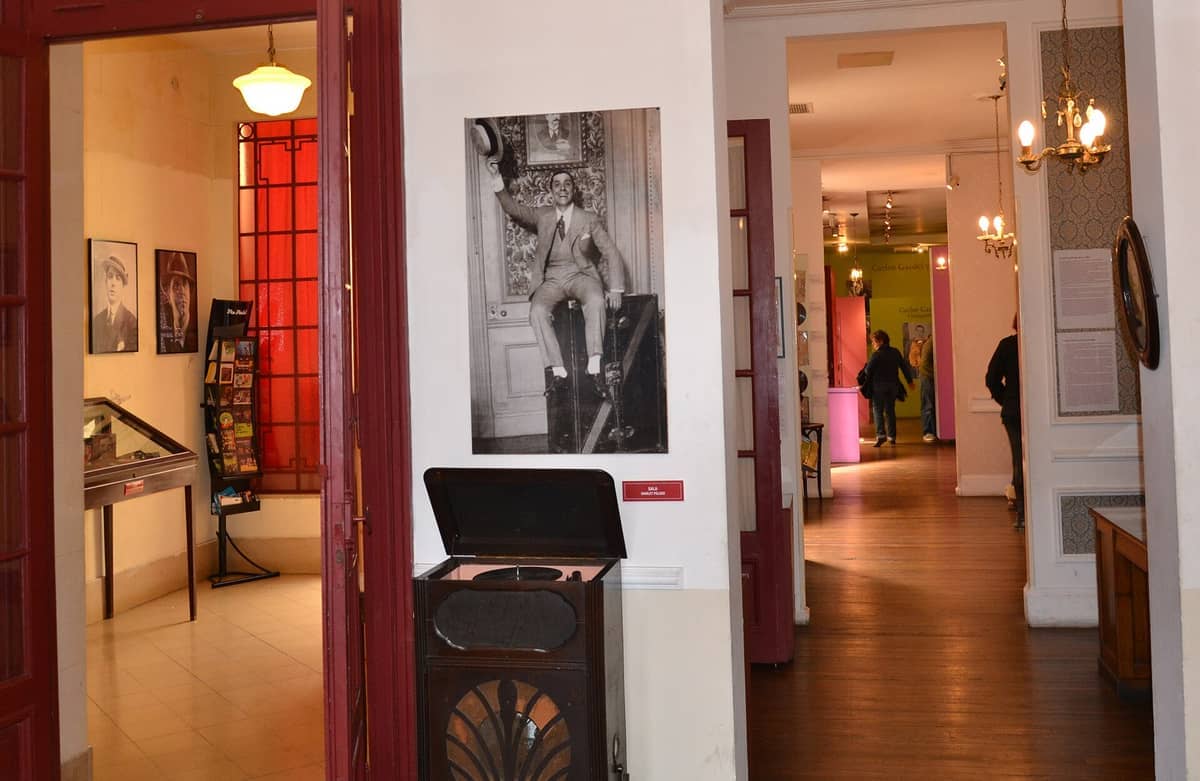
What Is the Museo Casa Carlos Gardel?
The Museo Casa Carlos Gardel is not a reconstruction or a themed exhibit built to evoke a famous person. It is the actual house where Carlos Gardel lived. He purchased the property at Jean Jaurès 735 in 1926, and it remained his Buenos Aires home, shared with his mother Berta Gardés, until November 7, 1933, when he left Argentina for the last time. Two years later, he died in an airplane collision in Medellín, Colombia. The museum opened on March 4, 2003, managed by the City of Buenos Aires government, and has become the most personal monument to tango's defining voice.
Gardel's cultural weight in Argentina is difficult to overstate. He transformed the tango from a working-class dance-hall genre into an internationally recognized art form, recorded more than 900 songs, and became one of the first Latin American entertainment figures to achieve global fame through cinema and radio. In Buenos Aires, his face appears on murals, his voice drifts from corner cafés, and the phrase 'cada día canta mejor' (he sings better every day) is still used in everyday speech. This museum is where that legacy becomes concrete and human-scaled.
💡 Local tip
The museum sits roughly one block north of the Abasto shopping center on Jean Jaurès. The nearest Subte station is Carlos Gardel on Line B, which is itself named after him. From Av. Corrientes, head north on Jean Jaurès for about 200 meters.
The Abasto Setting: Why Location Matters
Gardel chose the Abasto neighborhood deliberately. In the 1920s, the area around the old Mercado del Abasto (now a shopping center) was the heart of working-class Buenos Aires: the market supplied much of the city's produce, tango musicians played in nearby conventillos and cafés, and the neighborhood had the kind of street energy that fed the genre Gardel was building his career on. Walking from the Subte station along Jean Jaurès, you pass through a neighborhood that still retains some of that layered, worn texture, even as the streets around the market have modernized considerably.
The Abasto area rewards a slow approach. If you arrive from Avenida Corrientes, Buenos Aires' famous theater and bookshop corridor, you'll already be in a cultural frame of mind. The sidewalks here are narrower and quieter than the main avenue, with small restaurants and modest storefronts. The museum itself occupies a typical early-20th-century Buenos Aires townhouse: a relatively unassuming two-story structure that you might pass without noticing if the sign were not there. That ordinariness is part of what makes it interesting.
Tickets & tours
Live prices and dates from our booking partner. If you book, we may earn a commission at no extra cost to you.
Carlos Gardel Tango Show tickets with optional dinner
From 66 €Instant confirmationFree cancellationCarlos Gardel Tango Show VIP with transfer and optional dinner
From 88 €Instant confirmationFree cancellationBoca Juniors Museum skip-the-line tickets
From 17 €Instant confirmationFree cancellationTour to La Boca Jrs and River Plates Stadiums and museums
From 99 €Instant confirmationFree cancellation
Inside the House: What You'll Actually See
The museum experience is intimate rather than grand. The house is not large by institutional standards, and the rooms are arranged to reflect how the space was actually used during Gardel's residency. Rooms are furnished with period objects, and the curators have worked to balance the lived-in quality of the space against the need to present it as a legible historical document. You move through the house at your own pace, reading interpretive panels that situate each room and object within the timeline of Gardel's life and career.
The collection includes photographs spanning his career from early Buenos Aires shows through his Hollywood film work in the 1930s, original recordings and listening stations, personal correspondence, costumes, and stage memorabilia. One of the more affecting sections documents his relationship with his mother, Berta, who outlived him and continued to live in the house. The museum holds letters and objects that trace that domestic relationship in ways that no concert recording or film clip can.
The audio elements are handled well. Gardel's voice, coming from speakers in certain rooms, is not intrusive but creates a quiet presence that reinforces the character of the space. If you know his recordings even slightly, hearing them in the rooms where he actually lived produces a specific effect that larger museums rarely achieve.
ℹ️ Good to know
Opening hours: Monday, Wednesday, Thursday, Friday 11:00–19:00. Saturday, Sunday, and public holidays 11:00–20:00. Closed Tuesdays. Verify directly with the museum before visiting, as these hours may change.
How the Experience Changes by Time and Day
Crowd levels here are rarely a serious problem. The museum does not draw the volume of visitors that major Buenos Aires attractions like the Recoleta cemetery or the Casa Rosada receive. On weekday mornings, particularly Thursday and Friday, you may have entire rooms to yourself for stretches of time. This is the ideal condition for a house museum: silence allows the objects and the spatial proportions of the rooms to communicate without competition.
Weekend afternoons see more visitors, including Argentine school groups and families. The presence of other visitors is not disruptive, but if you want genuine quietude, a mid-morning arrival on a weekday is the reliable choice. Wednesdays are worth noting for a practical reason: admission is free for Argentine residents on that day, which can make the experience feel slightly more communal and lively, as locals who might not otherwise pay the entrance fee come through.
Lighting inside is calibrated for conservation rather than drama, which means the rooms feel appropriately subdued rather than museum-bright. Natural light enters through the original windows and shifts noticeably through the course of the afternoon. Late-afternoon visits in spring and autumn catch a warm, slanted light through the front rooms that suits the atmosphere of the place particularly well.
Practical Walkthrough and Visitor Logistics
Plan for 45 minutes to 90 minutes depending on how carefully you read the interpretive material. The house is not large enough to sustain a two-hour visit without a specific research interest, but it rewards a slow, attentive pace rather than a quick circuit. If you read Spanish, you'll get considerably more from the exhibit, as not all panels have English translations throughout. Basic English interpretation is available in key sections.
The admission structure is worth understanding. Foreign visitors pay ARS 10,000 (verify this locally, as Argentine peso prices shift frequently). Argentine residents with a DNI pay ARS 2,000. Several categories enter free: children under 12, pensioners and retirees, university students with accreditation, people with disabilities plus one companion, Falklands War veterans, and public school student groups. People with disabilities receive free admission, and the museum acknowledges visitors with reduced mobility, though detailed physical accessibility features such as ramps and lifts are not fully documented publicly. Contact the museum directly if mobility access is a specific concern.
Reaching the museum is straightforward. Line B of the Buenos Aires Subte stops at the station literally named Carlos Gardel, making the connection explicit. Multiple bus lines run along Av. Corrientes and Av. Pueyrredón nearby. If you are spending time in Café Tortoni or along Corrientes before the visit, allow about 15 minutes on the Subte from the Microcentro end of Line B.
⚠️ What to skip
The museum is closed on Tuesdays. Many visitors arrive expecting daily opening and find it shut. Double-check before planning your itinerary around this stop.
Cultural Context: Gardel, Tango, and Why This Museum Exists
Carlos Gardel was born in 1890 (the exact circumstances of his birth and nationality, whether French or Uruguayan, remain historically contested). He grew up in the Abasto area of Buenos Aires, which is part of why the neighborhood carries his name so naturally today. By the late 1910s he was already the leading voice of tango, and by the 1930s he was recording in New York, performing in Paris, and appearing in Paramount films in Hollywood. His death in 1935, in an airplane collision in Medellín, Colombia, at the height of his fame created a mythology that Buenos Aires has sustained ever since. For a deeper look at tango's place in Argentine culture, the tango guide for Buenos Aires covers milongas, shows, and learning options across the city.
The museum does not attempt to be a comprehensive museum of tango history. Its scope is deliberately personal: one man's house, one man's story. This focus is a strength. Other cultural institutions in Buenos Aires address the broader history of the genre, but no other site anchors that history in a specific, inhabited domestic space the way this one does. The house functions as a counterweight to the mythology: rather than encountering Gardel as a legend, you encounter him as someone who bought a house, lived with his mother, kept photographs, and owned furniture.
If you want to extend the tango theme across your Buenos Aires visit, the Buenos Aires Tango Festival transforms the city each August, with free milongas in public spaces that allow even first-time visitors to observe or participate without any special preparation.
Photography and What to Bring
Photography for personal, non-commercial use is generally permitted in most sections of the museum, but confirm with staff at the entrance as policies on specific objects or rooms may vary. The interior lighting is low and warm, so a phone camera with decent low-light performance will outperform a slower lens in these conditions. The patio area, if accessible, offers better natural light and a cleaner architectural shot of the house's original structure.
There is no need to bring water or wear particular clothing. The museum is temperature-controlled and compact. A notebook is useful if you intend to engage seriously with the exhibit, as the timeline of Gardel's recordings and career involves a number of specific dates and collaborators worth tracking.
Insider Tips
- The Subte station named Carlos Gardel on Line B is not just convenient: it contains its own tiled murals and decorative references to Gardel. Arrive a few minutes early and walk the platform before exiting.
- If you are visiting on a Wednesday and hold an Argentine DNI, admission is free. For foreign visitors, Wednesday also offers free admission, and the atmosphere is often slightly livelier with local visitors using the free-entry day.
- The museum's audio elements, Gardel's recordings played in certain rooms, are easy to miss if you move quickly. Slow down in the central rooms and let the sound register as part of the spatial experience rather than treating it as background.
- Combine this visit with a walk along Av. Corrientes rather than a direct transit-and-back trip. The bookshops, theatres, and old-school pizzerias on Corrientes between Callao and Pueyrredón form a cultural corridor that gives the Gardel visit useful context about mid-20th century Buenos Aires life.
- If you read Spanish and want to go deeper before visiting, the official Buenos Aires city museum page has a section titled 'El Museo' with detailed historical notes on the house purchase date and Gardel's final departure from Argentina. Reading this in advance makes the rooms themselves more legible.
Who Is Museo Casa Carlos Gardel For?
- Tango enthusiasts who want historical and biographical depth beyond a stage show
- Music history fans interested in early 20th-century Latin American popular culture
- Travelers exploring Argentine cultural identity and how national myths are constructed
- Anyone who has already seen a tango performance and wants to understand its human origins
- Visitors looking for a quiet, uncrowded, and genuinely affecting museum experience away from the main tourist circuit
Nearby Attractions
Combine your visit with:
- Cementerio de la Chacarita
Larger and less visited than its famous counterpart in Recoleta, Cementerio de la Chacarita is a vast urban cemetery spanning multiple city blocks in the Chacarita neighborhood. Free to enter, it holds the tombs of cultural icons including tango legend Carlos Gardel, and its monumental mausoleums, wide internal avenues, and layers of Argentine social history make it one of the most atmospheric and underappreciated sites in the city.
- Colonia del Sacramento (Uruguay)
Colonia del Sacramento, Uruguay's oldest city and a UNESCO World Heritage Site, sits just across the Río de la Plata from Buenos Aires. Its Barrio Histórico packs cobblestone lanes, Portuguese-era walls, and a working lighthouse into a compact quarter that most visitors can absorb in a single afternoon.
- Espacio Memoria y Derechos Humanos (ex-ESMA)
Built on the grounds of one of Argentina's most notorious clandestine detention centers, Espacio Memoria y Derechos Humanos (ex-ESMA) is a 17-hectare memorial complex in northern Buenos Aires dedicated to human rights and collective memory. Entry is free, the site has regular daily opening hours, and a visit here is one of the most sobering and important experiences the city offers.
- Estadio Monumental (River Plate)
The Estadio Más Monumental Antonio Vespucio Liberti is more than a football ground. Home to Club Atlético River Plate and the largest stadium in South America, it holds around 85,000 spectators and carries decades of Argentine football history. Whether you visit on a quiet Tuesday morning or a roaring match day, the scale and atmosphere of El Monumental is unlike anything else in Buenos Aires.
Planning a trip? Discover personalized activities with the Nomado app.