Musée Guimet: Europe's Greatest Collection of Asian Art
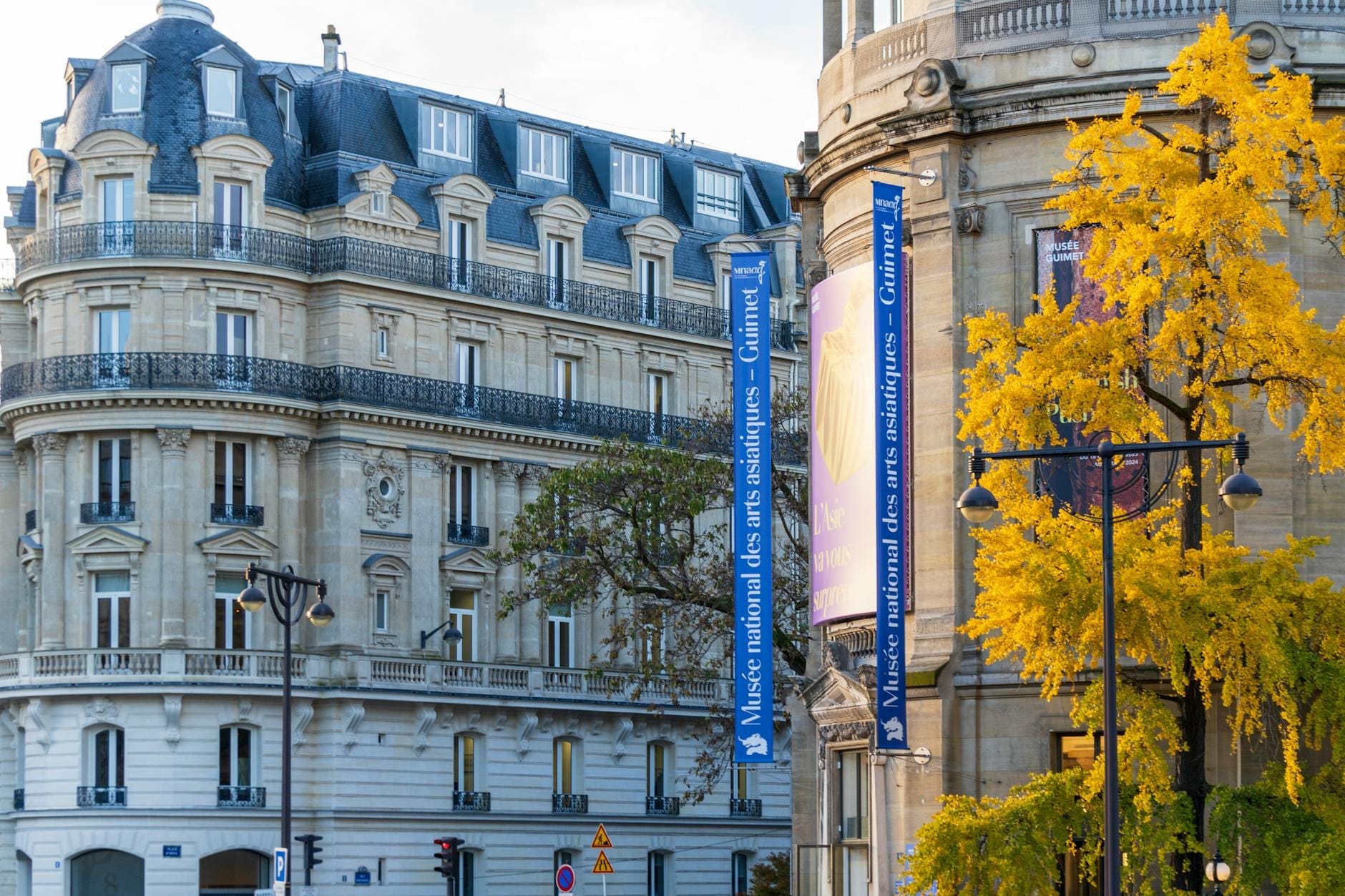
The Musée national des arts asiatiques - Guimet holds Europe's largest collection of Asian art, with more than 50,000 objects spanning 5,000 years of history across Afghanistan, India, Southeast Asia, China, Korea, and Japan. Housed in a handsome neoclassical building steps from the Trocadéro, it rewards visitors who approach it with curiosity and enough time to slow down.
Quick Facts
- Location
- 6 place d'Iéna, 75116 Paris (16th arrondissement, Champs-Élysées / Trocadéro)
- Getting There
- Métro Line 9 (Iéna) or Line 6 (Boissière); Bus 22, 30, 32, 63, 82; RER C (Pont de l'Alma, 10-min walk)
- Time Needed
- 1.5 to 3 hours (permanent collections alone); add 45 min for temporary exhibitions
- Cost
- €15 adults (includes permanent + temporary exhibitions, second visit free within 14 days); €12 reduced; free for under-18s, EU residents aged 18–25, disabled visitors + companion, and all visitors on the first Sunday of each month
- Best for
- Art history lovers, Southeast Asia and East Asia enthusiasts, travelers who want a world-class museum without the crowds of the Louvre
- Official website
- www.guimet.fr/en/node/7
What the Musée Guimet Actually Is
The Musée national des arts asiatiques - Guimet is France's national museum of Asian art and the largest collection of its kind in Europe. Across four floors and dozens of galleries, it traces 5,000 years of artistic production from Afghanistan, Pakistan, India, Nepal, Tibet, Cambodia, Thailand, Vietnam, China, Korea, and Japan. The sheer geographic and chronological scope is staggering, and first-time visitors often underestimate how much ground the building covers.
The museum takes its name from Émile Guimet, a Lyon industrialist who traveled through Japan, China, and India in the 1870s and 1880s, amassing religious objects, sculpture, and decorative arts. He opened a museum in Lyon in 1879, then moved everything to Paris, where the building on place d'Iéna opened in 1889. In 1945 the collection passed to the French state and merged with Asian holdings from the Louvre.
💡 Local tip
The €15 admission ticket covers both the permanent collections and any ongoing temporary exhibition, and a second visit within 14 days is free. If you visit on the first Sunday of the month, entry is entirely free.
The Collection: What You'll Actually See
The Khmer collection, considered one of the finest outside Cambodia, gathers stone sculptures from Angkor-era temples alongside objects from pre-Angkorian kingdoms. The faces of Khmer bodhisattvas carry an intensity that reproductions cannot convey. The Gandhara galleries nearby present Buddhist sculpture from the ancient crossroads of modern-day Pakistan and Afghanistan, where Greek artistic conventions fused with Buddhist iconography following Alexander the Great's campaigns. These are among the most academically significant objects in the building.
The India and Nepal galleries hold an outstanding series of bronze and stone deities: dancing Shivas, multi-armed Durgas, and meditating Buddhas in schist and gilt copper. The Tibetan collection includes painted thangkas and ritual objects that rarely appear in Western museums with such depth. If you have any interest in Himalayan art, this floor alone justifies the trip.
The upper floors shift eastward. Chinese ceramics run from Han dynasty earthenware tomb figures through Tang dynasty glazed horses to Song celadons and Ming porcelain, arranged to show stylistic evolution across dynasties. The lighting in these rooms is warmer and more flattering to ceramic surfaces than in many comparable institutions. Japan receives substantial space: lacquerware, folding screens, and rotating selections of prints. Nearby, the Panthéon Bouddhique pavilion, a separate but included space in the adjacent garden, holds a focused collection of Japanese and Chinese Buddhist art in an intimate, skylit room.
Tickets & tours
Hand-picked options from our booking partner. Prices are indicative; availability and final rates are confirmed when you complete your booking.
Musee d'Orsay Skip-the-Line Tickets and Guided Tour
From 59 €Instant confirmationFree cancellationSkip-the line guided tour of Musee Rodin
From 89 €Instant confirmationMusee d'Orsay entrance ticket with Seine river cruise
From 45 €Instant confirmationParis Musee d'Orsay tickets and in-app audio tour
From 35 €Instant confirmation
How the Museum Changes by Time of Day
Opening time at 10 AM is reliably the least crowded window. The building fills gradually through mid-morning, and the Khmer and Indian sculpture rooms attract the most visitors around 11:30 AM, when school and tour groups arrive. Come on a weekday morning and head to the upper-floor ceramics first, working down through the building, and you can cover the highlights ahead of the crowd flow.
Midday through early afternoon sees steady traffic but nothing approaching the density of the Louvre or Musée d'Orsay. The Guimet is genuinely spacious and even busy days rarely feel oppressive. Late afternoon from 4 PM onward the building thins out, and the low angled light entering the upper galleries catches the gold leaf of Buddhist objects particularly well. Admissions close at 5:15 PM.
ℹ️ Good to know
The museum is closed every Tuesday, as well as January 1, May 1, and December 25 (early closure on December 24 and 31). It closes early on December 24 and 31. Always check the official website before visiting during holiday periods.
Getting There and Getting Around
The most direct route is Métro Line 9 to Iéna, which deposits you on place d'Iéna directly in front of the entrance. Line 6 to Boissière is a slightly longer walk. From the Trocadéro esplanade, the museum is an eight-minute walk south. Bus routes 22, 30, 32, 63, and 82 all stop nearby. Arriving from the Right Bank on RER C, alight at Pont de l'Alma and walk about ten minutes up avenue d'Iéna.
Inside, the museum is fully accessible. There is a priority entrance for visitors with reduced mobility, ramps and elevators throughout all floors, accessible toilets, and trained staff available. Guided tours adapted for visitors with hearing impairments (in LSF French Sign Language and with lip-reading support) are offered on a scheduled basis. The free entry policy for disabled visitors plus one companion applies year-round.
Note that the Paris Museum Pass covers only the permanent collection galleries at the Guimet and does not include temporary exhibitions. If a major show is running, you will pay full admission or a separate ticket. See our guide to whether the Paris Museum Pass is worth it to decide before you buy.
The Building and Its Surroundings
The Guimet occupies a late-19th-century neoclassical building with a rotunda and interior atrium that draws natural light through the upper floors, giving the collection room to breathe. The entrance hall has a cloakroom, a bookshop with strong Asian art titles, and a café opening onto a small courtyard garden that is almost always quiet.
The museum sits in the quiet 16th arrondissement, close to the Trocadéro. The Palais de Tokyo and the Musée d'Art Moderne de la Ville de Paris are both within a ten-minute walk, making this one of the most concentrated museum zones in the city.
Photography, Practical Details, and What to Bring
Photography without flash is permitted throughout the permanent collection galleries, and the lighting quality is generally good enough for phone cameras to produce respectable results, especially in the ceramic galleries on the upper floors. The Khmer stone sculpture rooms are dimmer, so a steadier hand or a higher ISO setting helps. Tripods are not permitted.
The museum has a cloakroom near the entrance for coats and bags, which is worth using if you are carrying a large pack. The café serves reasonable lunch options and coffee. There is no requirement to pre-book for the permanent collection, though temporary exhibitions during peak periods occasionally sell out for specific time slots. Checking the official website before a major show opens is sensible.
Wear comfortable shoes; four floors cover a meaningful distance. For a full day of museum-going in this quarter, the Guimet pairs naturally with the Musée de l'Orangerie or with the towers and gardens of the Trocadéro area. Paris in spring and autumn gives you the most agreeable walking conditions between sites.
Honest Assessment: Is It Worth Your Time?
For visitors focused on Asian art, the Guimet is one of the best museums in the world for the subject. The Khmer collection and Gandhara sculpture alone place it in a category shared by only a handful of global institutions. For general tourists who have already covered the Louvre, Musée d'Orsay, and Versailles, it offers a genuinely distinct experience with manageable crowds and no queuing.
That said, visitors expecting the visual spectacle of a blockbuster institution or the grandeur of the Louvre may find the Guimet quieter and more scholarly in tone. The galleries are calm, the labeling informative but not dramatized, and the experience rewards patience over a quick tick-box visit. Give it less than 90 minutes and you will leave with an incomplete picture of the collection.
Visitors with no interest in Asian history or art, who are tight on time in a two or three-day Paris trip, might reasonably prioritize elsewhere. But for anyone with curiosity about Buddhist iconography, ancient trade routes, or the breadth of Asian civilization, this museum delivers at a level the entry price makes very good value.
⚠️ What to skip
The Guimet periodically undertakes gallery renovations, which can close specific wings with little advance notice on third-party sites. Check the official website for any closed rooms before your visit, especially if you have come specifically for one collection.
Insider Tips
- If you are visiting on a tight budget or with children, mark the first Sunday of each month in your calendar. Entry is free for everyone, all day, with no registration required.
- The Panthéon Bouddhique pavilion in the small garden adjacent to the main building is included in your admission and almost always overlooked by visitors. It holds a focused collection of Japanese and Chinese Buddhist art in an intimate setting with natural light from above.
- The museum bookshop near the entrance carries specialized titles on Khmer art, Tibetan thangkas, and Chinese ceramics that you will not find in general Paris bookshops. Even if you are not buying, it is worth browsing if you want to go deeper on anything you saw in the galleries.
- Audioguides and multimedia guides are available at the welcome desk. The multimedia guide is particularly worth renting for the Gandhara and Khmer sections, where the geographic and religious context significantly enriches what you are looking at.
- The Paris Museum Pass covers the permanent collections at the Guimet. If you already hold one, use it for the permanent collection and pay the small supplement only if a temporary exhibition genuinely interests you.
Who Is Musée Guimet For?
- Art history and archaeology enthusiasts who want serious depth, not just a highlights reel
- Travelers returning to Paris who have already covered the major Impressionist and Western art institutions
- Families with older children (10+) who are studying Asian history or world religions
- Photographers interested in Buddhist sculpture and ceramic art in well-controlled gallery lighting
- Budget-conscious travelers visiting on the first Sunday of the month, when entry is free
Nearby Attractions
Other things to see while in Champs-Élysées & Trocadéro:
- Arc de Triomphe
Standing 49.5 metres above Place Charles de Gaulle, the Arc de Triomphe de l'Étoile anchors the grandest axis in Paris. Its rooftop terrace delivers one of the city's great panoramas, while the base houses the Tomb of the Unknown Soldier — a living memorial renewed by flame every evening.
- Champs-Élysées
Stretching 1.91 km from Place de la Concorde to the Arc de Triomphe, the Avenue des Champs-Élysées is at once Paris's grandest promenade and its most debated street. Here is what to expect, when to go, and how to make the most of it.
- Crazy Horse Paris
Crazy Horse Paris has staged its distinctive blend of dance, light, and visual design on Avenue George V since 1951. The current show, 'Totally Crazy!', runs approximately 90 minutes and draws a mix of curious first-timers and loyal returning guests who appreciate its position between cabaret tradition and contemporary performance art.
- Grand Palais
Built for the 1900 Universal Exhibition and freshly reopened after a landmark renovation, the Grand Palais is one of the most spectacular public buildings in Europe. Its iron-and-glass nave stretches 240 metres and shelters world-class art exhibitions, cultural events, and the Palais de la Découverte science museum beneath a single soaring roof.