Mission Bay Beach: Auckland's Urban Beach Done Right
Stretched along Tāmaki Drive just 5 kilometres east of the city centre, Mission Bay Beach delivers calm swimming water, a flat esplanade lined with cafés and ice-cream kiosks, and uninterrupted views across the Waitematā Harbour. It is free to visit, easy to reach by bus or car, and genuinely pleasant from early morning through to late evening.
Quick Facts
- Location
- Tāmaki Drive, Mission Bay, Auckland
- Getting There
- TāmakiLink bus from near Waitematā Station; parking available on Tāmaki Drive
- Time Needed
- 1–3 hours depending on activity
- Cost
- Free entry; food and activities extra
- Best for
- Families, swimmers, runners, weekend brunch crowds
- Official website
- www.aucklandnz.com/explore/mission-bay
What Mission Bay Actually Is
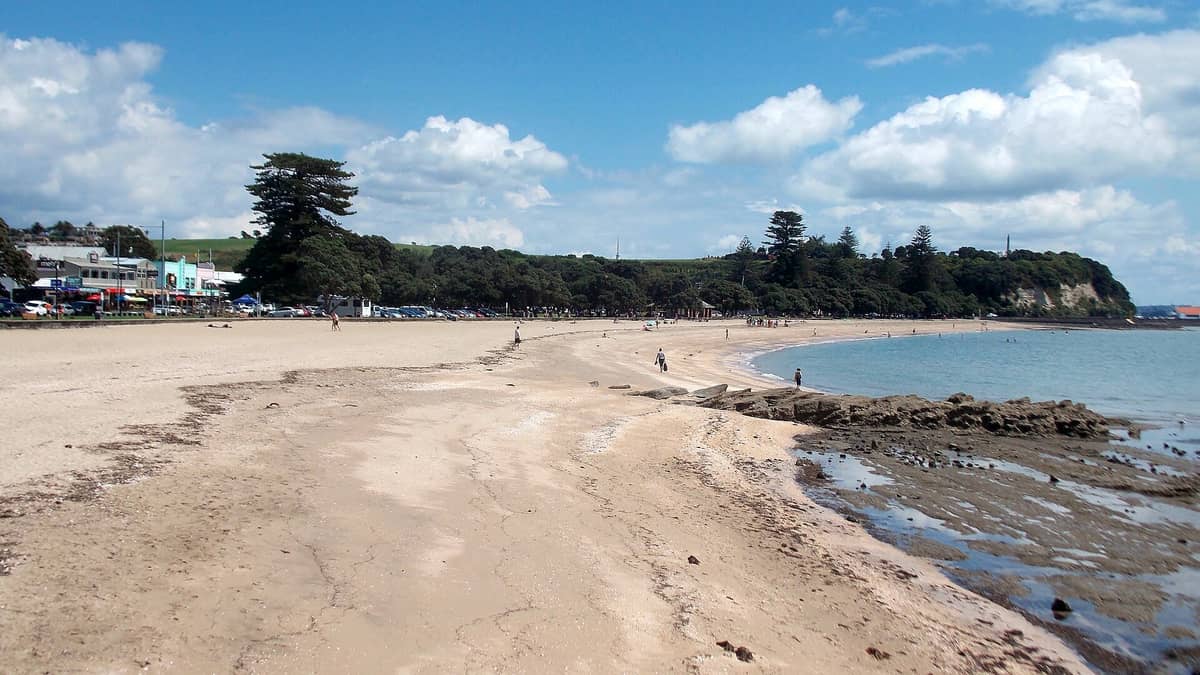
Mission Bay Beach is roughly 600 metres of fine, dark sand curving along the Waitematā Harbour, facing north-east across the Hauraki Gulf. It is not a wild or remote beach. It is Auckland's most deliberately urban beach: groomed, well-serviced, and built around a wide paved promenade that invites everything from early-morning runners to post-brunch strollers. The water here is calm, sheltered from ocean swell, and generally more sheltered than the exposed west-coast beaches on the other side of the Waitākeere Ranges.
The name goes back to 1858, when the Melanesian Mission established a base beside the bay. That institution trained Pacific Island clergy and was one of the more consequential colonial-era institutions in the region. The mission buildings are largely gone, but a stone school building remains as a restaurant; the name stuck, and the area has since evolved into one of the most visited leisure strips in the entire city.
ℹ️ Good to know
Mission Bay Beach has no official opening hours and no admission charge. It is accessible around the clock, though the promenade cafés and kiosks operate on their own schedules, typically from morning until late evening.
How the Beach Changes Through the Day
Arrive before 8 am and Mission Bay has a completely different character to its midday self. The promenade belongs to runners, dog walkers, and people with takeaway coffees watching the harbour wake up. Light hits the water at a low angle, and on clear mornings Rangitoto Island sits on the horizon like a perfectly symmetrical sketch. The fountain at the centre of the esplanade catches the light, and the car parks are still mostly empty.
By late morning on weekends, particularly between October and April, the dynamic shifts considerably. Families claim patches of sand, the gelato windows open, and the restaurants along The Parade start seating brunch crowds. The smell of sunscreen becomes noticeable. Parking along Tāmaki Drive fills up by 10 am on good-weather weekends, so driving in expecting a quick spot is optimistic.
Late afternoons in summer are arguably the most atmospheric window. The day-tripper families start thinning, the light turns golden over the harbour, and the outdoor tables at the bars and restaurants fill with people who have finished work or a swim. The water temperature in summer, typically around 20–22°C, makes an evening dip genuinely comfortable rather than bracing.
💡 Local tip
If you want to swim without crowds, aim for weekday mornings between late November and late March. The water is warmest at this time of year, and you will have long stretches of the beach largely to yourself before 9 am.
Tickets & tours
Live prices and dates from our booking partner. If you book, we may earn a commission at no extra cost to you.
Luggage Storage in Auckland
From 5 €Instant confirmationFree cancellationNew Zealand West Coast discovery tour
From 100 €Instant confirmationFree cancellation13,000ft skydiving experience in Auckland
From 195 €Instant confirmationFree cancellationDiscover Auckland City Tour
From 88 €Instant confirmationFree cancellation
The Promenade and What Lines It
The flat, paved esplanade running the length of the beach is one of Mission Bay's real assets. It is wide enough that cyclists, walkers, and people with prams do not feel like they are constantly negotiating right-of-way. There are public toilets and a fountain that children treat as a splash pad in summer. Benches face the water at regular intervals.
The strip of restaurants, cafés, and ice-cream sellers along The Parade is well-worn but functional. Options range from sit-down restaurants serving pizza and pasta to fast-food takeaways and gelato counters. The quality is consistent rather than exceptional; you are paying partly for the location. If you want a more serious meal or a café that prioritises the coffee over the view, the surrounding inner suburbs will serve you better.
Mission Bay is also the western end of a longer coastal walk that stretches east along Tāmaki Drive through Kohimarama and Saint Heliers. This flat walkway, known as part of the broader Tāmaki Drive corridor, is one of the most enjoyable urban walks in Auckland and takes around 45 minutes to an hour to complete at a relaxed pace.
Swimming, Safety, and the Water Itself
The beach is patrolled by surf lifesavers during the summer season, and the sheltered position means the sea rarely produces dangerous surf. For families with young children, this is a significant advantage over Auckland's west-coast beaches, where unpredictable surf and rip currents require constant attention. The sand shelf drops gradually, making shallow-water play feasible for toddlers.
Water quality is generally good, but Auckland's beach monitoring programme issues periodic swim warnings after heavy rainfall, when stormwater runoff can temporarily elevate bacteria levels. Auckland Council publishes real-time water quality alerts online; it is worth checking before swimming if there has been significant rain in the preceding 24 hours.
⚠️ What to skip
After heavy rain, check Auckland Council's water quality monitoring page before swimming at Mission Bay. Stormwater runoff can temporarily affect water quality at harbour beaches including this one.
Getting There Without a Car
Auckland Transport's TāmakiLink bus runs from Waitematā Station along Tāmaki Drive directly past Mission Bay. Check the AT Journey Planner for current travel times and payment options. On sunny summer weekends, this is genuinely the smarter option: Tāmaki Drive becomes a slow crawl eastbound after 10 am, and finding parking once you arrive can add significant frustration to an otherwise easy outing.
If you are building a longer day, Mission Bay connects naturally to a wider exploration of Auckland's eastern harbour edge. The best beaches in Auckland guide covers how Mission Bay compares to alternatives like Takapuna or the more remote west-coast options — useful context if you are deciding which beach suits your priorities.
Accessibility and Practicalities
The promenade is flat and fully paved, making it navigable for wheelchairs and prams without difficulty. Parking is available near the main esplanade entrance. The beach sand itself presents the usual challenges for wheeled mobility aids; beach wheelchairs are not confirmed to be available on-site, so anyone who needs one should plan ahead.
There is no shade on the beach itself beyond what neighbouring buildings cast in the early morning or late evening. Bring sunscreen and a hat if you plan to spend more than an hour during daylight hours, particularly between November and March when UV levels in Auckland are routinely high even on partly cloudy days.
Photography is rewarding in the golden hour before sunset, when Rangitoto Island catches warm light directly across the harbour. For a more elevated perspective of the city's volcanic geography, Mount Eden and other volcanic cones offer views that contextualise Mission Bay's position within Auckland's broader landscape.
Is Mission Bay Worth Your Time?
Mission Bay is not going to be the highlight of an Auckland trip for everyone. It is an urban beach, and it is honest about that. The food is average, the parking is difficult on good weekends, and the sand is not the powder-white variety that appears on New Zealand tourism brochures. If you are expecting something remote or dramatic, you will be disappointed.
But if you want a beach that is genuinely easy to access, safe for families, pleasant for a walk or swim, and surrounded by cafés and public amenities, Mission Bay delivers without requiring any particular planning. It is also a useful staging point: walk east toward Kohimarama and Saint Heliers, or use it as a warm-up before heading further out to explore the Hauraki Gulf.
Travellers who want something wilder and less suburban should consider the west-coast beaches; the Auckland west coast beaches guide covers Piha, Karekare, and Muriwai in detail. Those beaches require a car and more planning but offer a dramatically different experience. For island beaches with genuine remoteness, a ferry to Waiheke Island opens up options that Mission Bay simply cannot match.
Insider Tips
- Parking can fill up on sunny weekends. Take the TāmakiLink bus from Waitematā Station and skip the frustration entirely.
- The fountain in the middle of the esplanade is a reliable crowd magnet for small children on hot days — position yourself near it if you want candid, lively photos.
- Walk east from the beach toward Kohimarama and Saint Heliers for a quieter stretch of coastline with fewer kiosks and a more local feel. It takes about 25 minutes at a relaxed pace.
- Check Auckland Council's water quality alerts online if there has been heavy rain in the past day. Harbour beaches including Mission Bay can receive temporary swim warnings after significant rainfall.
- The view of Rangitoto Island from the esplanade is at its best in the 30 minutes before sunset on clear evenings — bring a camera and time your visit accordingly.
Who Is Mission Bay Beach For?
- Families with young children who want calm, safe swimming without surf
- Runners and walkers following the eastern harbour coastal path
- Visitors staying in the city centre who want a beach within easy reach without hiring a car
- Couples looking for a relaxed sunset walk along a flat, scenic promenade
- Travellers on a budget who need a free, full-afternoon activity near central Auckland
Nearby Attractions
Combine your visit with:
- Auckland Botanic Gardens
Spread across 64 hectares in Manurewa, the Auckland Botanic Gardens offer free entry every day of the year, with themed garden collections, 10 hectares of native forest, and a visitor centre on site. It sits south of the city centre and rewards a longer visit than most people initially plan for.
- Auckland Zoo
Auckland Zoo has been part of the city's fabric since 1922, sitting in the Western Springs precinct with a collection that spans native New Zealand wildlife and international species. This guide covers everything from ticket prices and transit options to the best time of day to arrive and which exhibits deliver the most.
- Bastion Point (Takaparawhau)
Takaparawhau, known widely as Bastion Point, is a grassy headland in Ōrākei where Māori history, colonial conflict, and sweeping Waitematā Harbour views converge. It costs nothing to visit, carries centuries of significance, and rewards visitors who take time to understand what they are standing on.
- Bethells Beach (Te Henga)
Bethells Beach, officially Te Henga (Bethells Beach), is a raw, dramatic stretch of black-sand coastline about 45 minutes west of central Auckland. With rolling dunes, a freshwater lagoon, strong surf, and zero phone coverage, it delivers a genuine wilderness experience rare for a city of 1.6 million people.
Planning a trip? Discover personalized activities with the Nomado app.