Mercat de la Boqueria: Barcelona's Great Food Market, Honestly Reviewed
The Mercat de Sant Josep de la Boqueria is Barcelona's largest and most storied food market, sitting squarely on La Rambla since its official inauguration in 1840. Free to enter and open six days a week, it offers 300-plus stalls of fresh produce, seafood, charcuterie, and prepared foods. But timing your visit right makes the difference between a genuine market experience and an overpriced tourist trap.
Quick Facts
- Location
- La Rambla, 91, Ciutat Vella, Barcelona
- Getting There
- Liceu (Metro L3, green line)
- Time Needed
- 45 minutes to 2 hours depending on interest
- Cost
- Free entry; stall prices vary widely
- Best for
- Food lovers, photographers, morning walkers, curious travelers
- Official website
- www.boqueria.barcelona
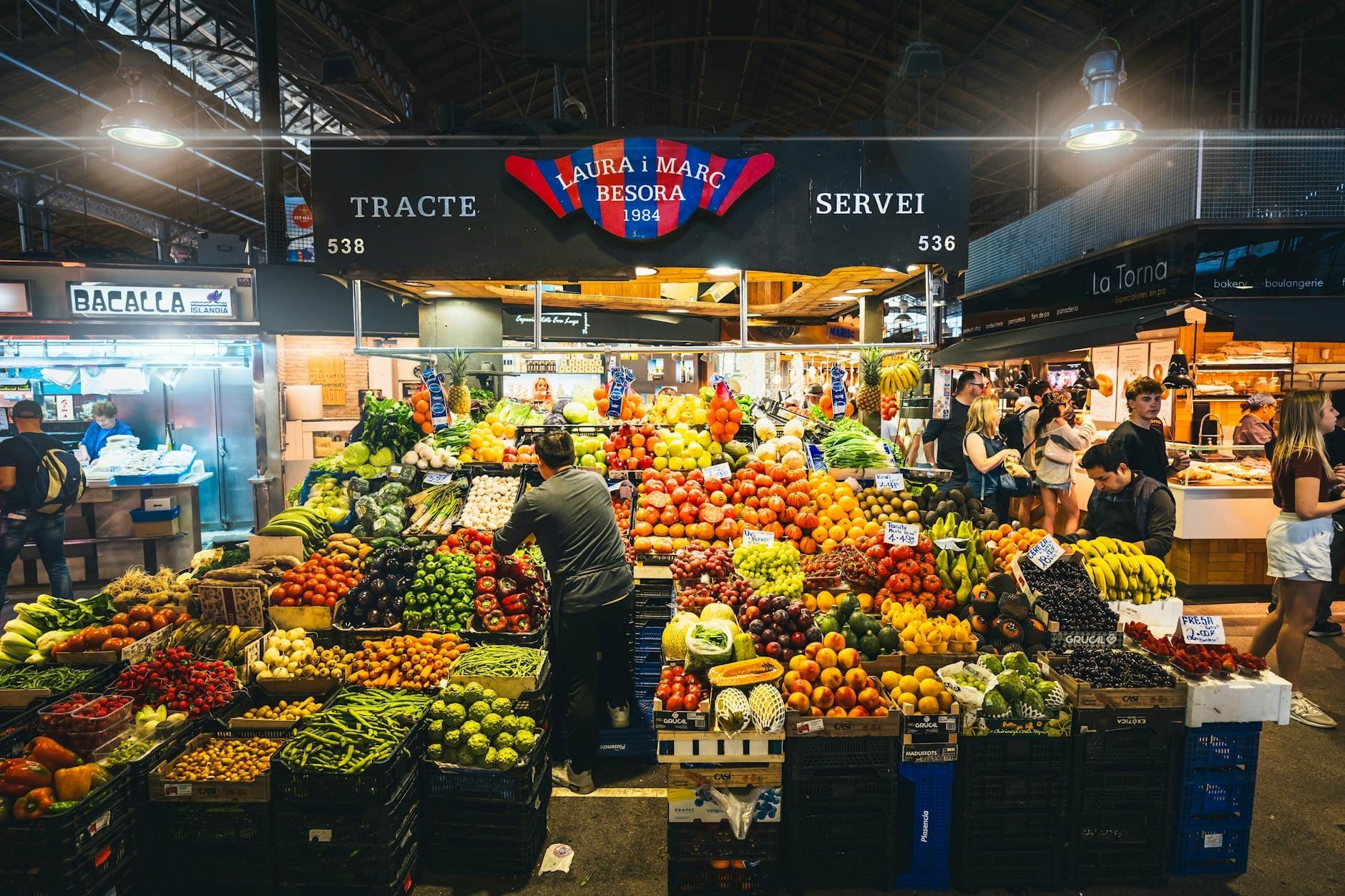
What La Boqueria Actually Is
The Mercat de Sant Josep de la Boqueria, known everywhere simply as La Boqueria, is Barcelona's largest market at 2,583 square meters, with more than 300 stalls operating under a wide iron-and-glass roof. Officially inaugurated in 1840 on the site of a former convent, it has roots that stretch back much further: meat was sold on these tables as early as 1217, and by 1470 pig traders had made the spot a regular fixture. The name Boqueria likely derives from the Catalan word for goat meat sellers.
The iconic stained-glass entrance canopy and the soaring iron roof, added in 1914, give the market its unmistakable visual identity. Inside, the layout moves roughly from prepared foods and fresh fruit at the front toward fish, meat, and specialty products deeper in. The stalls near the entrance are the most photographed, and consequently the most tourist-facing in their pricing.
ℹ️ Good to know
Opening hours: Monday to Saturday, 8:00 AM to 8:30 PM. Closed Sundays. Many stalls are still unpacking until around 10:00 AM, so the full market doesn't hit its stride until mid-morning. Note: a phased renovation is underway (2025-2027), which may temporarily affect some stall sections — check boqueria.barcelona before your visit.
How the Market Changes Through the Day
Arriving before 9:00 AM puts you in the market at its most authentic. Professional chefs, restaurant buyers, and local residents move purposefully through the aisles, speaking Catalan and Spanish with the vendors. The smells are at their sharpest: raw fish on ice, earthy mushrooms, the faintly sweet rot-edge of overripe tropical fruit. There is little ambient noise beyond transaction and the thud of cleavers in the meat section.
By 11:00 AM, the tourist numbers have multiplied. The central fruit stalls begin aggressively offering pre-cut portions in small plastic cups at prices that bear no relationship to the underlying produce. The aisles narrow further as tour groups pause for photographs. The experience is still worthwhile, but it is a different experience than the early morning one.
The afternoon is the busiest and, honestly, the least rewarding time to shop. Stalls toward the back of the market remain calmer and more local-facing in the afternoon, particularly the dry goods vendors, spice sellers, and the modest bar counters tucked into the interior.
💡 Local tip
Best visit window: arrive between 8:30 and 10:00 AM on a weekday. Saturday mornings are busy but still workable. Avoid midday on any day from May through October.
Tickets & tours
Live prices and dates from our booking partner. If you book, we may earn a commission at no extra cost to you.
Boqueria and Santa Caterina Markets tour with food and tapas
From 89 €Instant confirmationFree cancellationFood, wine and history guided tour with La Boqueria Market visit
From 95 €Instant confirmationFree cancellationPaella Cooking Class & Boqueria Market Tour
From 113 €Instant confirmationFree cancellationPicasso Museum guided tour
From 30 €Instant confirmationFree cancellation
What to Actually Buy and Eat Here
The pre-cut fruit cups at the entrance are convenient but significantly overpriced compared to buying whole fruit from the same stalls or from any neighborhood supermarket. They are not dishonest — the fruit is fresh — but they are priced for visitors with no alternative. If you want to taste something, buy a whole piece of fruit and ask the vendor to bag it, or pick up a small paper cone of dried fruits and nuts from one of the interior spice stalls.
The fresh seafood section in the deeper interior is where La Boqueria genuinely earns its reputation. The quality and variety of fish, shellfish, and cured marine products is exceptional. Prawns, razor clams, whole sea bass, salt cod in multiple preparations, and seafood you will struggle to identify by name are all laid out on crushed ice. These stalls serve working restaurants, which keeps the quality high and the turnover fast.
The market's sit-down bars, particularly the counters along the side aisles, serve short plates of cooked food at reasonable prices. A plate of grilled clams, a tortilla slice, or a glass of cava with anchovies eaten at a market bar stool at 9:30 in the morning is one of the more honest pleasures the place offers. Avoid the more visible counters near the front entrance, which tilt their menus toward tourist expectations.
If you want to understand the full range of Barcelona's food markets without the tourist density, the Mercat de Santa Caterina in El Born is a strong alternative with a stunning mosaic roof and a more local customer base.
Architecture and Historical Context
The building itself is worth a deliberate look before you get absorbed by the stalls. The entrance gate on La Rambla is framed by stained glass panels in deep reds and greens, assembled in the early twentieth century. The iron columns and vaulted roof above the main hall are good examples of the utilitarian Catalan Modernisme applied to public infrastructure, the same impulse that produced the city's modernist hospitals and factories.
The market stands on the site of the former Convent of Sant Josep, demolished in 1836. For several decades after demolition, an informal open-air market had been operating here, and the 1840 inauguration simply formalized and roofed what was already happening. The iron roof as it exists today was completed in 1914, replacing an earlier structure.
La Boqueria sits at the midpoint of Las Ramblas, Barcelona's most walked boulevard. The market's main entrance is visible from the street and draws visitors almost reflexively. If you're already walking La Rambla, entering the market requires no detour whatsoever.
Getting There and Getting Around Inside
The closest metro stop is Liceu on Line 3 (the green line). One note worth knowing: the Liceu platforms serve trains in two separate directions and the platform sections are not physically connected underground. Make sure you enter the correct side for your direction of travel, particularly when leaving. The exit onto La Rambla deposits you almost directly in front of the market entrance.
Inside, the market is a single large open floor with a fairly logical radial layout. The main entrance axis takes you straight through the middle. Side aisles to the left and right contain the more specialized vendors. The market is not signposted in a way that's easy to navigate on a first visit, so it rewards wandering rather than purposeful searching.
The ongoing renovation (2025-2027) aims to widen the internal aisles, which will improve accessibility for visitors with mobility constraints. Current conditions are tight in peak hours. If you use a wheelchair or stroller, an early weekday morning is your best window for manageable navigation.
La Boqueria is part of a broader cluster of things worth doing in the Las Ramblas area. The Gran Teatre del Liceu opera house is directly across the boulevard, and the Palau Güell, Gaudí's early masterwork, is a five-minute walk into El Raval.
Honest Assessment: Worth It or Overhyped?
La Boqueria is genuinely worth visiting, but the unqualified enthusiasm in many travel guides can set up the wrong expectations. The front third of the market is largely optimized for visitor spending, with prices that reflect location rather than quality. If you walk in at noon in July expecting an authentic local shopping experience, you will feel disappointed.
Visited early and with realistic expectations, it is one of the most impressive food environments in southern Europe. The sheer variety and volume of produce, the organizational logic of a working professional market, and the architectural setting add up to something that justifies the detour. The key is treating it as a place to look, smell, taste small things, and absorb the pace, not primarily as a grocery run.
⚠️ What to skip
Pickpocket risk is real in and around the market, particularly at the entrance and in the densest crowd periods. Keep bags zipped and in front of you. This is true along all of La Rambla, not just here.
Travelers who have no interest in food culture, markets, or architecture will find the experience underwhelming, especially given the crowds. If your priority is efficient sightseeing, this is a reasonable 30-minute stop rather than a destination in itself.
For a fuller picture of Barcelona's food landscape, including where to eat well near the market and in surrounding neighborhoods, the where to eat in Barcelona guide covers the city's distinct dining cultures across neighborhoods.
Photography at La Boqueria
The market photographs well at almost any hour, but early morning gives you cleaner compositions: vendors arranging produce, quiet aisles with raking light coming through the roof structure, and faces that are not turned away from a camera. The spice and dried fruit stalls produce the most saturated colors. The fish section rewards a wide lens and patience for the moment when a vendor lifts a tray.
Always ask before photographing individual vendors directly. Most will not object if asked politely in Spanish or Catalan, and a small purchase is a reasonable gesture of goodwill. Photographing without asking, particularly with a camera in someone's face, is received poorly and is worth avoiding on simple courtesy grounds.
Insider Tips
- The bar counters tucked into the side aisles rather than the main entrance area serve the same food at noticeably lower prices. Look for counters without English-language menu boards.
- If you want whole fresh fish at proper market prices, the vendors at the back of the fish section are your target. Bring a cool bag if you're heading to a self-catering apartment.
- Possible renovations means some sections may be temporarily closed or rerouted. Check boqueria.barcelona before visiting to see the current layout.
- On hot days, the market's interior stays measurably cooler than the street. It's a legitimate reason to duck in even if you're not buying anything.
- Locals who use La Boqueria regularly tend to have established relationships with specific vendors. If a stall has a small queue of people who appear to be regulars, that's usually a signal of consistent quality.
Who Is Mercat de la Boqueria For?
- Food travelers wanting to understand Barcelona's produce culture firsthand
- Early risers who can beat the tourist crowds and see a working professional market
- Photographers interested in color, texture, and daily life in a working market setting
- Self-catering visitors who want to buy quality fresh ingredients
- Architecture enthusiasts interested in Barcelona's tradition of expressive public infrastructure
Nearby Attractions
Other things to see while in Las Ramblas & El Raval:
- Font de Canaletes
A cast-iron fountain near Plaça de Catalunya, Font de Canaletes has stood at the top of La Rambla since 1892. It is where FC Barcelona fans flood the street after major victories, where a local legend promises you will return to the city if you drink its water, and where the everyday rhythm of Barcelona plays out in miniature.
- Gran Teatre del Liceu
The Gran Teatre del Liceu is one of Europe's largest and most storied opera houses, rising from La Rambla since 1847. With a gilded six-tier auditorium, a dramatic history of fire and rebirth, and a packed season running from September to July, it offers visitors far more than a night at the opera.
- Las Ramblas
Las Ramblas is Barcelona's most famous street, a 1.2 km tree-lined boulevard connecting Plaça de Catalunya to the waterfront. Free to walk, open around the clock, and flanked by markets, theatres, and historic facades, it anchors every first visit to the city. Go in knowing what you're getting and you'll enjoy it far more.
- MACBA – Museu d'Art Contemporani de Barcelona
MACBA is Barcelona's leading contemporary art museum, housed in Richard Meier's landmark white building in El Raval. From rotating collections to one of the city's most photogenic plazas, here's what to expect before you visit.
Planning a trip? Discover personalized activities with the Nomado app.