Gran Teatre del Liceu: Inside Barcelona's Grand Opera House
The Gran Teatre del Liceu is one of Europe's largest and most storied opera houses, rising from La Rambla since 1847. With a gilded six-tier auditorium, a dramatic history of fire and rebirth, and a packed season running from September to July, it offers visitors far more than a night at the opera.
Quick Facts
- Location
- La Rambla, 51-59, 08002 Barcelona (Las Ramblas)
- Getting There
- Metro Liceu (L3, Green Line)
- Time Needed
- 1 hour (guided tour) to 3-4 hours (full performance)
- Cost
- Varies by event or tour; check liceubarcelona.cat for current prices
- Best for
- Opera lovers, architecture fans, cultural evenings in Barcelona
- Official website
- www.liceubarcelona.cat/en
What the Gran Teatre del Liceu Actually Is
The Gran Teatre del Liceu is not just a concert venue. It is a working institution, a civic monument, and one of the defining symbols of Catalan cultural life, all compressed into a single neoclassical building on the most famous boulevard in Barcelona. Founded in 1847 on the site of a former Trinitarian convent, the Liceu was built not by royal decree but by a private society of citizens: local bourgeoisie who wanted a world-class opera house for their city. That origin gives it a different character from many European opera houses, which tend to be state or royal commissions. This one belongs, in a meaningful sense, to Barcelona.
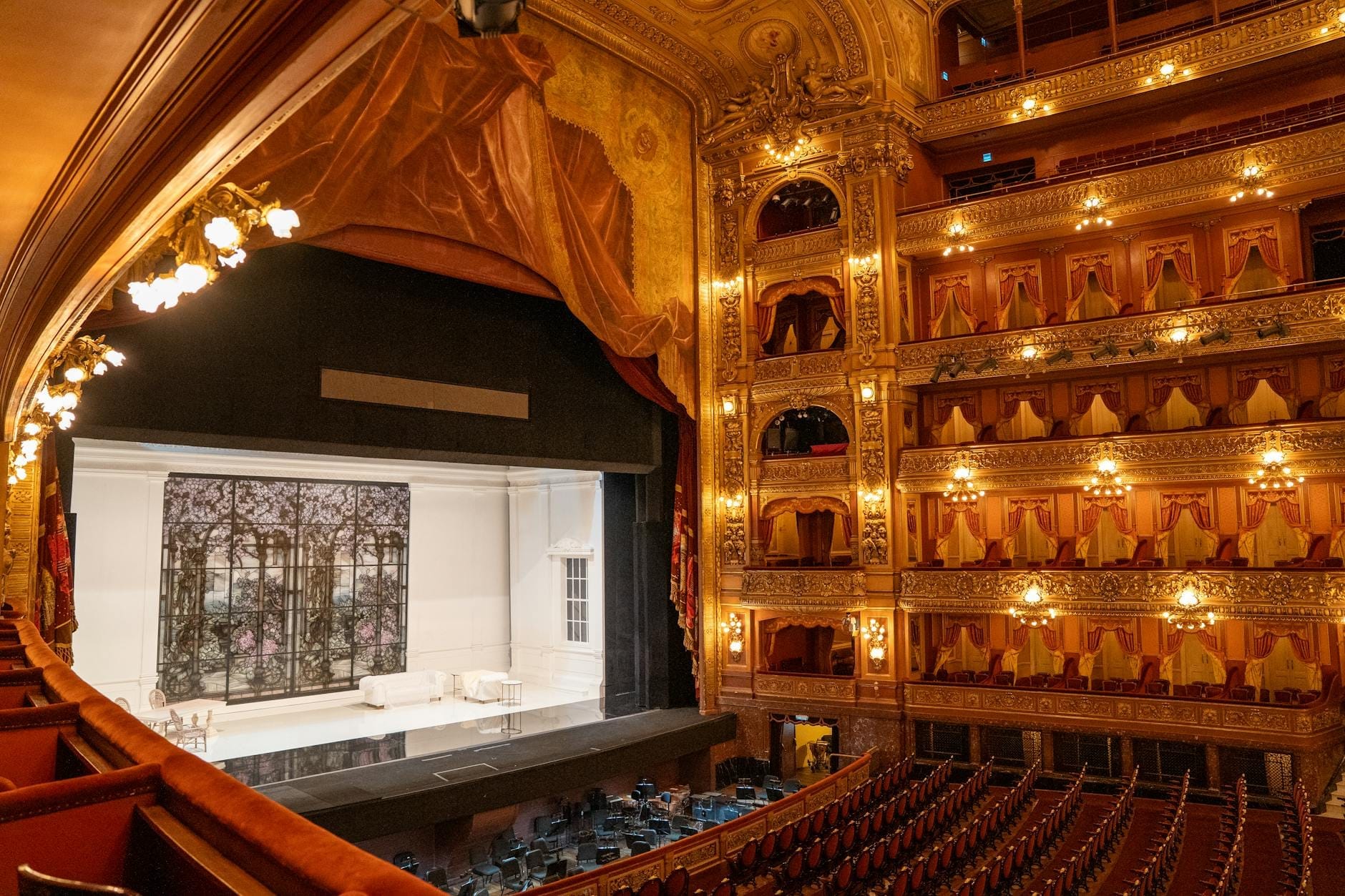
The auditorium seats 2,292 people across six tiers of horseshoe-shaped balconies, making it one of the largest opera houses in the world by capacity. The interior is layered with gilt plasterwork, red velvet, and carved wood. Even visitors who have no particular interest in opera tend to stop moving when they step inside the main hall. The scale is simply unexpected from the street.
ℹ️ Good to know
The Liceu's performance season runs from late September to late July. Outside performance nights, guided tours of the building are available. Check the official website at liceubarcelona.cat for current tour schedules and ticket availability before visiting.
A History Written in Fire
The Liceu has burned twice, and both fires shaped what you see today. The first, in 1861, destroyed the stage and part of the auditorium only 14 years after the theatre opened. It was rebuilt quickly, and the restored interior lasted over a century. Then, on January 31, 1994, a spark from a welder's torch set off a fire that gutted the auditorium entirely, reducing the ornate hall to a smoldering shell in a matter of hours. The footage ran on news broadcasts across Europe. Barcelona was devastated.
What followed was a reconstruction effort that lasted five years and involved meticulous historical research to restore the original appearance while quietly modernizing the technical infrastructure beneath it. The rebuilt Liceu reopened in October 1999 with a performance of Puccini's Turandot, the same opera that had been on the bill the night before the fire. The gesture was deliberate. The theatre was not just repaired; it was insisting on its own continuity.
The 1994 fire is still vivid in the memory of older Barcelonans. Asking a local of a certain age about the Liceu often prompts a specific memory of where they were when they heard the news. That emotional connection is part of what makes the building feel culturally significant in a way that goes beyond architecture or programming.
Tickets & tours
Live prices and dates from our booking partner. If you book, we may earn a commission at no extra cost to you.
Santa Maria del Mar Guided Tour Through the Interior and Terraces
From 19 €Instant confirmationFree cancellationBarcelona Highlights tour
From 50 €Instant confirmationFree cancellationBohemian neighbourhoods eBike tour
From 40 €Instant confirmationFree cancellationGaudi highlights eBike tour
From 40 €Instant confirmationFree cancellation
Visiting on a Performance Night
Arriving at the Liceu on an opera night has its own rhythm. The facade faces directly onto La Rambla, and the entrance foyer fills with well-dressed audience members from about an hour before curtain. The contrast with the street outside is immediate: you step from one of Barcelona's most chaotic pedestrian thoroughfares into a space of marble floors, gilt mirrors, and hushed anticipation. The interior is formally dressed in red and gold, and the chandeliers in the main hall throw light in ways that make the whole auditorium look slightly unreal.
Ticket prices vary considerably depending on the production and seat location. A seat in the upper tiers is significantly cheaper than stalls or lower balcony, and acoustically the upper levels can be excellent in a venue of this design. Whatever you book, arriving early enough to walk the corridors and take in the Sala dels Miralls (Hall of Mirrors) on the first floor is worth the effort. That room, with its floor-to-ceiling mirrors and ornate ceiling, predates the 1994 fire and gives a direct connection to the 19th-century Liceu. For context on how this fits into Barcelona's broader cultural landscape, the Palau de la Música Catalana in El Born offers an interesting comparison: a Modernista concert hall built in 1908, equally spectacular but in a completely different architectural key.
💡 Local tip
Book performance tickets well in advance for popular productions, especially international premieres or works by Catalan composers. The Liceu's website lists the full season programme and allows direct booking. Last-minute standing tickets are sometimes available, but cannot be counted on.
The Guided Tour: Seeing the Building Without a Performance
If attending a performance is not practical, the guided tour is the next best way to access the building. Tours typically move through the public reception rooms, the main auditorium, and backstage areas, giving visitors a sense of the machinery behind a working opera house: the fly tower, the wing space, the lighting rigs. The auditorium seen empty in daylight has a different atmosphere than on a performance night, quieter and more architectural, but the proportions are even more legible without the crowd and the dim lighting.
Tours are conducted in multiple languages and last roughly an hour. Numbers are limited, which keeps the experience from feeling rushed. That said, tour schedules can shift depending on rehearsal and production demands, so checking the official website before planning around a specific time is essential. The Liceu is a working theatre first, and tour access is scheduled around that priority.
The tour also provides historical context that enriches what you see. The building sits within a neighborhood with a dense cultural history. Las Ramblas itself has been a social artery of Barcelona since the 18th century, and the Liceu has stood at its midpoint, adjacent to the Mercat de la Boqueria, for nearly 180 years. That location is part of the story.
The Location: La Rambla in Context
The Liceu sits at roughly the midpoint of La Rambla, between Plaça de Catalunya at the top and the Columbus monument at the waterfront. The immediate neighborhood is lively at most hours, with the Mercat de la Boqueria located just a few steps north on the same boulevard. The contrast between the market's noise and produce smells and the Liceu's composed facade makes for an interesting twenty-meter transition.
By day, the Liceu's exterior is easy to miss. The building is integrated into the Rambla's continuous street wall, its neoclassical facade relatively restrained compared to the visual noise of the shops and kiosks around it. The marquee signage above the entrance is the clearest indicator. At night, with the foyer lit and audience members gathering on the pavement, the building asserts itself more clearly.
If you are spending an evening in this part of the city, the area around the Liceu pairs well with dinner beforehand in El Born or the Gothic Quarter, both within comfortable walking distance. Post-performance, La Rambla itself is active well past midnight, though travelers should be aware that the boulevard requires the usual attention to personal belongings in crowded conditions.
Practical Details and Who Should Skip It
Getting to the Liceu is straightforward: the Metro Liceu station (L3, Green Line) exits directly onto La Rambla a short walk from the theatre entrance. The journey from most central Barcelona hotels takes under 15 minutes by metro. Taxis and ride-hailing services can drop at the Rambla, though traffic on the boulevard itself is restricted.
Accessibility details are not comprehensively documented in publicly available sources. The post-1999 reconstruction incorporated modern technical infrastructure, and the official website is the best place to confirm specific access requirements before visiting.
For travelers assembling a broader cultural itinerary, the Liceu fits naturally alongside other major Barcelona institutions. The full range of things to do in Barcelona is wide, but if architecture and arts are priorities, the Liceu, the Palau de la Música, and the Modernista buildings of the Eixample form a coherent thread.
⚠️ What to skip
Visitors with no interest in opera or classical performance who visit only for the architecture may find the guided tour worthwhile but brief. The building's real power is experienced during a live performance. If live classical music or opera is genuinely not your interest, the tour alone may feel like a significant spend for an hour inside a beautiful but contextless space.
Travelers seeking a quick photo stop will find the exterior accessible at any time without charge, but the interior cannot be entered without a tour booking or performance ticket. There is no free lobby access on non-performance days. Plan accordingly.
Insider Tips
- The Sala dels Miralls (Hall of Mirrors) on the first floor is one of the most photographed spaces in the building. On guided tours, ask specifically to spend time there rather than moving through quickly.
- Upper-tier seats (fourth, fifth, or sixth row from the top) are the most affordable and can offer surprisingly good acoustics. Binoculars are useful for following stage detail from that height.
- The Liceu occasionally hosts free or low-cost events, including open rehearsals and community concerts. Check the 'Liceu per a Tothom' (Liceu for Everyone) programme on the official website.
- Evening performances usually end around 10:30-11pm. The Rambla is active afterward, but for a quieter post-show drink, head one block east toward the Gothic Quarter's smaller streets.
- The theatre's season programme is published months in advance. If a particular production is a priority, booking three to four months ahead for popular dates is not excessive.
Who Is Gran Teatre del Liceu For?
- Opera and classical music lovers visiting Barcelona for a dedicated cultural evening
- Architecture enthusiasts interested in 19th-century European theatre design and post-fire reconstruction
- Travelers building a Barcelona arts itinerary across the Liceu, Palau de la Música, and MNAC
- Couples looking for a formal evening out in one of Barcelona's most iconic indoor spaces
- History-minded visitors interested in the role of civic institutions in Catalan cultural identity
Nearby Attractions
Other things to see while in Las Ramblas & El Raval:
- Font de Canaletes
A cast-iron fountain near Plaça de Catalunya, Font de Canaletes has stood at the top of La Rambla since 1892. It is where FC Barcelona fans flood the street after major victories, where a local legend promises you will return to the city if you drink its water, and where the everyday rhythm of Barcelona plays out in miniature.
- Las Ramblas
Las Ramblas is Barcelona's most famous street, a 1.2 km tree-lined boulevard connecting Plaça de Catalunya to the waterfront. Free to walk, open around the clock, and flanked by markets, theatres, and historic facades, it anchors every first visit to the city. Go in knowing what you're getting and you'll enjoy it far more.
- MACBA – Museu d'Art Contemporani de Barcelona
MACBA is Barcelona's leading contemporary art museum, housed in Richard Meier's landmark white building in El Raval. From rotating collections to one of the city's most photogenic plazas, here's what to expect before you visit.
- Mercat de la Boqueria
The Mercat de Sant Josep de la Boqueria is Barcelona's largest and most storied food market, sitting squarely on La Rambla since its official inauguration in 1840. Free to enter and open six days a week, it offers 300-plus stalls of fresh produce, seafood, charcuterie, and prepared foods. But timing your visit right makes the difference between a genuine market experience and an overpriced tourist trap.
Planning a trip? Discover personalized activities with the Nomado app.