Little Hagia Sophia (Küçük Ayasofya Camii): Istanbul's Overlooked Byzantine Masterpiece
Built in the 530s under Emperor Justinian, Little Hagia Sophia predates its famous namesake and served as an architectural prototype for it. Today it functions as a working mosque in the Ahırkapı quarter of Sultanahmet, free to enter and far quieter than the monuments that draw the longest queues.
Quick Facts
- Location
- Küçük Ayasofya, Kumkapı, Fatih, Istanbul
- Getting There
- T1 tram to Sultanahmet, then 10-min walk southwest via Arasta Bazaar
- Time Needed
- 30–60 minutes
- Cost
- Free (donations accepted)
- Best for
- Byzantine history, architecture, quiet contemplation
What Is Little Hagia Sophia?
Küçük Ayasofya Camii, known in English as Little Hagia Sophia Mosque, is one of the oldest intact Byzantine structures in Istanbul. Originally consecrated as the Church of Saints Sergius and Bacchus sometime in the 530s CE under the reign of Emperor Justinian I, it predates the construction of the great Hagia Sophia by a few years. The two buildings share more than a name: scholars widely regard Saints Sergius and Bacchus as an early experiment in the domed structural form that would reach its apex in the larger church a short walk away.
The name 'Little Hagia Sophia' is a later popular attribution, not a formal designation, but it captures the relationship well. If you have already visited Hagia Sophia and want to understand what came before it, this is the place to come. The scale is more human, the crowds are a fraction of the size, and the atmosphere is noticeably different.
ℹ️ Good to know
Little Hagia Sophia is a functioning mosque. Entry is free, and the interior is closed to visitors during communal prayer times. Plan around prayer schedules, which shift seasonally, to ensure access.
Historical Context: A Church That Shaped an Empire's Architecture
Construction of the Church of Saints Sergius and Bacchus is generally dated to around 536 CE, commissioned by Justinian I during a period of intense building activity across Constantinople. Sergius and Bacchus were Roman soldier-saints venerated in the Eastern Christian tradition, and the church was built adjacent to what was then the Palace of Hormisdas, where Justinian had lived before becoming emperor.
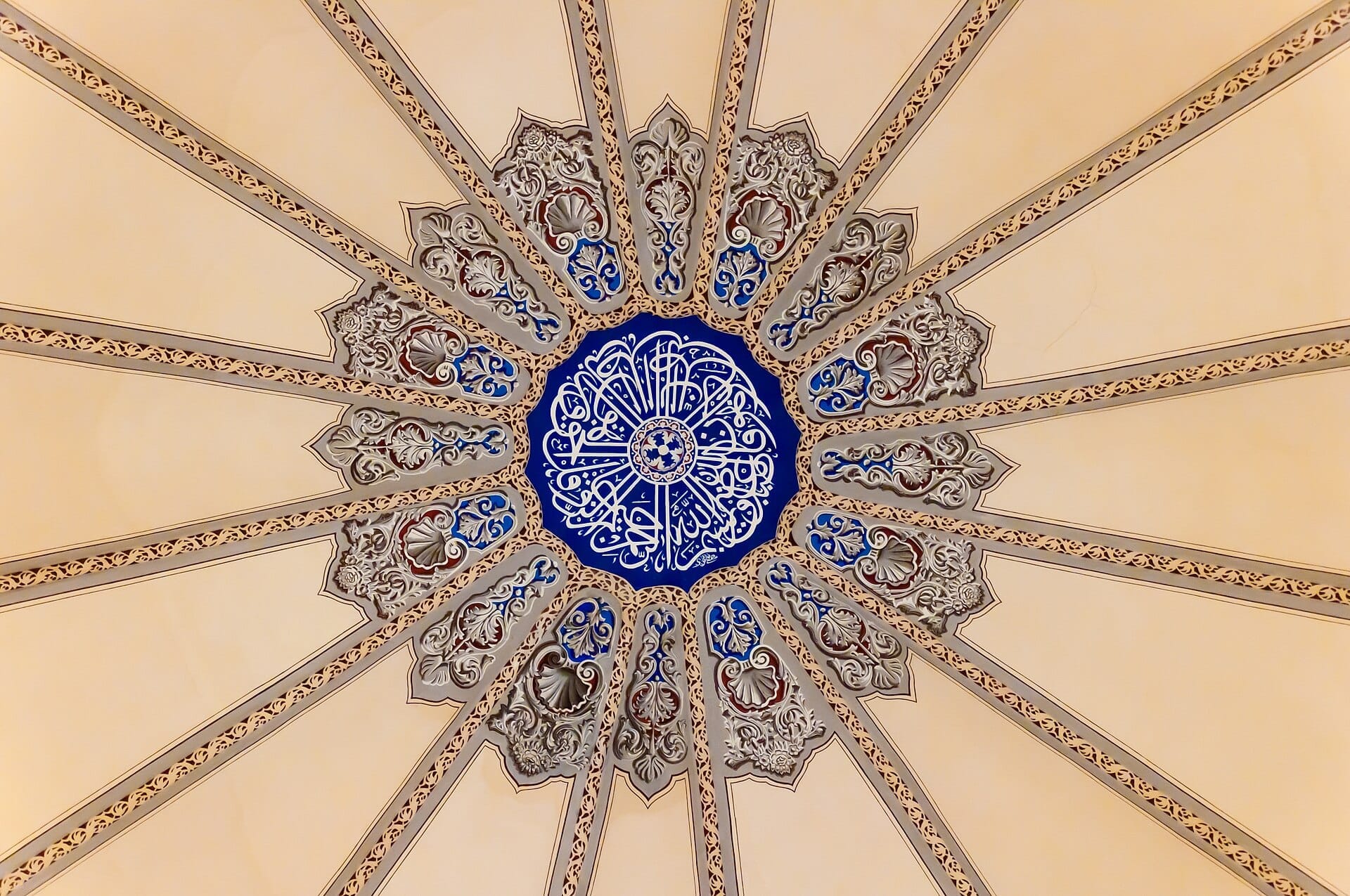
The defining architectural feature is an octagonal nave set within a rectangular outer shell, topped by an umbrella dome approximately 17 meters in diameter. The dome's ribs are separated by concave segments, creating a scalloped profile that distributes weight in a way that prefigures solutions later deployed at a much larger scale in Hagia Sophia. Look up when you enter: the transition from the octagon below to the circular dome above is handled with a sophistication that still draws architectural historians to this building.
The church survived intact through the Byzantine period and was converted into a mosque in the late 15th or early 16th century, not long after the Ottoman conquest of Constantinople in 1453. A mihrab (prayer niche) and minaret were added. The Greek inscriptions on the inner entablature, dedicating the building to Justinian, Empress Theodora, and the saints, remain legible today, making this one of the rare places in Istanbul where Byzantine dedicatory text survives on the walls of a working mosque.
For deeper context on the Byzantine period in Istanbul, the Istanbul Byzantine history guide covers the full arc from Constantine to the fall of Constantinople.
Tickets & tours
Hand-picked options from our booking partner. Prices are indicative; availability and final rates are confirmed when you complete your booking.
Hagia Sophia skip-the-line entry ticket and optional audio guide
From 37 €Instant confirmationSkip-the-line Hagia Sophia and Grand Bazaar tour
From 60 €Instant confirmationFree cancellationHagia Sophia, Topkapi Palace and Basilica Cistern Istanbul tour
From 144 €Instant confirmationFree cancellationSkip-the-Line Entrance to Topkapi Palace, Hagia Sophia and Basilica Cistern
From 137 €Instant confirmationFree cancellation
What You See Inside
The interior is compact but remarkably rich. The octagonal arrangement of columns on the ground floor creates eight bays, alternating between curved exedrae and flat-sided sections, which gives the space an unusual rhythm as you move around it. The columns themselves are topped with intricately carved capitals, their acanthus leaf carvings still crisp in places after fifteen centuries. The quality of the stonework reflects the kind of imperial commission this was.
Light enters through multiple tiers of windows. In the morning, sunlight falls across the lower columns and catches the texture of the carved capitals. By midday, the upper windows illuminate the dome interior more evenly. Late afternoon produces the warmest quality of light overall, with a golden tone that suits photography. The mosque carpet and prayer furniture are modest and do not obscure the architectural elements significantly.
The Greek inscription band running along the interior entablature is worth taking time to read, or at least to examine closely. It runs around the colonnade and explicitly names Justinian, Theodora, and the military saints. This level of surviving inscriptional content is unusual for a building that has been continuously used for nearly fifteen centuries under two different religious traditions.
The Courtyard and Surrounding Quarter
The mosque sits within a walled courtyard containing a small garden, a fountain, and a number of old tombstones. The courtyard is accessible even when the mosque interior is closed for prayer. It provides a quiet place to sit and look at the exterior facade, which retains much of its original Byzantine brickwork. The alternating bands of brick and mortar are characteristic of late antique construction in Constantinople.
The surrounding Kumkapı neighborhood is quieter and more residential than the Sultanahmet tourist core. The streets near the mosque hold a few small workshops, a tea house, and carpet and antique dealers. It does not feel staged for visitors the way some parts of Sultanahmet do. The walk down from the Blue Mosque via the Arasta Bazaar takes around ten minutes and descends gradually toward the Sea of Marmara.
This part of Sultanahmet is also close to the city walls near the sea, and the waterfront at Ahırkapı is within walking distance. The Sultanahmet neighborhood has considerably more to offer than the famous monuments on its upper plateau.
How the Experience Changes by Time of Day
Morning visits, roughly between 9:00 and 10:30, offer the calmest conditions. The courtyard is quiet, the interior cool, and the low eastern light angles into the windows in a way that makes the carved column capitals stand out in relief. Weekday mornings are markedly less crowded than weekends. You may find yourself alone in the interior, or nearly so.
Midday brings more passing visitors, particularly those on tours of the Sultanahmet area who include a brief stop here. The mosque is still far less crowded than Hagia Sophia or the Blue Mosque at the same hour. Afternoon visits have the advantage of warm light but can coincide with the late afternoon prayer, which temporarily closes the interior. Arriving shortly after it ends, usually around 16:30–17:00 depending on the season, gives you good light and a reopened space.
💡 Local tip
Check the current day's prayer timetable before visiting. Prayer times shift by roughly an hour across seasons. A local prayer time app or the mosque's posted schedule will show you the windows between prayers when the interior is open to visitors.
Practical Information: Getting There, Dress Code, and Accessibility
The T1 tram line stops at Sultanahmet station, which is the most convenient public transport access point for the historic peninsula. From the Sultanahmet tram stop, walk south past the Blue Mosque and continue through or around the Arasta Bazaar (a covered arcade of craft and carpet shops behind the mosque). Follow Küçük Ayasofya Caddesi downhill toward the sea. The walk is approximately 10 minutes and is mostly downhill.
As a working mosque, visitors are expected to observe standard mosque dress codes. Women should cover their hair and wear clothing that covers shoulders and knees. Men should also cover their legs if wearing shorts. Shoes must be removed before entering the prayer hall. Scarves are sometimes available at the entrance, but bringing your own is more reliable. Speak quietly inside and avoid visiting during prayer times out of respect for worshippers.
There is no entrance fee. Donations are accepted. No detailed wheelchair accessibility information for this site is available from official sources, so visitors with mobility requirements should assess the stepped entrance and uneven courtyard surfaces in advance. The neighborhood streets on the approach from Arasta Bazaar include some cobblestones and gradients.
⚠️ What to skip
Do not visit only for photography without respecting the mosque's function as an active place of worship. Worshippers use this mosque regularly, especially for midday and afternoon prayers. Photography of people in prayer is inappropriate.
Worth the Detour?
Little Hagia Sophia is not a spectacle. The scale is intimate, the interior modest by the standards of Istanbul's grand imperial mosques, and there are no light shows, multimedia displays, or gift shops. If your measure of value is visual drama, the famous monuments nearby will deliver more per minute. But if you want to stand in a building that is structurally and historically significant in ways that shaped the entire trajectory of Byzantine architecture, this is a rare opportunity to do so without crowds, ticket lines, or admission fees.
It suits travelers who read about places before visiting, who want to understand historical sequence rather than just collect landmarks, and who appreciate the quality of a space that has been in continuous use for roughly 1,500 years. It is less suited to visitors on tight schedules who have not yet seen the major Sultanahmet attractions, or to families with young children who need more immediately engaging environments.
Combining this visit with nearby sites makes geographic sense. The Istanbul Archaeology Museums and Hagia Irene are both within the broader Sultanahmet area and together make a coherent full-day itinerary focused on pre-Ottoman Istanbul.
Insider Tips
- The interior entablature inscription naming Justinian and Theodora runs around the full colonnade. Bring a pair of small binoculars or use your phone camera's zoom to read the Greek text clearly from ground level.
- The courtyard is accessible during prayer times when the mosque interior is closed. Use that time to examine the exterior brickwork up close: the original Byzantine construction technique of thin bricks set in thick mortar beds is still clearly visible on the outer walls.
- The Arasta Bazaar route from the Blue Mosque is more pleasant and direct than navigating the streets around it. The bazaar is a covered arcade and is itself worth a slow walk: it dates to the 17th century and was originally built to generate income for the Blue Mosque's upkeep.
- If you visit on a weekday morning before 10:00, the neighborhood is quiet enough that you can hear the birds in the courtyard garden. That level of calm is nearly impossible to find at any other major Byzantine structure in Istanbul.
- Combine this visit with the walk down toward the Ahırkapı waterfront afterward. The Sea of Marmara view from the old harbor wall is within walking distance from the mosque and provides a contrast between the ancient interior you just left and the open water that defined Constantinople's strategic position.
Who Is Little Hagia Sophia (Küçük Ayasofya Mosque) For?
- Byzantine history enthusiasts who want architectural context beyond Hagia Sophia
- Travelers seeking major historical sites without the crowds or admission fees
- Architects and students of late antique or early medieval building traditions
- Photographers looking for atmospheric interiors with good natural light and minimal visitor interference
- Anyone building a full-day historic peninsula itinerary who wants logical site sequencing
Nearby Attractions
Other things to see while in Sultanahmet:
- Basilica Cistern
Built by Emperor Justinian I in 532 AD, the Basilica Cistern is one of Istanbul's most extraordinary ancient structures. Descend beneath Sultanahmet's streets into a vast, column-filled underground reservoir that once supplied water to the Byzantine imperial palace. Few places in the world feel quite like it.
- Blue Mosque (Sultan Ahmed Mosque)
The Sultan Ahmed Mosque, known universally as the Blue Mosque, is one of Istanbul's most recognizable landmarks. Built between 1609 and 1616, it remains an active place of worship that welcomes non-Muslim visitors outside prayer times. This guide covers everything you need to plan a smooth, respectful visit.
- Gülhane Park
Gülhane Park sits directly beside Topkapı Palace in Sultanahmet, occupying land that served as the Ottoman court's private outer garden for centuries. Open daily, free to enter, and containing one of Istanbul's oldest surviving monuments, it rewards visitors who take more than a passing glance.
- Hagia Irene
Hagia Irene (Aya İrini Müzesi) is the oldest surviving church structure in Istanbul, predating even Hagia Sophia. Sitting quietly inside the first courtyard of Topkapı Palace, it offers a rare encounter with raw Byzantine architecture — unrestored, unadorned, and old.