Legion of Honor: San Francisco's Clifftop Art Palace
Perched above the Pacific in Lincoln Park, the California Palace of the Legion of Honor is a three-quarter-size replica of a Parisian neoclassical palace housing 4,000 years of art. The setting alone, with ocean fog rolling past the colonnade and a cast of Rodin's The Thinker standing sentinel in the courtyard, makes this one of the most visually striking museum visits in California.
Quick Facts
- Location
- 100 34th Avenue, Lincoln Park, San Francisco, CA 94121
- Getting There
- Muni 18-46th Ave bus stops at the museum; 38-Geary or 1-California to 33rd Ave & Geary/Clement, then walk or transfer
- Time Needed
- 2 to 3 hours for the permanent collection; half a day if a special exhibition is running
- Cost
- Adults $25 USD; Seniors (65+) $22; Students (with ID) $10; Youth 17 and under free. First Tuesday free for permanent collection; free permanent-collection entry daily from 4:30 pm. Verify current pricing at famsf.org.
- Best for
- European art, Rodin sculpture, architectural photography, fog-day atmosphere, quiet weekday mornings
- Official website
- www.famsf.org/visit/legion-of-honor
What the Legion of Honor Actually Is
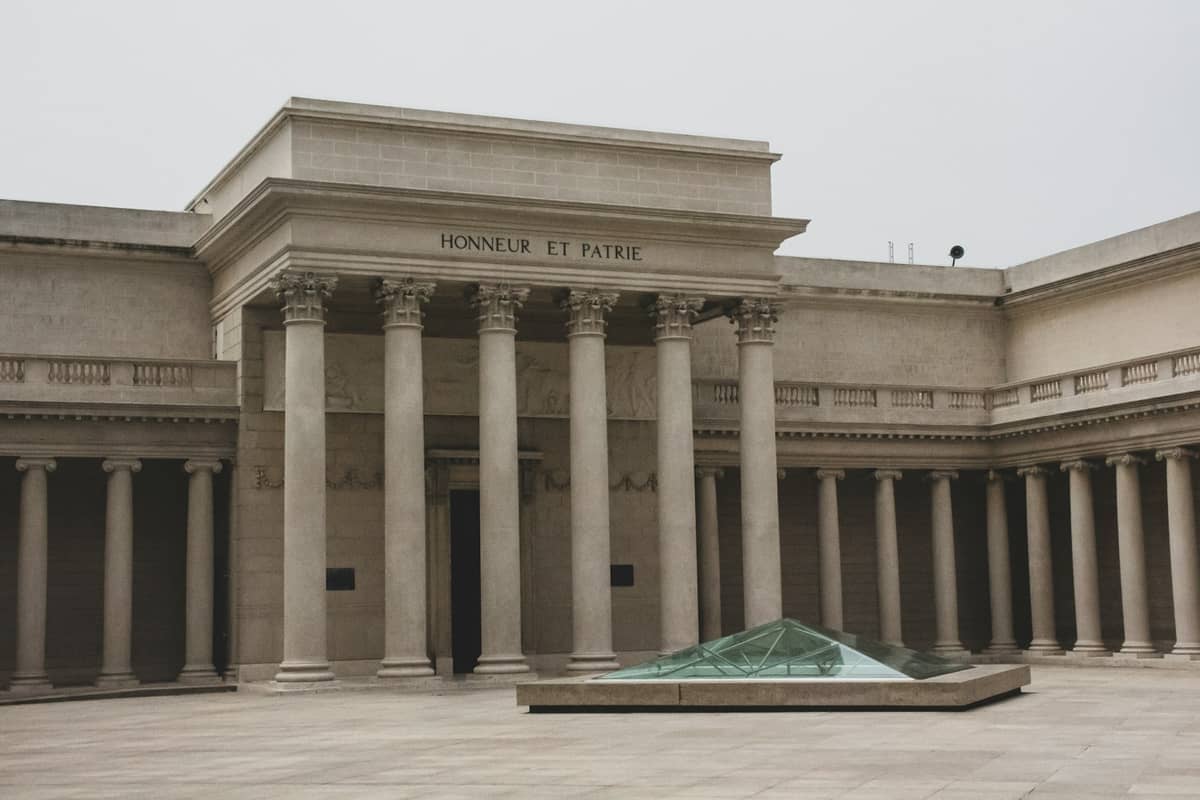
The California Palace of the Legion of Honor is a fine arts museum operated by the Fine Arts Museums of San Francisco, the same organization that runs the de Young Museum in Golden Gate Park. It opened on Armistice Day, November 11, 1924, founded by sugar magnate Adolph B. Spreckels and his wife Alma de Bretteville Spreckels as a memorial to the California soldiers killed in World War I. The building itself is a three-quarter-size replica of the Palais de la Légion d'Honneur in Paris, and it wears that lineage clearly: a colonnaded neoclassical facade, a formal forecourt, and a bronze cast of Rodin's The Thinker positioned in the courtyard arch where visitors first see it.
The collection spans roughly 4,000 years of ancient and European art, with particular strength in French decorative arts, old master paintings, and one of the largest collections of Rodin sculpture outside France. This is not a survey museum trying to cover everything. It has a focused identity: European, classical, and at times genuinely impressive in depth.
ℹ️ Good to know
The first Tuesday of every month offers free admission to the permanent collection. Arrive when doors open at 9:30 am on those days, as the museum draws notably larger crowds by mid-morning.
The Setting: Why the Location Changes the Experience
The museum sits inside Lincoln Park on the northwestern tip of San Francisco, above the Pacific. On clear days the view from the forecourt takes in the Golden Gate Bridge to the northeast and the Marin Headlands beyond it. On foggy mornings, which are common from June through August, the bridge vanishes entirely and the colonnade emerges from grey mist in a way that is, genuinely, more atmospheric than a blue-sky day. The fog also muffles the city completely. Standing in that courtyard with The Thinker, you would not know you were in a major urban area.
Morning visits, particularly on weekdays, have a specific quality worth seeking out. The low Pacific light enters the western-facing galleries at an angle that works well for paintings. By early afternoon the light has shifted, the school groups have arrived, and the atmosphere is more ordinary. Late afternoon on a clear September or October day, when San Francisco tends toward its warmest and clearest weather, the forecourt catches golden light and the bridge view is at its sharpest.
The surrounding Lincoln Park also connects to the Lands End Trail, a coastal hiking path that runs along the cliffs below the museum toward Sutro Baths. Combining a museum visit with a trail walk before or after is an efficient and genuinely rewarding way to use a half-day in this part of the city.
💡 Local tip
Fog at this elevation can be cold and damp even in summer. Bring a layer regardless of how warm it felt downtown when you left. The courtyard is exposed and the wind off the Pacific is direct.
Tickets & tours
Hand-picked options from our booking partner. Prices are indicative; availability and final rates are confirmed when you complete your booking.
Sonoma and Napa Valley wine tour from San Francisco
From 127 €Instant confirmationFree cancellationGo City | San Francisco Explorer Pass
From 76 €Instant confirmationFree cancellationMuir Woods and Sausalito guided tour with transportation
From 82 €Instant confirmationFree cancellationSan Francisco CityPASS
From 77 €Instant confirmationFree cancellation
Inside the Collection: What to Prioritize
The permanent collection runs across 19 galleries on the main floor. The Rodin holdings are the centerpiece and they justify the trip on their own: the museum holds more than 100 works including significant bronze castings, marble sculptures, and works on paper. The galleries devoted to Rodin are quiet on weekday mornings in a way that allows for the kind of close, sustained looking the work rewards.
The European paintings collection is strongest in Dutch and Flemish work from the 16th and 17th centuries, and in French 18th-century decorative arts. There are also galleries dedicated to ancient art from Egypt, Greece, and Rome, which provide useful context for the European material but are not the primary draw for most visitors. The prints and drawings collection, held in the Achenbach Foundation for Graphic Arts (the largest such collection on the West Coast), is accessible by appointment for serious researchers.
Special exhibitions may carry a separate admission ticket on top of general entry. Check the current schedule on the museum's website before visiting, as the quality and subject matter of these shows varies considerably. Some have been among the finest temporary exhibitions in the western United States; others are more modest.
If you plan to visit both the Legion of Honor and the de Young Museum in Golden Gate Park, check current dual-museum and CityPASS options at famsf.org — general admission policies for visiting both on the same day change periodically. The two collections complement each other well: the de Young leans toward American art and international textiles, while the Legion of Honor is emphatically European.
Getting There: Transit, Driving, and Parking
The museum is genuinely out of the way by San Francisco standards, which is part of why it stays less crowded than comparable institutions closer to downtown. By public transit, the Muni 18-46th Avenue bus stops directly in front of the museum entrance. From downtown or Union Square, the most practical route is the 38-Geary or 1-California bus to the intersection of 34th Avenue and Clement Street, followed by a transfer to the 18 bus or a walk to the museum.
Driving is straightforward: follow 34th Avenue north through Lincoln Park to the museum. There is on-site parking, which fills quickly on weekends and on free-admission Tuesdays. Arriving before 10 am on busy days is the reliable way to get a spot. Rideshare drop-off works well given the museum's defined entrance area.
For first-time visitors to San Francisco who are building a broader itinerary, the first-time visitor guide covers transit options and neighborhood orientation in useful detail.
Practical Details and Accessibility
The museum is open Tuesday through Sunday, 9:30 am to 5:15 pm. It is closed Mondays, Martin Luther King Jr. Day, Labor Day, Indigenous Peoples' Day, Thanksgiving, and Christmas. These hours are subject to change for special events, so verify at famsf.org before making the trip out here.
Accessibility provision includes accessible entrances, elevators serving all floors, and services for visitors with disabilities. The museum's official visit page details wheelchair access routes, service animal policy, and accessible parking spaces. The main galleries are on a single level once inside, making the collection reasonably navigable for visitors with mobility considerations, though the approach from the parking area involves some slope.
Photography of the permanent collection for personal, non-commercial use is generally permitted without flash. Special exhibition galleries may have separate photography rules posted at the entrance. The museum's cafe and shop are on site, and the cafe's outdoor terrace, when weather permits, offers one of the better lunch spots with a view in this part of the city.
⚠️ What to skip
The Legion of Honor does not appear on most compressed city itineraries, and its distance from downtown means a poor-weather day can make the journey feel inefficient. If fog and drizzle are heavy, the outdoor courtyard experience is diminished and you are left with the interior galleries alone, which are excellent but not worth a long transit journey on a purely utilitarian calculation. September through November, when skies are clearest, is the most reliable season to visit.
Who Should Consider Skipping This
The Legion of Honor is not a natural stop for visitors primarily interested in contemporary or 20th-century art. SFMOMA and the de Young cover those areas more thoroughly. If your San Francisco time is limited to one or two days and you have not yet seen the major neighborhoods, the waterfront, or Golden Gate Park, those experiences tend to offer more of what defines the city. The Legion of Honor rewards visitors who specifically want European art in an extraordinary setting, or who have already covered the more central attractions and are ready to venture further west.
For a broader overview of the city's museum landscape, the guide to the best museums in San Francisco lays out the major options by collection type and visitor interest.
Insider Tips
- The forecourt view of the Golden Gate Bridge is best from the right-hand side of the colonnade as you face the building. Most visitors stand centrally; move to the northeast corner for a cleaner composition without the parked cars in frame.
- The museum's lower level holds the Bowles Hall of the Achenbach Foundation, where rotating displays of works on paper are shown in a smaller, usually very quiet gallery. It is regularly overlooked and often contains some of the most interesting material in the building.
- First Tuesday free admission applies only to the permanent collection. Special exhibitions require a separate ticket even on free Tuesdays. Check the museum website to see what is running before you plan around a free day.
- The Lincoln Park Golf Course wraps around the museum grounds and its 18th fairway runs directly behind the building. The fence line along the back of the museum offers an unusual view of the course, the bay, and the bridge together that almost no visitor photographs.
- If you are visiting in late afternoon on a clear day between September and November, the courtyard catches warm directional light from the west. The Thinker in that light, with the arch framing it, is as good a photograph as the museum setting offers.
Who Is Legion of Honor For?
- Travelers with a specific interest in European paintings, sculpture, and decorative arts
- Photography focused on architecture and dramatic natural light
- Visitors combining a museum visit with a coastal walk along the Lands End Trail
- Those returning to San Francisco who have already covered the central attractions
- Quiet, unhurried weekday mornings when the galleries are nearly empty
Nearby Attractions
Other things to see while in Lands End:
- China Beach
Set between Baker Beach and Lands End in San Francisco's Sea Cliff neighborhood, China Beach is a small, free sandy cove within the Golden Gate National Recreation Area, managed in partnership by the National Park Service and the Golden Gate National Parks Conservancy.
- Lands End Coastal Trail
The Lands End Coastal Trail traces a rugged bluff above the Pacific in the Golden Gate National Recreation Area, following the former bed of a 19th-century railway. At roughly 3.4 miles round-trip, it delivers Golden Gate Bridge panoramas, views of shipwrecks at low tide, and a quieter side of San Francisco that most visitors never find.
- Ocean Beach
Ocean Beach is a 3.5-mile stretch of wild Pacific shoreline forming the western edge of San Francisco. Part of Golden Gate National Recreation Area, it is free to visit, open around the clock, and offers a dramatically different mood than the city's polished tourist corridors.
- Sutro Baths
Once the world's largest indoor swimming complex, the Sutro Baths today survive as concrete ruins on the edge of the Pacific. Free to visit at any hour, this National Recreation Area site combines Victorian-era history, dramatic coastal scenery, and an eerie, photogenic atmosphere unlike anything else in San Francisco.