Ocean Beach, San Francisco: Where the City Meets the Pacific
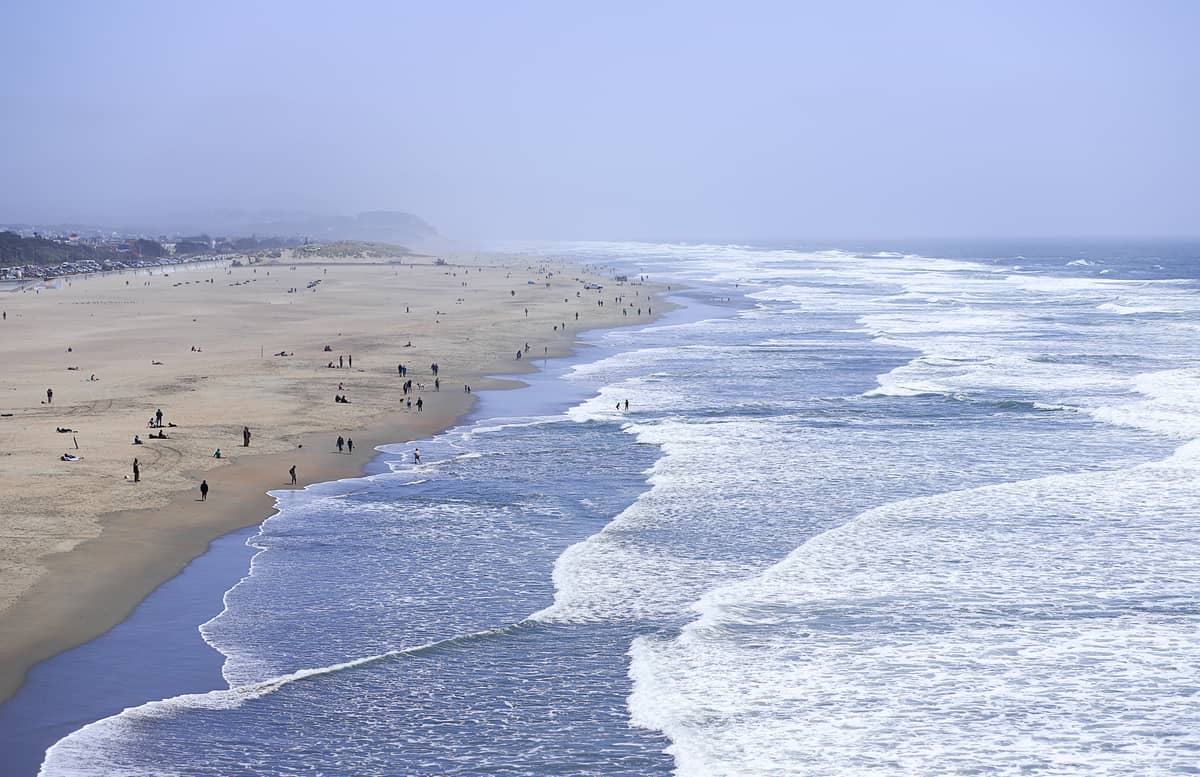
Ocean Beach is a 3.5-mile stretch of wild Pacific shoreline forming the western edge of San Francisco. Part of Golden Gate National Recreation Area, it is free to visit, open around the clock, and offers a dramatically different mood than the city's polished tourist corridors.
Quick Facts
- Location
- Western San Francisco, from Cliff House south to Sloat Blvd, CA
- Getting There
- Muni lines serve Great Highway via Fulton St and Sloat Blvd; check SFMTA for current route numbers
- Time Needed
- 1–3 hours depending on whether you walk the full length
- Cost
- Free — no admission fee (Golden Gate National Recreation Area)
- Best for
- Walkers, surfers, photographers, sunset seekers, fog enthusiasts
- Official website
- www.nps.gov/places/000/ocean-beach.htm
What Ocean Beach Actually Is
Ocean Beach is a 3.5-mile ribbon of sand running along San Francisco's western edge, bordered by the Great Highway to the east and the full force of the Pacific Ocean to the west. It is not a resort beach. There are no lounge chairs for rent, no vendors selling coconut water, no calm lagoon for children to splash in. What it offers instead is something rarer in a major American city: a wild stretch of coast where the cold, powerful Pacific drives in uninterrupted swells and the wind rarely lets up.
The beach is part of Golden Gate National Recreation Area and managed in partnership with the Golden Gate National Parks Conservancy. Access to the shoreline is free and generally available at all hours, every day of the year, though fog, surf advisories, or management decisions can affect specific conditions at any given time.
ℹ️ Good to know
Ocean Beach runs from Cliff House and the ruins of Sutro Baths at its northern end down to Sloat Boulevard in the south. The northern section near Cliff House is the most visited and historically rich; the southern section near Sloat is quieter and often windier.
The Sensory Reality of Being Here
The first thing most people notice is the wind. Even on a clear afternoon, the onshore breeze coming off the Pacific carries enough force to make a conversation at normal volume difficult within a few feet of the waterline. Sand moves constantly, collecting in jacket pockets and crunching between teeth. The smell is strong and clean: salt, kelp, and cold water with an edge of iodine. When fog sits low over the ocean, the sound of waves arrives before any visual does, and the beach takes on a disorienting quality.
The sand itself is coarser than most California beaches further south. Walking the full length at the water's edge, you'll pass tide-carved sandbars, washed-up Dungeness crab shells, feathers from shorebirds, and occasional driftwood logs heavy enough to anchor a small shelter. At low tide, a flat shelf of hard sand emerges near the water that makes walking easier and reveals tide-pool textures at the northern end.
Surfers are here year-round. Ocean Beach produces powerful, fast-breaking beach breaks that draw experienced surfers from across Northern California. The waves here are not beginner-friendly: currents are unpredictable, water temperatures hover around 50–55°F year-round, and rip currents form frequently. Watching surfers from the dry sand is excellent; entering the water without experience is dangerous. There are no lifeguards stationed here.
⚠️ What to skip
Swimming is strongly discouraged at Ocean Beach. The NPS and surf safety organizations consistently flag dangerous rip currents, cold water, and unpredictable surf. Wading at the shoreline carries real risk, especially for children.
Tickets & tours
Hand-picked options from our booking partner. Prices are indicative; availability and final rates are confirmed when you complete your booking.
Sonoma and Napa Valley wine tour from San Francisco
From 127 €Instant confirmationFree cancellationGo City | San Francisco Explorer Pass
From 76 €Instant confirmationFree cancellationMuir Woods and Sausalito guided tour with transportation
From 82 €Instant confirmationFree cancellationSan Francisco CityPASS
From 77 €Instant confirmationFree cancellation
How the Beach Changes by Time of Day
Early mornings, roughly 6–8am, are when Ocean Beach is at its most meditative. Dog walkers, joggers, and the occasional surfer checking conditions are the only company. The light from the east catches the wet sand and turns it gold. Marine fog is common this time of day, particularly from May through August, which compresses the view into something almost abstract: the flat grey of wet sand meeting the flat grey of ocean, with a narrow strip of white surf as the only horizon marker.
Afternoons between noon and 4pm bring more visitors, particularly on weekends and during the drier months of September and October, which are statistically San Francisco's warmest. Families spread out along the flatter southern stretches near Sloat. But even on busy days, the sheer length of the beach means crowds thin dramatically once you walk more than a quarter-mile from any parking access point.
Sunset is the draw that most people come for, and for good reason. Ocean Beach faces directly west, offering an unobstructed sightline to the horizon. On clear evenings in autumn, the sun drops into the Pacific in a direct line from the beach, and the sky can shift through orange and pink into deep purple across a span of about 20 minutes. Arrive 30 minutes before official sunset time to claim a spot on the dunes and let your eyes adjust. Bring a jacket regardless of how warm the day felt — temperatures drop noticeably once the sun touches the water.
💡 Local tip
September and October are the warmest and clearest months in San Francisco due to the city's Mediterranean climate. If you want the best chance of a fog-free sunset at Ocean Beach, plan your visit during these two months rather than the peak summer season.
History and the Northern End: Cliff House and Sutro Baths
The northern end of Ocean Beach sits at the base of a headland where the Cliff House restaurant has stood, in various incarnations, since the 1860s. The current structure dates from a 1909 rebuild after fire destroyed its Victorian predecessor. It is part of Golden Gate National Recreation Area.
Immediately behind the northern beach entrance lie the ruins of Sutro Baths, a once-enormous glass-enclosed public bathing complex built by Adolph Sutro and opened in 1896. At its height it could accommodate 10,000 visitors and held seven saltwater pools of varying temperatures. It burned in 1966 and was never rebuilt. Today the concrete foundations and collapsed walls are open to explore without charge. The site sits just north of the beach proper and can be combined with a visit to the sand in under two hours total. See our guide to the Sutro Baths ruins for a detailed walkthrough.
The stretch of shoreline near the ruins also conceals the remnants of several 19th and early 20th century shipwrecks. In the right conditions at very low tide, iron ribs of older vessels occasionally protrude from the sand along the northern section. The NPS has documented these as part of the area's maritime heritage.
Walking the Beach: A Practical Orientation
Most visitors enter from one of three main access points. The northern entry near Fulton Street and Great Highway puts you closest to Cliff House and the Sutro Baths area, as well as the western boundary of Golden Gate Park. The middle stretch between Lincoln Way and Irving Street is the most accessible from the Sunset District neighborhood. The southern end at Sloat Boulevard is the least crowded and offers street parking that fills less quickly than the northern lot.
Walking the full 3.5-mile length one way takes roughly 45 to 60 minutes at a comfortable pace along the firmer sand near the waterline. If you plan to combine this with exploring the Lands End coastal trail to the north, allow half a day. The Lands End Trail connects the beach area to Merrie Way and continues to the Legion of Honor museum, offering a coastal hike that contrasts sharply with the flat, exposed beach below.
Parking along Great Highway is free and generally available on weekdays. Weekend afternoons in September and October can fill the lots near Fulton Street, but walking five minutes south along the road almost always yields open spots. There are restroom facilities at several points along the beach, including near the Balboa Street and Sloat Boulevard access points.
💡 Local tip
The N-Judah Muni Metro line runs through the Sunset District parallel to the beach, with stops within walking distance of the shore. It connects directly to downtown and the Embarcadero, making it a straightforward car-free option from most visitor accommodations.
Photography at Ocean Beach
The beach is one of the best unobstructed sunset locations in San Francisco. For photography, a wide-angle lens handles the full sweep of sky and sand well. The long, flat horizon makes it ideal for silhouette shots of surfers paddling out during golden hour. Fog adds atmosphere but reduces color contrast; bracketing exposures helps when the fog is low. On overcast days, the diffuse light is excellent for close-up detail shots of tide-pool textures, kelp, and weathered driftwood.
One underused angle: walking south from the Sloat access point and looking back north toward the headland puts the Cliff House on the far horizon above the surf, framing the full scale of the beach in a single image. This works best in the late afternoon when the light comes from the west-northwest and skims the wet sand.
Accessibility and Practical Logistics
The paved paths and viewing areas along Great Highway are accessible for wheelchair users, and the flat section above the high-tide line at several access points can accommodate mobility aids on firm sand. However, the full beach is soft sand with no hardened surface, and traversing it in a wheelchair without assistance is difficult. The Golden Gate National Recreation Area provides general accessibility information for the park; contact the NPS directly for current conditions.
Dogs are allowed on Ocean Beach but must be leashed in the northern section and may be off-leash in designated areas in the southern section near Sloat Boulevard during specified hours. These rules are subject to change, so verify current regulations on the SFMTA and NPS sites before visiting with a dog.
Ocean Beach is free to enter and requires no advance booking. It pairs logically with Golden Gate Park directly to the east, and a single day can comfortably cover both. For broader context on what else is within reach, the Golden Gate Park guide covers the park's major attractions in detail.
Insider Tips
- The informal bonfires once held anywhere on the sand are no longer permitted — fires are now limited to designated fire rings provided by the NPS between specific stairwells and seasons. Don't plan an evening around building your own unauthorized fire.
- If you arrive at the northern end near Cliff House and the parking lot is full, drive south on Great Highway. Spots become available quickly and the beach thins out, meaning you'll likely have more sand to yourself.
- The sand dunes backing the beach are a restored natural habitat. Stay on marked paths through the dune areas — the native plant restoration is ongoing and sensitive to foot traffic.
- Bring more layers than you think you need. San Francisco's summer fog regularly drops temperatures at the beach to the low 60s°F even on days when the rest of the city is clear and warmer. A windproof outer layer is more useful than a heavy fleece.
- For the best surf-watching vantage point without getting sand-blasted, the elevated walkway just south of the Cliff House parking area overlooks the northern break and gives a clear sightline over the lineup.
Who Is Ocean Beach For?
- Walkers and joggers who want a long, uncrowded shoreline with no tourist infrastructure
- Photographers targeting Pacific sunset shots or fog-over-ocean compositions
- Experienced surfers looking for powerful beach breaks — Ocean Beach hosts professional surf contests
- Visitors who want a counterpoint to downtown San Francisco's density and want to feel the city's actual edge
- Day-trippers combining the beach with Sutro Baths ruins, Lands End Trail, and the western half of Golden Gate Park
Nearby Attractions
Other things to see while in Lands End:
- China Beach
Set between Baker Beach and Lands End in San Francisco's Sea Cliff neighborhood, China Beach is a small, free sandy cove within the Golden Gate National Recreation Area, managed in partnership by the National Park Service and the Golden Gate National Parks Conservancy.
- Lands End Coastal Trail
The Lands End Coastal Trail traces a rugged bluff above the Pacific in the Golden Gate National Recreation Area, following the former bed of a 19th-century railway. At roughly 3.4 miles round-trip, it delivers Golden Gate Bridge panoramas, views of shipwrecks at low tide, and a quieter side of San Francisco that most visitors never find.
- Legion of Honor
Perched above the Pacific in Lincoln Park, the California Palace of the Legion of Honor is a three-quarter-size replica of a Parisian neoclassical palace housing 4,000 years of art. The setting alone, with ocean fog rolling past the colonnade and a cast of Rodin's The Thinker standing sentinel in the courtyard, makes this one of the most visually striking museum visits in California.
- Sutro Baths
Once the world's largest indoor swimming complex, the Sutro Baths today survive as concrete ruins on the edge of the Pacific. Free to visit at any hour, this National Recreation Area site combines Victorian-era history, dramatic coastal scenery, and an eerie, photogenic atmosphere unlike anything else in San Francisco.