Lascaris War Rooms: Inside Valletta's Secret Wartime Underground
Carved into the rock 150 feet beneath Valletta's Upper Barrakka Gardens, the Lascaris War Rooms were the nerve centre of Malta's WWII defence and the planning headquarters for the Allied invasion of Sicily. Today the tunnels are open to visitors as a meticulously restored museum, managed by the Malta Heritage Trust.
Quick Facts
- Location
- Lascaris Ditch, VLT 2000, Valletta, Malta
- Getting There
- 10–15 min walk from City Gate or Fort St. Elmo; buses stop near Valletta Bus Terminus
- Time Needed
- 1.5–2.5 hours
- Cost
- Paid entry; contact venue for current prices (+356 2123 4717)
- Best for
- History enthusiasts, WWII buffs, architecture lovers, families with older children
- Official website
- www.lascariswarrooms.com
What the Lascaris War Rooms Actually Are
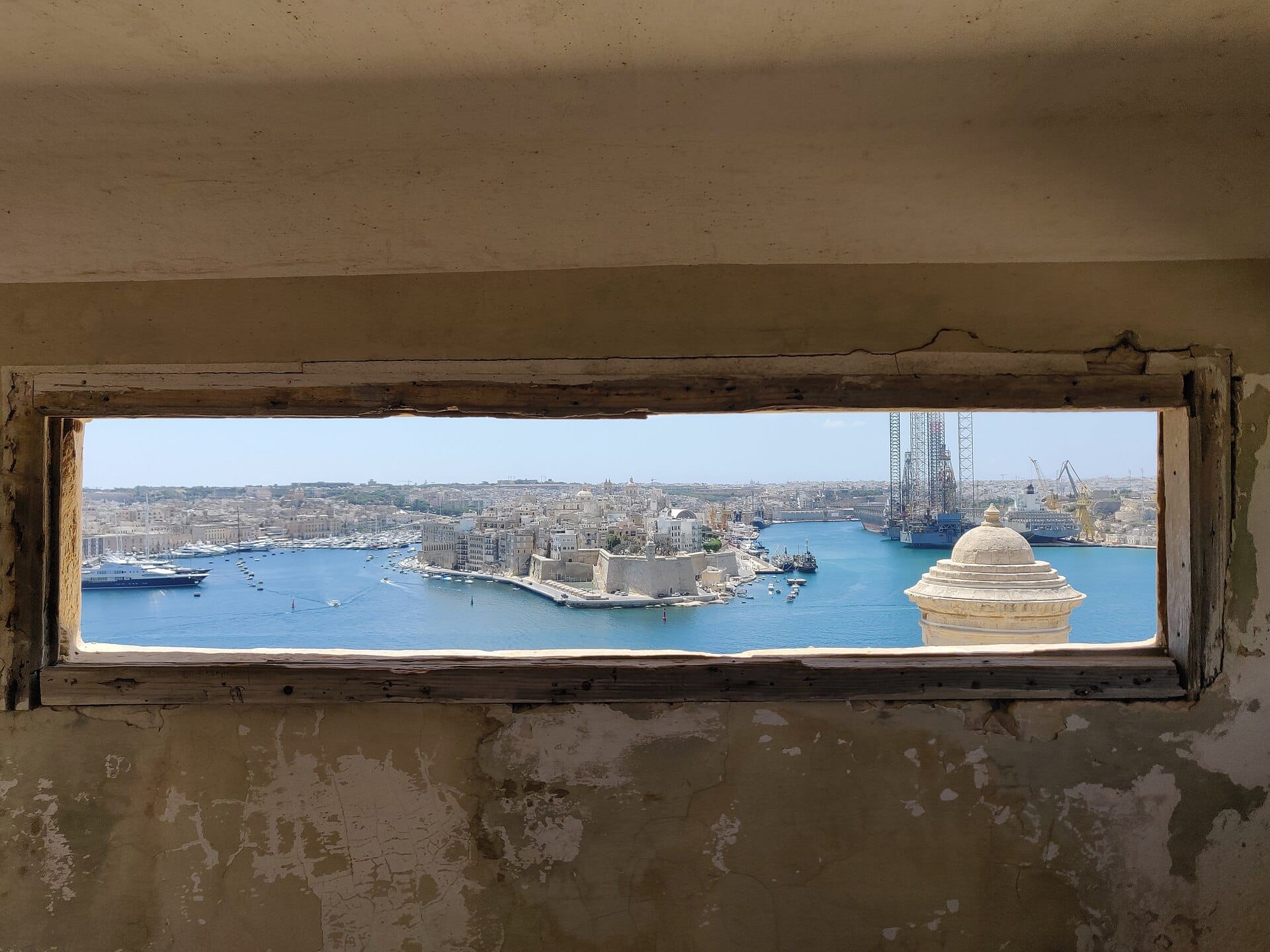
The Lascaris War Rooms are a network of rock-cut tunnels and chambers burrowed into the limestone cliff face beneath Valletta, roughly 150 feet below street level. During the Second World War, this underground complex served as Britain's Combined War Headquarters in the Mediterranean, coordinating the island's air and naval defence at a time when Malta was one of the most heavily bombed territories on earth. The complex extends around 150 metres from Lascaris Ditch toward Lascaris Battery.
Construction ran from 1940 through May 1943, with some 1,000 people working in and around the complex during peak wartime operations. In July 1943, the rooms served as the advance headquarters for Operation Husky, the Allied amphibious invasion of Sicily that opened the route into mainland Europe. After the war, the tunnels did not go quiet: NATO used them until 1977 to monitor Soviet naval movements in the Mediterranean, which makes this place a genuine cold-war relic as much as a WWII site.
ℹ️ Good to know
The Lascaris War Rooms are managed by Fondazzjoni Wirt Artna (the Malta Heritage Trust) since 2009. Opening hours and ticket prices can change seasonally. Verify the current schedule directly by calling +356 2123 4717 or checking the official website before your visit.
The Experience Underground: What You'll See and Feel
The descent into the Lascaris tunnels is immediate and physical. The air drops in temperature noticeably within the first few metres, carrying that particular mineral coolness that comes from cut limestone. Sound behaves differently down here: footsteps echo off bare rock, and any ambient noise from Valletta above disappears completely. For visitors accustomed to open-air historical sites, the enclosed scale of the rooms brings an immediacy that photographs simply cannot convey.
The Operations Room is the centrepiece of the visit. The large plotting table, the wall-mounted status boards, and the overhead galleries where RAF officers once tracked incoming Axis raids have been restored to wartime configuration. Mannequins in period uniform are positioned at key stations, and the lighting is deliberately kept low, which reinforces the atmosphere without tipping into theme-park theatrics. Original signals equipment, telephones, and classified maps are displayed in adjacent chambers, each room telling a tighter, more specific slice of the operational story.
Further along the tunnels, displays cover Malta's Siege period (1940–1942), the island's role in coordinating convoy protection, and the cold-war era monitoring stations. The transition from WWII exhibits to NATO-era hardware within the same physical space is one of the most interesting curatorial choices here: you move through decades of strategic history without ever leaving the rock.
Tickets & tours
Hand-picked options from our booking partner. Prices are indicative; availability and final rates are confirmed when you complete your booking.
City Sightseeing hop-on hop-off bus tour of Gozo
From 20 €Instant confirmationFree cancellationThe Malta Experience Audio-Visual Show and La Sacra Infermeria Tour
From 20 €Instant confirmationFree cancellationLuggage Storage in Malta
From 6 €Instant confirmationFree cancellation6-day heritage and attractions pass in Malta
From 80 €Instant confirmationFree cancellation
Historical Context: Why Malta Needed This
Malta's strategic value in the Second World War was simple and brutal: the island sits almost equidistant between Gibraltar and Suez, making it the central waypoint for Allied supply lines across the Mediterranean. Axis forces understood this and subjected Malta to relentless aerial bombardment, particularly between 1940 and 1942. The island received the George Cross collectively from King George VI in April 1942, an honour unprecedented for a whole territory.
A surface command headquarters in Valletta would have been an obvious and vulnerable target. Carving operations rooms into the limestone bedrock was both practical and necessary. The Lascaris tunnels let senior commanders and their staff continue coordinating convoys, air intercepts, and naval operations through air raids that would have made surface work impossible. The depth and rock cover provided genuine protection against the bombs falling above.
Understanding this wartime context before your visit makes the physical space more legible. If you want to go deeper on Malta's role in the conflict and the Knights of St. John who shaped Valletta's fortifications before WWII ever arrived, the Knights of Malta history guide provides useful background that threads directly into what you'll see underground.
Best Time to Visit and Crowd Patterns
The Lascaris War Rooms are a relatively niche attraction by Valletta standards, which means crowd pressure is modest compared to the city's headline sites. Morning visits, particularly on weekdays, tend to be quieter, giving you more time at the plotting table and in the operations rooms without other groups pressing in from behind. Guided tour groups do pass through, and inside a tunnel network the acoustic effect of a large group is significant: if you prefer to move at your own pace, aim for early opening or mid-afternoon.
Because the site is entirely underground, the external weather is almost irrelevant to the visit itself. On a baking July afternoon in Valletta when the limestone above ground radiates heat, the constant cool of the tunnels is a practical relief. In winter, bring a light layer: even in mild Maltese January, the underground temperature will feel cold relative to the outside air.
⚠️ What to skip
Opening hours are currently listed as Thursdays 10:00 AM – 4:30 PM, but this schedule may not reflect the full weekly availability. Confirm current days and hours directly with the venue before planning your visit, especially if you have a tight itinerary.
Getting There and the Surrounding Area
The entrance to the Lascaris War Rooms is in Lascaris Ditch, the moat-like area below the city's bastions on the harbour side of Valletta. From the Valletta Bus Terminus at City Gate, the walk takes roughly 10 to 15 minutes, passing through some of the most architecturally dense streets in the capital. From Fort St. Elmo at the tip of the Valletta peninsula, the walk is similar in length along the lower fortifications.
The site sits almost directly beneath the Upper Barrakka Gardens, one of Valletta's most visited open spaces. The juxtaposition is striking: visitors strolling the gardens above have no visible indication that a fully equipped wartime headquarters lies beneath their feet. Combining both in a single morning is straightforward and takes less than half a day.
Valletta's compact layout means you can pair this visit with a broader exploration of the capital's historic sites. The things to do in Valletta guide covers the full range of options within walking distance, from the Grand Master's Palace to the Co-Cathedral.
💡 Local tip
Wear comfortable, closed-toe shoes. The tunnel floors are uneven rock and can be damp in places. Avoid flip-flops or open sandals.
Photography and Accessibility
Photography is generally permitted inside the tunnels, but the low-light conditions are challenging. The warm amber lighting used in the operations rooms creates atmosphere but works against auto-focus systems. A wide-aperture lens or a phone with a capable night mode will produce noticeably better results than a standard kit lens at higher ISO. The plotting table, surrounded by period artefacts and staffed by uniform mannequins, is the shot most visitors want, and it benefits from a slightly elevated angle if you can position yourself in the observation gallery above.
Accessibility is limited by the nature of the site. The tunnels involve uneven terrain, narrow passages, and sections with steps. Visitors with mobility impairments should contact the venue directly before visiting to understand which areas are accessible and whether any adapted entry arrangements are available.
Honest Assessment: Is It Worth Your Time?
For visitors with a serious interest in WWII history, the Mediterranean campaign, or cold-war military infrastructure, the Lascaris War Rooms are one of the most authentic and well-curated sites in Malta. The combination of intact original architecture, genuine operational artefacts, and the physical sensation of the underground environment makes this a qualitatively different experience from a conventional gallery museum.
For visitors without that interest, the value proposition is softer. The site is text-heavy, the rooms are small, and without contextual knowledge the exhibits can feel abstract. Children under twelve may find the presentation dry unless they have a specific interest in military history. If your travel priorities run toward beaches, boats, or open-air architecture, this is not the place to start.
For those building out a fuller visit to Valletta and wanting to understand the city's layered military history, pairing the Lascaris War Rooms with Fort St. Elmo across the city creates a coherent arc from the Knights of St. John through to the NATO era.
Insider Tips
- Call ahead (+356 2123 4717) or check the official website the week of your visit. The venue has limited opening days and unannounced closures during private events or maintenance are possible.
- The site is managed by a heritage foundation, not a commercial operator, which means the interpretation is detailed and serious. Read the wall panels rather than rushing through: the operational narrative of the 1942 convoys is genuinely tense.
- The temperature underground hovers around 18–20°C year-round. In summer, this feels dramatically cooler than Valletta above ground (which can exceed 35°C). In winter, it may feel cold. A light layer solves the problem either way.
- If you plan to visit the Upper Barrakka Gardens on the same day, consider doing Lascaris first while your legs are fresh and the tunnels are at their quietest. The gardens provide a natural decompression after the enclosed underground experience.
- The NATO cold-war monitoring section in the deeper tunnels tends to be less crowded than the WWII operations rooms at peak times. It is historically fascinating and gets a fraction of the visitor attention.
Who Is Lascaris War Rooms For?
- WWII and military history enthusiasts who want original, unreconstructed operational spaces rather than replica museums
- Architecture and engineering curious visitors interested in rock-cut construction and wartime infrastructure
- Travellers already in Valletta combining the site with the Upper Barrakka Gardens and Fort St. Elmo on a single half-day loop
- Visitors seeking shade and cool on a hot summer day who also want genuine historical content
- Cold-war history buffs: the NATO-era section is underrated and frequently overlooked
Nearby Attractions
Other things to see while in Valletta:
- Basilica of Our Lady of Mount Carmel
The Basilica of Our Lady of Mount Carmel anchors Valletta's skyline with a 42-metre oval dome visible from across Marsamxett Harbour. Originally built in 1570 by the architect of Valletta himself, bombed flat in World War II, and rebuilt over two decades, this is a church with a remarkable story behind its serene facade.
- Casa Rocca Piccola
Casa Rocca Piccola is a 16th-century aristocratic palace on Valletta's Republic Street, home to the de Piro family for roughly 350 years and still occupied today. Guided tours take visitors through 50 furnished rooms stacked with Maltese silver, antique furniture, lace collections, and paintings, before descending into a genuine WWII air-raid shelter carved beneath the building.
- City Gate & Renzo Piano Parliament
The City Gate and Parliament House form Valletta's most architecturally charged entrance. Designed by Renzo Piano and completed between 2011 and 2015, this project replaced a clumsy 1960s gateway and derelict opera ruins with something genuinely bold. Entry to the public spaces is free and open around the clock.
- Fort St. Elmo & National War Museum
Standing at the tip of the Sciberras Peninsula, Fort St. Elmo has guarded Valletta's twin harbours for over five centuries. Inside, the National War Museum takes visitors from Bronze Age Malta through to the WWII siege that earned the island its George Cross, with artefacts that are genuinely difficult to find anywhere else in the Mediterranean.