Las Vegas Motor Speedway: The Complete Visitor Guide
Las Vegas Motor Speedway is a racing complex about 15 miles north of the Strip, home to a 1.5-mile superspeedway and some of the loudest, most atmospheric motorsport events in North America. Whether you're catching a NASCAR weekend or taking a guided track tour on a quiet Tuesday, this guide tells you exactly what to expect.
Quick Facts
- Location
- 7000 Las Vegas Blvd N, Las Vegas, NV 89115 — approx. 15 miles north of the Strip
- Getting There
- RTC Bus Line 220 serves the area; rideshare and car recommended on non-event days
- Time Needed
- Track tours on weekdays; full day for race events
- Cost
- Track tours from $15–$20; NASCAR and major event tickets vary widely
- Best for
- Motorsport fans, families, groups, photography, adrenaline seekers
- Official website
- www.lvms.com
What Las Vegas Motor Speedway Actually Is
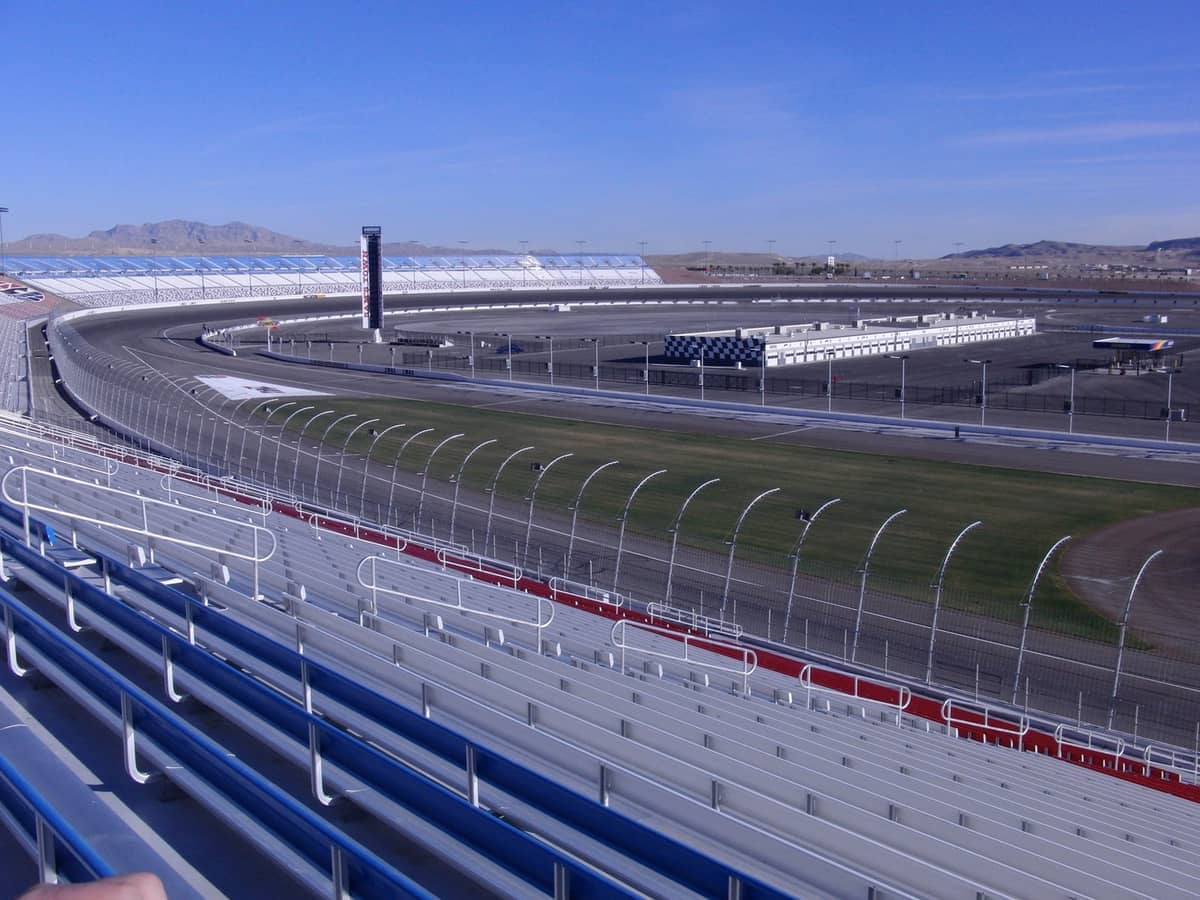
Las Vegas Motor Speedway (LVMS) is one of the largest motorsport complexes in the United States, covering a large site in the North Las Vegas desert. At its heart is a 1.5-mile tri-oval superspeedway that hosts major NASCAR Cup Series events, but the property also contains a drag strip, a dirt oval, a road course, and several smaller support tracks. It is not a museum or a theme park. On quiet weekdays, it operates more like an industrial campus with a gift shop and guided tours. On race weekends, particularly during NASCAR's two annual Las Vegas stops, it transforms into one of the most sensory-intense environments in the American Southwest.
The scale alone tends to catch first-time visitors off guard. From the outside, the grandstands look large. From inside the facility, with spectators filling the seats and the infield alive with campers, sponsor activations, and support paddocks, the place feels genuinely enormous. The desert backdrop adds to the strangeness of it all: bleached mountains to the west, a flat grid of suburban Las Vegas to the south, and the constant low rumble of engines bouncing off open sky.
💡 Local tip
Track tours run Monday through Friday, 10:00 a.m. to 3:00 p.m. on non-event days. Tours are suspended during major race weekends, so plan accordingly. Call ahead or check the official site before driving out.
The Track Tour Experience
For visitors who are not attending a race, the guided track tour is the core offering. Tours depart from the ticket and gift shop, which is open Monday through Friday, 10:00 a.m. to 4:00 p.m. on non-event days. Standard admission is $20 per person; seniors 55 and older, active military, Nevada residents, and children 12 and under pay $15. Children three and under enter free.
The tour takes you through areas of the facility that are normally off-limits to the public: the pit lane, the garage area, and in some configurations, down to the edge of the racing surface itself. Standing in pit lane with the banking of Turn 1 looming ahead gives a much more accurate sense of the physical scale and gradient of a superspeedway than any television broadcast conveys. The corners are steeper than they look on screen, and walking them is genuinely disorienting. The asphalt smells faintly of rubber even on off-days, a residue of thousands of laps burned into the surface.
The gift shop at the entrance stocks LVMS-branded merchandise along with NASCAR and general motorsport items. It is compact, well-stocked for a track store, and worth a brief browse whether or not you take the full tour.
⚠️ What to skip
Tour availability is not guaranteed on short notice during event build-up periods, which often begin several days before a major race weekend. If your trip overlaps with a NASCAR event, verify tour status directly with the venue at 800-644-4444.
Tickets & tours
Hand-picked options from our booking partner. Prices are indicative; availability and final rates are confirmed when you complete your booking.
Go City | Las Vegas All-Inclusive Pass
From 140 €Instant confirmationFree cancellationHighlights Over the Grand Canyon air tour from Las Vegas
From 195 €Instant confirmationFree cancellationTickets to Las Vegas Live Comedy Club
From 36 €Instant confirmationAntelope Canyon and Horseshoe Bend tour from Las Vegas
From 198 €Instant confirmationFree cancellation
Attending a Race: What to Expect
Race weekend at LVMS is a completely different proposition from a quiet-day tour. NASCAR events here typically draw tens of thousands of fans, and the logistics of moving that many people in and out of a facility 15 miles from the Strip require real planning. The parking lots are expansive and free for most general events, but traffic on Las Vegas Boulevard North and Craig Road can back up significantly before and after green flag and checkered flag. Arriving 90 minutes before the event start and leaving 30 to 45 minutes after the race ends reduces time spent in queues considerably.
RTC Bus Route 220 serves the speedway area, and during NASCAR weekends, official shuttle buses operate between designated parking areas, campgrounds, and speedway gates. For visitors staying on or near the Strip without a rental car, the shuttle and bus combination is workable, though journey times on race days can run long. Rideshare pickup and dropoff during major events is managed in designated zones, and surge pricing is common in the final hour before race start and immediately after the finish.
Inside the gates, the infield houses sponsor villages, food vendors, and in some configurations, fan zones where you can watch cars in the garage. The sound during a NASCAR Cup race at full field is not background noise. It is a physical sensation, felt in the chest and stomach, particularly when the pack goes by on the frontstretch. Ear protection is strongly recommended and is widely available at vendors around the gates. The desert sun is unfiltered and intense even in spring and fall, so sun protection, a hat, and water are not optional.
Event tickets are sold via the LVMS official site and through Ticketmaster. Pricing varies significantly by seating category, event tier, and demand. Premium terrace and suite options exist for those wanting enclosed, climate-controlled viewing with catering. For the full sensory experience, open grandstand seats on the frontstretch or in the Turn 1 to Turn 2 corridor give the clearest sense of speed and pack movement.
Getting There from the Strip
The speedway sits at 7000 Las Vegas Boulevard North, about 15 miles north of the center of the Strip. By car or rideshare on a non-event day, the drive takes around 20 to 25 minutes via Las Vegas Boulevard North or the I-15 to Craig Road. On race days, add 30 to 60 minutes minimum depending on event size and timing.
For visitors combining the speedway with other parts of the city, it pairs logically with a morning or afternoon exploring Fremont Street or the Downtown Las Vegas area, which lies en route from the Strip heading north. It is not easily walkable from any hotel district, so plan for a dedicated transit leg.
Parking is available in large surface lots surrounding the facility. On non-event days, the lot directly adjacent to the main entrance is open and accessible. On event days, lots open several hours before scheduled race start, and campsite areas within the property accommodate overnight guests during multi-day race weekends.
Time of Day and Weather Considerations
Las Vegas sits in the Mojave Desert at roughly 2,000 feet of elevation, and the speedway compound has virtually no shade outside of the grandstand structures. Midday temperatures from May through September often exceed 100 degrees Fahrenheit, making any outdoor event during peak summer genuinely challenging. The two main NASCAR Cup weekends are typically scheduled in spring and fall specifically to avoid the worst of the summer heat, but even in October, afternoon temperatures on the exposed grandstands can reach the mid-80s. Bring more water than you think you need.
Morning track tours are noticeably more comfortable than afternoon visits in warmer months. The facility faces west along its main straight, which means afternoon sun falls directly on the frontstretch grandstands. If attending a day race in September or October, seats on the infield side of the circuit or in shaded terrace sections will be significantly cooler.
ℹ️ Good to know
Winter visits (December through February) are climatically pleasant at LVMS, with mild daytime temperatures and cool evenings. However, there are far fewer events scheduled in this window. Check the event calendar on lvms.com before planning a race-oriented trip.
Accessibility and Practical Details
LVMS maintains accessible seating across multiple grandstand sections, and enclosed suites are reached by elevator. Guests requiring specific accommodation or accessible seating assistance should contact the ticket office directly at 800-644-4444 before purchasing.
The surface throughout most of the general access areas is paved asphalt or concrete, though portions of the infield and parking areas are unpaved. Sturdy, closed-toe shoes are practical for track tours and infield access. Sandals or dress shoes are not ideal for either.
For visitors considering the speedway as part of a broader Las Vegas sports and entertainment itinerary, the Allegiant Stadium experience offers an interesting contrast: a modern, enclosed venue versus the open-air, industrial scale of a superspeedway. Both reward pre-planning. For a broader look at where LVMS fits into a Las Vegas trip, the things to do in Las Vegas guide covers the full range of options across the city.
Who This Is For, and Who Should Skip It
Motorsport fans, particularly those with any interest in NASCAR, oval racing, or drag racing, will find the speedway genuinely impressive. The scale of the facility is difficult to appreciate without being inside it. For families with children who have any interest in cars or speed, the track tour is an unusually accessible way to walk through a professional racing venue without event crowds.
Visitors with no particular interest in motorsport are unlikely to find much here on a non-event day. The facility is functional, not scenic. There is no museum, no historical exhibit, and no entertainment outside of the tour itself. Those looking for something more culturally rich would be better served by the Mob Museum or the Neon Museum downtown, or by heading out to Red Rock Canyon for landscape and hiking.
The speedway is also not the right fit for visitors with severe heat sensitivity during summer months, or for anyone expecting a walkable, leisurely outing. It rewards preparation, interest in the sport, and a tolerance for logistics.
Insider Tips
- Track tours are not heavily marketed, and walk-in availability on weekday mornings is usually good. You rarely need to book days in advance for a standard tour on a non-event week.
- If attending a NASCAR event, the Turn 3 to Turn 4 grandstands on the backstretch offer a less crowded atmosphere than the frontstretch, with good sightlines for the final corner entry where overtaking often happens.
- Event parking opens well before gates, and arriving early to tailgate in the lots is deeply embedded in the speedway culture here. Many longtime attendees consider the pre-race lot experience as important as the race itself.
- The Las Vegas F1 Grand Prix uses street circuits on the Strip, not LVMS, so the speedway and Formula 1 events are entirely separate. Do not conflate the two when planning around the F1 calendar.
- Bring a small backpack with earplugs, a refillable water bottle, sunscreen, and a portable phone charger. Cell service on race days is strained by tens of thousands of simultaneous users, and photo uploads often fail until after you leave the lot.
Who Is Las Vegas Motor Speedway For?
- NASCAR and oval-racing fans who want to experience a major American motorsport venue
- Families with car-obsessed kids looking for an educational, hands-on attraction beyond the Strip
- Sports tourists building an itinerary around a specific race weekend
- Photography enthusiasts interested in the industrial geometry of pit lanes, banking, and grandstands
- Visitors on a tighter budget seeking a substantial, non-casino daytime activity at low cost
Nearby Attractions
Combine your visit with:
- Antelope Canyon
Antelope Canyon is a series of sculpted slot canyons carved into Navajo Sandstone near Page, Arizona, and one of the most visually striking natural formations in the American Southwest. Accessible only on guided tours led by licensed Navajo guides, it requires advance planning but rewards visitors with an experience unlike anywhere else within day-trip range of Las Vegas.
- Area 51 & Extraterrestrial Highway
Nevada State Route 375, officially designated the Extraterrestrial Highway in 1996, is a 98-mile desert drive skirting the perimeter of the most famous restricted military installation on Earth. It costs nothing to drive, demands serious preparation, and delivers a genuinely remote American landscape that few Strip visitors ever see.
- AREA15 Immersive Entertainment Complex
AREA15 is a 35-acre immersive entertainment and events district just off the Las Vegas Strip, packed with art installations, bizarre interactive experiences, bars, and ticketed attractions like Omega Mart. Daytime entry is free, but the real substance costs extra — and it's worth understanding the pass tiers before you arrive.
- Death Valley National Park
Just two hours from the Las Vegas Strip, Death Valley National Park is the hottest, driest, and lowest national park in the United States. From the salt flats of Badwater Basin to the sculpted dunes of Mesquite Flat, it rewards early risers and well-prepared visitors with landscapes found nowhere else on Earth.