Koenji: Tokyo's Counter-Culture Capital of Vintage, Music, and Local Life
Koenji is a neighborhood in Suginami that operates on a completely different frequency from the rest of Tokyo. Known for its dense concentration of vintage clothing stores, small live music venues, anarchist bookshops, and independent cafes, it rewards slow exploration on foot. There is no single ticketed attraction here — the neighborhood itself is the draw.
Quick Facts
- Location
- Koenji, Suginami-ku, Tokyo
- Getting There
- Koenji Station (JR Chuo Line) — about 15 minutes from Shinjuku
- Time Needed
- 3–5 hours for a thorough walk; a full day if you stay for evening live music
- Cost
- Free to explore; vintage shops from ¥300; live music entry typically ¥1,500–¥3,000
- Best for
- Vintage fashion hunters, music lovers, travelers who want Tokyo without tourist crowds
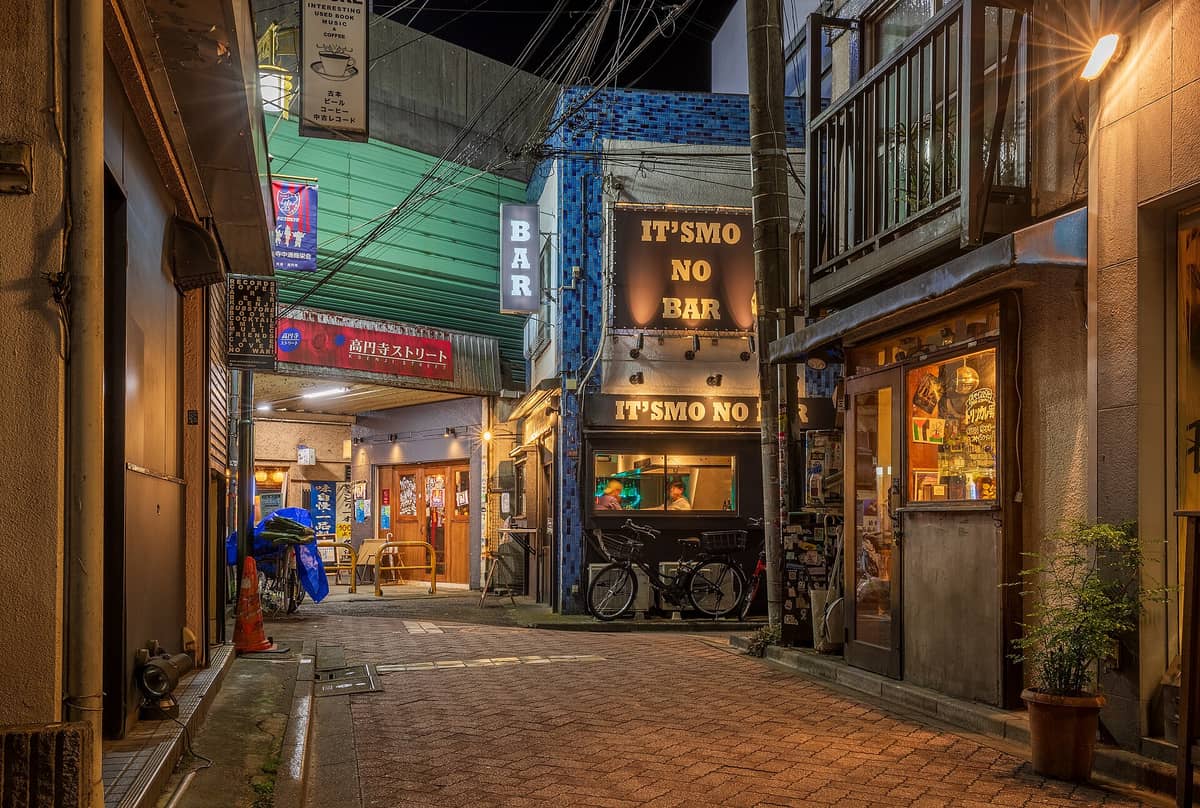
What Koenji Actually Is
Koenji is not a park, a museum, or a temple. It is a residential and commercial district centered on Koenji Station, about 10 minutes west of Shinjuku on the JR Chuo Line, and it has spent decades quietly becoming one of the most interesting neighborhoods in Tokyo. There is no admission fee, no official opening time, and no single monument that justifies the trip. What justifies the trip is the texture of the place: narrow covered shopping arcades called shotengai, side alleys stacked with used records and military surplus clothing, kissaten (old-school coffee shops) where the owner has been brewing the same blend since the 1970s, and live houses where bands play to crowds of thirty people with the same intensity they would bring to a stadium.
The neighborhood has a well-established reputation as Tokyo's bohemian quarter, drawing artists, musicians, and people who simply prefer a neighborhood that still has its own personality. Rents are lower here than in Shimokitazawa or Daikanyama, which means more of the interesting, independent businesses can actually survive. That economic reality shows in the streetscape: fewer chains, more character.
💡 Local tip
Arrive by late morning and start on the north side of the station (Koenji Kitamachi). Work your way through the arcade, then cross to the south side (Koenji Minamimachi) in the afternoon. Save the live music venues for after 7pm.
The North Side: Shotengai, Vintage, and Daytime Character
The north exit of Koenji Station opens onto the Pal Shopping Street and the Look Shopping Street, two covered arcades that run parallel to each other and contain many vintage clothing shops. These are not curated boutiques with neon signage — many are crammed floor-to-ceiling with secondhand denim, old band T-shirts, work jackets, and the occasional genuine mid-century Western garment that somehow ended up in Tokyo. Prices are honest rather than inflated, and patient browsing is rewarded.
The arcades also contain secondhand record shops with listening stations, small toy stores selling vintage figures still in original packaging, and a handful of used book dealers with stacks extending into the walkway. The smell shifts from old paper to fresh-roasted coffee to frying karaage as you move through. On weekday mornings the arcade is quiet enough to hear the automatic sliding doors of the shops and the occasional burst of music from a record shop testing merchandise. On weekends by early afternoon, it fills with a mixed crowd of local residents doing their shopping alongside younger visitors from central Tokyo making the specific trip.
If vintage shopping is the primary reason for your visit, Koenji is a sharper destination than Takeshita Street in Harajuku, which has tilted toward fast fashion and tourist novelty. Koenji's stock trends older, stranger, and considerably cheaper.
Tickets & tours
Hand-picked options from our booking partner. Prices are indicative; availability and final rates are confirmed when you complete your booking.
Tsukiji Fish Market Walking Food Tour
From 40 €Instant confirmationFree cancellationMt.Fuji,Owakudani, Hakone Cruise & Ropeway, Oshino Hakkai 1-Day Trip
From 54 €Instant confirmationFree cancellationTour to Mt. Fuji Area, Oshino Hakkai and Kawaguchi Lake from Tokyo
From 57 €Instant confirmationFree cancellationNikko UNESCO Shrine and Nature View 1-Day Tour from Tokyo
From 78 €Instant confirmationFree cancellation
The South Side: Cafes, Bars, and the Live Music Scene
Cross the station to the south exit and the atmosphere shifts slightly. The streets here are narrower, the bars start appearing earlier in the day, and the overall feeling is less commercial and more residential. This is where most of Koenji's live music venues are concentrated, including small rock and jazz houses where the stage is barely elevated above the floor. The venues have names like HIGH, Jirokichi, and Showboat, and they have been operating long enough to have shaped generations of Japanese independent music.
During the day, the south side is good for cafe-hopping. The kissaten culture is strong here: look for shops with hand-lettered signs in the window, wooden counters, and the faint smell of pipe tobacco absorbed into the ceiling. These places take their coffee seriously in a pre-third-wave way — it is about consistency and atmosphere rather than single-origin tasting notes. Many have been operated by the same individual or family for decades.
By 7pm on weekends, the south side becomes genuinely lively. Groups form outside the live houses before doors open, and the izakayas fill up with people who came for a show and stayed for another round. This is not the loud tourist nightlife of Kabukicho — it is local and unperformed. If you want to understand what Tokyo's working neighborhood culture actually looks like after dark, this is a more honest version of it than most options closer to the city center.
Koenji Awa Odori: The Festival That Transforms Everything
On the last weekend of August each year, Koenji hosts the Koenji Awa Odori, one of the largest Awa Odori festivals in Japan outside Tokushima, the dance form's original home in Shikoku. Attendance typically reaches around ten thousand dancers and about 1.02 million spectators over the two-day event. The streets around the station are closed to traffic and given over entirely to processions of musicians and dancers in traditional yukata, moving in formations that travel across several fixed performance stages set up along the shopping arcades.
If you are in Tokyo at the end of August, planning a day around this festival is worthwhile. Arrive before 5pm to find a position along the main route before the crowds become truly dense. The music — hayashi, a combination of shamisen, flute, drums, and hand bells — is loud enough to feel physical at close range. The combination of summer heat, festival food stalls, and the movement of the processions makes it one of the more visceral urban experiences Tokyo offers in summer.
ℹ️ Good to know
The Koenji Awa Odori typically runs on the last Saturday and Sunday of August. Exact dates change annually — confirm with the official Koenji Awa Odori committee website before planning your trip around it.
How the Neighborhood Changes by Time of Day
Weekday mornings in Koenji are unhurried and genuinely local. The vintage shops don't open until 11am or noon at the earliest, so the arcades in the morning are full of residents buying groceries and older shop owners setting out their displays. This is the best time to sit in a kissaten, order a morning set of toast and coffee, and watch the neighborhood get going without competing for counter space.
Afternoons on weekends are peak time for vintage shopping and general wandering. The energy is pleasant rather than overwhelming — Koenji does not generate the kind of shoulder-to-shoulder pressure you find in Shibuya or Harajuku on a Saturday afternoon. Families, young couples, and solo browsers mix without obvious tension. The light in the covered arcades is even throughout the afternoon, which is useful if you are inspecting the condition of secondhand garments.
Evenings from around 6pm onward bring a different crowd: people coming specifically for the bar and music scene. The transition is gradual rather than sudden. By 9pm on a weekend night, the south side is at its most atmospheric, with lights from the venues and the sound of live music audible on the street between sets.
Getting There and Getting Around
Koenji is directly accessible on the JR Chuo Line from Shinjuku (about 10 minutes) and from Tokyo Station (about 20–25 minutes). It is also reachable on the Chuo-Sobu (local) Line. The neighborhood is compact and best navigated entirely on foot — getting lost down side streets is part of the experience. There is no meaningful need for taxis or buses within the area itself. For broader context on navigating Tokyo's rail network, the getting around Tokyo guide covers the JR and subway systems in detail.
The station has both north and south exits with ticket gates on each side. IC cards (Suica or Pasmo) work seamlessly on the Chuo Line. If you are combining Koenji with other western Tokyo neighborhoods, Koenji sits on the same JR Chuo Line as Nakano, Asagaya, and Ogikubo, all within a few minutes by train, making a half-day itinerary across multiple neighborhoods straightforward.
⚠️ What to skip
Koenji Station has a limited number of elevator-equipped exits. If you use a wheelchair or travel with a stroller, check the current accessible route at the station's information board or JR East's accessibility map before choosing your exit.
Is Koenji Worth Your Time? Honest Assessment
Koenji rewards a specific kind of traveler: someone who finds pleasure in wandering without a fixed agenda, who can spend forty minutes in a record shop or try three kissaten in a row without feeling that time is being wasted. It is not a neighborhood of landmark moments. There is no single photograph that captures why it is interesting. The interest is cumulative and ambient.
If you are on a short Tokyo trip focused on iconic sights, Koenji is probably not where your limited days should go. But if you have already covered the major draws and are looking for what Tokyo looks like when it is not performing for visitors, Koenji is one of the better answers. It pairs well logically with Nakano Broadway to the east and the quieter atmosphere of Shimokitazawa-adjacent neighborhoods to the south. For a curated look at under-the-radar districts across the city, the hidden gems Tokyo guide covers several neighborhoods that share Koenji's independent spirit.
Travelers who strongly prefer structured, interpretive experiences — museums with English signage, temple complexes with audio guides, or neighborhoods built around a single photogenic feature — may find Koenji underwhelming. There is very little in English, and the pleasures are subtle enough that they require some tolerance for ambiguity. That is not a flaw in the neighborhood; it is simply what it is.
Insider Tips
- The best vintage shops are not on the main arcade but on the narrow cross-streets between Pal and Look Shopping Streets. Look for hand-painted signs rather than printed ones — those shops tend to have older and stranger stock.
- Many kissaten in Koenji do not have English menus. Point at what the person next to you is having, or say 'kohi to tosto' (coffee and toast) — most morning sets are built around some version of that combination.
- Live houses in Koenji typically hold fewer than 100 people. Check the venue's schedule online before you go and show up before the posted door time — capacity is real and there is usually no advance booking for smaller shows.
- The second-hand record shops near the north exit often have bargain bins outside on the street. Prices in those bins can be as low as ¥100 for older Japanese pressings, and the selection rotates frequently.
- If you visit during the Koenji Awa Odori festival, the area around the station becomes extremely crowded by 6pm. The best viewing spots are at the fixed stages along the southern route, which tend to be less packed than the main Pal arcade stretch.
Who Is Koenji For?
- Vintage and secondhand clothing enthusiasts looking for real depth of stock at honest prices
- Music travelers interested in Japan's independent live music culture and small venues
- Repeat Tokyo visitors who have covered the major sights and want a more local experience
- Anyone visiting Tokyo in late August who wants to experience a major traditional festival outside the usual tourist circuit
- Slow travelers who prefer wandering and discovery over itinerary-driven sightseeing
Nearby Attractions
Combine your visit with:
- Akasaka Palace (State Guest House)
The State Guest House, Akasaka Palace is Japan's principal diplomatic residence and one of the few Western-style palaces in Asia open to the public. Built in neo-baroque style for the Crown Prince in the early 20th century, it now receives heads of state and, on select days, ordinary visitors. The combination of ornate gilded interiors, formal French gardens, and a Japanese-style annex makes it one of the most architecturally unusual stops in Tokyo.
- Edo-Tokyo Open Air Architectural Museum
Spread across the grounds of Koganei Park, the Edo-Tokyo Open-Air Architectural Museum rescues and reassembles more than 30 historic structures spanning the Edo period through the early 20th century. From a dismantled farmhouse to a reconstruction of a Showa-era Tokyo streetscape, it is one of the most thoughtful and undervisited cultural sites in the metropolitan area.
- Enoshima
A small island off the Shonan coast of Kanagawa Prefecture, Enoshima packs a surprising amount into a short walk: a three-part Shinto shrine, ancient sea caves, a hilltop botanical garden, a lighthouse observation tower, and seafood stalls lining a stone-paved shopping street. It works as a half-day excursion or a full day if you combine it with nearby Kamakura.
- Gotokuji Temple
Gotokuji Temple in Setagaya is a working Soto Zen Buddhist temple that happens to be one of the claimed birthplaces of the maneki-neko, Japan's iconic beckoning cat. Hundreds of white ceramic cats line the shelves of a dedicated shrine, creating one of Tokyo's most quietly striking visual spectacles. Entry is free, crowds are manageable, and the surrounding grounds offer genuine calm.