James Joyce Centre: Dublin's Most Literary Address
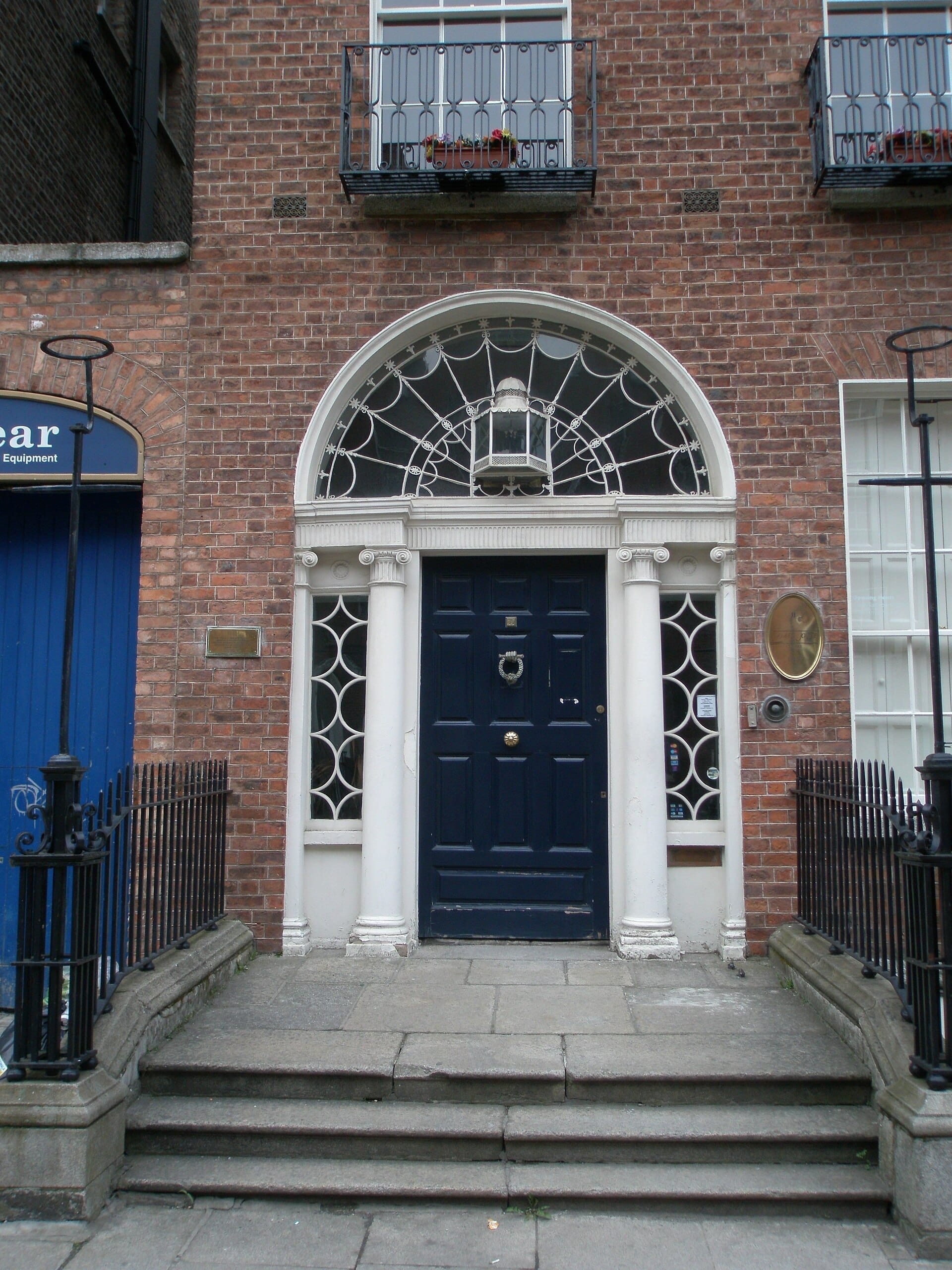
Housed in a restored 1784 Georgian townhouse on North Great George's Street, the James Joyce Centre is Dublin's dedicated museum and cultural space for the life and work of Ireland's most celebrated novelist. From the original door of Leopold Bloom's fictional home to guided walking tours through Joycean Dublin, this is the clearest window into the world of Ulysses the city has to offer.
Quick Facts
- Location
- 35 North Great George's Street, Dublin 1
- Getting There
- Walking distance from O'Connell Street; Dublin Bus routes serve the area. No direct Luas stop.
- Time Needed
- 1 to 2 hours for the museum; allow 2 to 3 hours if including a walking tour
- Cost
- Approx. €7 adults, €5 students/seniors, children under 12 free. Walking tour extra (approx. €25 adults, €20 students/seniors). Verify current rates before visiting.
- Best for
- Literature lovers, Joyce scholars, fans of Georgian architecture, and independent walkers exploring north Dublin
- Official website
- jamesjoyce.ie
What the James Joyce Centre Actually Is
The James Joyce Centre is a dedicated museum, cultural centre, and research hub occupying a meticulously restored Georgian townhouse at 35 North Great George's Street, Dublin 1. It is the single most focused institution in Dublin for exploring the life, work, and context of James Joyce, with particular emphasis on Ulysses and its relationship to the streets, buildings, and people of early twentieth-century Dublin.
The centre is modest in scale but precise in purpose. It does not try to be a sprawling encyclopaedic museum. Instead, it offers curated exhibitions, a research library, and guided walking tours that bring Joyce's fiction into direct contact with surviving Dublin geography. For anyone who has read Joyce, or intends to, this is where the abstract becomes concrete.
The centre sits on a street that itself carries literary weight. North Great George's Street is one of Dublin's finest surviving Georgian terraces, and it connects the James Joyce Centre naturally to the broader Dublin literary trail that runs across both sides of the Liffey.
💡 Local tip
Opening hours are listed as Tuesday to Saturday, 10:30 to 16:30, with Sunday and Monday closed. The centre also runs walking tours year-round, sometimes outside standard museum hours. Confirm current hours directly at jamesjoyce.ie before visiting, as seasonal variations apply.
The Building: A Georgian Survival Story
The house itself is part of the attraction. No. 35 was built in 1784, originally constructed as the Dublin townhouse of Valentine Browne, 1st Earl of Kenmare. It sits within a terrace that was considered one of the most fashionable addresses in the city during the late eighteenth century, a period when Dublin's Georgian north side rivalled its southern equivalent in social prestige.
That prestige faded through the nineteenth century and the early decades of Irish independence. By the 1970s and early 1980s, the street had declined significantly, and several houses on the terrace were demolished. No. 35 faced the same fate until Senator David Norris and local preservation campaigners intervened. Their campaign saved the building, and the James Joyce Centre was founded in 1982, opening to the public in June 1996 after a full restoration.
Inside, the plasterwork ceilings are among the best-preserved examples of the period in the city. The decorative detailing is fine-grained and restrained in the way that characterises the best Dublin Georgian interiors: cornicing, fanlight-lit stairwells, and rooms scaled for formal entertaining. The physical quality of the building adds a layer of authenticity that reinforces the exhibitions rather than competing with them.
⚠️ What to skip
Accessibility is limited. Only the ground floor is wheelchair accessible. The upper floors, which contain additional exhibition material, involve a period staircase with no lift. Visitors with mobility requirements should contact the centre in advance.
Tickets & tours
Hand-picked options from our booking partner. Prices are indicative; availability and final rates are confirmed when you complete your booking.
Dublin Shore Excursion in Glendalough and Dublin's city centre
From 80 €Instant confirmationFree cancellationShore Excursion of Howth and Dublin's City Centre
From 95 €Instant confirmationFree cancellationGiant's Causeway, Dark Hedges, and Belfast Tour from Dublin
From 85 €Instant confirmationFree cancellationDublin self-guided audio tour
From 10 €Instant confirmation
The Eccles Street Door and the Ulysses Courtyard
The centre's most tangible Joycean object is in the courtyard: the original front door from 7 Eccles Street, the real Dublin address that Joyce chose as the fictional home of Leopold and Molly Bloom in Ulysses. The house itself no longer exists, demolished in 1982 when the Mater Private Hospital expanded onto the site. The door was salvaged and is now displayed here, marked and worn in ways that make its age readable.
The courtyard also features murals depicting the eighteen episodes of Ulysses. The episodes, known by their Homeric chapter names to scholars, are laid out in a sequence that gives visitors a structural map of the novel even if they have not read it. For those who have, seeing the episodes visualised in physical space outside a Georgian house in north Dublin has a particular resonance.
The Eccles Street door is genuinely significant. Ulysses is set almost entirely on a single day, 16 June 1904, and tracks Bloom's movements across a very specific map of Dublin. The preservation of this single physical object creates a direct link between the novel's fictional geography and the actual city. It is one of the more quietly powerful artefacts in Dublin's literary landscape.
Exhibitions and What You Will See Inside
The permanent exhibitions cover Joyce's biography, his relationship with Dublin, the composition and publication history of his major works, and the social and political context of early twentieth-century Ireland. The material is organised to be accessible to visitors with no prior knowledge of Joyce as well as informative for those who know the work well.
Photographs, letters, first editions, and personal effects are displayed alongside contextual panels. The tone throughout is scholarly but not academic in a way that excludes casual visitors. There is a research library on the upper floors, used by Joyce scholars and writers, which reinforces the centre's dual role as both public museum and active literary institution.
The centre also hosts events around Bloomsday on 16 June each year, when Dublin marks the single day on which Ulysses is set. If you are visiting in mid-June, check the Dublin Bloomsday guide for the full calendar of events across the city, many of which begin or pass through North Great George's Street.
The Walking Tours: Where the Real Value Is
The guided walking tours offered by the James Joyce Centre are, for many visitors, the most useful thing the institution provides. They take the geography of Ulysses seriously and trace actual routes through Dublin streets that correspond to movements in the novel, pointing out surviving buildings, changed streetscapes, and locations that have vanished entirely.
Tours typically last around ninety minutes and cover parts of the north inner city. The guides work from the text and from historical photographs, which makes the tours genuinely informative rather than superficially thematic. Walking through Dublin with someone who can tell you which pub Bloom entered, where the newspaper offices stood, and how the streetscape looked in 1904 is qualitatively different from reading a map alone.
Tour schedules vary by season and may operate outside regular museum opening hours. Check jamesjoyce.ie directly for current tour times and booking requirements. Tours tend to be small in group size, which makes them worth booking in advance during peak season.
Visiting Practical Details: Time of Day and What to Expect
The centre is rarely crowded. Unlike the major Dublin museums, it draws a self-selecting audience of people who have sought it out, which means the atmosphere inside is attentive and quiet rather than tourist-traffic loud. Morning visits on weekdays are particularly calm. The light through the Georgian windows is at its best in the late morning, when it falls across the original plasterwork and gives the interiors a clarity that the afternoon, facing west, does not quite replicate.
North Great George's Street itself is worth a few minutes of attention before entering. Look at the terrace as a whole: the proportions, the door surrounds, the surviving fanlights. It offers a compressed version of what Dublin's Georgian north side looked like before twentieth-century clearances. The street is quiet most of the time, which works in its favour.
The surrounding area rewards further exploration. The centre is a short walk from the GPO Witness History exhibition on O'Connell Street and from the Garden of Remembrance, making it easy to combine a literary morning with a broader historical afternoon on the northside.
Photography inside the centre is generally permitted for personal use, but check with staff before photographing any specific artefacts. The courtyard with the Eccles Street door photographs well in most light conditions. The plasterwork ceilings photograph well from below with a wide angle, though the rooms are intimate enough that wide shots require care.
Who Will Get the Most Out of This Visit
Visitors who have read Ulysses, or who are actively working through it, will find the centre substantially enriches their reading. The spatial dimension the centre provides, the actual streets, the surviving addresses, and the physical door from Bloom's house, is something that a text alone cannot deliver.
For visitors unfamiliar with Joyce, the centre is still worthwhile as an introduction, particularly if you take the walking tour. It is possible to leave with a clear sense of why Joyce matters, why Ulysses is set where and when it is, and what made early twentieth-century Dublin the city it was. That kind of contextual grounding is more useful than most exhibition labels alone can provide.
Those who have no interest in literature and no curiosity about Georgian architecture are unlikely to find the experience rewarding. The centre does not compensate for indifference to its subject with spectacle or entertainment. It is a serious, focused institution, and that is a quality, not a limitation, for the right visitor.
Insider Tips
- Visit on a weekday morning for the quietest experience. Weekend afternoons, particularly in summer, see more foot traffic, though the centre never becomes overwhelmed.
- Book the walking tour in advance during June, especially around Bloomsday on 16 June. Tours sell out more quickly than the museum itself.
- Spend a few minutes on North Great George's Street before entering. The terrace as a whole tells a story about Georgian Dublin and its preservation that the centre's own exhibitions reference but cannot fully show.
- The research library is accessible to scholars and serious readers with an appointment. If you are working on a Joyce-related project, contact the centre directly before visiting.
- Combine the centre with the GPO Witness History exhibition a short walk south on O'Connell Street. Together they cover both Dublin's literary and political history in a single northside morning.
Who Is James Joyce Centre For?
- Readers working through Ulysses or other Joyce novels who want spatial and biographical context
- Literary tourists building a Dublin itinerary around Irish writing
- Architecture enthusiasts interested in Georgian Dublin interiors and preservation history
- Small-group visitors who prefer focused, quiet museums over large institution crowds
- Bloomsday visitors in mid-June looking for the centre of the city's Joyce celebrations
Nearby Attractions
Combine your visit with:
- Abbey Theatre
Founded in 1904 by W.B. Yeats and Lady Gregory, the Abbey Theatre is Ireland's National Theatre and one of the most historically significant stages in the English-speaking world. Sitting on Lower Abbey Street in the heart of Dublin city centre, it continues to produce new Irish work alongside classic plays that shaped a nation's identity.
- Blessington Street Basin
Once the Royal George Reservoir supplying water to Dublin's north side, Blessington Street Basin is now a free public park in Phibsborough. The central lake, Tudor gate lodge, and resident wildfowl make it one of the most quietly rewarding green spaces within walking distance of Dublin city centre.
- Casino Marino
Casino Marino is an 18th-century Neo-Classical pleasure house in north Dublin, designed by Sir William Chambers for the Earl of Charlemont. Despite its compact exterior, the building conceals 16 rooms across three floors — a feat of architectural illusion that continues to astonish visitors. Access is by guided tour only, with admission from €3 for children and students and €5 for adults.
- Clontarf Promenade
Clontarf Promenade stretches 4.5 kilometres along Dublin Bay from Fairview to the Bull Wall at Dollymount, offering open sea views, public art, and a marked cycle route along much of its length. It costs nothing to visit, runs along a flat sea wall path, and delivers some of the most expansive coastal scenery accessible from Dublin city centre.