Iglesia de San Juan del Hospital: Valencia's Oldest Church and Its Hidden Medieval Cemetery
Founded in 1238 immediately after the Christian reconquest of Valencia, the Iglesia de San Juan del Hospital is the oldest church in the city. The complex preserves a rare medieval cemetery, crusader-era stonework, and layers of history that most visitors walking nearby streets never find.
Quick Facts
- Location
- Calle Trinquete de Caballeros 5, 46003 València – historic centre (La Xerea)
- Getting There
- Walk around 10 min from Xàtiva or Colón metro stations; multiple bus lines serve the historic centre
- Time Needed
- 30–45 min for the church alone; 90 min for a full guided visit including the medieval cemetery
- Cost
- Free entry to the church during visiting hours. Guided visits: €8 general / €7 reduced (full visit); €5 / €4 (cemetery only). Children under 12 free. No guided visits in August.
- Best for
- Medieval history enthusiasts, architecture lovers, anyone wanting a quiet counterpoint to Valencia's more visited monuments
- Official website
- sanjuandelhospital.es
Why This Church Matters
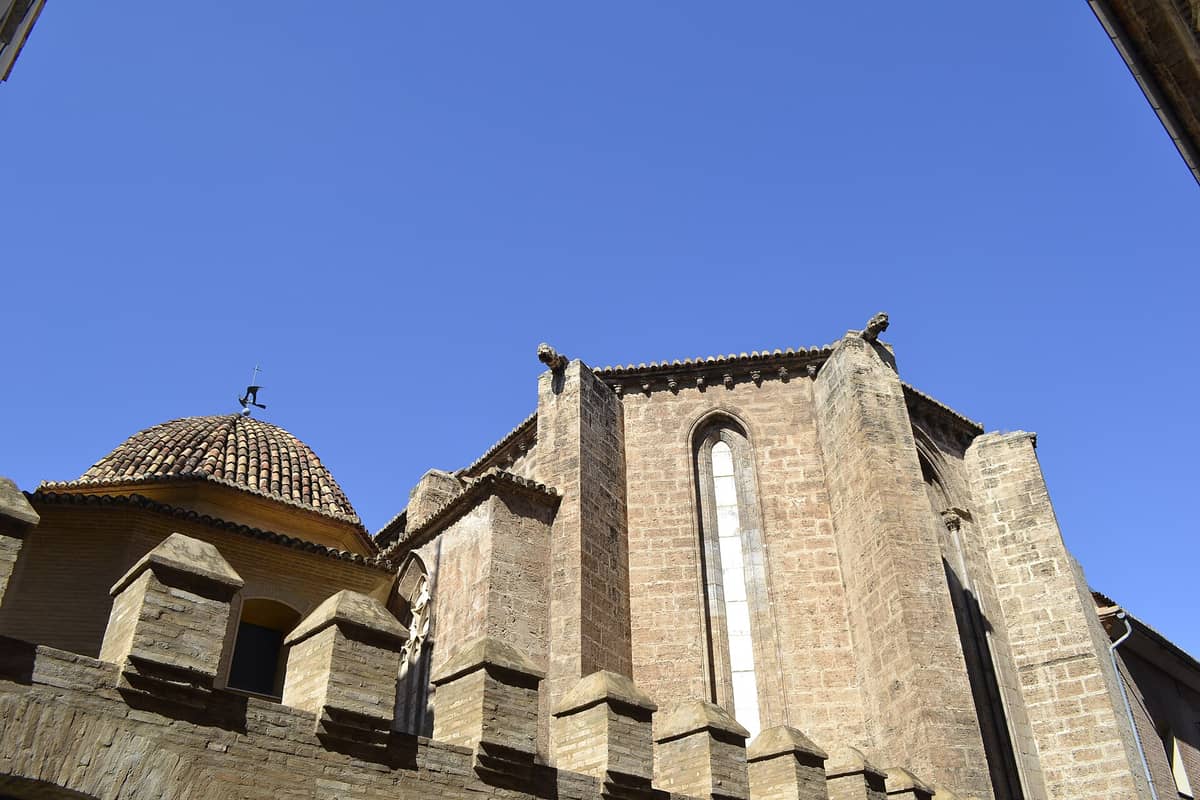
The Iglesia de San Juan del Hospital is not just old. It is the oldest church in Valencia, built in the immediate aftermath of King Jaume I's conquest of the city in 1238. The Knights Hospitaller, a military-religious order whose identity was inseparable from crusading and the care of pilgrims, received this plot of land to construct a church and hospital complex. That founding moment predates even the Catedral de Valencia in terms of construction sequence, making it the first purpose-built Christian church on Valencian soil after the reconquest.
The full official name for the site is the Conjunto Histórico de San Juan del Hospital, which signals that this is not simply a church but a complex: a church, a chapel, gardens, and one of the most intact medieval cemeteries surviving in any Spanish city centre. Most visitors to Valencia's historic core walk straight past the entrance on Calle Trinquete de Caballeros without realizing what is behind the door.
💡 Local tip
The church is open every day of the year and admission is free during visiting hours. You can usually walk in at many times before 21:00 without booking anything. The guided visits — which unlock the medieval cemetery — run on a fixed schedule and do require a ticket.
The Architecture: What You Are Actually Looking At
The nave is narrow and tall in the way of early Spanish Gothic, with bare stone walls that have not been softened by later Baroque additions the way so many Valencian interiors were. Light enters at a low angle through small openings, which means the quality of light shifts noticeably between morning and afternoon visits. In the morning, the stone is cool and the space feels austere. By late afternoon, when the sun catches the upper walls, there is a warmth to the ochre stonework that changes the whole register of the room.
The church preserves elements from multiple centuries laid on top of each other in ways that reward careful attention. The original 13th-century structure is visible in the proportions of the nave and in certain carved details near the entrance. Later additions from the 14th and 15th centuries are layered over it without completely obscuring what came before. A Byzantine-influenced chapel dedicated to Santa Bárbara, believed to have been associated with the Byzantine empress Constance of Hohenstaufen, adds an unusual element to the complex that distinguishes it from any other church in the city.
The floor is uneven in places, worn smooth by centuries of use, and the smell of old stone and faint incense is persistent even when no service is in progress. These are not complaints — they are part of what makes the building feel genuinely old rather than restored into blandness.
Tickets & tours
Hand-picked options from our booking partner. Prices are indicative; availability and final rates are confirmed when you complete your booking.
Cala del Moraig Hiking and Beach Trip from Valencia
From 32 €Instant confirmationFree cancellationValencia Silk Museum tickets and audio guide
From 7 €Instant confirmationFree cancellationSaint Nicholas Church Entrance Tickets and Audioguide
From 11 €Instant confirmationHistoric Valencia walking tour
From 27 €Instant confirmationFree cancellation
The Medieval Cemetery: The Main Reason to Book a Guided Visit
The cemetery attached to the complex is one of the most significant medieval burial grounds in the Valencia region. Dating from the 13th century, it contains tomb slabs, carved stone markers, and funerary inscriptions that document the early Christian community of post-reconquest Valencia. The cemetery is not accessible during standard free-entry hours — it is only included in the guided visit.
Guided visits for the full church and cemetery run on Mondays and Fridays at 11:00, and on Sundays at 17:30. If you only want the cemetery visit, there is a separate option on Mondays at 21:00. The evening cemetery visit is genuinely atmospheric: the overhead sky darkens, the stones are lit from below, and the confined space of the burial ground feels appropriately solemn. The ticket for the full visit is €8 general or €7 reduced. Cemetery-only visits cost €5 general or €4 reduced. No guided visits run during August.
⚠️ What to skip
Guided visits do not run in August. If you are visiting Valencia in summer, plan your trip to this site for self-guided church access only, or schedule the guided visit before or after the summer break.
When to Visit and How It Changes
The church is open every day of the year with visiting hours that generally extend to the evening, often until around 21:00, which gives considerable flexibility. Early morning visits, particularly on weekdays, tend to be quiet to the point of solitude. The neighbourhood around Calle Trinquete de Caballeros is a working residential part of the historic centre rather than a tourist corridor, so you are unlikely to encounter groups outside of the scheduled guided visit slots.
Midday in summer brings heat and stronger contrast between the bright street outside and the cool, dark interior. This is one of the more genuinely comfortable places in the historic centre during a hot July or August afternoon — stone walls several metres thick keep the temperature noticeably lower than outside. Bring a layer if you are sensitive to cold interiors even in summer.
The surrounding streets form part of the broader historic centre of Valencia, which is compact enough that combining San Juan del Hospital with nearby monuments is straightforward on foot. The Iglesia de Santa Catalina and the Torres de Serranos are both within a ten-minute walk.
Getting There
The church sits on Calle Trinquete de Caballeros, a narrow street in the La Xerea section of the historic centre. The address is number 5. On foot from Plaza de la Reina, the walk takes around five minutes heading northeast. From the Xàtiva metro station, allow eight to ten minutes on foot. The area is navigable by bicycle, though you will need to lock up before entering the street, which is pedestrianised at its narrowest point.
If you are building a longer route through the old city, the walking tour of Valencia's old city provides useful context for how San Juan del Hospital fits into the broader sequence of historic streets and monuments.
ℹ️ Good to know
Photography inside the church is generally permitted during free-entry hours. Use the available natural light — flash photography flattens the stone textures and is often unwelcome. The cemetery, when accessible on guided visits, benefits from a wide-angle lens given the confined space.
Honest Assessment: Who Will Get the Most From This
San Juan del Hospital rewards visitors who come with some curiosity about medieval history and early Christian Valencia. The space is not theatrical. There are no immersive audio-visual experiences, no elaborate signage in multiple languages, and the building does not announce its significance loudly. What it offers instead is a genuine encounter with a 13th-century space that has been in continuous use for nearly eight centuries.
Visitors who prefer a curated, heavily interpreted museum experience may find the self-guided visit underwhelming without background knowledge. The guided visits change this considerably — the guides at this site tend to be specialists, and the cemetery context transforms what you see inside the church as well. If you are choosing between a free drop-in and a booked guided visit, the guided visit is worth the modest cost for anyone with genuine interest in the period.
Families with young children can certainly visit the church for free, and the space is calm enough for a short stop. The guided visits, particularly the evening cemetery visit, are less suited to very young children both in terms of pacing and content.
Practical Notes on Accessibility and Etiquette
The church is an active place of worship, which means dress standards are expected: covered shoulders and knees are appropriate. The stone floors and narrow spaces of the medieval cemetery involve some uneven ground. No formal accessibility statement for wheelchair users was available at the time of writing — visitors with mobility requirements should contact the church directly before visiting to confirm access conditions.
As with most religious sites in Valencia's historic core, the atmosphere shifts distinctly during services. For a comparable experience of active religious life in an architecturally rich setting, the Basílica de la Virgen de los Desamparados nearby is another reference point, though the two buildings have very different characters.
Insider Tips
- The Monday evening cemetery visit at 21:00 is the most atmospheric option on the schedule. Cooler temperatures and artificial lighting across the burial ground create a very different experience from the daytime visit. Book ahead — the group size is limited.
- If you arrive outside guided visit hours and want historical context, the church's own website (sanjuandelhospital.es) has detailed information in Spanish on the founding history and the Byzantine chapel. Reading it before your visit makes the space considerably more legible.
- The street itself, Calle Trinquete de Caballeros, is one of the quieter lanes in the historic centre. It is worth walking the full length before entering the church — the scale of the buildings on either side gives a sense of the medieval urban grain that wider tourist streets have lost.
- No guided visits run during August. This is one of the few significant historic sites in the city centre where the core experience — the cemetery — is genuinely unavailable for an entire month. If your trip falls in August, visit for the free church interior only and manage expectations accordingly.
- The reduced ticket price applies to students, seniors, and holders of certain cultural cards. Bring documentation if you intend to claim it — the entrance is staffed and tickets are checked.
Who Is Iglesia de San Juan del Hospital For?
- Travellers with a specific interest in medieval Iberian history and crusader-era religious orders
- Architecture enthusiasts who prefer unrestored, lived-in Gothic over polished museum pieces
- Visitors seeking a calm, crowd-free stop in the historic centre during busy periods
- Anyone building a half-day walking itinerary through the oldest streets of Valencia's city core
- History-focused couples or small groups willing to commit to a guided visit for the full experience
Nearby Attractions
Other things to see while in Centro Histórico:
- Basílica de la Virgen de los Desamparados
The Real Basílica de Nuestra Señora de los Desamparados stands at the heart of Valencia's historic centre, housing the revered image of the city's patron saint. Built between 1652 and 1667, it is free to enter and open every day, making it one of the most accessible and emotionally resonant stops in the old city.
- Catedral de València
Rising above Plaza de la Reina in Valencia's historic centre, the Cathedral of Valencia is a remarkable layered monument built over seven centuries. From a Romanesque doorway to Gothic vaulting, a Baroque facade, and a relic claimed to be the Holy Grail, this is one of Spain's most architecturally complex and historically loaded churches.
- Centre Cultural La Nau
Housed in the University of Valencia's historic headquarters since the late 15th century, Centre Cultural La Nau is a historic landmark in the old town offering free exhibitions, concerts, and theatre. It rewards visitors who slow down and look closely.
- Centre Arqueològic de l'Almoina
Beneath a quiet plaza steps from Valencia Cathedral lies one of Spain's most compelling urban archaeology sites. The Centre Arqueològic de l'Almoina preserves around 2,500 square metres of Roman, Visigothic, and medieval remains, excavated over two decades and now visible through a striking modern structure.