House of Music (Haus der Musik) Vienna: What to Expect Before You Go
The Haus der Musik is an interactive sound museum occupying four floors of the historic Palais Erzherzog Carl in Vienna's first district. Part science exhibit, part music history, part playground for the ears, it earns its late-night opening hours by genuinely keeping visitors engaged well past dinner.
Quick Facts
- Location
- Seilerstätte 30, 1010 Vienna (Innere Stadt)
- Getting There
- Karlsplatz/Oper (U1, U2, U4); Stephansplatz (U1, U3); trams 1, 2, D, 71
- Time Needed
- 2 to 3.5 hours; evenings feel less crowded and equally rewarding
- Cost
- €19 standard, €15 reduced; open daily 10:00–22:00 (last entry 21:00)
- Best for
- Music lovers, families with curious teenagers, rainy-day visitors, solo travelers
- Official website
- www.hdm.at
What the Haus der Musik Actually Is
The Haus der Musik, or House of Music, is not a concert hall and not a conventional museum. It is an interactive sound museum spread across four floors of the Palais Erzherzog Carl, a Neoclassical palace in Vienna's historic first district. Opened on 15 June 2000 and owned by the City of Vienna via Wien Holding since 2005, it positions itself somewhere between a science centre and a music history exhibition, and largely succeeds at being both.
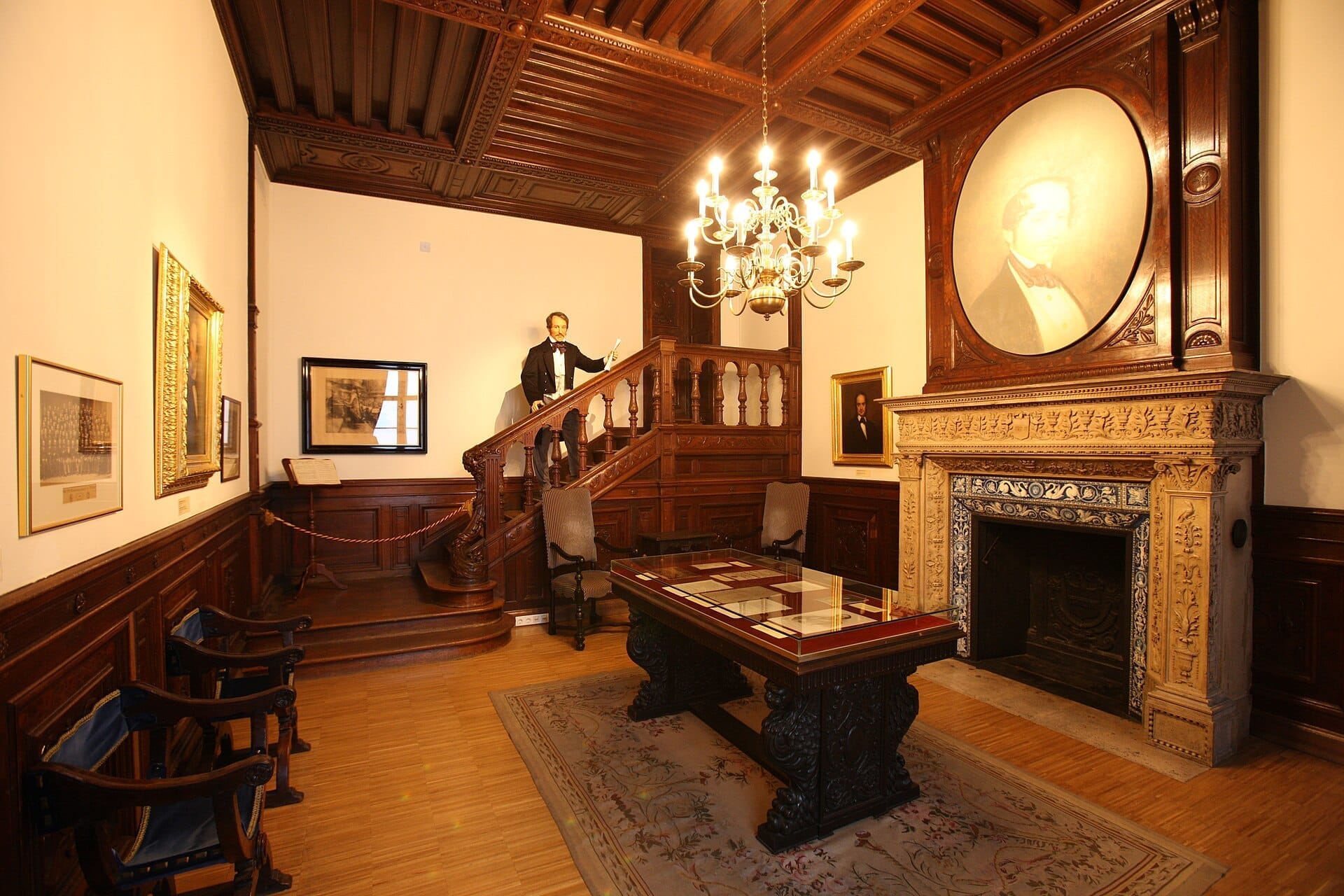
The building itself carries weight before you step inside. Archduke Charles of Austria, the military commander who defeated Napoleon at the Battle of Aspern-Essling in 1809, once lived here. The Vienna Philharmonic also had its founding meeting in this palace in 1842. The layers of history embedded in the walls are not just decorative footnotes; they inform the seriousness with which the museum treats its subject matter.
💡 Local tip
The museum stays open until 22:00 every day, and this is one of the genuinely useful late-night cultural options in central Vienna. Arriving at 18:00 or later means fewer school groups and more space around the interactive stations.
Four Floors, Four Different Experiences
The ground floor entrance gives little away. You buy your ticket, pass through, and the building opens up gradually. Each floor has a distinct identity, and the tonal shift between them is part of what makes the visit feel substantial rather than one-note.
The Vienna Philharmonic Floor
The first major floor is dedicated to the Vienna Philharmonic, one of the most storied orchestras in the world. The exhibits cover the ensemble's history since its 1842 founding, with archival photographs, original documents, and listening stations where you can hear recordings across different eras. For anyone already familiar with the orchestra's sound, the historical context adds texture. For those who are not, it serves as a compelling introduction.
The Sound Exhibition
This is the floor that surprises most visitors. The sound science exhibition explores how humans perceive and create music, using a mix of physical installations and digital interactive exhibits. You can hear how sound travels through different materials, experiment with acoustic phenomena, and experience what music feels like stripped down to its physical properties. Children respond well to this floor, but adults frequently spend just as long here. The exhibits are built with enough scientific rigour to avoid feeling dumbed-down.
The Great Composers
A significant portion of the museum traces the lives and works of composers with strong Vienna connections: Haydn, Mozart, Beethoven, Schubert, and Johann Strauss, among others. The approach is biographical and musical rather than purely archival. Listening stations let you hear specific works in context. The Beethoven section, in particular, tends to hold visitors longer than expected, partly because the exhibits acknowledge the complexity of his later years in Vienna rather than smoothing over the difficulties.
Vienna's relationship with these composers is explored in more depth in the Vienna classical music guide, which covers concert venues, composer residences, and the city's ongoing musical life.
The Virtual Conductor Experience
The top floor houses what many visitors remember most: a station where you can conduct the Vienna Philharmonic using motion-sensing technology. You stand before a screen, raise your arms, and the orchestra responds to your tempo and gestures. It sounds gimmicky and it is slightly gimmicky, but it is also genuinely entertaining, and the technology is good enough that the experience feels responsive rather than random. The playback quality is excellent. There is usually a short queue during busy afternoon hours.
Tickets & tours
Live prices and dates from our booking partner. If you book, we may earn a commission at no extra cost to you.
How the Experience Changes by Time of Day
Mornings from 10:00 to around 12:00 tend to attract school groups, particularly on weekdays. The interactive stations on the sound science floor can feel congested, and the noise level rises considerably when a class of ten-year-olds discovers they can create sound sculptures. If your visit falls on a weekday morning, consider starting on the composers floor, which attracts fewer children, and working downward.
The early afternoon lull, roughly 13:30 to 16:00, is generally the quietest window. By late afternoon, the museum picks up again with post-work visitors and tourists finishing nearby sights. Evenings after 18:00 have a noticeably calmer atmosphere. The interactive exhibits are still fully operational, the lighting creates a more considered mood, and you can linger at listening stations without pressure. The late opening is not just a logistical convenience; the museum genuinely rewards evening visits.
ℹ️ Good to know
On 24 December and 23 March, the museum closes earlier at 18:00 with last admission at 17:00. All other days follow the standard 10:00–22:00 schedule.
Getting There and Getting Around Inside
The museum sits on Seilerstätte 30 in Vienna's first district, a short walk from the Vienna State Opera and Kärntner Strasse. The nearest U-Bahn stop is Karlsplatz/Oper, served by the U1, U2, and U4 lines, as well as trams 1, 2, D, and 71. Stephansplatz (U1, U3) is also within comfortable walking distance, roughly eight to ten minutes on foot through the pedestrian centre.
If you are visiting the Vienna State Opera on the same day, the Haus der Musik is a natural pairing; the two buildings are about five minutes apart on foot, and the museums complement each other thematically.
Inside the building, floors are connected by elevators and stairs. Visitors with mobility requirements are advised to contact the museum directly in advance by phone or email to confirm current accessibility arrangements, as the specifics can vary.
Honest Assessment: What Works and What Doesn't
The Haus der Musik succeeds most clearly when it trusts the material. The sound science exhibits are genuinely inventive, the Vienna Philharmonic historical floor is substantive, and the composers section handles its subjects with care. The virtual conductor experience is the crowd-pleasing outlier, a feature that works as entertainment even if it sits at some distance from the intellectual weight of the other exhibits.
Where the museum is less impressive: the explanatory text in some sections can be dense, and certain exhibits rely on audio content that becomes difficult to absorb in a busy room. Audio guides or a careful read of the exhibit labels before diving into interactions will help. The museum is also not cheap at €19 for a standard ticket, but the four-hour potential of the visit and the late opening make the value calculation more favourable than a quick scan of the price tag suggests.
Who might not find this worthwhile: visitors who prefer passive, contemplative museum experiences without interactive elements may find the format exhausting. The museum is designed to engage, and it does so persistently. If what you want is a quiet room with paintings and silence, this is the wrong building.
Vienna has no shortage of alternatives in the same price range. The Kunsthistorisches Museum and the Albertina both offer more traditional exhibition formats if that better suits your preference.
Photography and Practical Details
Photography is generally permitted throughout the museum for personal use. The sound science floor offers some of the more photogenic moments, particularly the installations that visualise sound waves and acoustic shapes. Avoid using flash around the older archival materials on the Vienna Philharmonic floor. The lighting throughout is deliberately atmospheric, which makes some sections challenging for photography without adjusting your camera settings.
There is a museum shop near the entrance level. The selection leans toward music-themed gifts, books on Vienna's composers, and audio recordings. It is a reasonable stop if you are looking for something more considered than the typical souvenir. The building does not have an in-house cafe as of the time of writing, so plan food around the visit rather than during it; the Kärntner Strasse area and the streets around the State Opera have many options within a two-minute walk.
⚠️ What to skip
Ticket prices and opening hours can change. Verify current details at hdm.at before your visit, particularly if you are planning around the Christmas Eve or late-March reduced hours.
Insider Tips
- Buy tickets online in advance through the official website to skip the box office queue on busy afternoons. Weekend afternoons between 14:00 and 17:00 are consistently the peak crowd window.
- The virtual conductor station on the top floor records a short video of your performance. You can email it to yourself directly from the kiosk, which makes for a more memorable souvenir than anything in the gift shop.
- The Vienna Philharmonic floor has listening stations with high-quality headphones. Budget at least 20 minutes here even if classical music is not your primary interest; the archival recordings from the early 20th century are remarkable in audio quality.
- Combine the visit with a walk along the Ringstrasse before or after. The boulevard runs just a few minutes away and allows you to connect the architectural grandeur of 19th-century Vienna with the musical history you have just encountered inside.
- The museum's multilingual labelling (German and English throughout) is consistent and well-translated, so English-speaking visitors do not need a guide or audio rental to follow the content comfortably.
Who Is House of Music (Haus der Musik) For?
- Music lovers wanting more than a concert: the historical and interactive elements add context that a live performance alone cannot provide
- Families with children aged 8 and older: the sound science floor is hands-on enough to hold attention without being condescending
- Rainy afternoon visitors: four floors of weather-proof content and a 22:00 closing time make this a reliable full-evening option
- Solo travelers: the self-paced format and late hours suit independent visitors who want to spend as long as they like without coordinating a group
- Curious non-specialists: you do not need prior knowledge of classical music to get significant value from the sound science and architectural history on offer
Nearby Attractions
Other things to see while in Innere Stadt (1st District):
- Albertina Museum
Housed in a former Habsburg palace at the edge of the Ringstrasse, the Albertina holds one of the largest and finest graphic art collections in the world. With over one million drawings and prints alongside rotating exhibitions of modern masters, it rewards both the casual visitor and the serious art traveler.
- Austrian National Library (Prunksaal State Hall)
The Prunksaal, or State Hall of the Austrian National Library, is a Baroque masterpiece built for Emperor Charles VI between 1723 and 1726. At roughly 80 metres long and crowned by Daniel Gran's sweeping ceiling frescoes, it is one of the most visually arresting interiors in central Europe, and still holds around 200,000 historic volumes in its carved walnut shelves.
- Burgtheater
The Burgtheater is Austria's national theatre and one of the most significant German-language stages in the world. Its Neo-Renaissance building on Vienna's Ringstraße dates to 1888, and its institutional history stretches back to the court of Empress Maria Theresa. Whether you come for a performance or a guided tour, it rewards attention.
- Café Central
Housed inside the Palais Ferstel in Vienna's historic first district, Café Central has been serving coffee and conversation since 1876. Once the gathering point for Freud, Trotsky, and a constellation of Central European intellectuals, it remains one of the most architecturally remarkable coffeehouses in the world.
Planning a trip? Discover personalized activities with the Nomado app.