Hockey Hall of Fame: Canada's Shrine to Its National Game
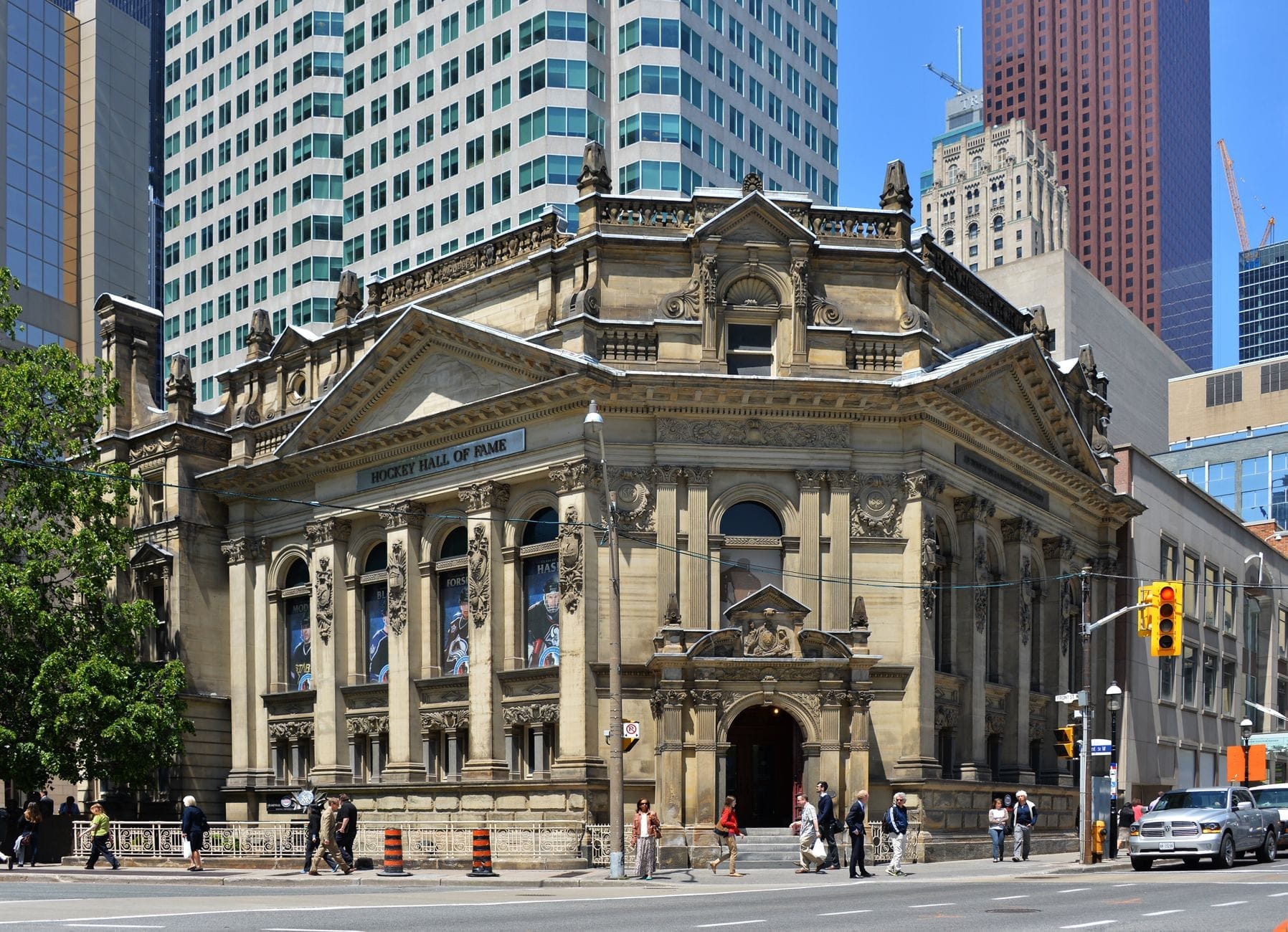
Housed in a landmark 19th-century bank building in the heart of downtown Toronto, the Hockey Hall of Fame houses one of the world's most comprehensive collections of hockey history, including the original Stanley Cup. Whether you follow the NHL closely or simply want to understand Canada's deepest sporting passion, this is one of the most thoughtfully curated sports museums on the continent.
Quick Facts
- Location
- 30 Yonge Street (Brookfield Place), at Yonge & Front, Downtown Toronto
- Getting There
- Union Station (Line 1, GO Transit, VIA Rail, UP Express) — 5-minute walk; King Station (Line 1) also nearby
- Time Needed
- 2 to 3 hours for a thorough visit; hockey fans may spend longer
- Cost
- Adults $29.95 CAD; Youth (4–13) $19.95 CAD; Seniors $24.95 CAD; Under 3 free
- Best for
- Sports fans, families with school-age kids, hockey history enthusiasts, rainy-day visitors
- Official website
- www.hhof.com
What the Hockey Hall of Fame Actually Is
The Hockey Hall of Fame is the official repository of professional ice hockey's history, artifacts, and inductee records. Founded in 1943, originally in Kingston, Ontario, the institution relocated to Toronto in 1958 and settled into its current Brookfield Place home in 1993. The building it occupies is itself worth noting: the former Bank of Montreal branch at the corner of Yonge and Front Streets, completed in 1885, is a Beaux-Arts structure with a domed great hall, ornate plasterwork, and stained glass that makes an unexpectedly grand backdrop for hockey jerseys and vintage skates.
The facility spans approximately 65,000 square feet across multiple levels, connected to the broader Brookfield Place complex and directly accessible from Toronto's underground PATH walkway. That last detail matters more than it sounds: you can walk here from Union Station without stepping outside, which makes it genuinely practical on a cold January afternoon or a rainy October morning.
💡 Local tip
Arrive via the PATH from Union Station to avoid street-level weather and skip the external queues. Follow signs for Brookfield Place once you are inside the underground concourse.
The Stanley Cup and the Great Hall
The emotional centrepiece of the museum is the original Stanley Cup, displayed inside the restored bank vault room beneath the Great Hall's dome. The Cup itself is surprisingly small — Lord Stanley donated a 7.5-inch bowl in 1892, and what you see here is the original bowl separated from the modern trophy that circulates among NHL championship teams. Most visitors spend several minutes here just reading the barrel of names engraved on the replicas and originals around the room.
The Great Hall above is where the inductee plaques live. The scale of the room amplifies the weight of the display: more than 300 bronze plaques covering players, builders, and officials from the sport's earliest organized years through the present era. Morning light through the stained glass dome hits the room differently than afternoon overhead lighting, and if you visit on a weekday before noon, you will often have long stretches of the hall nearly to yourself.
Photography of the Stanley Cup display is permitted and essentially expected. The light inside the vault area is dim, so your phone camera will work reasonably well only if you hold steady or use a surface for support. For visitors interested in the broader architectural story of downtown Toronto, the building connects naturally with the Brookfield Place complex above, itself a significant piece of late-20th-century urban architecture worth a few minutes of exploration.
Tickets & tours
Live prices and dates from our booking partner. If you book, we may earn a commission at no extra cost to you.
90-minute Toronto express city tour with photo stop at City Hall
From 44 €Instant confirmationFree cancellationToronto Old Town: Dark Side Exploration Game and Tour
From 12 €Instant confirmationFree cancellationLEGOLAND Discovery Centre Toronto tickets
From 16 €Instant confirmationFree cancellationToronto 'Little Canada' entrance tickets
From 27 €Instant confirmationFree cancellation
Interactive Zones and the Game Experience
Beyond the artifacts and plaques, the Hall has invested heavily in participatory exhibits that make the visit work for people who are not already steeped in hockey lore. The interactive zones include shooting galleries where you can test a slap shot against a simulated NHL goaltender, a broadcast booth where you can record your own play-by-play call over real game footage, and a zone dedicated to goaltending that lets you face virtual shooters.
These areas get loud and crowded when school groups arrive, typically between 10:00 a.m. and 1:00 p.m. on weekdays. If you want the shooting galleries and simulators with minimal wait, plan to arrive right at opening or visit after 2:00 p.m. on weekdays. Weekends tend to be consistently busier throughout the afternoon.
There is also a substantial zone dedicated to international hockey, covering the Summit Series of 1972, Olympic tournaments, and women's hockey history. The women's game section is more developed than many visitors expect, with equipment, trophies, and documentation going back decades before the modern professional era.
ℹ️ Good to know
Standard hours are daily 10:00 a.m. to 5:00 p.m. Extended summer hours (late June through early September) typically open at 9:00 a.m. The Hall closes on Induction Day, Christmas Eve, and Christmas Day. Confirm exact dates on the official site before visiting.
Navigating the Building: A Practical Walkthrough
Entry is on the lower concourse level of Brookfield Place. After ticketing, the flow moves naturally through the historic bank structure first, where you encounter the Great Hall and the trophy rooms, then expands outward into newer gallery wings. There are no strict one-way routes, which means you can double back, but it also means occasional confusion about what you have and have not seen. Pick up the printed floor guide at the desk.
The museum is fully accessible. Elevators connect all levels, and wheelchairs are available upon request at the front desk. The PATH-level entry has no steps, making this one of the more straightforward accessible experiences among Toronto's major cultural venues. Strollers are manageable in most areas, though the historic vault room and some smaller gallery sections are narrow.
For visitors planning a broader day around the Financial District, the Hall is conveniently close to several other downtown landmarks. The Union Station area and the nearby waterfront are walkable additions to a half-day itinerary. If you have children in tow, check the Toronto with kids guide for a sequence of nearby stops that makes logistical sense.
Who Will Enjoy This Most, and Who Might Not
The Hall works best for people with at least a casual interest in hockey or Canadian cultural history. Avid NHL followers will find depth they did not expect: original equipment from the 1910s and 1920s, media archives, and nuanced coverage of rule changes and franchise histories. Families with children aged six and older tend to get good value, particularly from the interactive zones.
Visitors with no connection to hockey and limited interest in sports history may find the experience thinner than advertised. The building's architecture alone justifies a brief detour, but two to three hours of pure artifact and plaque browsing will not hold attention without some underlying curiosity about the game. If you are traveling with someone in that category, build in the architecture angle and the interactive games, and treat the inductee gallery as a walk-through rather than a study.
The attraction is an indoor, climate-controlled space, which makes it well-suited for Toronto's winter months when outdoor options are limited. For a broader picture of indoor cultural options downtown, the best museums in Toronto guide covers how it compares with venues like the Royal Ontario Museum and the Art Gallery of Ontario.
Getting There and Practical Details
The most practical approach is via Union Station, a five-minute walk through the PATH underground system. Union Station is served by TTC Line 1, all GO Transit rail corridors, the UP Express from Pearson Airport, and VIA Rail intercity trains. If you are arriving from elsewhere in Canada or connecting from the airport, you can reach the Hall without surfacing at street level.
By car, the Gardiner Expressway has an exit at Yonge Street. Street-level parking in the Financial District is limited and expensive; the PATH-connected parking garages at Brookfield Place and along Front Street are the more sensible option. Rideshare drop-off works well on Yonge Street directly outside the building entrance.
All admission prices are in Canadian dollars. At the time of writing, the adult rate is $29.95 CAD, youth (ages 4 to 13) is $19.95 CAD, and seniors (65 and older) pay $24.95 CAD. Children aged three and under enter free. Taxes are additional. Prices are subject to change; verify on the official site before visiting.
⚠️ What to skip
The Hall closes on its annual Induction Day each November, as well as Christmas Eve and Christmas Day. If your visit falls near these dates, check the official schedule at hhof.com before making plans.
Insider Tips
- The Great Hall's dome lighting is best in the morning when natural light filters through the stained glass. If you care about the architectural experience, arrive close to opening time rather than mid-afternoon.
- The shooting gallery simulators have a short battery of shots per turn. Watch a round or two before stepping up so you understand the interface and do not waste your attempts on orientation.
- The broadcast booth experience produces a downloadable clip you can keep. Bring a phone or email address ready if you want to save the recording before you leave the building.
- The gift shop at the exit carries licensed NHL merchandise at prices comparable to arena retail, but the Hall-exclusive items, particularly replica trophy pieces and historical prints, are not easily found elsewhere in the city.
- If you are visiting with a group that includes non-hockey fans, spend the first 30 minutes in the Great Hall and vault room, which are genuinely impressive as architecture regardless of sporting interest, before moving to the exhibit wings.
Who Is Hockey Hall of Fame For?
- NHL fans and hockey history enthusiasts who want depth beyond a game-night experience
- Families with children aged 6 and older, particularly for the interactive shooting and broadcast zones
- Visitors on rainy or cold days looking for a substantial, fully indoor cultural attraction near Union Station
- Architecture enthusiasts interested in the 1885 Bank of Montreal Beaux-Arts building
- Travelers with a half-day in the Financial District who want to combine cultural and architectural sightseeing
Nearby Attractions
Other things to see while in Downtown Toronto:
- Allan Gardens Conservatory
Allan Gardens Conservatory is a free, year-round botanical conservatory at 160 Gerrard Street East in downtown Toronto. Housed in six glass display houses anchored by a 1910 Edwardian Palm House, it holds about 1,500 m² of tropical palms, cacti, orchids, and seasonal blooms. One of the oldest parks in Toronto, it remains one of the city's most underrated green spaces.
- Art Gallery of Ontario
The Art Gallery of Ontario is one of North America's largest art museums, housing over 90,000 works inside a landmark Frank Gehry-renovated building in downtown Toronto. From Indigenous Canadian art to European masters and contemporary photography, the AGO rewards focused visitors and casual explorers alike.
- Brookfield Place (Allen Lambert Galleria)
The Allen Lambert Galleria inside Brookfield Place is a free, publicly accessible arcade designed by architect Santiago Calatrava between 1987 and 1992. Its arching steel-and-glass canopy, rising between two of downtown Toronto's tallest towers, is one of the most impressive interior spaces in Canada.
- Campbell House Museum
Built in 1822 for Upper Canada's Chief Justice, Campbell House Museum is the oldest surviving residence from the original Town of York. Moved to its current downtown corner in 1972 and opened as a museum in 1974, it offers an intimate, unhurried window into early colonial Toronto — a sharp contrast to the glass towers surrounding it.
Planning a trip? Discover personalized activities with the Nomado app.