Half Moon Bay: The Complete Day Trip Guide from San Francisco
Half Moon Bay is a small coastal city on the San Francisco Peninsula, about 30 to 45 minutes south of the city via Highway 92 or Highway 1. It offers four miles of protected state beach, a walkable historic main street, and some of the most reliably clear skies in the Bay Area during autumn. This guide covers what to do, when to go, and how to get the most out of the trip.
Quick Facts
- Location
- Half Moon Bay, CA 94019 — approx. 25 miles (40 km) south of San Francisco via Highway 92 or Highway 1
- Getting There
- Best reached by car via Highway 1 or Highway 92; SamTrans bus routes connect to the coast from Millbrae BART/Caltrain station
- Time Needed
- Half day to full day; 4–6 hours covers the beach, trail, and Main Street
- Cost
- Town access is free; Half Moon Bay State Beach charges a vehicle day-use parking fee (USD, verify current rates at parks.ca.gov)
- Best for
- Coastal walks, beachcombing, farm stand shopping, escaping San Francisco fog in fall
- Official website
- www.visithalfmoonbay.org
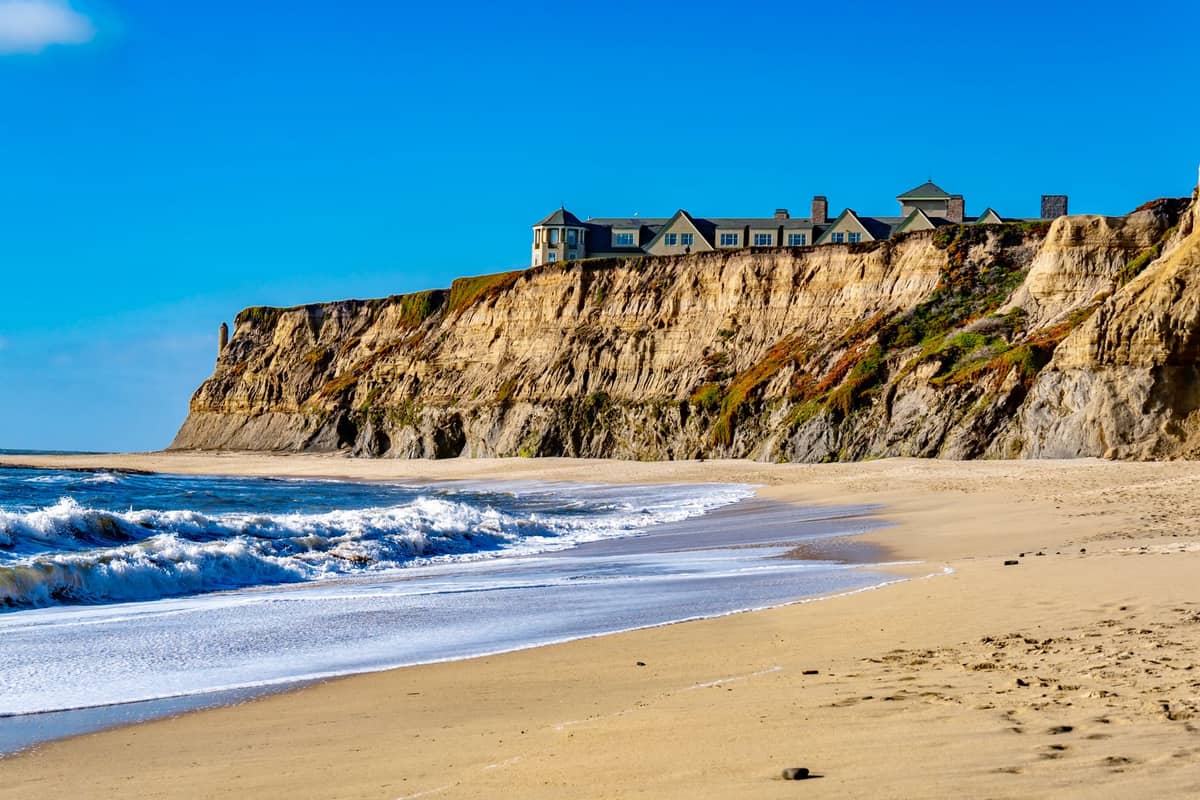
What Half Moon Bay Actually Is
Half Moon Bay is a small incorporated city on the San Mateo County coast, flanked by Pacific bluffs to the west and the Santa Cruz Mountains to the east. For visitors coming from San Francisco, it functions primarily as a coastal escape: open beaches, farm-direct produce, and a low-key historic downtown that feels genuinely unhurried. It is one of the oldest communities in San Mateo County, and while it draws heavy weekend crowds during events like the annual Pumpkin Festival in October, on most weekday mornings the beach trail is nearly empty.
The main draw for most visitors is Half Moon Bay State Beach, a protected stretch of coastline managed by California State Parks. The state beach covers 4 miles (6 km) along the shoreline, divided into four named sections: Francis, Venice, Dunes, and Roosevelt Beaches. The water along this stretch is cold year-round and the surf can be powerful, so most visitors walk, cycle, or simply sit rather than swim.
ℹ️ Good to know
Half Moon Bay State Beach is day-use only, generally open from morning to sunset. Vehicle parking requires a fee payable at the lots — confirm current rates at parks.ca.gov before you go, as California State Parks adjusts fees periodically.
Getting There from San Francisco
Driving is by far the most practical option. From San Francisco, Highway 92 west is the direct route, dropping you onto Highway 1 just north of town. The drive takes roughly 30 to 45 minutes in normal traffic, though weekend afternoons and holidays can push that to 60 minutes or more, particularly on the return leg. Highway 1 south from the city is more scenic but adds travel time. If you want coastal views on the way there, take Highway 1 out and Highway 92 back.
For those without a car, SamTrans operates bus service on Route 17, which connects Half Moon Bay to Hillsdale and Millbrae BART/Caltrain station. The journey from BART adds significant time compared to driving, but it is a workable option for a relaxed weekday trip. Confirm current schedules and fares directly with SamTrans before traveling, as routes and timetables change. Rideshare services (Uber and Lyft) are available for the journey, though surge pricing on busy weekends can make this expensive.
If you plan to combine Half Moon Bay with other coastal stops, the day trips from San Francisco guide covers how to structure the route south along the peninsula, including timing and what else is worth stopping for along the way.
Tickets & tours
Hand-picked options from our booking partner. Prices are indicative; availability and final rates are confirmed when you complete your booking.
Sonoma and Napa Valley wine tour from San Francisco
From 127 €Instant confirmationFree cancellationGo City | San Francisco Explorer Pass
From 76 €Instant confirmationFree cancellationMuir Woods and Sausalito guided tour with transportation
From 82 €Instant confirmationFree cancellationSan Francisco CityPASS
From 77 €Instant confirmationFree cancellation
The Beach Trail: What to Expect
The Coastal Trail runs the full length of the state beach and is the backbone of a Half Moon Bay visit. It is a wide, flat, well-maintained path that sits just above the beach on low bluffs, with open views of the Pacific in both directions. The surface is packed gravel and hard-packed dirt in most sections, manageable for most footwear, though the beach itself is soft sand. On clear mornings, the light is sharp and the horizon is unobstructed. By midday the marine layer often retreats inland, and in summer it can roll back in by late afternoon.
Francis Beach, at the southern end near the main campground and visitor facilities, is the most developed section and tends to be busiest. Venice Beach and Dunes Beach in the middle of the stretch offer more solitude, particularly on weekday mornings. Roosevelt Beach at the north end near the Ritz-Carlton is the quietest of the four, accessible from a smaller parking area. Cyclists use the trail regularly, so walkers should stay aware on shared sections.
💡 Local tip
Arrive at Francis Beach before 9:00 am on weekends to secure parking without waiting. The lots fill quickly between late morning and early afternoon, particularly from May through October.
The beach itself is appealing for walking at low tide, when the sand flattens out and the exposed wet sand compacts underfoot. At high tide, the beach can narrow significantly in some sections. Check tide tables if you want a comfortable walk along the waterline rather than the upper trail. Water temperature along this coast runs cold year-round, typically in the low 50s to mid-50s Fahrenheit (around 11–13°C), so do not plan on swimming without a wetsuit.
Main Street and the Town
Downtown Half Moon Bay sits about half a mile inland from the beach along Main Street, a compact historic corridor with local shops, cafes, and restaurants. The architecture is low-key Victorian and early 20th-century commercial, nothing spectacular by itself, but the scale is pleasant and the pace is slow. There are independent bookshops, garden stores, and several decent spots for coffee and lunch. On weekends, Main Street gets noticeably crowded by midday — arriving before 11:00 am gives you a more relaxed experience.
The surrounding coastside area is prime farmland. The flat coastal terrace between the mountains and the ocean supports strawberry fields, pumpkin patches, artichoke farms, and flower farms. Roadside stands along Highway 92 and Highway 1 operate through the growing season, selling directly to passing visitors. Prices at these stands are often lower than what you would find at San Francisco farmers markets for the same produce. Fall is peak season for pumpkins and squash; spring and early summer bring strawberries and cut flowers.
If a coastal market day is the primary goal, Half Moon Bay pairs naturally with a visit to the Ferry Plaza Farmers Market in San Francisco, which carries produce from many of the same Coastside farms.
When to Go and What to Expect by Season
Half Moon Bay has its own microclimate. September and October are the best months by most measures: temperatures are warmest (often reaching the mid-60s Fahrenheit, around 18°C), fog is often reduced, and the inland farm stands are at peak supply. This is also when the annual Half Moon Bay Art and Pumpkin Festival brings very large crowds, so if you want to visit in October, pick a non-festival weekend or arrive early.
Summer (June through August) is reliably cooler and often foggy in the mornings, with the marine layer frequently burning off by early afternoon. Bring a windproof layer regardless of the season — the bluffs and beach trail are exposed, and wind is a constant presence. Winter brings the rainy season (November through March), but clear winter days can be rewarding: fewer visitors, dramatic surf, and long low light that is excellent for photography.
⚠️ What to skip
Never turn your back to the ocean on this coast. Sneaker waves, which arrive unexpectedly and with force, are a documented hazard on Northern California beaches including Half Moon Bay State Beach. Heed all posted warnings and stay off low rocks near the waterline.
For a broader look at how weather affects planning across the Bay Area, the best time to visit San Francisco guide covers seasonal patterns in detail, including how fog distribution differs across the peninsula.
Photography, Accessibility, and Practical Details
For photography, the golden hours at Half Moon Bay are genuinely rewarding. Sunrise over the Santa Cruz Mountains behind the town produces warm light that catches the bluffs and the farm fields east of Highway 1. Sunset over the ocean from the beach trail or the bluff above Francis Beach gives the classic Pacific silhouette. Midday light is flat and bright, less interesting for landscapes but fine for documentary shots of the town and farm stands.
Accessibility at Half Moon Bay State Beach is mixed. The Coastal Trail is relatively firm and navigable for most mobility levels, but the beach itself is soft sand. Parking lots at Francis Beach have designated accessible spaces and accessible restrooms; terrain at Venice and Dunes Beaches is more uneven. Contact California State Parks directly or check parks.ca.gov for current accessibility information before visiting if this is a priority concern.
Travelers planning a broader coastal itinerary might also consider Point Reyes National Seashore to the north, which offers a very different coastal environment: forested ridges, tule elk, and dramatic headlands. It makes a strong pairing if you have two separate day trips to plan.
Who Should Reconsider
Half Moon Bay is a straightforward coastal excursion, not a destination with dense cultural programming or nightlife. Visitors looking for world-class museums, landmark architecture, or a packed itinerary of ticketed attractions will find it underwhelming. The town itself is small and can be walked in under 30 minutes. On October festival weekends, Highway 1 approaching town can back up significantly, and parking becomes a logistical challenge. If your time in San Francisco is limited to a day or two, the city itself offers more concentrated reward per hour spent.
For those weighing where to allocate a single day outside the city, the Muir Woods guide covers another popular day trip to the north that trades open coastline for old-growth redwood forest — a very different but complementary experience.
Insider Tips
- The Coastal Trail at Half Moon Bay connects all four state beach sections end to end. If you park at Francis Beach and walk north to Roosevelt Beach and back, you cover roughly 8 miles round trip with consistent ocean views the entire way — no car shuttling required.
- Roadside flower farms along Highway 92 near the Skyline junction often sell bundles of fresh-cut flowers for a few dollars. These farms are working operations, not tourist shops, and the quality is excellent in spring and early summer.
- Half Moon Bay's fog timing differs from San Francisco's. The city often clears by 11:00 am while the coast sits in low cloud, but the reverse also happens. Check a weather app specifically for Half Moon Bay rather than assuming San Francisco's conditions will match.
- Pescadero, a small coastal town about 15 miles south on Highway 1, makes a worthwhile extension to the drive. Pescadero State Beach and the artichoke soup at Duarte's Tavern are both worth the extra 20 minutes of driving.
- If you are visiting on a weekday, the Francis Beach campground store sometimes has good local produce and supplies. It operates on a smaller scale than the farm stands but is convenient if you are already at the beach.
Who Is Half Moon Bay For?
- Families with children who want open beach space without urban crowds
- Cyclists looking for a flat coastal trail with clear Pacific views
- Photographers seeking golden hour ocean light with minimal obstruction
- San Francisco visitors who want to see the agricultural coast that supplies the city's farmers markets
- Anyone whose San Francisco trip falls during September or October and wants reliable sunshine away from the fog belt
Nearby Attractions
Combine your visit with:
- 16th Avenue Tiled Steps
The 16th Avenue Tiled Steps Project is a community-made mosaic staircase of 163 steps stretching through San Francisco's Golden Gate Heights neighborhood (a sub-area of the Inner Sunset), depicting a journey from the ocean floor to the night sky. It's free, photogenic, and connects to one of the city's best lesser-known hilltop viewpoints.
- Angel Island State Park
Angel Island State Park sits in the middle of San Francisco Bay, offering miles of hiking trails, layers of military and immigration history, and 360-degree views of the city skyline, Marin headlands, and beyond. Getting there requires a ferry, which is part of the appeal — the island feels removed from city life, even though San Francisco is visible the entire time.
- Asian Art Museum of San Francisco
One of the largest Asian art collections in the Western world, housed in a transformed Beaux-Arts landmark at Civic Center. From ancient Chinese bronzes to contemporary Southeast Asian installations, the museum rewards careful visitors who know what to look for.
- UC Berkeley Campus
The University of California, Berkeley sits on a hillside above San Francisco Bay, offering free access to striking Beaux-Arts architecture, landmark museums, and open green spaces. A short BART ride from San Francisco, it rewards curious visitors with history, intellectual energy, and some of the best campus scenery in the country.