Greektown & Halsted Street: Chicago's Greek Quarter Worth Exploring
Centered on a five-block stretch of South Halsted Street just west of The Loop, Chicago's Greektown packs Greek restaurants, bakeries, cultural institutions, and nearly two centuries of immigrant history into a compact, walkable district. Free to explore and open around the clock, it rewards visitors who come hungry and curious.
Quick Facts
- Location
- South Halsted Street, West Loop, Chicago (approx. between Madison & Van Buren Streets)
- Getting There
- CTA Blue Line (UIC-Halsted station) or a short 8-block walk from The Loop; multiple CTA bus routes serve Halsted Street
- Time Needed
- 1.5 to 3 hours for a full walk, meal, and cultural stop
- Cost
- Free to walk; restaurant meals vary; National Hellenic Museum charges admission (verify current prices at nationalhellenicmuseum.org)
- Best for
- Food lovers, history enthusiasts, solo walkers, and anyone combining a visit with the nearby West Loop dining scene
- Official website
- greektownchicago.org
What Greektown Actually Is
Greektown Chicago is a concentrated stretch of South Halsted Street in the West Loop, roughly five blocks long, that has served as a major symbolic and commercial center for Chicago's Greek-American community since the 1960s. It is not a theme-park recreation of Greece. It is a working urban neighborhood with a distinctive identity: blue-and-white signage, the smell of charcoal-grilled lamb drifting onto the sidewalk on weekend evenings, restaurants that have been run by the same families for decades, and a small but serious cultural museum that anchors the district.
The streets are open and free to walk at any hour. There is no admission gate, no wristband, no tour bus required. You arrive, you walk, you eat, and if you're genuinely interested in the history, you spend an hour inside the National Hellenic Museum. That's essentially the blueprint.
💡 Local tip
Greektown is about a 10- to 15-minute walk west from The Loop, making it an easy addition to any downtown itinerary. The UIC-Halsted CTA Blue Line station puts you right at the edge of the district without a transfer.
A History Rooted in Immigration and Displacement
Greek settlement in Chicago traces back to the 1840s, but it accelerated significantly after the Great Chicago Fire of 1871, when Greek immigrants were among the laborers who helped rebuild the city. The original Greek neighborhood, known locally as 'The Delta,' occupied a triangular area around Halsted, Harrison, and Blue Island Streets — ground that is now the University of Illinois at Chicago campus. Urban development in the mid-20th century displaced that community, and the current Greektown along Halsted took shape during the 1960s as the community re-established itself a few blocks north.
That history of displacement and reinvention gives Greektown a slightly different emotional texture than Chicago's other ethnic neighborhoods. It is a district that was deliberately rebuilt and consciously maintained as a cultural anchor, not simply a place where immigrants happened to settle. The restaurants and the museum are acts of preservation as much as commerce.
For a broader look at Chicago's layered immigrant and ethnic neighborhood history, the Chicago neighborhoods guide provides useful context before you visit.
Tickets & tours
Hand-picked options from our booking partner. Prices are indicative; availability and final rates are confirmed when you complete your booking.
Go City | Chicago All-Inclusive Pass
From 127 €Instant confirmationFree cancellationiFLY Chicago Lincoln Park indoor skydiving experience
From 126 €Instant confirmationFree cancellationiFLY Chicago Rosemont indoor skydiving tickets
From 117 €Instant confirmationFree cancellationChicago lakefront neighbourhood bike tour
From 18 €Instant confirmationFree cancellation
Walking Halsted Street: What You'll Actually See
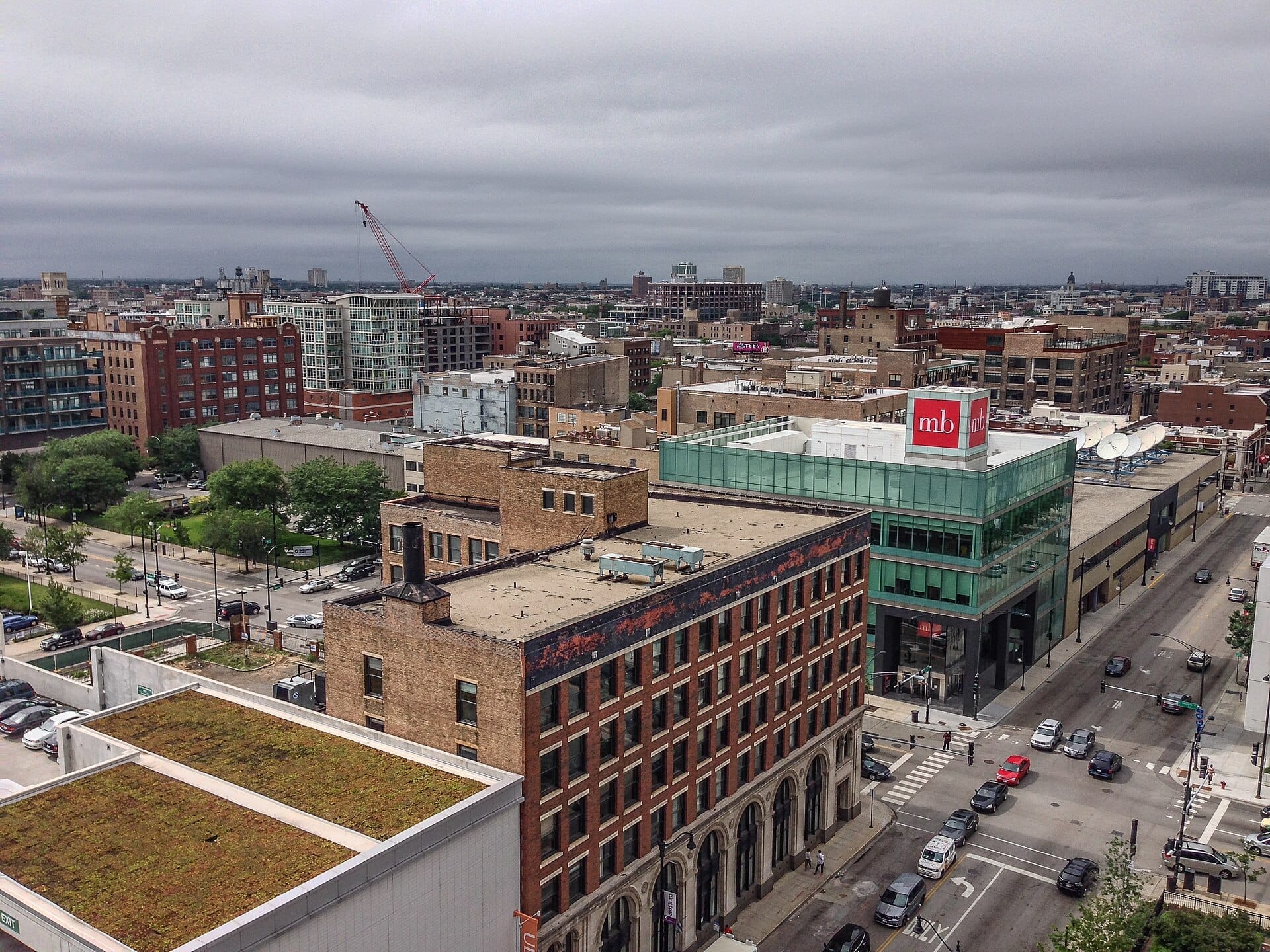
The district's visual character is deliberately Greek-coded: columns on restaurant facades, blue neon lighting in windows, Greek lettering on shop signs, and blue-painted awnings that contrast against the Chicago brick typical of the surrounding West Loop. It reads as theatrical in daylight and genuinely atmospheric after dark.
During weekend lunch hours, the sidewalks outside the major restaurants fill with people waiting. The smell of saganaki (the flaming cheese dish that is practically a Greektown ritual) escapes through open doors. On weekday mornings, the same blocks are considerably quieter, with delivery trucks and restaurant prep work giving the street a more ordinary commercial feel. The neighborhood looks most like itself on Friday and Saturday evenings, when the restaurants are full and the blue lighting is lit.
The five-block core is manageable in 20 to 30 minutes of walking, even if you stop to look at menus. Most of the significant restaurants are clustered between Adams and Jackson, with a few extending toward Van Buren. There are also Greek bakeries, specialty grocers, and gift shops carrying ceramics, icons, and imported goods, though these have become less numerous over the years as real estate pressure from the broader West Loop development has reshaped the retail mix.
The National Hellenic Museum
The most substantive cultural stop in the district is the National Hellenic Museum, which describes itself as the community anchor of Greektown and the West Loop. It occupies a purpose-built facility on South Halsted and focuses on the history of Greek immigration to the United States, with rotating exhibitions, archival collections, and oral history programs. The building itself is modern and well-maintained, a deliberate statement about permanence in a neighborhood that has already been displaced once.
Admission is charged; current prices should be confirmed directly at nationalhellenicmuseum.org before visiting, as rates are subject to change. A visit here takes roughly 45 to 90 minutes depending on your level of interest in the permanent and temporary exhibitions. If you only have time for either the museum or a long restaurant meal, most visitors choose the meal. Both are worth doing if you have the time.
The museum is covered in detail on the National Hellenic Museum attraction page, which includes current hours and admission details.
Eating in Greektown: The Real Reason Most People Come
The restaurants are the district's primary draw, and they are serious about certain things. Saganaki, flamed tableside and accompanied by a shout of 'Opa,' is essentially required at the major establishments. Whole roasted lamb appears on weekend specials. Spanakopita, lamb chops, gyros, and dense honey-soaked pastries are staples across most menus. Portions tend toward generous.
The big-name restaurants along Halsted are substantial operations that can handle large groups, which means they attract family celebrations, pre-theater dinners, and tourist groups alongside neighborhood regulars. If you want a quieter experience, aim for weekday lunch or arrive at dinner before 6:30 PM on a weekend. By 7:30 PM on a Friday or Saturday, waits of 30 to 45 minutes at the most popular spots are common.
The food quality at the established restaurants is generally reliable. This is not a neighborhood where you are likely to stumble onto a revelatory hidden meal; the benchmark is consistency and atmosphere. Expect to pay mid-range Chicago restaurant prices, typically in the range of $20 to $40 per person for a full meal with a drink, though prices vary and should be confirmed with current menus.
💡 Local tip
If you are combining Greektown with a West Loop visit, note that Randolph Street's acclaimed restaurant corridor is only about 10 to 15 minutes' walk north. A Greektown lunch plus a West Loop evening works well as a single food-focused itinerary day.
Getting There and Practical Logistics
The UIC-Halsted station on the CTA Blue Line is the most convenient transit stop, placing you at the southern edge of the Greektown corridor. From downtown Loop stations, the ride takes around five minutes. Multiple CTA bus routes also serve Halsted Street; consult the CTA trip planner at transitchicago.com for current routing.
Walking from The Loop takes about 10 to 15 minutes at a comfortable pace, crossing the Kennedy Expressway overpass at Ida B. Wells Drive. The walk is straightforward and mostly flat. Rideshare drop-off works well directly on Halsted, though traffic on weekend evenings can slow arrival times slightly.
Street parking exists in the surrounding blocks but should not be relied on during peak weekend hours. The neighborhood is well-lit at night and pedestrian traffic is steady during restaurant hours, which makes evening visits feel comfortable for solo travelers and groups alike.
For a complete picture of moving around the city, the getting around Chicago guide covers CTA fares, transit passes, and rideshare tips in detail.
Weather, Seasons, and When to Visit
Greektown works in every season, but the experience changes considerably. In summer, outdoor seating appears at several restaurants and the street has a social, open-air energy that suits the Mediterranean theme. Late spring (May to June) and early fall (September to early October) offer the most comfortable walking conditions, with temperatures ranging from roughly 16 to 22°C (60 to 72°F).
In winter, the neighborhood contracts indoors. The restaurants are warm and often decorated for the season, and the lack of crowds makes reservations easier to get. Chicago winters are genuine — temperatures regularly fall below freezing between December and February — so dress accordingly if you're walking from the Loop. The short walk is manageable even in cold weather, but wind chill from the lake can make it feel harsher than the thermometer suggests.
ℹ️ Good to know
Taste of Greektown, an annual outdoor celebration held in Greektown, typically takes place in late August and draws significant crowds. If your visit coincides with the festival, expect higher energy, closed street sections, and limited restaurant seating without a reservation.
Honest Assessment: What Greektown Is and Isn't
Greektown is a compact, well-defined cultural corridor with genuine historical roots and good food, but it is not a sprawling neighborhood with layers of discovery around every corner. Visitors expecting the depth of Chicago's Chinatown, the mural culture of Pilsen, or the commercial variety of the West Loop will find it feels more contained. The core experience is essentially: walk the blocks, choose a restaurant, eat well, and optionally visit the museum.
That focused simplicity is actually useful if you have limited time. It is the kind of place that rewards a half-day rather than a full day. Travelers who try to stretch it into an all-day destination may find themselves at a loose end by mid-afternoon. Those who slot it into a morning-to-early-afternoon visit, pair it with the National Hellenic Museum, and then walk east toward the West Loop or south toward the Loop will find the pacing feels exactly right.
If you are building a one-day Chicago itinerary, the Chicago one-day itinerary shows how Greektown can be combined efficiently with nearby Loop and West Loop attractions.
Insider Tips
- Arrive at a major Greektown restaurant at opening time (typically 11 AM for lunch) on a weekend to avoid waits. By noon, several spots will already have a queue at the host stand.
- The UIC-Halsted Blue Line stop is less obvious than it sounds: it is named for the University of Illinois at Chicago, not for the Greektown district itself. Don't let the campus-sounding name put you off; it drops you directly where you want to be.
- If saganaki is your primary goal and you want to understand what the fuss is about: the flaming presentation was reportedly invented in Chicago's Greektown, not imported from Greece. It is a Chicago original dressed in Greek clothing.
- The blocks immediately north of the Greektown core, heading toward Randolph Street, transition quickly into the restaurant-dense West Loop. Combining both in a single afternoon gives you a meaningful cross-section of Chicago's food culture without covering much ground.
- Visit the National Hellenic Museum on a weekday if possible. Weekend afternoons can get busy with school groups and organized tours, which affects the quieter, more reflective experience the permanent collection deserves.
Who Is Greektown & Halsted Street For?
- Food travelers who want a focused, satisfying Greek meal in a district with genuine historical character
- History enthusiasts interested in Greek-American immigration and Chicago's immigrant neighborhood evolution
- Visitors combining a Loop day with a westward walk to explore adjacent neighborhoods
- Solo travelers who want a low-key, navigable neighborhood without the scale of larger Chicago attractions
- Families looking for a relaxed, affordable lunch stop near downtown with reliable, crowd-pleasing food options
Nearby Attractions
Combine your visit with:
- Bahá'í House of Worship
The Bahá'í House of Worship in Wilmette, Illinois, is one of the most architecturally singular buildings in North America. Free to enter, open daily, and reachable by CTA from downtown Chicago, it rewards visitors with a 135-foot lace-like dome, meditative silence, and an unusual kind of spiritual calm that transcends denomination.
- Brookfield Zoo Chicago
Brookfield Zoo Chicago is one of the largest and most historically significant zoos in the United States, covering 216 acres about 14 miles west of downtown. With more than 511 species, landmark indoor exhibits, and a genuine conservation mission, it rewards a full day of exploration. But it takes planning to get the most out of it.
- Chicago Air and Water Show
Every August, the Chicago Air and Water Show transforms the lakefront into a grandstand for one of the most spectacular free public events in the United States. Fighter jets, military demonstrations, and precision flying teams perform over Lake Michigan while hundreds of thousands of spectators line the shore from Fullerton to Oak Street.
- Chicago Botanic Garden
A living museum spread across 385 acres and nine islands north of Chicago, the Chicago Botanic Garden offers 27 gardens, four natural areas, and six miles of lake shoreline in Glencoe, Illinois. Whether you visit for a single seasonal bloom or spend a full day exploring Japanese landscapes and native prairies, this guide covers everything you need to plan a worthwhile trip.