Galicia Jewish Museum: Jewish Memory Told Through Photographs
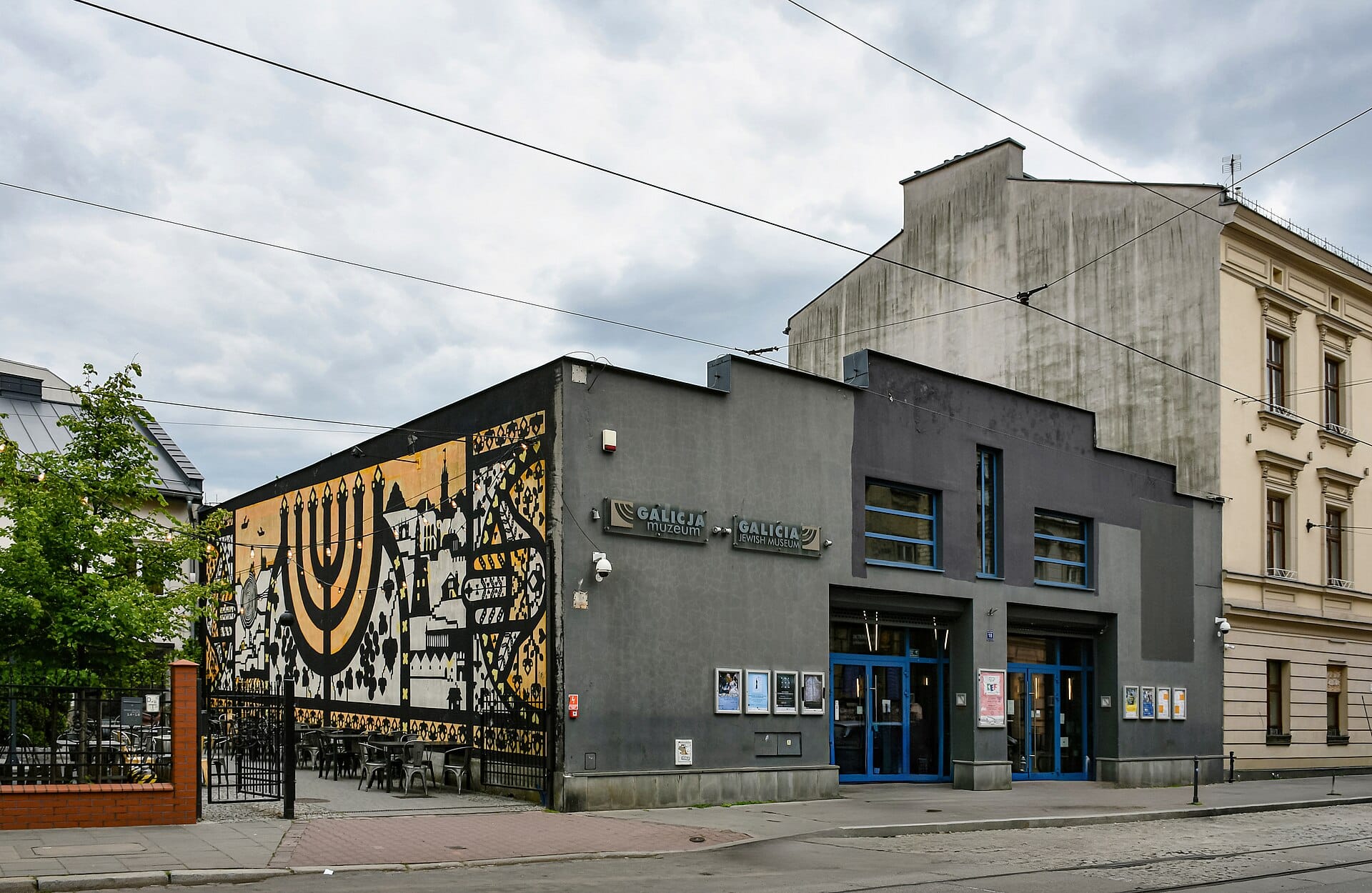
Housed in a converted pre-war industrial building on ul. Dajwór in Kraków's Kazimierz district, the Galicia Jewish Museum presents Jewish life and culture in the former region of Galicia through documentary photography and rotating exhibitions. It is one of the most thoughtfully curated cultural institutions in southern Poland, and one that rewards visitors who come willing to slow down and read.
Quick Facts
- Location
- ul. Dajwór 18, Kazimierz, Kraków
- Getting There
- Trams 3, 8, 9, 24, 50, 69 and bus 502 serve the Kazimierz area near Dajwór Street
- Time Needed
- 1.5 to 2.5 hours
- Cost
- Adults 35 PLN, Students/Seniors 25 PLN, Family 55 PLN
- Best for
- History and photography enthusiasts, those interested in Jewish heritage and Holocaust memory
- Official website
- galiciajewishmuseum.org/en
What the Galicia Jewish Museum Actually Is
The Galicia Jewish Museum opened in 2004 in a converted pre-war industrial building in Kazimierz, Kraków's historic Jewish quarter. The building, formerly used as a mill or furniture factory, retains its raw bones: exposed brick, high ceilings, and the kind of light that comes through tall, slightly uneven windows. The contrast between the industrial shell and the gravity of what it contains is not accidental.
The Polish name is Żydowskie Muzeum Galicja. The museum's focus is Jewish life and memory in Galicia, the historical region that spanned parts of present-day southern Poland and western Ukraine, and which was home to one of the largest concentrations of Jewish population in Europe before the Second World War.
This is not a Holocaust museum in the conventional sense, though the Holocaust is present throughout. The core permanent exhibition, called 'Traces of Memory,' uses documentary photographs taken by British photographer Chris Schwartz to document what remains of Jewish life across Galicia: synagogues, cemeteries, houses, and landscapes. For context on the neighborhood surrounding the museum, see the Kazimierz Jewish Quarter guide.
💡 Local tip
The museum is open every day 10:00–18:00, and is typically closed on Yom Kippur as well as Christmas Eve and Christmas Day. Confirm directly with the museum if you are visiting around those dates.
The Permanent Exhibition: Traces of Memory
The 'Traces of Memory' exhibition is the heart of the museum and the reason most visitors come. It comprises large-format photographs shot across dozens of sites in Galicia: decaying synagogue interiors, overgrown Jewish cemeteries, fragments of Hebrew inscriptions repurposed in later construction, and architectural remnants in towns where the Jewish community was entirely destroyed during the war.
What makes this exhibition unusual is its approach to absence. Rather than relying primarily on archival images of people, it documents the physical traces left behind. A carved wooden ark in a half-collapsed building. A cemetery where the matzevot (gravestones) are barely visible beneath decades of undergrowth. The photographs are accompanied by detailed written panels in English and Polish that provide historical context without resorting to simplification.
The exhibition is organized thematically rather than chronologically, which means visitors move through categories of memory: places of prayer, places of rest, daily life, destruction. Plan for at least 90 minutes if you intend to read carefully. The material is dense but not overwhelming, and the pacing is up to you.
ℹ️ Good to know
All exhibition texts are available in English and Polish. The museum also offers audio guides and guided tours in several languages — check the official website for current schedules and group booking options.
Tickets & tours
Live prices and dates from our booking partner. If you book, we may earn a commission at no extra cost to you.
The Building and the Atmosphere Inside
The converted industrial space gives the museum a particular atmosphere. The ceilings are high, the floors bare, and the rooms feel slightly unfinished in a way that suits the subject matter. There is no theatrical staging here. The photographs are mounted cleanly, with enough space between them to breathe.
In the morning, when the museum first opens at 10:00, it is often quiet enough that you can hear your own footsteps. The light through the windows changes as the day progresses. By early afternoon, particularly in summer, tour groups begin arriving, and the rooms can become moderately busy. If you prefer a quieter visit, arrive before 11:00 or plan to come late in the afternoon, around 16:00, when groups tend to have moved on.
The building is accessible for visitors with reduced mobility. The ground floor is step-free, and the facilities are adapted for wheelchair users. This is worth noting because many of the historic sites featured in the exhibition itself, such as old cemeteries and rural synagogues, are not accessible at all.
Rotating Exhibitions and Cultural Programming
Beyond the permanent collection, the Galicia Jewish Museum hosts a regular program of temporary exhibitions, lectures, film screenings, and cultural events. These change throughout the year and often explore specific themes in Jewish history, art, and contemporary Polish-Jewish relations.
The museum has a strong reputation in the academic and cultural community as a space for dialogue rather than just display. Events often include contributions from scholars, artists, and community members, and the programming reflects a commitment to treating Jewish heritage as a living subject rather than a finished historical record.
If you are planning a visit around a specific theme or event, check the official website before you go. The museum also connects naturally with other significant sites in Kazimierz, including the Old Synagogue and the Remuh Synagogue and Cemetery, both within walking distance.
How to Get There and What to Expect on Arrival
The museum is located at ul. Dajwór 18, on the eastern side of Kazimierz. It is walkable from Kraków's Old Town in around 20 to 25 minutes on foot, passing through the southern part of Kazimierz along the way. By tram, lines 3, 8, 9, 24, 50, and 69 serve the area, as does bus 502. The walk from the nearest tram stop takes under five minutes.
The entrance is clearly marked, and there is a small bookshop just inside the door. The bookshop stocks a well-curated selection of titles on Jewish history, Galicia, the Holocaust, and related subjects, in both Polish and English. It is worth spending a few minutes here before or after your visit.
Kazimierz is a district that rewards exploration before or after your museum visit. The area has a long history as Kraków's Jewish quarter, and walking its streets, especially around Plac Nowy, gives important context for what you will see inside. For a structured approach to the neighborhood, the Kazimierz neighborhood guide covers the main sites and walking routes.
Honest Assessment: Who Will Get the Most from This Museum
The Galicia Jewish Museum is not designed for passive visitors. It asks you to read, to look closely, and to sit with difficult subject matter. If you are looking for a quick cultural stop between a lunch and a walking tour, this is not the right fit. The material deserves more attention than a 30-minute scan.
For visitors with a genuine interest in Jewish history, Central European heritage, or documentary photography, it is one of the strongest museum experiences in Kraków. The exhibitions are intellectually serious without being inaccessible, and the physical space does not impose an emotional register on you. You are left to respond in your own way.
It pairs particularly well with a visit to Schindler's Factory Museum across the Vistula in Podgórze, though the two institutions approach Jewish wartime history from very different angles. If you are building a day around these themes, the Jewish quarter itinerary gives a coherent route through the relevant sites.
Travelers who find purely photographic exhibitions less engaging than object-based displays may prefer the Old Synagogue, which houses a permanent collection of religious artifacts. Those primarily interested in the broader story of wartime Kraków may find Schindler's Factory more immediately accessible. Both are valid choices — the Galicia Jewish Museum simply offers something more meditative and thematically specific.
Insider Tips
- The museum bookshop near the entrance carries titles that are hard to find elsewhere in Kraków, including academic works on Galician Jewish history and high-quality photography books. Allow time to browse even if you are not a regular book buyer.
- Morning visits before 11:00 offer the quietest experience. Tour groups from major hotels typically arrive between 11:00 and 14:00, particularly in summer and around Jewish heritage events like the Jewish Culture Festival in late June and early July.
- The museum is small enough that a second pass through the exhibition pays off. Read the wall panels on your first pass and look more carefully at the photographs on your second. Details in the images that initially seem incidental often carry significant meaning.
- If you are visiting Kazimierz on a Saturday, note that some nearby synagogues observe Shabbat restrictions. The Galicia Jewish Museum itself operates as a secular cultural institution and is open daily, but plan your wider neighborhood itinerary with this in mind.
- Admission is paid in Polish złoty (PLN). There is no indication that card payments are universally available, so carry some cash as a backup. Prices as of recent guides: 35 PLN for adults, 25 PLN for students and seniors, 55 PLN for families — verify on the official website before visiting.
Who Is Galicia Jewish Museum For?
- Visitors with a serious interest in Jewish history and Central European heritage
- Photography and documentary art enthusiasts who appreciate large-format narrative work
- Travelers who want to understand Galicia's Jewish past beyond the framework of the Holocaust alone
- Academic and educational groups looking for a thoughtfully curated museum with bilingual content
- Solo travelers prepared to spend reflective time with difficult material
Nearby Attractions
Other things to see while in Kazimierz:
- Ethnographic Museum Kraków
Housed in the former Kazimierz Town Hall on Plac Wolnica, the Seweryn Udziela Ethnographic Museum of Kraków holds over 80,000 objects documenting Polish and Central European folk life. It is one of the oldest ethnographic collections in Poland, and one of the most overlooked institutions in a city full of heavyweight attractions.
- New Jewish Cemetery (Miodowa Street)
Established in 1800–1801 on the western edge of Kazimierz, the New Jewish Cemetery on Miodowa Street holds thousands of graves spanning two centuries of Kraków's Jewish life. Quiet, largely unvisited by mass tourism, and registered as a heritage monument since 1999, it offers a contemplative counterpoint to the city's busier historical sites.
- Old Synagogue
The Old Synagogue on Szeroka Street in Kraków's Kazimierz district is the oldest surviving synagogue in Poland, now home to a permanent museum dedicated to the history and culture of Kraków's Jewish community. Part of the Museum of Krakow network, it stands as one of the most historically significant buildings in Central Europe.
- Plac Nowy Market, Kazimierz
Plac Nowy is Kazimierz's central market square, running from early-morning produce stalls to late-night street food. At its heart stands the Okrąglak, a 12-sided rotunda built in 1900 that once served as a kosher poultry slaughterhouse and now dishes out zapiekanki until the early hours. The square is free to enter and shifts character dramatically depending on the hour and the day of the week.
Planning a trip? Discover personalized activities with the Nomado app.