Fundació Pilar i Joan Miró: Miró's Studios, Moneo's Architecture, and 6,000 Works in Palma
The Fundació Pilar i Joan Miró a Mallorca is where Joan Miró actually worked, and that biographical intimacy sets it apart from any conventional gallery visit. Spread across preserved studios, a Rafael Moneo-designed exhibition building, and a sculpture garden in Palma's Cala Major district, the foundation holds around 6,000 works and offers one of the most architecturally considered art spaces in Spain.
Quick Facts
- Location
- C/ Joan de Saridakis, 29, Cala Major, Palma de Mallorca
- Getting There
- Bus from Palma city centre or taxi (approx. 10-15 min)
- Time Needed
- 2 to 3 hours
- Cost
- Verify current pricing at miromallorca.com (typically in the €9–12 adult range)
- Best for
- Modern art, architecture, photography, quiet cultural mornings
- Official website
- miromallorca.com/en
What the Fundació Pilar i Joan Miró Actually Is
Most art foundations named after a famous artist display works in buildings that have nothing to do with the artist's life. The Fundació Pilar i Joan Miró a Mallorca is different. Joan Miró spent the last three decades of his life working here, in the studios that are now open to the public. The foundation was established in 1981, after Miró's death, at his explicit wish that the complex be preserved and made accessible after his death. He died in 1983, and the foundation formally opened to the public in 1992 after the new headquarters building was completed.
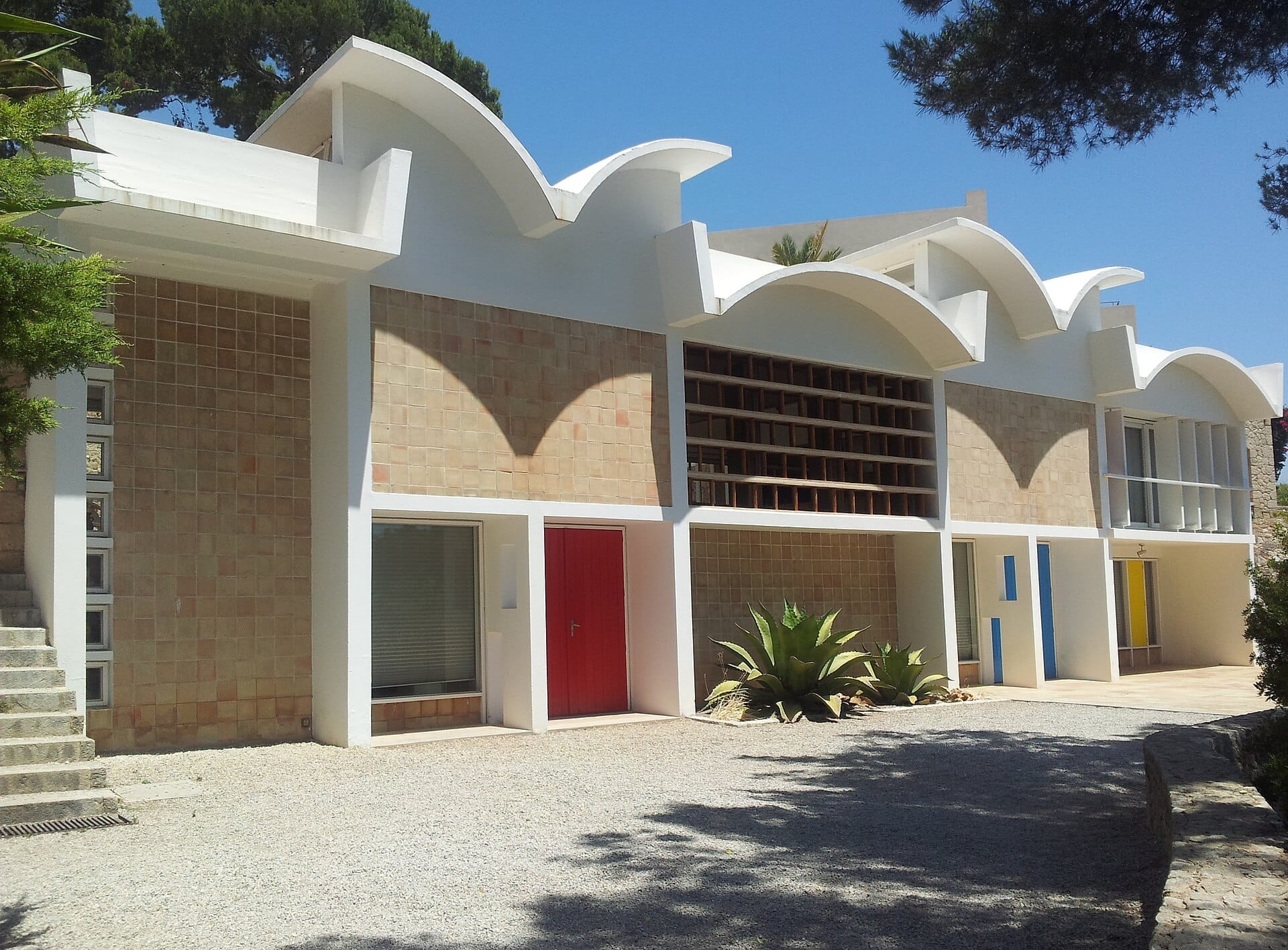
The site in Cala Major, a quiet residential area about 4 kilometres west of Palma's old town, brings together three distinct architectural moments: the 18th-century stone house known as Son Boter, near which Miró established his residence in 1956 and used as a studio for large-scale works; the Taller Sert, his primary painting studio designed by his friend and architect Josep Lluís Sert and completed in 1956; and the Edifici Moneo, a purpose-built exhibition and archive building designed by Rafael Moneo and constructed between 1987 and 1992. Each building has its own logic, its own light, and its own relationship to the Mediterranean garden that surrounds them.
ℹ️ Good to know
Note: Son Boter, the 18th-century studio, is temporarily closed for rehabilitation works. Check miromallorca.com before your visit to confirm which spaces are accessible.
The Architecture as an Attraction in Itself
The Edifici Moneo alone justifies the journey for anyone interested in late 20th-century architecture. Rafael Moneo, who won the Pritzker Prize in 1996, designed the building to handle natural Mediterranean light without allowing it to damage works on paper or canvas. The result is a sequence of top-lit galleries where sunlight enters filtered and diffused, giving the interior a quality of illumination that feels almost theatrical despite being entirely natural. The geometry is angular and deliberate, with the building's exterior clad in warm concrete that sits comfortably within the pine-covered hillside.
The Taller Sert is the emotional core of the complex. Sert designed the studio specifically to match Miró's working habits: large north-facing skylights for consistent, non-directional light; high ceilings to accommodate oversized canvases; a floor plan that allowed Miró to work on multiple pieces simultaneously by spreading them on the ground. Visiting the Taller Sert, which has been preserved close to its working state, gives a precise sense of how Miró's paintings were physically made. The scale of the space, and the tools and materials left within it, shift the experience from looking at finished art to understanding an artistic process.
Tickets & tours
Hand-picked options from our booking partner. Prices are indicative; availability and final rates are confirmed when you complete your booking.
Quad sunset tour in Cala San Joan
From 79 €Instant confirmationFree cancellationDinosaurland and Caves of Hams combined ticket
From 25 €Instant confirmationFree cancellationShuttle Boat from Cala Millor to Cala Ratjada
From 26 €Instant confirmationFree cancellation3-hour Es Trenc Boat Tour in Mallorca
From 39 €Instant confirmationFree cancellation
The Collection: Scale and Range
The foundation's permanent collection holds approximately 6,000 works, making it one of the largest single-artist holdings in Europe. The collection spans paintings, drawings, graphic works, sculptures, textiles, and ceramics, and covers the full arc of Miró's career from early figurative work through the development of his distinctive symbolic language in the 1920s and 1930s to the monumental late paintings he was producing in Mallorca in the 1970s. Temporary exhibitions in the Edifici Moneo rotate works from the permanent collection alongside occasional loans and thematic shows.
Not everything in the collection is on display at any given time. The foundation also houses a specialised library and archive with documents, letters, and photographs relating to Miró's life and working methods. Researchers can access the archive by prior arrangement. For general visitors, the permanent and temporary galleries in the Edifici Moneo, combined with the studios, provide more than enough material for a thorough two to three hour visit.
If the permanent collection leaves you wanting more context on Miró's broader influence on Spanish modernism, Es Baluard museum in Palma's old town holds a strong collection of 20th-century Spanish and Mallorcan art and makes a natural companion visit on the same day.
The Sculpture Garden and Outdoor Spaces
The garden connecting the buildings is planted with Mediterranean species: pines, carob trees, rosemary, and wild grasses that shift colour between spring and summer. Sculpture is placed throughout, and the transitions between buildings become part of the visit rather than interruptions to it. In mid-morning, when the light is still low enough to cast long shadows across the stone paths, the garden is genuinely quiet. By early afternoon in summer, the open sections get hot and the shade under the pines becomes the most appealing part of the outdoor experience.
The garden also gives the best angles for photographing the exterior of the Edifici Moneo, particularly the relationship between the building's angular concrete forms and the soft, unmanicured planting around it. Anyone interested in architecture photography should bring a wide-angle lens and allow time to explore the perimeter.
When to Visit and How to Get There
Tuesday to Saturday mornings, particularly before midday, are the quietest times. The foundation draws a genuinely international and culturally engaged audience rather than large tour groups, so crowds rarely become a serious problem, but early visits allow the studios to be experienced in something close to silence. Sunday opening is shorter, with the foundation closing at 3pm. The foundation is closed on Mondays.
Winter hours (16 September - 15 May): Tuesday to Saturday 10am to 6pm, and Sunday and public holidays 10am to 3pm. From late spring through summer, hours may extend. Always verify current hours directly at miromallorca.com before visiting, as these are subject to change.
Getting here from central Palma is straightforward by public bus or taxi. The Cala Major area is approximately 10 to 15 minutes from the city centre by road. If you are already planning a day in the western part of Palma or along the Bay of Palma coastline, the foundation fits naturally into a route that could also include Bellver Castle, which sits on a pine-covered hill just to the east and is one of the few circular Gothic castles in Europe.
💡 Local tip
There is no large car park adjacent to the foundation. If arriving by car, allow extra time to find street parking on the residential streets around Cala Major. Bus is the easier option for most visitors.
Practical Details: Tickets, Accessibility, and What to Bring
Admission fees are not published within this guide as they are subject to change. Current pricing is available at miromallorca.com. Based on comparable Spanish art foundations, expect adult tickets in the €9 to €12 range, with concessions for students, seniors, and under-16s. The foundation accepts card payment.
The Edifici Moneo has step-free access and is suitable for wheelchair users. The studios and garden paths involve some uneven surfaces; contact the foundation directly if accessibility requirements need to be confirmed in advance. Audio guides and information panels are available in multiple languages including English, Spanish, and Catalan.
Photography is generally permitted in the permanent collection and studios for personal use, though tripods and flash are typically restricted. The quality of natural light in the Taller Sert is excellent for handheld photography. Bring a jacket if visiting in winter or early spring, as the studio spaces can be cool.
The Fundació fits well into a broader cultural itinerary across Palma. For context on the city's visual art and historic architecture before or after your visit, the Palma Cathedral and the Palace of La Almudaina are the obvious anchors of the old town, roughly 15 minutes east by taxi.
Who This Attraction Is and Is Not For
Visitors who engage most with the foundation are typically those with some prior interest in Miró's work, 20th-century European modernism, or studio-museum experiences as a format. The combination of preserved working spaces, serious architecture, and a significant permanent collection gives the visit a density that rewards curiosity and slow looking.
Those who find contemporary and abstract art unrewarding will likely feel under-served here. The foundation is not a blockbuster institution with crowd-pleasing interactive elements or broad historical narratives: it is a specialist space, and it makes no apology for that. Families with very young children may find the studio and gallery environment difficult to navigate, though the sculpture garden offers some open space. Visitors primarily interested in Palma's beaches, food scene, or old-town architecture may find the 15-minute trip to Cala Major difficult to justify unless they have a specific interest in the subject matter.
If you are building a broader cultural itinerary for Palma and want to understand what else the city offers beyond the obvious landmarks, the complete guide to things to do in Mallorca covers the full range of options across the island.
Insider Tips
- The Taller Sert, Miró's primary painting studio, preserves the space close to its working state. Spend more time here than the gallery rooms if you can: the scale of the skylights and the residual traces of the creative process are unlike anything in a conventional exhibition space.
- Tuesday mornings shortly after opening are reliably the quietest period. The combination of low visitor numbers and morning light in the Edifici Moneo galleries makes this the most contemplative time to visit.
- The foundation's bookshop stocks a better-than-average selection of Miró monographs, exhibition catalogues, and art history titles, some exclusive to the foundation. If you are interested in Miró's graphic work in particular, the catalogue range here is more comprehensive than anything available in Palma's general bookshops.
- Confirm Son Boter's status before visiting. The 18th-century studio is temporarily closed for rehabilitation and the situation may change. Check miromallorca.com directly on the week of your visit.
- If you want to combine the foundation with Bellver Castle in a single half-day, start at the foundation when it opens, then walk or take a short taxi to the castle. The route between them passes through pleasant pine-covered residential streets and takes around 20 minutes on foot.
Who Is Fundació Pilar i Joan Miró For?
- Travellers with a serious interest in Joan Miró or 20th-century European modernism
- Architecture enthusiasts who want to experience Rafael Moneo's work in context
- Photographers drawn to the quality of natural light in purpose-built studio and gallery spaces
- Visitors who want a quiet, unhurried cultural morning away from Palma's old-town crowds
- Anyone interested in the studio-museum format and what it reveals about artistic process
Nearby Attractions
Other things to see while in Palma de Mallorca:
- Arab Baths (Banys Àrabs)
The Banys Àrabs are the only intact remnant of Palma's Islamic past, dating to the 10th or 11th century. Compact but genuinely atmospheric, this ancient hammam in the heart of the old city takes less than an hour to visit and rewards anyone with even a passing interest in history.
- Bellver Castle
Perched on a pine-covered hill 3 km west of Palma's city centre, Bellver Castle is one of Europe's rare circular Gothic fortresses. Built under King Jaume II and completed around 1311, it has served as a royal residence, a prison, and now houses the Palma Municipal History Museum. The views over Palma Bay alone justify the climb.
- Bishop's Garden (Jardí del Bisbe)
Tucked behind the towering walls of Palma Cathedral, the Jardí del Bisbe is a small formal garden on the grounds of the Episcopal Palace. Free to enter and often overlooked by visitors rushing between La Seu and the seafront, it offers citrus groves, herb beds, an ornamental pond, and a rare ground-level view of the cathedral's famous rose window.
- Es Baluard Museum of Modern & Contemporary Art
Es Baluard Museu d'Art Contemporani de Palma occupies a Renaissance bastion on the old city walls, combining 800-plus works of modern and contemporary art with sweeping views over Palma Bay. It is one of the most architecturally striking museum settings in the Balearic Islands, and far less crowded than the cathedral a few minutes' walk away.