Fredrikstad Old Town (Gamlebyen): The Fortress Town Worth Leaving Oslo For
Fredrikstad Gamlebyen is one of the best-preserved fortified towns in the Nordic region, founded in 1567 and still encircled by its original star-shaped ramparts. Just about an hour south of Oslo by train, it offers cobblestone lanes, working artist studios, waterfront cafés, and a ferry crossing that costs nothing. Entrance to the fortress area is free.
Quick Facts
- Location
- Smedjegaten 87, Gamle Fredrikstad, Norway — approx. 100 km south of Oslo
- Getting There
- Train from Oslo Central Station (Oslo S) to Fredrikstad, then a free city ferry across the Glomma river to Gamlebyen
- Time Needed
- 2–4 hours in the Old Town; allow a full day if combining with Isegran island or riverside lunch
- Cost
- Free to enter the fortress area; individual museums and events charge separately
- Best for
- History lovers, architecture enthusiasts, families, photographers, day-trippers from Oslo
- Official website
- www.visitfredrikstadhvaler.com/en/the-fortified-town
What Fredrikstad Old Town Actually Is
Fredrikstad Gamlebyen is not a reconstruction or an open-air museum. It is a living, inhabited fortified town — one where people still hang laundry from windows, potters fire ceramics in 17th-century buildings, and a handful of restaurants operate inside the original garrison walls. That distinction matters, because it explains why the atmosphere here feels nothing like a theme park.
The town was founded in 1567 by King Frederik II of Denmark-Norway after an earlier settlement upstream burned down. What makes it remarkable from an architectural standpoint is its completeness: the star-shaped bastioned fortification, the moat, the drawbridge, the earthen ramparts, and much of the interior streetscape have survived intact. Military historians and urban preservationists consistently cite it as one of the best-preserved examples of fortress-town planning in Northern Europe.
For Oslo visitors deciding how to spend a day outside the capital, Fredrikstad sits in a different category from most day-trip options. It is not primarily a nature destination, nor a ski resort. It is a compact, walkable piece of European military and urban history that happens to be reached by a direct train. For context on how it fits into a broader Oslo itinerary, see our guide to day trips from Oslo.
The Crossing: How You Arrive Shapes the Experience
Fredrikstad train station sits on the modern side of the Glomma river. The Old Town is directly across the water. To get there, you walk down to the riverbank and board the free city ferry, a small passenger boat that makes the crossing in under five minutes. The fare is zero. The ferry runs regularly throughout the day and is wheelchair-accessible.
That river crossing is not incidental to the experience — it is the beginning of it. From the water, you see the low earthen ramparts rising on the far bank, with the old town walls visible behind them. Arriving by ferry gives you a sense of the original layout: a garrison town deliberately positioned on the far bank, separated from the civilian population by water, designed to be difficult to access without permission. That defensive logic becomes clear from the boat in a way it never quite does from a map.
💡 Local tip
The ferry also connects to Isegran island, a short distance upriver. If you have time after exploring Gamlebyen, the island offers open green space and views back toward the fortress walls — a good spot for a picnic on a clear day.
Tickets & tours
Live prices and dates from our booking partner. If you book, we may earn a commission at no extra cost to you.
Oslo Old Town exploration game and tour
From 12 €Instant confirmationFree cancellationPrivate and personalized tour of Oslo with a local
From 190 €Instant confirmationFree cancellationOslo Fjord sightseeing audio-guided electrical boat tour
From 35 €Instant confirmationFree cancellationFjord cruise with live jazz music
From 64 €Instant confirmationFree cancellation
Inside the Walls: What You See and How It Unfolds
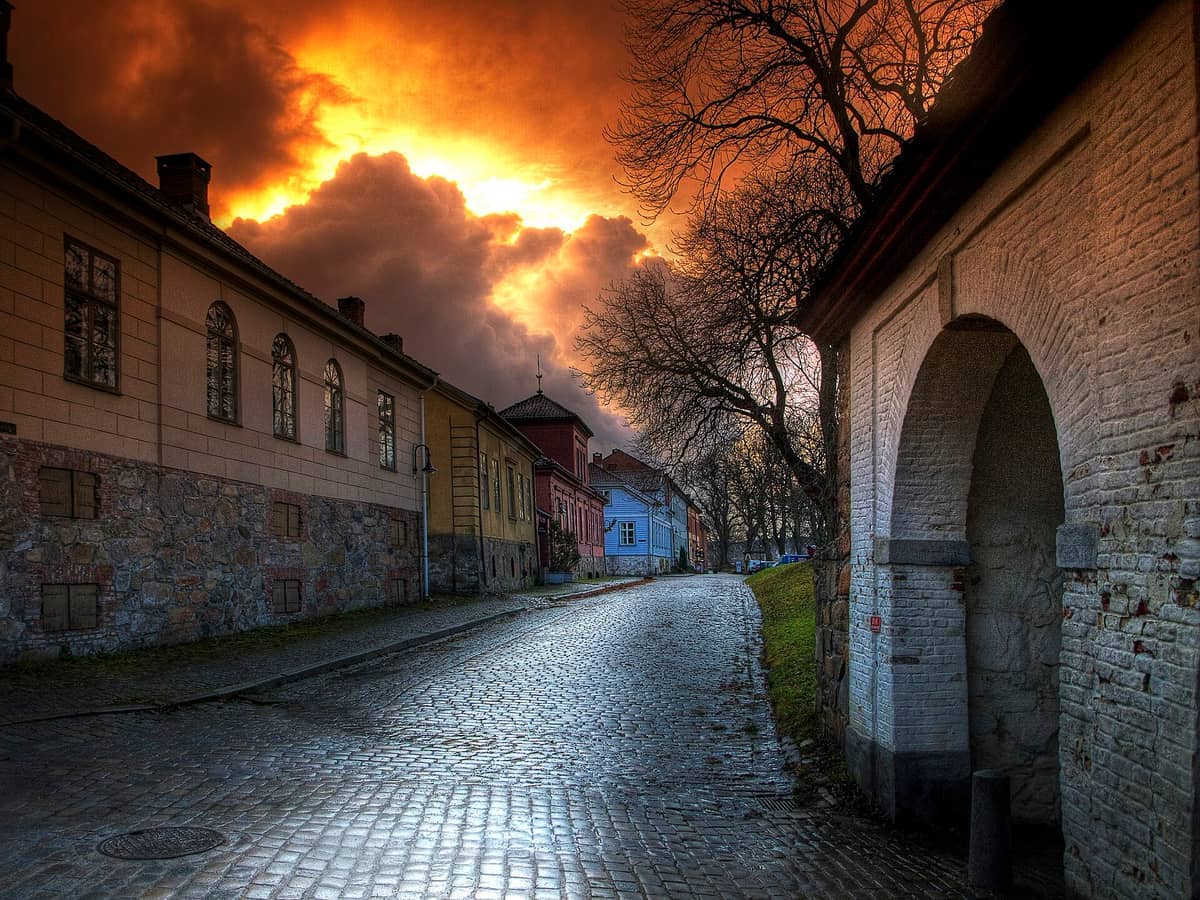
The Old Town covers a relatively small area, which means you can walk the entire perimeter of the ramparts and explore the interior lanes in a single visit without feeling rushed. The main entrance is through the King's Gate, a stone archway that leads onto the central street running through the garrison. The cobblestones throughout are original — meaning uneven, worn smooth in the middle, and noticeably difficult underfoot if you are not wearing flat shoes. Heels are a bad idea. So are running strollers without large wheels.
The interior is organized around a loose grid of lanes lined with low, painted timber and brick buildings. Many date to the 17th and 18th centuries. Artists and craftspeople have occupied a significant number of them for decades, drawn by low rents and the light quality inside the thick-walled interiors. On a weekday morning, you might hear a woodworker's tools, see a weaver's loom visible through an open door, or find a small gallery showing work that has nothing to do with tourist kitsch. The creative occupation of the town is genuine, not curated.
The main historical museum and several smaller exhibition spaces charge individual admission. Opening hours vary by season and are generally broader in summer (roughly June through August) than in the shoulder months. Most venues are closed Mondays. If museums are your primary reason for coming, check hours directly with each institution before travelling, since seasonal schedules change.
The Ramparts: Walking the Fortifications
The outer ramparts are the most architecturally distinctive part of Gamlebyen and require no ticket. You can walk the top of the earthworks in their entirety. The bastioned star layout, which was the standard defensive form for European fortresses from the mid-16th century onward, is most legible from above — either from the rampart walls themselves or, better, from aerial photographs. At ground level, what you notice is the width of the earthen walls, the depth of the dry moat below, and the way the bastions project outward to allow defenders to cover the walls on either side with crossfire.
The rampart walk is exposed, so wind and rain affect it noticeably. On a grey autumn morning, with mist over the moat and the lime-rendered buildings visible below, the setting has a particular quality that summer crowds dilute. Come in September or October if you want atmosphere without the queues at the café tables.
ℹ️ Good to know
Bastion 5 has gravel paths, an accessible restroom, and nearby parking — making it the most practical entry point for visitors with mobility needs. The cobblestone interior streets are difficult for wheelchairs and slow for anyone with limited mobility.
Time of Day and Seasonal Differences
Gamlebyen is at its quietest on weekday mornings between roughly 9 and 11, before day-trippers arrive. The light at that hour, especially in late spring, falls at a low angle across the painted facades and catches the uneven texture of the cobblestones in a way that midday sun flattens entirely. Photographers working with natural light should come early.
Summer weekends bring the largest crowds, particularly during the Old Town Market (Gamlebyen market) and other seasonal events. The narrow lanes fill quickly, café tables outside are taken by mid-morning, and the ferry queue lengthens. If your goal is quiet exploration rather than event attendance, a Tuesday or Wednesday in June will serve you better than a Saturday in July.
In winter, the fortress takes on a different character entirely. Most shops and many cafés reduce hours or close entirely. The moat can freeze. The ramparts are icy and should be walked with care. But the town is nearly empty, the timber buildings look exactly as they must have for centuries, and the absence of visitors makes the scale of the fortification — designed to house a garrison, not a tourist economy — easier to feel.
For visitors planning a winter trip from Oslo, the Oslo in winter guide covers what to expect from the season across the region, including the shorter daylight hours that affect how much you can see on a single day trip.
Practical Walkthrough: Getting There from Oslo
Trains from Oslo Central Station (Oslo S) to Fredrikstad run regularly and take about 60–70 minutes. The train is operated by Vy. Fares vary depending on how far in advance you book — check the Vy website or app for current prices before travelling, as fares change with demand and timetable updates.
From Fredrikstad station, the ferry pier is a short walk downhill toward the river. The city ferry is free of charge and runs throughout the day. The entire journey from Oslo S to the King's Gate of Gamlebyen takes roughly 90 minutes door-to-door.
If you are driving, parking is available near Bastion 5. The Old Town interior is pedestrian-only, so cars cannot enter the fortress area itself.
⚠️ What to skip
The Oslo Pass does not cover admission to Fredrikstad attractions or train travel to Fredrikstad — it is valid only within Oslo's public transport zones. Budget separately for this day trip.
If you are planning multiple day trips from Oslo and considering value-for-money transport options, the Oslo Pass guide explains exactly what the pass covers and where it falls short for out-of-city travel.
Who Should Think Twice
Visitors primarily interested in Norway's Viking history or its contemporary design culture will find Gamlebyen peripheral to both. The fortress dates from the post-Reformation period of Danish-Norwegian military expansion — it has no Viking-era significance. The town's creative scene is genuine but small-scale, and it is not the place to shop for cutting-edge Scandinavian design.
Travelers with only two or three days in Norway may find the day trip hard to justify against the depth of what Oslo itself offers. The 3-day Oslo itinerary covers the capital's core attractions in sequence — Fredrikstad works best as an addition once those are accounted for, not a replacement.
Anyone with significant mobility limitations should weigh the cobblestone-heavy interior carefully. The ferry and the Bastion 5 area are accessible, but the majority of the Old Town's lanes are not smooth-surface routes. The experience of Gamlebyen is fundamentally a walking experience.
Photography Notes
The painted timber facades — yellows, ochres, deep reds — work best in soft light. Early morning and late afternoon in summer are the prime windows. The view from the rampart walk looking back over the rooflines toward the river is the most composed wide shot available without leaving the walls. For detail work, the textures of the King's Gate stonework and the ironwork on the older buildings reward close attention.
If you are building an itinerary around Oslo-region viewpoints and photography locations, our Oslo viewpoints guide covers the best elevated and architectural perspectives in and around the capital.
Insider Tips
- The free city ferry also stops at Isegran island — disembark there first on the way in, walk around the small island in 20 minutes, then continue to Gamlebyen. It adds almost no time and gives you the best approach view of the fortress walls.
- Most visitors spend all their time inside the walls. The outer moat walk is almost always empty, even in high season, and gives you the clearest sense of the fortress geometry from the outside.
- Shops and galleries in Gamlebyen are heavily seasonal. If craft studios and gallery browsing are your main goal, visit between late May and late August — outside those months, a significant number of commercial premises are closed or on reduced hours.
- Weekday ferry crossings are quick and uncrowded. On summer weekend afternoons, the queue at the ferry pier can back up. Allow an extra 15–20 minutes on the return leg if you are catching a specific train.
- The rampart walls can be slippery after rain. The earthen surface drains slowly, and even in summer a morning shower leaves the top of the walls muddy in places. Footwear with grip is more useful here than it might appear from photographs.
Who Is Fredrikstad Old Town (Gamlebyen) For?
- History and military architecture enthusiasts who want to understand how a 17th-century European garrison town actually functioned
- Photographers looking for painted timber facades, cobblestone textures, and a fortification that photographs well in both summer light and autumn mist
- Families with children old enough to walk the ramparts and engage with the fortress layout — the moat and bastions are genuinely impressive at ground level
- Travelers who have already covered Oslo's major attractions and want a day trip that offers a completely different historical register
- Anyone who wants to leave Oslo for a day without needing a car — the entire trip is doable by train and free ferry
Nearby Attractions
Combine your visit with:
- Drøbak
Drøbak is a compact coastal town on the eastern shore of the Oslofjord, about an hour south of Oslo by bus. Known for its well-preserved wooden architecture, Sunday shopping tradition, and proximity to the historic Oscarsborg Fortress, it offers a genuine change of pace from the capital without requiring an overnight stay.
- Ekeberg Viewpoint
Perched on Ekebergåsen hill southeast of central Oslo, Ekebergparken combines one of the city's most sweeping viewpoints with an open-air sculpture park, ancient rock carvings, and forested walking trails. It is free to enter, open around the clock, and far less crowded than most Oslo attractions.
- Ekebergparken Sculpture Park
Ekebergparken Sculpture Park sits on a wooded hillside southeast of Oslo's city center, combining a rotating collection of contemporary sculpture with sweeping views over the Oslofjord. Entry is free, the park is open around the clock, and the experience shifts dramatically depending on what time of day and season you visit.
- Emanuel Vigeland Mausoleum
Tucked into a quiet residential street in the Slemdal neighborhood, the Emanuel Vigeland Mausoleum is one of Oslo's most singular and least-visited art experiences. A barrel-vaulted chamber covered floor-to-ceiling in frescoes depicting the human life cycle, with acoustics so extreme that a whisper lingers for twenty seconds. Open Sundays only, with timed entry slots and advance booking recommended.
Planning a trip? Discover personalized activities with the Nomado app.