Fo Guang Shan Buddhist Temple: Auckland's Tang-Dynasty Sanctuary
Rising from the suburbs of Flat Bush in South Auckland, the Fo Guang Shan Buddhist Temple is the largest Buddhist temple in New Zealand. Modelled on Tang-dynasty architecture and built over seven years, it offers visitors a rare encounter with monastic art, ceremonial bells, and the particular calm of a working religious site.
Quick Facts
- Location
- 16 Stancombe Road, Flat Bush, Manukau 2016, Auckland
- Getting There
- Best reached by car or rideshare; no verified direct public transport route — check Auckland Transport journey planner before visiting
- Time Needed
- 1–2 hours for a thorough visit; allow longer on festival days
- Cost
- No admission fee listed on the official site — confirm directly before visiting
- Best for
- Architecture enthusiasts, those seeking quiet reflection, cultural travellers, families
- Official website
- fgs.org.nz/english
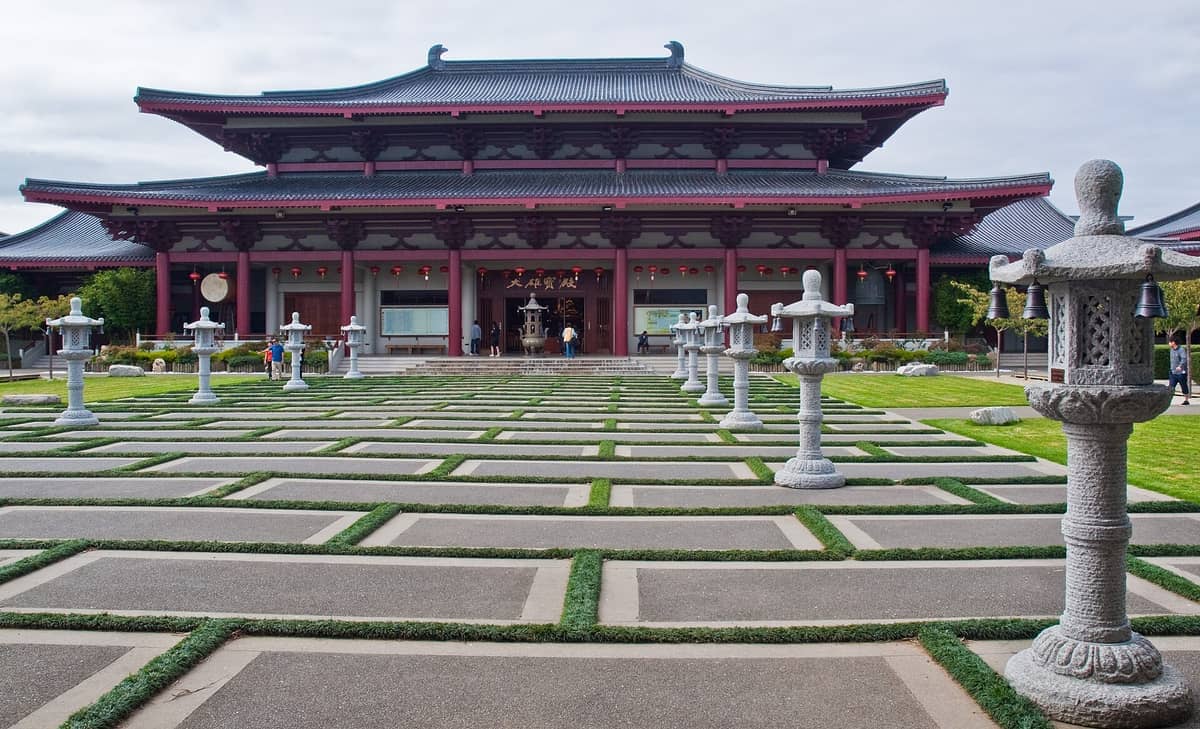
What the Fo Guang Shan Buddhist Temple Actually Is
The Fo Guang Shan Buddhist Temple of New Zealand is the country's largest Buddhist temple, and it sits in an unlikely spot: a quiet residential pocket of Flat Bush in South Auckland's Manukau area. Construction began in 2000 and the temple opened in 2007 after seven years of building work. It belongs to the international Fo Guang Shan monastic order, which originated in Taiwan and has dozens of temples worldwide. This is a functioning religious site, not a heritage museum, which shapes the atmosphere considerably.
The complex was designed in the Tang-dynasty style, referencing the golden age of Chinese Buddhist architecture from the 7th to 10th centuries: sweeping upturned roof eaves, layered gateways, symmetrical courtyards, and rich ochre and vermillion stonework. Against Auckland's low-rise suburban backdrop, the visual contrast is pronounced. From the approach on Stancombe Road, the rooflines appear well before the entrance, which gives arriving visitors a few moments to register quite how substantial the complex is.
ℹ️ Good to know
The temple is open Tuesday to Sunday, 9:00 am to 3:00 pm. It is closed on Mondays. Hours may change around major Buddhist festivals and public holidays — contact the temple directly or check fgs.org.nz before planning your visit.
Architecture and Layout: What You'll Encounter on the Ground
Arrival at the main gate is the first architectural moment worth pausing for. The entrance structure is scaled deliberately large, framing the interior courtyard and drawing the eye through to the main hall beyond. The materials have a particular solidity: carved stone detailing, heavy ceramic roof tiles in grey-green, and painted timber elements. If you have any interest in historical East Asian architecture, this is the most detailed example of its type in New Zealand and it repays slow walking.
The main Buddha hall contains the primary statuary. Lighting inside is subdued, and it takes a moment to adjust from the brightness outside. The scale of the central Buddha figure is significant enough that visitors tend to fall quiet without prompting. The smell of incense is constant but not overwhelming, and you'll often hear monks or visitors performing chanting, particularly in the morning hours.
A two-tonne ceremonial bell is among the notable features of the complex. Bells of this scale are cast for sound quality as much as appearance, and the resonance when struck during ceremonies carries across the courtyard. Even outside ceremony times, its physical presence in the bell pavilion is worth finding. Other structures on the grounds include memorial halls, meditation spaces, and shrines with distinct functions in the monastic calendar.
Tickets & tours
Live prices and dates from our booking partner. If you book, we may earn a commission at no extra cost to you.
Luggage Storage in Auckland
From 5 €Instant confirmationFree cancellationNew Zealand West Coast discovery tour
From 100 €Instant confirmationFree cancellation13,000ft skydiving experience in Auckland
From 195 €Instant confirmationFree cancellationDiscover Auckland City Tour
From 88 €Instant confirmationFree cancellation
How the Experience Changes by Time of Day
Arriving close to opening at 9:00 am gives you the quietest version of the temple. The courtyards are often empty except for monks going about their morning routines, and the light from the east catches the roof tiles at a low angle, emphasising the carved detailing. This is the hour for visitors who want genuine stillness rather than a social experience.
By mid-morning, especially on weekends, the temple receives more visitors: Chinese-New Zealand families, school groups during term time, and independent tourists. The atmosphere remains respectful, but the sense of solitude diminishes. If you're coming specifically for photography, the morning window between 9:00 and 10:30 am offers the best combination of good light and manageable foot traffic.
On Buddhist festival days, the temple operates on a completely different register. Ceremonies draw large numbers of community members, the ceremonial bell is used, and the courtyards that seem spacious on ordinary days become genuinely crowded. These occasions offer an entirely different and more immersive encounter, but they're not suited to visitors looking for quiet. Check the temple's website or contact them directly for upcoming festival dates.
Cultural Context: Fo Guang Shan and New Zealand's Chinese Community
The Fo Guang Shan order, founded by Venerable Master Hsing Yun in Taiwan in 1967, emphasises humanistic Buddhism: an approach that prioritises community engagement, education, and cultural outreach alongside traditional monastic practice. The Auckland temple reflects this philosophy. It functions not just as a place of worship but as a cultural centre, hosting language classes, community events, and interfaith activities.
Auckland has a substantial and historically significant Chinese community, and the temple plays a genuine role in that community's cultural life. Understanding this gives the visit more weight than a purely architectural tour would. For broader context on Auckland's multicultural character, the Auckland Māori culture guide is a useful companion, as it addresses how different cultural traditions coexist and express themselves across the city.
The Tang-dynasty design choice is historically deliberate. Tang-era Buddhism was the period during which Chinese Buddhist art, architecture, and practice reached their most influential form, spreading across East Asia. Building in this style connects the Auckland temple symbolically to that classical moment while situating it firmly as a contemporary, functioning institution.
Practical Walkthrough: Getting There and Visiting Respectfully
Flat Bush is in South Auckland, roughly 25–30 minutes from the central city by car under normal traffic conditions. The temple's address is 16 Stancombe Road, Manukau 2016. Parking is available on site. Rideshare services like Uber operate in this area, though this part of Auckland is less densely served than inner suburbs, so wait times can vary. No verified direct public transport route has been confirmed; the Auckland Transport journey planner at at.govt.nz is the most reliable resource for checking current bus options.
💡 Local tip
Dress modestly before arriving. Shoulders and knees should be covered out of respect for the monastic community. Remove shoes before entering the main hall — look for the shoe racks near the entrance. Speak quietly and avoid using flash photography inside.
No admission fee is listed on the temple's official website, but confirming directly before your visit is advisable since arrangements can change. There may be donation boxes within the complex; contributing is appropriate if you spend time in the halls. The grounds are largely at ground level, which makes movement through the courtyards relatively straightforward for visitors with mobility considerations, though this detail was not confirmed directly on the official site.
Photography in the courtyard areas is generally fine, but use your judgment inside the halls. If there is active prayer or chanting in progress, pause and wait rather than walking through. The community that uses this temple is not performing for visitors, and treating the space with that in mind makes for a better experience on both sides.
Honest Assessment: Who Will Get the Most from This Visit
The Fo Guang Shan Buddhist Temple is not in a part of Auckland that most itineraries naturally pass through. It requires a deliberate trip south, and there are few obvious complementary attractions in the immediate vicinity to build a half-day around. For visitors on a tight schedule who are already committed to inner-city highlights like the Auckland War Memorial Museum or Auckland Domain, the logistics may make this a difficult fit.
That said, for anyone with a genuine interest in religious architecture, Chinese cultural history, or simply an attraction to places that operate outside the usual tourist circuit, this temple delivers something that nothing else in Auckland does. The architecture is serious, the setting is genuine, and the scale surpasses expectations. It is one of the more rewarding detours available to visitors willing to rent a car or arrange a rideshare.
If you're building a broader itinerary that combines cultural depth with other Auckland experiences, the 3-day Auckland itinerary can help you decide where this visit fits most naturally, particularly if you plan to spend time in South Auckland or are combining it with a visit to other heritage sites.
Weather, Seasons, and What to Bring
Auckland's climate is temperate and maritime, meaning weather can shift quickly at any time of year. The temple's courtyards are open-air, so a light waterproof layer is sensible for morning visits when low cloud and drizzle are common, particularly in winter between June and August. Summer visits (December to February) are more reliably dry, but even then a sudden shower is possible. The interior halls provide shelter, but a significant portion of the experience involves the outdoor courtyard space.
Sunscreen is worth applying before you go if you're visiting on a clear day: the courtyards offer little shade, and Auckland's UV index is high, particularly in summer. Comfortable, closed shoes are practical for a visit that involves a fair amount of standing and walking on stone surfaces.
Insider Tips
- The morning light between 9:00 and 10:30 am hits the eastern roof elevations at a low angle, creating the most photogenic conditions. By midday the light flattens considerably.
- If you want to witness a ceremony rather than simply observe the architecture, contact the temple in advance to ask about upcoming services or festival observances. Arriving on a random weekday with no prior research means you may find the halls quiet but empty of ceremony.
- The two-tonne bell is housed in its own pavilion, which is easy to walk past without noticing. Ask a staff member or monk to point it out if you can't locate it on your own.
- There is an on-site tea house serving vegetarian food, coffee, and tea, open Tuesday to Sunday from 9:30 am to 2:00 pm. Plan your visit timing around its hours — Flat Bush and the wider Manukau area have a range of Asian food options that reflect the South Auckland community well.
- Festival days like Vesak (Buddha's birthday, typically in May) transform the temple completely. If your travel dates overlap, it's worth planning the visit then, but check crowd levels and whether specific areas will be accessible.
Who Is Fo Guang Shan Buddhist Temple For?
- Architecture and design enthusiasts interested in Tang-dynasty construction translated into a contemporary setting
- Visitors seeking genuine quiet and meditative space away from the inner-city tourist trail
- Families wanting a respectful, educational cultural experience with no admission cost
- Travellers with an interest in New Zealand's Chinese community and its cultural institutions
- Photographers looking for a visually distinct subject unlike anything else in the Auckland region
Nearby Attractions
Combine your visit with:
- Auckland Botanic Gardens
Spread across 64 hectares in Manurewa, the Auckland Botanic Gardens offer free entry every day of the year, with themed garden collections, 10 hectares of native forest, and a visitor centre on site. It sits south of the city centre and rewards a longer visit than most people initially plan for.
- Auckland Zoo
Auckland Zoo has been part of the city's fabric since 1922, sitting in the Western Springs precinct with a collection that spans native New Zealand wildlife and international species. This guide covers everything from ticket prices and transit options to the best time of day to arrive and which exhibits deliver the most.
- Bastion Point (Takaparawhau)
Takaparawhau, known widely as Bastion Point, is a grassy headland in Ōrākei where Māori history, colonial conflict, and sweeping Waitematā Harbour views converge. It costs nothing to visit, carries centuries of significance, and rewards visitors who take time to understand what they are standing on.
- Bethells Beach (Te Henga)
Bethells Beach, officially Te Henga (Bethells Beach), is a raw, dramatic stretch of black-sand coastline about 45 minutes west of central Auckland. With rolling dunes, a freshwater lagoon, strong surf, and zero phone coverage, it delivers a genuine wilderness experience rare for a city of 1.6 million people.
Planning a trip? Discover personalized activities with the Nomado app.