Flushing Meadows Corona Park: Queens' Grand Park with a World's Fair Legacy
Flushing Meadows Corona Park is Queens' largest park and one of New York City's most historically significant public parks. Built on a former ash dump and transformed for two World's Fairs, it holds the iconic Unisphere, multiple museums, a zoo, tennis stadiums, and wide open lawns where the borough's diverse communities gather every weekend.
Quick Facts
- Location
- Queens, New York City (between Flushing, Corona, and Forest Hills)
- Getting There
- 7 train to Mets–Willets Point or Flushing–Main St (walk into different park sections)
- Time Needed
- 2–5 hours for the park; full day if visiting museums or the Hall of Science
- Cost
- Free to enter the park; separate admission for Queens Zoo, Queens Museum, NY Hall of Science
- Best for
- Families, history buffs, picnickers, sports fans, and anyone wanting Manhattan-free open space
- Official website
- www.nycgovparks.org/parks/flushing-meadows-corona-park
What Flushing Meadows Corona Park Actually Is
Flushing Meadows Corona Park sits in the geographic and cultural heart of Queens, covering approximately 897 acres of lawns, lakes, meadows, and cultural institutions. To put that in perspective: it is slightly smaller than Central Park, which covers about 843 acres compared to Flushing Meadows Corona Park’s 897-acre footprint including some non-park facilities. Yet it draws far fewer tourists, which means on any given weekday morning you can walk its main promenade with a genuine sense of space, with the Unisphere rising ahead of you and almost no one blocking your sightline.
The park is not a manicured showpiece in the way Central Park is. Parts of it feel raw, even under-maintained, especially around the meadow edges and some of the older recreational facilities. That is part of its character. This is a working park for a working borough, and it wears that role honestly.
ℹ️ Good to know
Park entry is free. Budget separately for any venues inside: the Queens Zoo, New York Hall of Science, and Queens Museum all charge their own admission. Check each venue's website directly for current hours and prices before visiting.
The History Behind the Park: From Ash Dump to World's Fair
The site's origin is one of New York's stranger redemption stories. Before it was a park, this land was the Corona Ash Dump, a vast, smoldering wasteland of incinerator ash that F. Scott Fitzgerald described in The Great Gatsby as the 'valley of ashes.' Urban planner Robert Moses transformed it in the 1930s into a parkland, a project tied directly to the 1939–1940 New York World's Fair, which was held here under the theme 'The World of Tomorrow.'
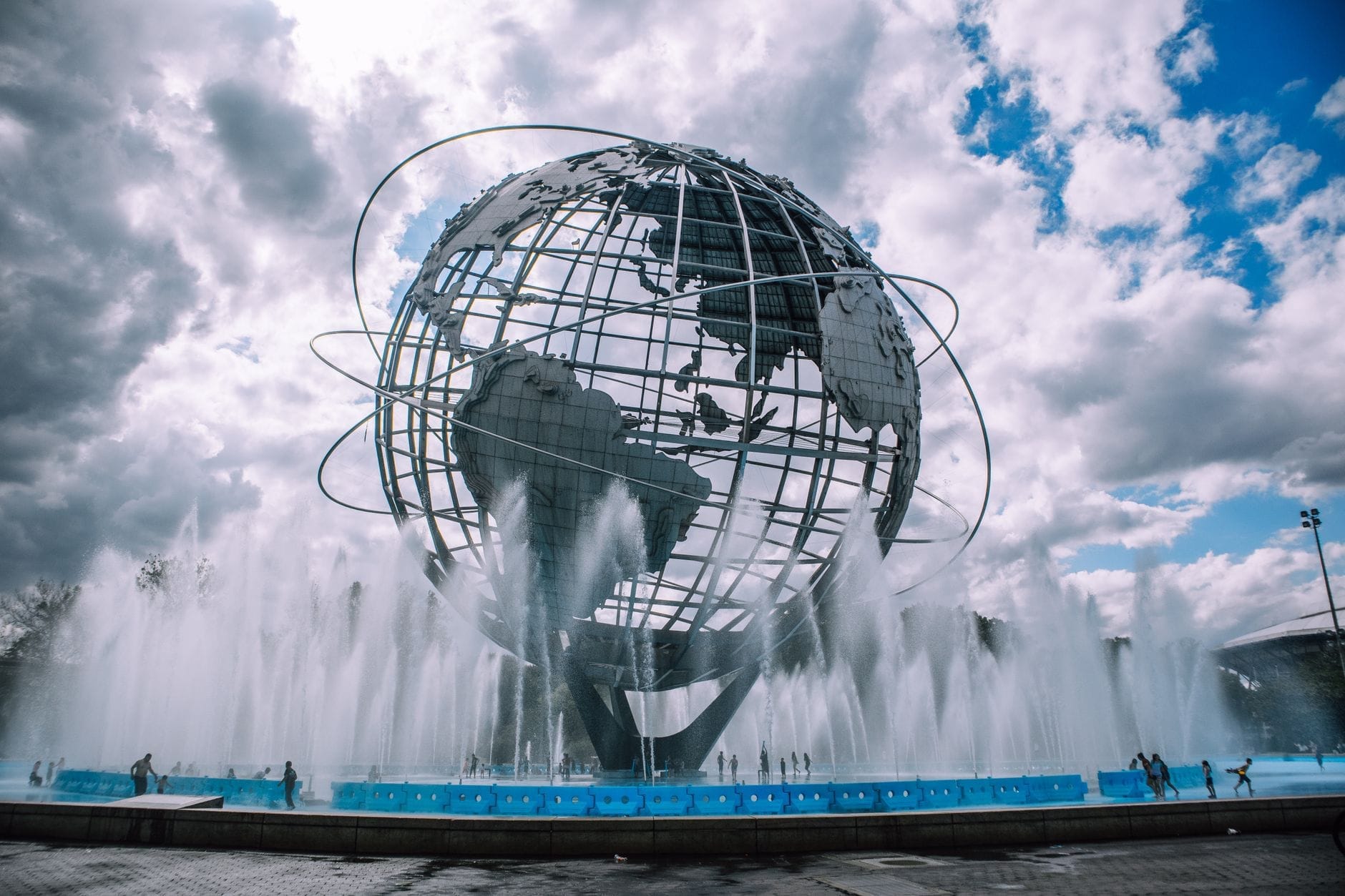
The park then hosted a second World's Fair in 1964–1965, and it is from this era that the park's most enduring landmark survives: the Unisphere. Built by U.S. Steel and standing 140 feet tall (about 12 stories), the stainless steel globe represents Earth during the Space Age, with rings of orbital paths circling it. It was among the largest globe structures ever built at the time of its construction. Decades of weathering have given it a mottled, oxidized surface that actually reads better in photographs than the polished original would have.
This World's Fair lineage gives the park a peculiar architectural texture. Several pavilions and structures from those exhibitions either survive in altered form or left their footprints on the landscape. The Queens Museum, for instance, occupies the former New York City Building from the 1939 Fair. For anyone interested in mid-century American urbanism and design, this park is worth exploring alongside the NYC architecture guide for broader context.
Tickets & tours
Hand-picked options from our booking partner. Prices are indicative; availability and final rates are confirmed when you complete your booking.
Statue of Liberty, Ellis Island, and Brooklyn Bridge Happy Hour Cruise
From 49 €Instant confirmationFree cancellationSpirit of New York Dinner Cruise
From 161 €Instant confirmationFree cancellationNew York City Highlights bike tour
From 70 €Instant confirmationFree cancellationNew York Statue of Liberty and Ellis Island tour by ferry
From 55 €Instant confirmation
The Unisphere and the Central Promenade
Most visitors enter from the Mets–Willets Point subway station and approach the park from the north, walking south along the main promenade toward the Unisphere. This approach is deliberate: the path frames the globe at the end of a long axis, and the scale only becomes apparent as you get closer. From 200 feet away, the structure dwarfs everyone around it. The fountain basin at its base runs seasonally, and on warm days in late spring and summer, the water and the steel together produce a kind of industrial grandeur that feels genuinely distinctive.
Early mornings are the best time to photograph the Unisphere. The light is softer, the crowds are thin, and you will not spend ten minutes waiting for a clear shot. By midday on weekends, especially in summer, the promenade fills with families, food vendors, and occasionally large community events that can make the central area feel crowded and loud. That energy is not unpleasant, but it is a different experience entirely.
💡 Local tip
Photography tip: Position yourself on the southern side of the Unisphere fountain basin in the morning for the best light. The globe faces roughly north, so afternoon sun hits the back of the structure and reduces detail in front-facing shots.
What to Do Inside the Park
The park holds more institutions than most visitors expect. The New York Hall of Science sits at the park's southern end and is one of the country's best hands-on science museums, particularly strong for children ages 5 and up. The Queens Museum, housed in its repurposed World's Fair building, contains a permanent collection that includes a remarkable 9,335-square-foot (approximately 870-square-meter) scale model of all five New York City boroughs, updated periodically to reflect real changes in the cityscape. The Queens Zoo is small compared to the Bronx Zoo but appropriate for a half-morning visit with young children.
The USTA Billie Jean King National Tennis Center occupies the park's northeastern section. It hosts the US Open each August and early September, one of the four Grand Slam tennis tournaments, when the area transforms entirely with temporary infrastructure, ticketed access, and crowds that spill into the surrounding streets. If you are planning a visit during that period, see the US Open guide before you go, as park access and transit dynamics change significantly.
Meadow Lake and Willets Point Pond offer rowing and paddleboat rentals seasonally, and the park's meadows are heavily used for soccer, cricket, and informal sports by Queens' resident communities. On weekends, the park effectively becomes a mosaic of different cultural communities using the same space simultaneously: Latin American families with portable speakers and grills, South Asian cricket players, Chinese seniors doing tai chi near the lake edges. It is one of the more genuinely multicultural outdoor environments in any American city.
How the Park Changes by Time of Day and Season
Weekday mornings before 10 a.m. offer the park at its quietest. Dog walkers, joggers, and commuters cutting through dominate. The air near Meadow Lake carries a faintly brackish smell in warm months, and the calls of red-winged blackbirds are common along the water edges. This is the version of the park that local residents know, and it feels like a genuinely different place from the weekend afternoon crowds.
Spring and fall are the most comfortable seasons for extended walking. Summer brings heat and humidity that can feel oppressive in the park's more open, shade-limited central areas, though the lake and tree-lined paths near the Queens Museum offer some relief. Winter is uncrowded and sometimes stark, but the Unisphere looks striking against a grey sky, and some indoor venues run quieter programming during the off-season.
⚠️ What to skip
Avoid the park during major events at Citi Field (the adjacent Mets baseball stadium) or the US Open unless you are attending. On game days and Open match days, the 7 train and surrounding streets become severely congested, and parking around the park is effectively impossible.
Getting There and Getting Around
The 7 subway line is the primary way to reach the park. The Mets–Willets Point stop drops you at the park's northern edge, near the Unisphere and the Queens Museum. The Flushing–Main Street stop is the eastern terminus of the 7 train and puts you near the park's eastern boundary, closer to the USTA tennis complex. Both are walkable entry points, though the park is large enough that getting between the northern and southern ends on foot takes 20 to 30 minutes.
From Midtown Manhattan, the 7 train ride to Mets–Willets Point takes roughly 30 to 40 minutes depending on your starting point. The journey itself passes through a cross-section of Queens neighborhoods and is worth paying attention to. For broader guidance on navigating the subway system, the getting around New York City guide covers fares, passes, and practical tips.
The park's internal scale means that cycling is genuinely useful here. Dedicated paths run through multiple sections, and Citi Bike has docking stations near the park's edges. If you plan to visit both the Hall of Science at the southern end and the Unisphere area in the center, cycling between them saves meaningful time.
Accessibility and Practical Notes
The park's main promenades and central areas are paved and generally wheelchair accessible, though some outer meadow paths are unpaved gravel or grass. The Queens Museum and New York Hall of Science both publish detailed accessibility information on their own websites, and both are modern enough to have functional elevator access and accessible restrooms. The Queens Zoo's terrain involves some slopes. Visitors with specific mobility requirements should check each venue individually before planning a visit.
Restroom facilities exist throughout the park but are inconsistently maintained. The most reliable options are inside the museum buildings. Bringing water is advisable in summer, as shade in the central areas is limited and vendors are not always present outside of weekends and major events.
If you are visiting Queens more broadly and want to combine the park with the area's extraordinary food culture, the Flushing and Queens neighborhood guide covers nearby dining options in Flushing's Main Street corridor, which is one of the most concentrated and diverse food streets in the entire city.
Insider Tips
- The Queens Museum's 9,335-square-foot Panorama of the City of New York model is one of the most underrated exhibits in all of New York City. Allow at least 45 minutes for it alone and look for your own neighborhood if you know the city well.
- The park hosts free outdoor film screenings and cultural festivals on summer weekends, organized by local community groups and the Alliance for Flushing Meadows Corona Park. These events are rarely advertised to tourists but draw large, genuinely local crowds. Check the Alliance's website before visiting in summer.
- The area behind the Unisphere on its south side is almost always clear of tourists, even when the north-facing promenade is packed. The view from there, looking back toward the structure with the Queens Museum in the background, is compositionally strong and crowd-free.
- The New York Hall of Science has an outdoor science playground that is included with museum admission. It is one of the largest such playgrounds in New York City and significantly more engaging for children ages 6 to 12 than most indoor sections.
- If you arrive by the Flushing–Main Street 7 train, walk west along the park's eastern perimeter before entering: the stretch near the USTA facility is quiet on non-tournament days and gives you a less-trafficked approach to the park's interior.
Who Is Flushing Meadows Corona Park For?
- Families with children who want a full day combining outdoor space, science, and animals without Manhattan prices
- History and architecture enthusiasts interested in mid-century American World's Fair design and Robert Moses-era urbanism
- Photographers looking for iconic New York City landmarks with genuinely low competition for clear shots
- Local-culture seekers who want to experience Queens' multicultural community life in a natural, unprogrammed setting
- US Open tennis fans who want to see the USTA Billie Jean King National Tennis Center campus outside of the main tournament period
Nearby Attractions
Other things to see while in Flushing:
- New York Hall of Science
The New York Hall of Science sits inside Flushing Meadows-Corona Park in a building originally constructed for the 1964 World's Fair. It combines serious interactive science with one of the largest outdoor science playgrounds in the United States, making it a genuine full-day destination for families and curious adults alike.
- Queens Night Market
Held every Saturday evening from April through late October, Queens Night Market brings together more than 100 vendors in the parking lot behind the New York Hall of Science in Flushing Meadows Corona Park. Entry is free, the food is cheap, and the cultural range is unmatched anywhere in the city.
- Rockaway Beach
Rockaway Beach and Boardwalk stretches for miles along the Atlantic Ocean in Queens, offering free swimming, legal surfing, and a genuine seaside atmosphere that feels worlds away from Midtown. It's accessible by subway, ferry, or LIRR, making it a realistic half-day from almost anywhere in the city.