Rockaway Beach: New York City's Ocean Escape
Rockaway Beach and Boardwalk stretches for miles along the Atlantic Ocean in Queens, offering free swimming, legal surfing, and a genuine seaside atmosphere that feels worlds away from Midtown. It's accessible by subway, ferry, or LIRR, making it a realistic half-day from almost anywhere in the city.
Quick Facts
- Location
- Rockaway Peninsula, Queens, NYC (Beach 9th St to Beach 149th St)
- Getting There
- A train or Rockaway Park Shuttle to Beach 116 St or Beach 67 St; NYC Ferry (Rockaway route) to Beach 108th St
- Time Needed
- 3–5 hours for a beach day; 1–2 hours for a boardwalk walk
- Cost
- Free (public beach, no admission fee)
- Best for
- Swimming, surfing, long walks, summer day trips from the city
What Rockaway Beach Actually Is
Rockaway Beach and Boardwalk is New York City's largest and most significant public beach, managed by NYC Parks along a continuous Atlantic Ocean shoreline in Queens. It runs from Beach 9th Street in Far Rockaway all the way to Beach 149th Street in Neponsit, a stretch so long that different sections have genuinely different characters. The western end near Beach 116th Street draws the biggest summer crowds, with concession stands, restrooms, and a lively boardwalk scene. The eastern and more residential stretches feel quieter, with fewer facilities but more space between umbrellas.
What distinguishes Rockaway from other city beaches is its surf culture. The Rockaways contain New York City's only legal surfing beaches, designated at Beach 67th to 69th Streets and Beach 87th to 92nd Streets. On any given summer morning, you'll see surfers wading out before the swimming crowds arrive, boards tucked under their arms, reading the Atlantic swells. It's an unexpectedly raw scene for a city better known for concrete and glass.
ℹ️ Good to know
Swimming is only permitted when lifeguards are on duty: daily 10:00 a.m. to 6:00 p.m. during the official beach season (Memorial Day weekend through Labor Day). Outside those hours or in closed sections, swimming is prohibited.
How the Beach Changes Through the Day
Early morning at Rockaway, before 9 a.m., is a different world. The boardwalk belongs to joggers, dog walkers, and the surfers already in the water. The air smells of salt and damp sand, and the only sounds are the Atlantic, occasional seagulls, and the distant rumble of an A train approaching Beach 116th Street station. Families haven't arrived yet. Vendors are still setting up. This window is worth catching if you're willing to make the trip out early.
By late morning, especially on a July or August weekend, the dynamic shifts fast. Towels appear in dense rows near the lifeguard stands, the boardwalk fills with foot traffic, and the smell of sunscreen becomes persistent. The water at this point is warm, the Atlantic crowd noise builds, and chairs fill up from the access points outward. If you want sand space, walk at least five to ten blocks away from the main subway exits before setting up.
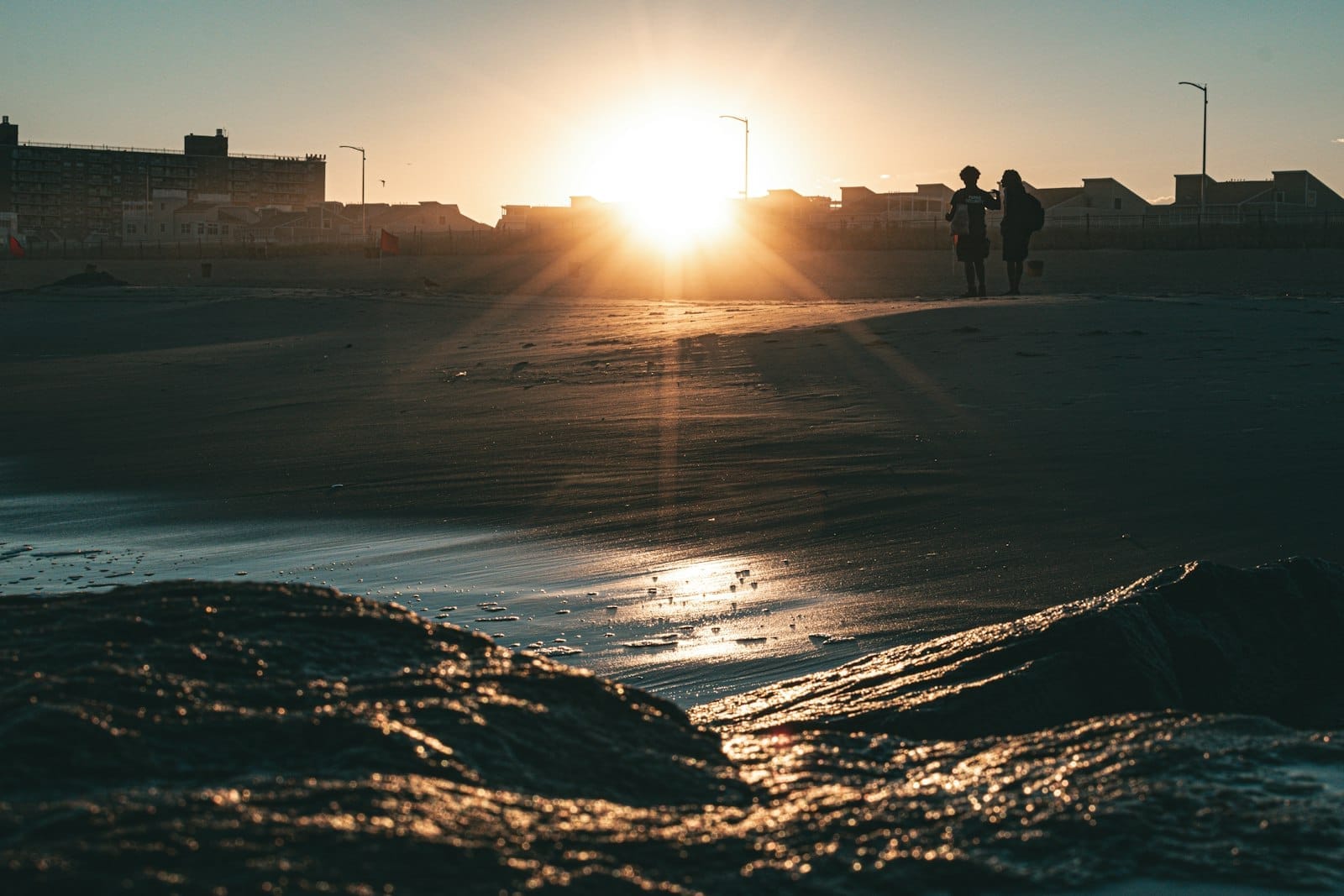
Late afternoon, roughly 4 p.m. onward, brings a welcome thinning of the crowds as day-trippers begin the return journey. The light turns amber across the water. The concession stands stay open, the surf zones get active again as the general swimming crowd thins, and the boardwalk takes on a looser, more relaxed energy. This is arguably the best two-hour window to be at Rockaway in summer.
💡 Local tip
Arrive before 10 a.m. or after 4 p.m. on weekends to avoid the peak crowd. Midday Saturday and Sunday in July and August is the most congested period by a wide margin.
Tickets & tours
Hand-picked options from our booking partner. Prices are indicative; availability and final rates are confirmed when you complete your booking.
Statue of Liberty, Ellis Island, and Brooklyn Bridge Happy Hour Cruise
From 49 €Instant confirmationFree cancellationSpirit of New York Dinner Cruise
From 161 €Instant confirmationFree cancellationNew York City Highlights bike tour
From 70 €Instant confirmationFree cancellationNew York Statue of Liberty and Ellis Island tour by ferry
From 55 €Instant confirmation
Getting There: Your Realistic Options
Rockaway is in Queens, on a narrow barrier peninsula, which means the transit logistics are slightly more involved than reaching a Manhattan attraction. That said, the MTA has made it genuinely accessible via multiple routes.
The most direct option from Manhattan is the A train, which runs to the Rockaway Peninsula directly. Take the A to either Rockaway Park–Beach 116 St (western end, most popular) or Beach 67 St (mid-peninsula, near the surf zones). Travel time from Midtown is roughly 70 to 90 minutes. The Rockaway Park Shuttle (S train) connects from Broad Channel during beach season. For a full breakdown of subway options across the city, see the getting around New York City guide.
The NYC Ferry (Rockaway route) offers a scenic alternative from Wall St/Pier 11 in Lower Manhattan or from Sunset Park/Brooklyn Army Terminal in Brooklyn, landing at Beach 108th Street and Beach Channel Drive, a short walk to the ocean. The ferry takes longer than the train but transforms the journey into part of the experience, with views of the harbor and Jamaica Bay. Fares and schedules are subject to change; check ferry.nyc before you travel.
Bus service is also available along the peninsula. The Q35, Q52 SBS, Q53 SBS, Q22, Q113, and Q114 routes serve Rockaway Beach Boulevard, Newport Avenue, and Seagirt Boulevard. From Far Rockaway LIRR station, the Q22 and Q114 buses connect to the beach. Accessible subway stations for the beach include Rockaway Park–Beach 116 St and Beach 67 St.
Surfing, Swimming, and What to Expect in the Water
The two legal surf zones, at Beach 67th–69th Streets and Beach 87th–92nd Streets, operate separately from the general swimming sections. Non-surfers should not enter these areas; the separation is enforced by lifeguards. The surf at Rockaway is Atlantic beach break, best on days with northeast or south swells. It's not a premium surf destination by world standards, but for a city beach connected to the subway, the quality is surprising.
General swimming conditions in summer are typically calm to moderate. Water temperatures reach the mid-70s Fahrenheit by July and August, warm enough for comfortable extended swimming. The bottom is sandy and relatively flat near shore, which makes it manageable for families and casual swimmers. That said, ocean conditions vary daily. Red flags mean the beach is closed to swimming; yellow flags indicate caution. Pay attention to lifeguard instructions, particularly near the ends of the guarded zones where currents can pull.
⚠️ What to skip
Rockaway is an Atlantic ocean beach, not a sheltered bay. Rip currents, sudden weather changes, and debris in the water after storms are real hazards. If red flags are flying, the swimming closure is serious. Check NYC Parks social media on the morning of your visit for any advisories.
The Boardwalk and What Surrounds It
The Rockaway Beach Boardwalk runs along the ocean-facing side of the peninsula and is open daily from 6 a.m. to 10 p.m. It's a wide, well-maintained wooden structure with concession stands, outdoor showers, restroom facilities, and direct access points to the sand at regular intervals. During peak season, vendors sell food and drinks, and the overall atmosphere is close to a traditional American beach boardwalk without the carnival rides or amusement elements found at, say, Coney Island.
The neighborhood behind the boardwalk in the Beach 116th Street area has developed noticeably over the past decade, with small restaurants, coffee spots, and surf shops that cater to both locals and weekend visitors. It's a different energy from the more commercial atmosphere you'd find at Coney Island's boardwalk, which is louder, denser, and more tourist-focused. Rockaway feels more like a working-class beach town that happens to be inside city limits.
Beach wheelchairs are available at Rockaway Beach by reservation through NYC Parks, and beach mats are provided for wheelchair access to the sand. The accessible subway stations serving the beach and the boardwalk's paved surface make this one of the more accessible beach options in the region. Contact NYC Parks in advance to arrange wheelchair reservations.
Practical Details: What to Bring and When to Go
Rockaway Beach is free to access. There is no parking fee or entrance charge. Bring everything you need for a day at an Atlantic beach: sunscreen, a towel, water, and cash for the concession stands (card acceptance at vendors can be inconsistent). There are outdoor showers for rinsing off after swimming. The nearest grocery stores are a walk or short bus ride away, so packing your own food makes sense if you plan a full day.
The beach season runs from Memorial Day weekend through the Sunday after Labor Day, with lifeguards on duty during that period. Outside the official season, the boardwalk remains accessible but swimming is unguarded. Autumn visits are worth considering: September and October bring cooler air, nearly empty sand, and good light for photography, though the water temperature drops quickly by October. For weather patterns and the best months to visit the city overall, consult the best time to visit New York City guide.
If you're planning a broader summer day trip that combines the beach with other Queens destinations, families visiting with children should note that Rockaway pairs well with the area around Jamaica Bay, and the A train connects you back to the rest of Queens and Brooklyn without transfers.
Who Will Love This Beach, and Who Should Think Twice
Rockaway suits visitors who want a genuine ocean beach experience without paying resort prices or leaving the five boroughs. It's particularly well-matched to people who like open water swimming, surfing, or simply a long walk along the Atlantic with no agenda. It also works well for budget-conscious travelers: a subway or ferry fare is the only cost involved.
Travelers looking for a quick, easy cultural or architectural experience should look elsewhere. Rockaway requires real transit commitment, roughly 70 to 90 minutes each way from Midtown by subway, and the destination itself is a beach, not a curated attraction. It rewards those who treat the journey as part of the day. Visitors short on time who want to check off major NYC sights should prioritize other destinations first; the first-time visitor guide covers the must-see priorities well.
Very young children can enjoy Rockaway, but the Atlantic surf is not as calm as a bay beach. The waves are real. Parents of toddlers should plan to stay close to the waterline and stay well within the guarded swimming zones. For a calmer water experience within the city, the Hudson River Park esplanade or bay-side spots may suit small children better.
Insider Tips
- The surf zone at Beach 87th–92nd Streets tends to be less crowded than the more well-known section at Beach 67th–69th, making it worth the short walk if you're coming to watch surfers or want a quieter stretch of sand near the surf area.
- The NYC Ferry from Lower Manhattan is longer than the A train but significantly less crowded on summer weekends, and the approach through Jamaica Bay offers a view of the peninsula that's impossible to get any other way. Check ferry.nyc for current schedules and fares.
- Boardwalk food vendors near Beach 116th Street can have lines during peak weekend hours. Walk a few blocks east or west along the boardwalk and you'll often find the same vendors with shorter queues.
- Off-season visits, specifically September after Labor Day and into early October, offer a radically different experience: the beach is largely empty, the light is excellent for photography, and the boardwalk is peaceful. Swimming is unguarded but the atmosphere is worth the trip.
- Beach wheelchairs are available by reservation through NYC Parks. Contact them in advance if you need one; they are not available on a walk-up basis at the beach.
Who Is Rockaway Beach For?
- Budget travelers wanting a free full-day outing from the city
- Surfers and surf spectators seeking NYC's only legal surf zones
- Families looking for a traditional Atlantic beach day accessible by transit
- Joggers and walkers who want an extended boardwalk route along the ocean
- Off-season visitors who want quiet, open beach space with good photography light
Nearby Attractions
Other things to see while in Flushing:
- Flushing Meadows Corona Park
Flushing Meadows Corona Park is Queens' largest park and one of New York City's most historically significant public parks. Built on a former ash dump and transformed for two World's Fairs, it holds the iconic Unisphere, multiple museums, a zoo, tennis stadiums, and wide open lawns where the borough's diverse communities gather every weekend.
- New York Hall of Science
The New York Hall of Science sits inside Flushing Meadows-Corona Park in a building originally constructed for the 1964 World's Fair. It combines serious interactive science with one of the largest outdoor science playgrounds in the United States, making it a genuine full-day destination for families and curious adults alike.
- Queens Night Market
Held every Saturday evening from April through late October, Queens Night Market brings together more than 100 vendors in the parking lot behind the New York Hall of Science in Flushing Meadows Corona Park. Entry is free, the food is cheap, and the cultural range is unmatched anywhere in the city.