Flemington Racecourse: Melbourne's Home of Racing
Flemington Racecourse is one of the world's most storied thoroughbred racing venues, covering 127 hectares in Melbourne's inner northwest. Home to the Melbourne Cup since 1861, it draws everything from casual racegoers to fashion-forward crowds on major event days — and deserves consideration well beyond Cup Week.
Quick Facts
- Location
- 448 Epsom Road, Flemington VIC 3031
- Getting There
- Train to Flemington Racecourse station (race days only); Tram 57 to Flemington Drive (non-race days); routes 472 and 404 also serve nearby entrances
- Time Needed
- 3–6 hours on a race day; shorter for heritage or non-event visits
- Cost
- Ticket prices vary by event and ticket type; check the VRC event pages for current pricing. Heritage Centre visits by appointment on weekdays.
- Best for
- Racing fans, fashion and culture events, Australian history, group days out
- Official website
- www.vrc.com.au
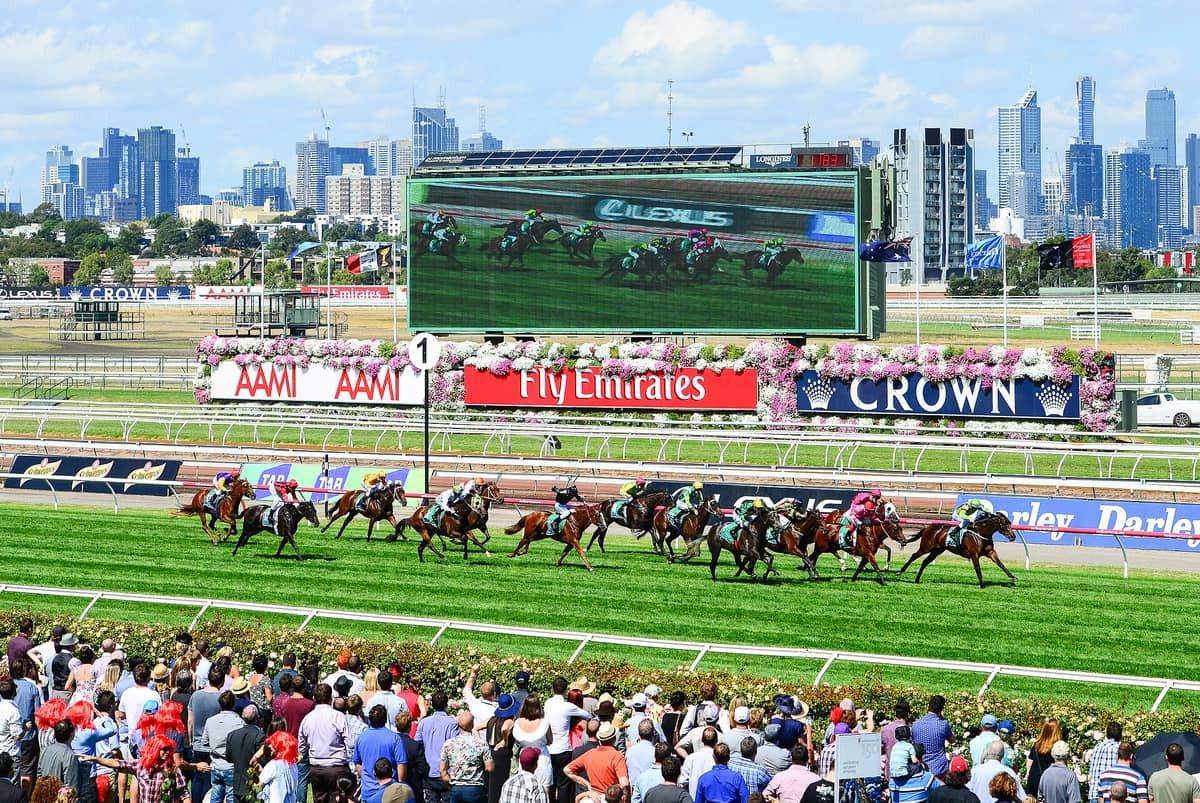
What Flemington Racecourse Actually Is
Flemington Racecourse is the headquarters of the Victoria Racing Club (VRC) and, in Melbourne's sporting and cultural calendar, it occupies a place that no other venue quite matches. It sits about five kilometres northwest of the CBD, sprawling across 127 hectares of turf, gardens, heritage stands, and manicured lawn. The venue is registered on the Victorian Heritage Database — and once you arrive, it is easy to understand why.
Racing at Flemington began on 3 March 1840, making this one of the oldest continually operating racecourses in the Southern Hemisphere. The first Melbourne Cup was run here in 1861, and the VRC has run the race at Flemington every spring since 1864. That longevity is embedded in the architecture: the old Members' Stand, the rose garden along the running rail, and the grandstands each carry different eras of construction, layered over one another like geological strata.
ℹ️ Good to know
Flemington is not open for casual walk-in visits on non-race days. The Flemington Heritage Centre is available weekdays by appointment. If you are coming specifically to see the track, plan around a scheduled race meeting.
The Race Day Experience: What to Expect from Entry to Last Race
On race days, the venue transforms in a way that is genuinely hard to convey without being there. Gates open hours before the first race, and the atmosphere builds gradually: the smell of cut grass mixing with coffee from early-arriving vendors, groundstaff moving with purpose across the apron, and the low hum of a crowd finding its seats. By mid-morning the noise level has lifted considerably, and by the time the field loads into the barriers for the first race, the grandstands carry a collective energy that is specific to live horse racing.
Flemington's course is a roughly oval left-handed circuit with a long straight — the Flemington straight is one of the longest in Australian racing, stretching about 1,000 metres from the start to the winning post. Watching a race from the mounting yard before the field heads out to the track, then moving to the grandstand rail to see the finish, gives you a complete picture of what the course actually does. The sound of hooves on turf at pace is something you feel as much as hear.
Ticket categories range from general admission lawn areas through to reserved grandstand seating and hospitality packages. General admission tickets place you on the public lawn, which has its own atmosphere and often its own crowd culture, particularly on event days like Derby Day or the Melbourne Cup. Reserved grandstand seats give a clearer elevated view of the full straight. Neither option is strictly superior: lawn access is more social and more mobile; stand seats are better for watching the actual racing.
💡 Local tip
Arrive well before the first race if you want to watch the horses in the mounting yard and walk the concourse without crowds. The venue is noticeably quieter in the first 45 minutes after gates open, regardless of the event.
Tickets & tours
Live prices and dates from our booking partner. If you book, we may earn a commission at no extra cost to you.
Great Ocean Road reverse itinerary tour from Melbourne
From 77 €Instant confirmationFree cancellationGreat Ocean Road bus tour with a forest walk
From 90 €Instant confirmationFree cancellationYarra Valley Bus Wine Tour including lunch with a glass of wine and chocolate
From 107 €Instant confirmationFree cancellationHidden bars of Melbourne guided tour
From 115 €Instant confirmationFree cancellation
The Spring Racing Carnival: Stakes Week and the Melbourne Cup
The Melbourne Cup Carnival runs across four days in late October and early November, anchored by the Melbourne Cup itself on the first Tuesday of November. The Carnival includes Victoria Derby Day (the Saturday before Cup Day), Melbourne Cup Day, Oaks Day (Thursday), and Champions Stakes Day (the following Saturday). Each day draws a different crowd and has its own character.
Derby Day carries a black-and-white dress theme and attracts a fashion-forward crowd; Cup Day is the main event, drawing international visitors and the full spectrum of Melbourne's population; Oaks Day is traditionally a day celebrated by women and has its own awards for fashion and style. If you are visiting Melbourne during this period and want to understand what the Melbourne Cup means to this city, attending in person — even on a smaller race day during the Carnival — is far more instructive than watching on television.
Cup Day specifically requires planning months in advance. Tickets sell out early across most categories, train services run at high frequency from the city but become packed, and the venue itself is at full capacity. For first-time visitors, a mid-Carnival day like Oaks Day or Champions Stakes Day can offer a more manageable introduction to the event while still capturing much of the atmosphere.
⚠️ What to skip
On Melbourne Cup Day, trains to Flemington Racecourse station run frequently but carriages fill quickly from the city. If travelling from the CBD, board at Southern Cross or North Melbourne rather than trying to join at intermediate stops.
Architecture, Heritage, and the Venue Itself
Flemington's built environment is worth paying attention to independently of what is happening on the track. The heritage-listed grandstands represent different moments in the venue's development, from Victorian-era iron columns through to mid-twentieth-century reinforced concrete additions. The rose garden running along the inside rail is one of the more unexpected details: a formal garden of this quality, maintained alongside a working racecourse, says something specific about the venue's priorities.
The Flemington Heritage Centre holds archival material, trophies, and photographs covering the venue's history since the 1840s. It is available for weekday visits by appointment, which makes it genuinely useful for anyone with a specific interest in Australian racing history or in the history of the venue as a piece of Melbourne's development. It is not a drop-in tourist attraction, but for the right visitor it is one of Melbourne's more overlooked archival experiences. Flemington's weight in the city's cultural history is comparable to the Melbourne Cricket Ground or Marvel Stadium — venues that are part of the city's identity in a way that extends beyond sport.
Getting There: Transport by Race Day and Non-Race Day
On race days, the VRC strongly recommends public transport, and for good reason: parking around the venue is limited and traffic in the Flemington and Kensington area builds significantly from late morning. Dedicated train services run to Flemington Racecourse station, which is directly adjacent to the venue and is the clearest option for most visitors. The service frequency increases as the day progresses toward the main races.
Tram 57 from the CBD stops at Flemington Drive, near the main gate. This is a useful option on non-race days or for visitors staying in the inner north or northwest of the city. Routes 472 and 404 also stop near the venue. The VRC specifically advises that tram route 57 uses older rolling stock that is not low-floor, so visitors using wheelchairs or mobility aids should take the train to Flemington Racecourse station, which is wheelchair accessible.
For a broader picture of how Melbourne's public transport works, the getting around Melbourne guide covers the Myki ticketing system and the train, tram, and bus network in detail. You will need a Myki card or contactless payment to board.
💡 Local tip
Rideshare services (Uber and others) operate in Melbourne, but drop-off and pick-up around Flemington on major race days is chaotic. If using rideshare, set your pick-up point a few streets away from the main entrance to avoid significant waiting time.
Practical Details: Dress Codes, What to Bring, and Accessibility
Dress codes at Flemington vary by ticket type and event day. Members' areas enforce formal dress requirements that are strictly applied. Public lawn areas have minimum standards that are more relaxed on regular race days but become enforced more firmly during the Spring Carnival. The VRC publishes specific dress standards for each event and ticket category on its website — check these before you go, as entry can be refused for non-compliance.
Comfortable footwear is worth planning for: the venue is large, the lawn areas may be uneven depending on recent weather, and you will cover more ground than you expect. Melbourne's spring weather is changeable — warm sunny mornings can shift to cold wind or brief rain by afternoon. Layers and a compact umbrella are practical regardless of the forecast.
Flemington has accessible turnstiles, accessible parking, and designated accessible viewing areas. The racecourse station and all train services on race days are wheelchair accessible. The VRC accessibility page provides specific details on routes within the venue, and it is worth checking in advance if you have specific access requirements.
Visitors with children will find Flemington manageable on regular race days, less so during Cup Week when crowd density is high. Younger children are generally permitted in lawn areas; specific ticketing rules for minors should be confirmed with the VRC. Flemington sits in a broader part of Melbourne's live sport and events culture that also encompasses cricket, Australian Rules football, and tennis.
Who Will Enjoy Flemington (and Who Might Not)
Flemington delivers most for visitors who have genuine interest in thoroughbred racing, Australian social history, or major event days as cultural experiences. The venue itself is beautiful, the racing is of the highest quality, and the crowd energy on a good day is something Melbourne does exceptionally well.
Visitors who find gambling culture uncomfortable may find Cup Week in particular overstimulating or difficult to navigate. The event is fun but it is inseparable from betting, and the atmosphere reflects that. Similarly, anyone expecting a quiet, intimate heritage experience on a major race day will be disappointed: Flemington on Cup Day holds tens of thousands of people. If your interest is specifically in the architecture and history rather than the racing, a Heritage Centre appointment on a weekday is a better fit than a major race meeting.
Flemington is located in the inner northwest of Melbourne, a part of the city that is often underrepresented in standard tourist itineraries. The surrounding area includes the suburb of Kensington and connects across to broader routes toward the Yarra River and city centre. For ideas on how Flemington fits into a broader Melbourne visit, the Melbourne attractions guide covers the city's major draws in context.
Insider Tips
- The mounting yard is one of the best places to watch at Flemington — horses and jockeys are visible up close before each race, and it is far less crowded than the finishing straight. Position yourself there for at least two or three races.
- Race day food and beverage quality varies significantly by area. General lawn bars are functional but limited; higher-category ticket areas typically have better options. If catering matters to you, check what is included in your ticket type before booking.
- The Flemington Heritage Centre is open weekdays by appointment and holds archival material that racing historians and Melbourne history enthusiasts will find worthwhile. It is not publicised heavily and most visitors never discover it.
- On non-Cup race days throughout the year, Flemington runs regular metropolitan and feature meetings with a fraction of Cup Week's crowds and cost. The racing quality remains high and the experience is more relaxed.
- If you want a good photograph of the famous Flemington straight, position yourself at the winning post end of the grandstand and wait for a race with a large field. The sight of a field of thoroughbreds filling the straight is one of Melbourne's more striking visual experiences.
Who Is Flemington Racecourse For?
- Racing enthusiasts and anyone who wants to understand Australian horse racing culture at its highest level
- Groups celebrating occasions — Melbourne Cup Week in particular is an event day as much as a sporting one
- Australian social and cultural history buffs, especially those interested in nineteenth and twentieth century Melbourne
- Visitors who enjoy fashion and dressing up — major race days are one of the few occasions in Melbourne where formal dress is widely worn
- Sports fans wanting a live event experience different from football or cricket
Nearby Attractions
Combine your visit with:
- 1000 Steps Kokoda Track Memorial Walk
The Kokoda Track Memorial Walk, known locally as the 1000 Steps, climbs through fern-filled forest in the Dandenong Ranges east of Melbourne. Free to visit and reached by train, it combines a genuine physical workout with quiet moments of WWII commemoration.
- Albert Park Lake
Albert Park Lake is a vast freshwater reserve just minutes from Melbourne's CBD, offering a 4.7km walking and cycling path around calm water, sports ovals, and open parkland. Free to enter and accessible by tram, it rewards early morning walkers, cycling families, and anyone wanting to understand how Melbourne uses its open spaces.
- Bells Beach
Bells Beach, in Wadawurrung country and also known by its Traditional Owner name Djarrak, is a 48-hectare coastal reserve near Torquay that holds the distinction of being the world's first declared surfing reserve. With its sheer sandstone cliffs, deep bowl-shaped break, and annual Rip Curl Pro competition, it draws surfers and non-surfers alike for one of Victoria's most dramatic coastal experiences.
- Brighton Beach Bathing Boxes
Lined up along Dendy Street Beach in Brighton, Melbourne's 96 privately owned bathing boxes are one of Victoria's most recognisable sights. Free to view from the public beach, they reward visitors who time their arrival with the morning light or an empty tide. Here is what you actually need to know before making the trip.
Planning a trip? Discover personalized activities with the Nomado app.