Edward M. Kennedy Institute for the United States Senate: Inside Democracy
Housed on Columbia Point in Dorchester, the Edward M. Kennedy Institute for the United States Senate offers something unique: a full-scale, working replica of the U.S. Senate Chamber where visitors can debate, vote, and understand how American democracy actually functions. It is one of the most substantive civic education attractions in the country.
Quick Facts
- Location
- 210 Morrissey Blvd, Columbia Point, Dorchester, Boston, MA 02125
- Getting There
- MBTA Red Line to JFK/UMass, then free UMass Boston Shuttle Bus #1 to Kennedy/Archives stop
- Time Needed
- 1.5 to 2.5 hours
- Cost
- Adults $18 | Seniors (62+) $12 | College students $12 | Youth (6–17) $8 | Children 5 and under free (verify current prices)
- Best for
- History buffs, civics enthusiasts, school groups, politically curious travelers, and families with older children
- Official website
- emkinstitute.org
What the Edward M. Kennedy Institute Actually Is
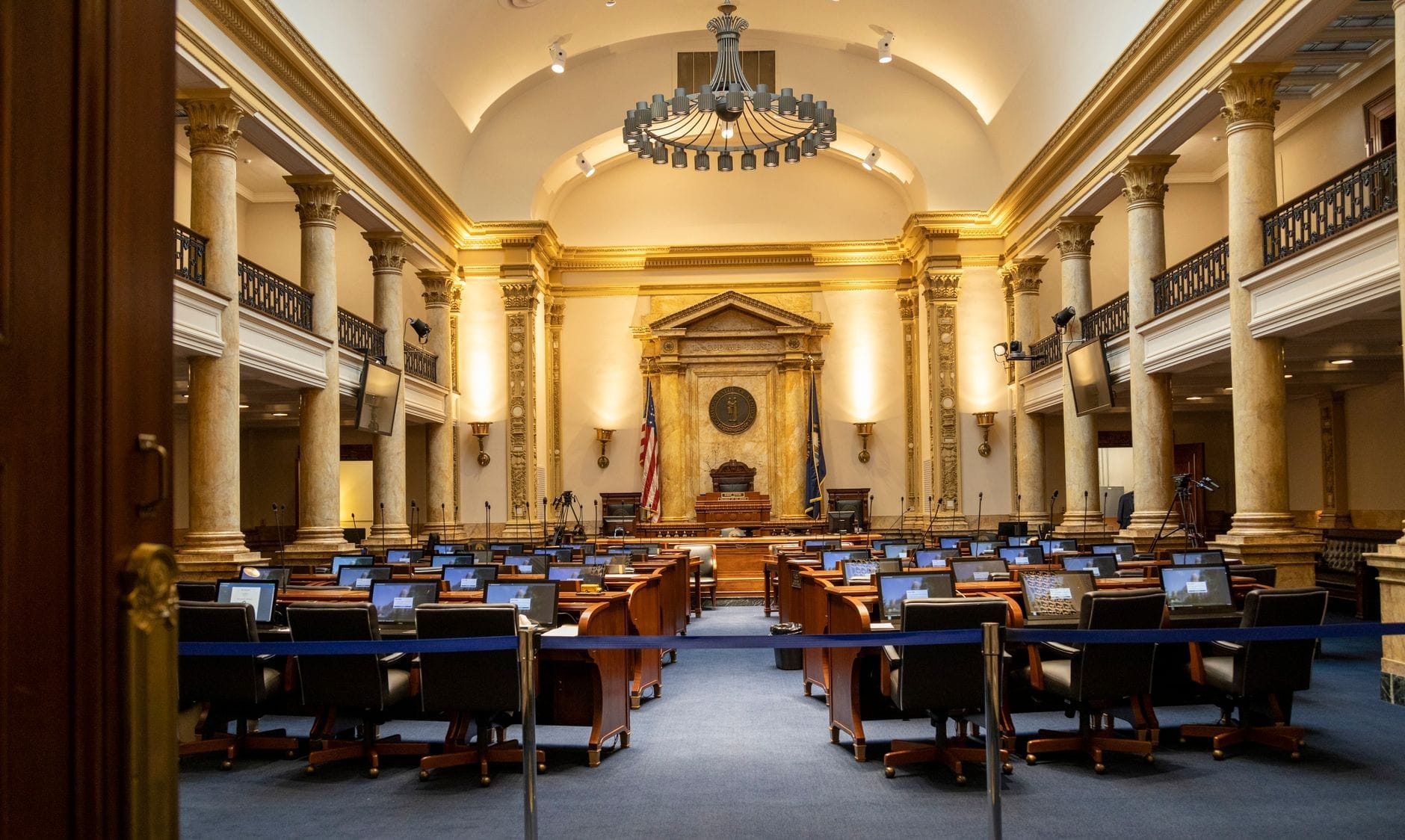
The Edward M. Kennedy Institute for the United States Senate is not a memorial or a museum in the conventional sense. It is a civic education center built around a single, extraordinary centerpiece: a full-scale, architecturally faithful reproduction of the United States Senate Chamber. The desks, the galleries, the carpeting, the proportions — all of it is a precise replica of the chamber in the U.S. Capitol Building in Washington, D.C., and it is the only one of its kind in the world.
Opened in 2015 on Columbia Point in Boston's Dorchester neighborhood, the Institute sits on the UMass Boston campus beside the John F. Kennedy Presidential Library, which shares the same windswept peninsula jutting into Boston Harbor. The location is not coincidental. This corner of Boston has become a kind of pilgrimage site for people interested in the Kennedy legacy and the broader arc of American democratic history.
Senator Edward M. Kennedy, who represented Massachusetts in the Senate for 47 years before his death in 2009, believed that understanding how the Senate works was essential to civic participation. That philosophy shapes everything here. Where the nearby John F. Kennedy Presidential Library focuses on biography and presidency, the Kennedy Institute focuses on institution and process. It asks visitors to engage, not just observe.
The Senate Chamber: The Heart of the Visit
Walking into the replica Senate Chamber is a disorienting experience in the best possible way. The room is large and formally proportioned, with 100 desks arranged in a semicircle facing the presiding officer's rostrum. The desks are organized by party, just as they are in Washington. Light filters in from above. The acoustics feel deliberate. You understand, in a visceral way, that this is a room designed for argument and resolution.
The Chamber is used for interactive simulations that are central to the Institute's programming. Visitors can participate in staged Senate debates on real historical legislation — civil rights bills, healthcare votes, foreign policy resolutions — where they take on the roles of senators and work through the process of amendment, debate, and final vote. The experience is designed for school groups but works surprisingly well for adults too, particularly those who have never watched a Senate floor debate and wondered how the procedural machinery actually functions.
💡 Local tip
If you want to participate in a Senate simulation, check the Institute's schedule before you arrive. Simulation sessions are often tied to group bookings or specific program times. Individual visitors can still explore the Chamber, but the interactive element may not always be available for walk-ins.
Adjacent to the Chamber is a recreation of Senator Kennedy's Washington office — desk, bookshelves, personal effects, the accumulated texture of nearly five decades in public life. The contrast between the grand civic stage of the Chamber and the intimate, slightly cluttered office is affecting. It is a reminder that the institution is made of individual people.
Tickets & tours
Hand-picked options from our booking partner. Prices are indicative; availability and final rates are confirmed when you complete your booking.
Boston Summer Night Trolley Tour and River Cruise
From 27 €Instant confirmationFree cancellationLEGOLAND Discovery Center Boston tickets
From 26 €Instant confirmationFree cancellationGhosts and Gravestones tour of Boston
From 39 €Instant confirmationFree cancellationBest of Boston tour
From 182 €Instant confirmationFree cancellation
Exhibits: More Than Biography
The Institute's permanent exhibits trace the history of the United States Senate with a clarity and depth that goes well beyond what you find in most political museums. There is substantial attention to landmark legislation: the Civil Rights Act, the Americans with Disabilities Act, immigration reform, and other bills that changed American life. The framing is deliberately non-partisan in tone, focusing on the mechanics and compromises of lawmaking rather than ideological positions.
Senator Kennedy's own career is woven through the exhibits, but the Institute is careful not to reduce everything to his story. His role in specific pieces of legislation is presented as case studies in Senate process — how coalitions are built, how opposition is negotiated, what floor strategy looks like in practice. For visitors with even a passing interest in political history, these sections are illuminating.
The Institute also hosts rotating exhibitions, public programs, and events that address contemporary civic issues. If you are visiting Boston and want to complement a trip to the Freedom Trail or the Massachusetts State House with something that speaks to modern democratic governance, the Kennedy Institute fills that gap directly.
Getting There and Practical Logistics
The Institute is located at 210 Morrissey Blvd on Columbia Point, which is not a neighborhood most visitors to Boston pass through by accident. The most straightforward way to get here is the MBTA Red Line to JFK/UMass Station, followed by the free UMass Boston Shuttle Bus #1, which stops directly at the Kennedy/Archives stop across from the Institute. The shuttle runs regularly on days the campus is active, but checking the schedule in advance is worthwhile.
For visitors arriving by car, there is paid parking available in the nearby UMass Boston lots (such as the Bayside and campus garages), including accessible spaces, with rates set by UMass Boston rather than the Institute. This is one of the few Boston attractions where driving is convenient rather than a headache. The Institute's lot does not charge, which is unusual for any major cultural institution in Greater Boston.
ℹ️ Good to know
Hours (from June 23): Tuesday through Sunday, 10:00 AM to 5:00 PM, with last admission typically 30 minutes before closing. Closed on major holidays including Thanksgiving Day, Christmas Eve, Christmas Day, and New Year's Day; verify any early closures such as the day before Thanksgiving and New Year's Eve on the official website. Always verify current hours at emkinstitute.org before visiting.
The building is fully wheelchair accessible, and the Institute offers manual wheelchairs to borrow at no charge on a first-come, first-served basis. Exhibit and program videos are open-captioned, and audio enhancement devices are available for speaker programs. The accessibility provisions here are comprehensive and thoughtfully implemented.
Timing Your Visit: When to Go and What to Expect
Weekday mornings, particularly Tuesday through Thursday, tend to draw the highest concentration of school groups. If you are visiting as an adult and prefer a quieter experience, arriving on a Saturday or Sunday afternoon often means smaller crowds and more space to linger in the exhibits. The Chamber itself feels different when it is not full of students — more contemplative, almost solemn.
The Institute is an indoor attraction, so weather does not affect the experience directly. That said, the journey from JFK/UMass Station via the shuttle can be breezy and exposed in winter. Dress for the outdoor commute, not just the indoor destination.
Plan to spend at least 90 minutes if you want to move through the exhibits properly. Add another 30 to 45 minutes if you participate in a simulation or attend a program. Combining this visit with the JFK Presidential Library next door makes for a full half-day dedicated to American political history, though the two institutions have separate admission fees.
Who This Attraction Is For — and Who Might Not Connect With It
The Kennedy Institute rewards visitors who arrive with some curiosity about American governance. You do not need to be a political scientist or a history professor. But if you have no interest at all in how laws are made, the legislative process, or the Senate as an institution, the exhibits may feel dry despite the thoughtful presentation. The replica Chamber alone is worth seeing for its sheer scale, but the full experience is designed for the engaged, not the passive.
Families with children under 10 may find the content level challenging for younger kids, though older children and teenagers — particularly those studying American government — will find it directly relevant and engaging. For that audience, it is among the best interactive civic education experiences in New England. Visitors interested in Boston's broader history will find the Kennedy Institute a natural complement to the city's many Revolutionary-era sites, shifting the frame from the founding generation to the 20th-century expansion of democratic rights.
International visitors curious about American politics — especially those trying to understand the structure and culture of the U.S. legislative branch — will find this one of the most concrete and accessible explanations available anywhere in the country. The institution does not preach. It demonstrates.
Insider Tips
- Book tickets online in advance if you plan to visit during peak school group season (September through June on weekday mornings). Walk-in availability is usually fine on weekends, but popular simulation slots can fill quickly on school days.
- Combine your visit with the JFK Presidential Library next door to create a half-day of American political history. Both institutions share the Columbia Point waterfront and the juxtaposition of presidential and legislative perspectives is complementary.
- Massachusetts EBT and ConnectorCare cardholders can get free admission for up to four people through the Institute’s participation in the EBT Card to Culture and related access programs, but this discount is only available when purchased in person at the admissions desk. Bring your card.
- The replica of Senator Kennedy's Washington office is easy to rush past but worth slowing down for. The accumulation of personal objects, correspondence, and mementos across nearly five decades in public life tells a different kind of story than the formal exhibits.
- If you drive, the free parking lot is one of the genuine logistical advantages of this location. Coming by Red Line is equally easy but adds 10 to 15 minutes of shuttle travel each way — factor that into your schedule.
Who Is Edward M. Kennedy Institute for the United States Senate For?
- American history and political history enthusiasts wanting a hands-on civics experience
- Families with teenagers studying U.S. government or American history
- International visitors seeking to understand the structure of the U.S. legislative branch
- School and educational groups looking for curriculum-connected programming
- Travelers combining this visit with the adjacent JFK Presidential Library for a full political history day
Nearby Attractions
Combine your visit with:
- Arnold Arboretum
Founded in 1872, the Arnold Arboretum is the oldest public arboretum in North America — a free, 281-acre landscape in Jamaica Plain managed by Harvard University. With over 15,000 accessioned plants and sweeping hillside views, it draws botanists, dog walkers, and curious visitors in equal measure across all four seasons.
- Blue Hills Reservation
Ten miles south of downtown Boston, Blue Hills Reservation spreads across more than 7,000 acres of forested hills, rocky ridgelines, and glacial wetlands. Free to enter and open year-round from dawn to dusk, it offers 125 miles of trails ranging from easy pond-side loops to a genuine summit climb at 635-foot Great Blue Hill.
- Boston Duck Tours
Boston Duck Tours puts you aboard a replica World War II DUKW amphibious vehicle for an 80-minute circuit of the city's most historic landmarks, finishing with a splash into the Charles River. Running seasonally from late March through late November, it's one of the few tours in Boston that covers both street-level sights and a Charles River perspective in a single trip.
- Boston Harbor Islands
Boston Harbor Islands National and State Park puts 34 islands and peninsulas within easy ferry reach of downtown Boston. From Civil War earthworks on Georges Island to the oldest lighthouse station in the United States on Little Brewster, the park rewards visitors who are willing to trade the city's brick sidewalks for salt air and open water.