Chinese Historical Society of America Museum: Chinese American History in a Landmark Building
The Chinese Historical Society of America Museum tells the story of Chinese immigration, labor, and community in the United States from the Gold Rush to the present day. Housed in the landmark Julia Morgan-designed Chinatown YWCA building in the heart of San Francisco's Chinatown, it is the oldest and one of the most significant institutions dedicated to Chinese American heritage in the country.
Quick Facts
- Location
- 965 Clay Street, Chinatown, San Francisco, CA 94108
- Getting There
- Powell Street BART, then Muni 30 or 45 bus, or Powell–Hyde Cable Car to Chinatown
- Time Needed
- 1 to 2 hours
- Cost
- Paid admission (rates vary by age/status); Medi-Cal and EBT cardholders $3. Verify current prices at chsa.org.
- Best for
- History enthusiasts, Chinese American heritage, architecture lovers, first-time visitors to Chinatown
- Official website
- chsa.org
What the CHSA Museum Actually Is
The Chinese Historical Society of America Museum, known by its abbreviation CHSA, is the oldest and one of the most substantive institutions in the United States dedicated to preserving and presenting Chinese American history. Founded in 1963, the organization spent decades as a research and archival body before opening its public museum and learning center at its current location in 2001. That shift transformed CHSA from a scholarly society into a place any curious visitor can walk into and spend a meaningful hour or two.
The museum's collection and rotating exhibitions trace Chinese immigration to the United States from the mid-19th century forward, covering the Gold Rush era, the transcontinental railroad, discriminatory legislation like the Chinese Exclusion Act of 1882, neighborhood life in Chinatown, and the stories of Chinese Americans in World War II. This is not a surface-level cultural showcase. The museum engages seriously with both the achievements and the injustices that shaped this community.
ℹ️ Good to know
Hours vary by day. As of the most recent official listing, the museum is open Wednesday and Saturday from 10:00 to 17:00, though several third-party sources still show older hours (for example, Wednesday to Sunday, 11:00 to 16:00). Confirm current hours directly at chsa.org or by calling +1 415-391-1188 before visiting.
The Building: Julia Morgan's Chinatown YWCA
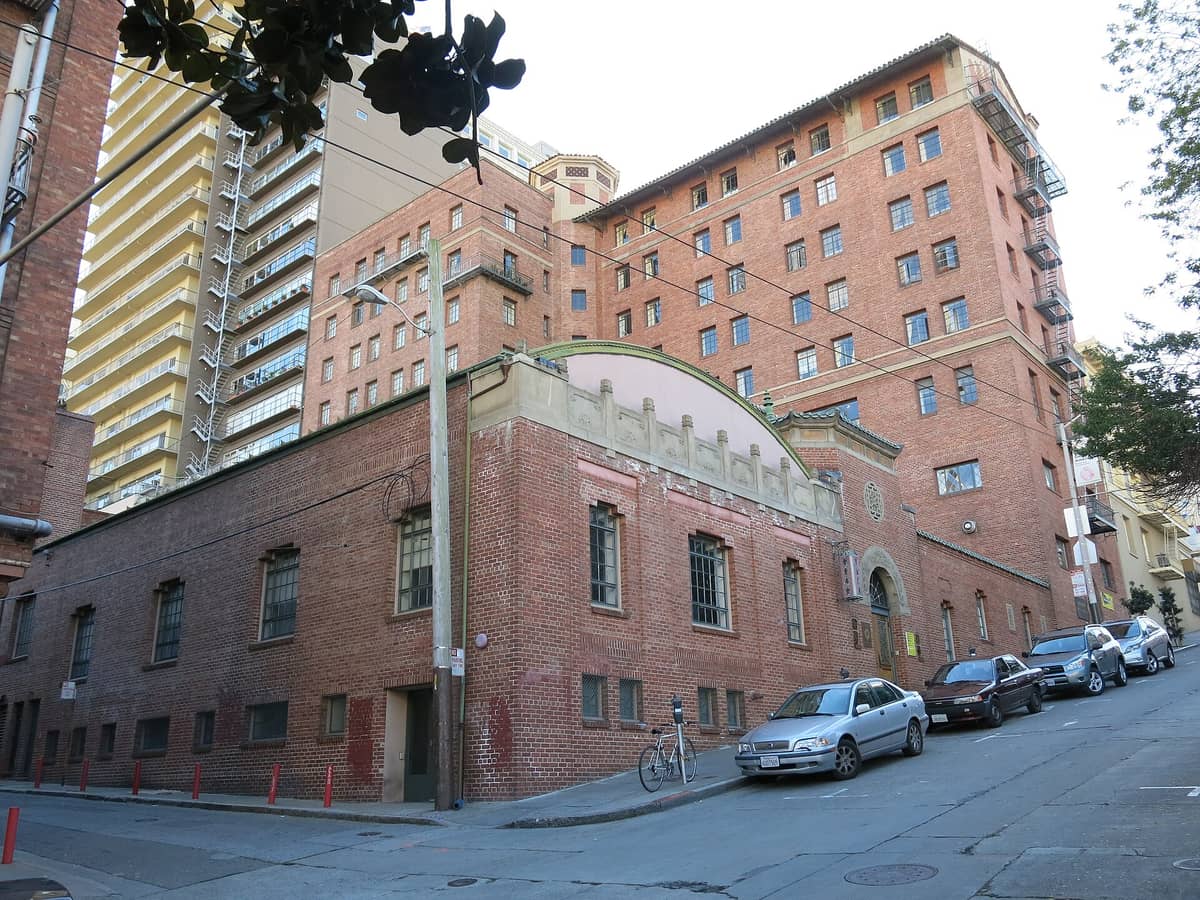
The physical space is worth attention on its own terms. The building was designed by Julia Morgan, one of the most important architects in California history and the designer of Hearst Castle. Constructed between 1929 and 1932 as the Chinatown YWCA, the building blends Morgan's characteristic design sensibility with deliberate Chinese design elements: decorative tile work, ornamental details drawn from classical Chinese architecture, and a warm brick facade that sets it apart from the commercial streets nearby.
Standing outside on Clay Street, you notice the building's proportions before you notice its details. It is quieter and more considered than the storefronts that line Grant Avenue a block away. The interior has the feel of a civic institution built to last: high ceilings, solid materials, rooms scaled for community gatherings rather than retail. For visitors interested in San Francisco's architectural heritage, the CHSA building is a genuine find. You can read more about the city's broader architectural story in the San Francisco architecture guide.
Tickets & tours
Hand-picked options from our booking partner. Prices are indicative; availability and final rates are confirmed when you complete your booking.
Sonoma and Napa Valley wine tour from San Francisco
From 127 €Instant confirmationFree cancellationGo City | San Francisco Explorer Pass
From 76 €Instant confirmationFree cancellationMuir Woods and Sausalito guided tour with transportation
From 82 €Instant confirmationFree cancellationSan Francisco CityPASS
From 77 €Instant confirmationFree cancellation
What You Will See Inside
The museum combines a permanent collection with rotating temporary exhibitions. The permanent collection includes photographs, artifacts, documents, and objects from Chinese American life across multiple generations: tools used by railroad workers, objects from early Chinatown households, immigration papers, items from the Angel Island Immigration Station, and community-produced materials from the mid-20th century. These are not grand objects. Much of what survives is modest and personal, and that is exactly what makes it affecting.
Temporary exhibitions have addressed topics ranging from Chinese American military service to contemporary art by Chinese American artists, so what you find on any given visit will partly depend on the current programming. The museum's exhibition calendar is posted at chsa.org. If you are planning a Chinatown visit that includes multiple stops, the Golden Gate Fortune Cookie Factory and Old Saint Mary's Cathedral are both within easy walking distance.
When to Visit and How the Experience Changes
The museum is small enough that timing matters less here than at a large institution like the de Young. On weekday mornings when the museum is open, the galleries are often nearly empty, which allows for a genuinely reflective experience with the material. You can stand in front of a photograph or a document case for as long as you like without feeling crowded or rushed.
Saturday mornings tend to draw more visitors, including school groups and families from the neighborhood. This makes the atmosphere livelier but the exhibitions slightly harder to move through at your own pace. If you are visiting with children, Saturday has the advantage of more activity and often scheduled programming. If you prefer quiet focus, aim for a Wednesday morning.
Weather does not affect the museum visit directly since the experience is entirely indoors. However, Chinatown itself is more enjoyable before midday, when streets are less congested and the morning deliveries and market activity give the neighborhood a character that disappears by afternoon. Pairing a CHSA visit with an early walk through Chinatown makes for a more complete morning than arriving after lunch when Grant Avenue is at peak pedestrian density.
💡 Local tip
Arrive at least 15 minutes before closing. The staff begin preparing to close earlier than the posted time, and rushing through the final galleries does the material a disservice.
Getting There from Downtown San Francisco
The most straightforward transit option is BART to Powell Street Station, followed by Muni bus lines 30 or 45, both of which stop near Chinatown. The Powell-Hyde Cable Car also passes through the area, though it runs on a different axis and requires a short walk. The museum is at 965 Clay Street, which is one block north of Sacramento Street and about three blocks west of the Chinatown gate on Grant Avenue at Bush Street. For a broader overview of getting around the city, the guide to getting around San Francisco covers all transit options in detail.
If you are walking from Union Square, the distance is roughly 10 to 12 minutes on foot. Head north on Powell Street, turn left on Sacramento Street, and then right on Waverly Place or a parallel street into Chinatown. Clay Street intersects shortly after. The walk uphill from Union Square is gentle but noticeable.
Accessibility, Practical Notes, and Who Should Skip
The museum is housed in a historic building, and detailed accessibility information is not published on the main website. Visitors with mobility considerations should contact the museum directly at +1 415-391-1188 x109 or info@chsa.org before visiting to confirm what accommodations are available.
Photography within the galleries is generally permitted for personal use, but check with staff on arrival regarding any restrictions near specific objects or rotating exhibition items. The gift area near the entrance carries books on Chinese American history and community publications not widely available elsewhere, which makes it worth a few minutes even if you are short on time. For visitors building a broader Chinatown itinerary, the nearby Dragon's Gate on Grant Avenue and Bush Street is the neighborhood's formal ceremonial entrance and a natural starting point.
Visitors expecting a large-format museum with interactive technology, a cafe, and multiple floors of exhibits will find the CHSA Museum modest by comparison. The space is compact, the collection is focused, and the experience is quiet and text-heavy in places. Travelers who want spectacle over substance, or who have no particular interest in immigration history or Chinese American experience, are likely better served by other attractions nearby. The museum is not trying to be something it is not, and that focused scope is part of its strength.
Insider Tips
- The museum's research library and archive hold materials not on public display. If you have a specific genealogical or historical research interest in Chinese American history, contact CHSA in advance to ask about access.
- Check the events calendar on chsa.org before your visit. CHSA regularly hosts lectures, film screenings, and community programs that offer a richer engagement with the material than a solo gallery visit.
- The building's exterior courtyard and entry area are worth a slow look. The decorative tilework on the facade incorporates motifs drawn from classical Chinese ornament, a detail that is easy to walk past quickly.
- Admission is $3 for Medi-Cal and EBT cardholders, making this one of the more accessible cultural institutions in the city for local residents. If you hold either card, bring it.
- Combine the visit with a stop at the nearby Beat Museum in North Beach, a short walk north and east, for a different but complementary angle on San Francisco's layered immigrant and counterculture histories.
Who Is Chinese Historical Society of America Museum For?
- Travelers with a genuine interest in American immigration history and the Chinese American experience
- Architecture enthusiasts who want to see Julia Morgan's work beyond Hearst Castle
- First-time visitors to San Francisco who want to understand Chinatown's historical depth rather than just its commercial surface
- School groups and families looking for a substantive, age-appropriate museum experience
- Researchers and students with interests in Chinese American studies, civil rights history, or California labor history
Nearby Attractions
Other things to see while in Chinatown:
- Dragon's Gate (Chinatown Gate)
Dragon's Gate (龍門, Lóngmén) stands at the corner of Bush Street and Grant Avenue, marking the formal threshold into the oldest Chinatown in North America. A paifang-style ceremonial arch dedicated in 1970, it costs nothing to visit and is open around the clock, making it a natural starting point for any exploration of the neighborhood.
- Golden Gate Fortune Cookie Factory
Tucked into Ross Alley in the heart of San Francisco's Chinatown, the Golden Gate Fortune Cookie Factory has been folding fortune cookies by hand since 1962. It's a rare chance to watch a working bakery up close, smell fresh-baked wafers, and buy cookies straight off the press — with free admission (note that photography may incur a small fee).
- Old Saint Mary's Cathedral
Built in 1854 and still an active parish, Old Saint Mary's Cathedral stands at the corner of California Street and Grant Avenue as the oldest cathedral in San Francisco. Free to enter and rich in Gothic Revival detail, it offers a striking architectural and historical contrast to the surrounding energy of Chinatown.