Casa de Campo: Madrid's Vast Royal Park Explained
Once a royal hunting ground reserved for Spanish kings, Casa de Campo is now Madrid's largest public park, covering 1,535.52 hectares west of the Royal Palace. Free to enter year-round, it offers a lake, forest trails, a cable car connection, and two family attractions, all within reach of the city centre.
Quick Facts
- Location
- Paseo de la Prta del Ángel, 1, 28011 Madrid — west of the Royal Palace
- Getting There
- Metro: Casa de Campo (L5, L10), Batán (L10), Lago (L10); or Teleférico cable car from Parque del Oeste
- Time Needed
- 2 hours for a lakeside walk; a full day if you include the zoo or amusement park
- Cost
- Park entry is free. Zoo and amusement park charge separate admission
- Best for
- Joggers, families, picnickers, cyclists, and anyone needing a long exhale from the city
- Official website
- www.esmadrid.com/en/tourist-information/casa-de-campo
What Casa de Campo Actually Is
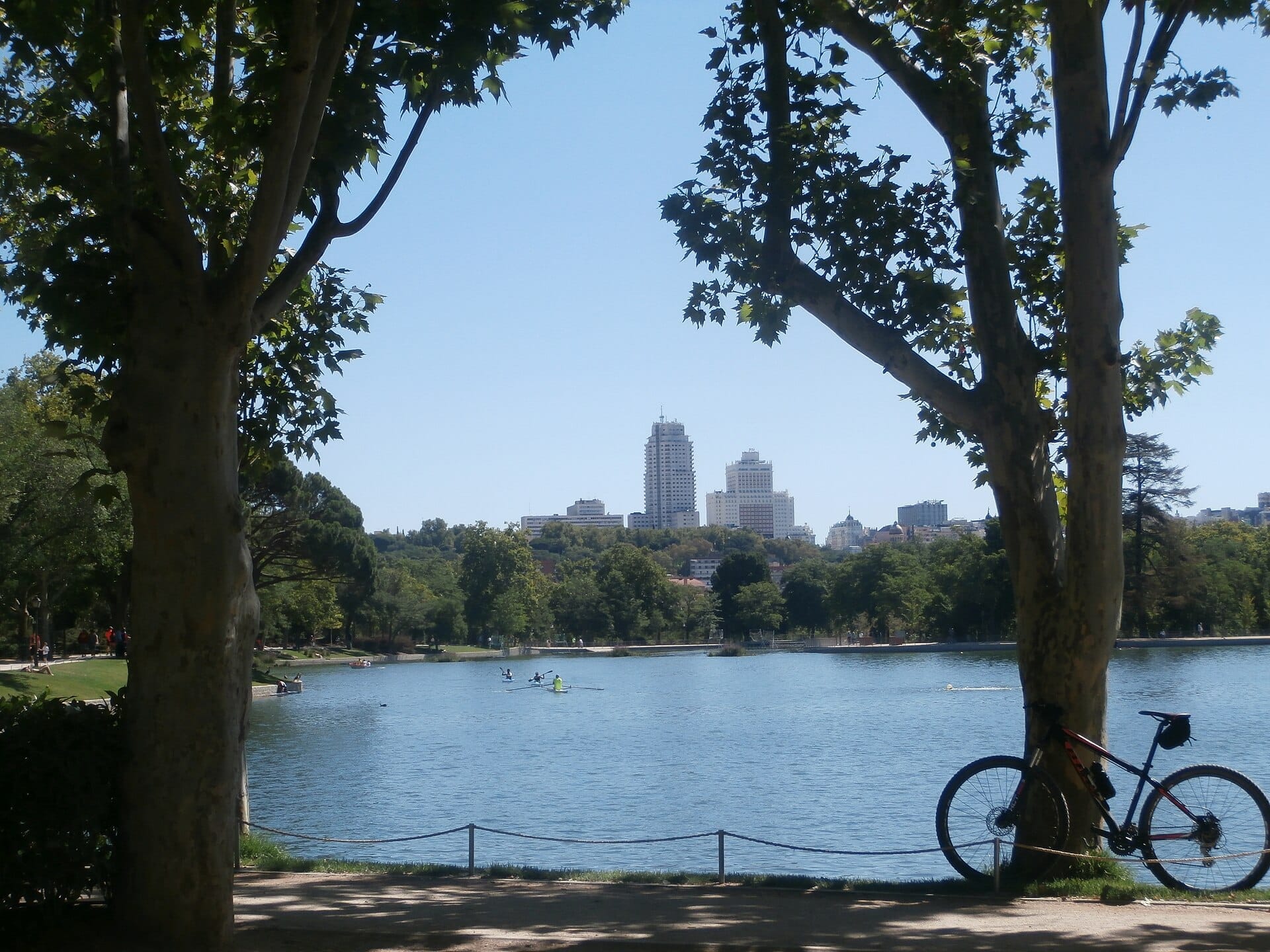
Casa de Campo is not a manicured garden or a compact city square with benches. It is a working forest, roughly four times the size of Central Park in New York, occupying 1,535.52 hectares of pine, scrub oak, and open grassland on Madrid's western edge. The park runs directly from the back of the Royal Palace down to the Manzanares River valley, and on a clear morning you can look east from the lakeside and see the palace silhouetted against the sky.
Entry to the park is free and has been since Madrid City Council received it from the Spanish crown in 1931. Before that, it had been royal property since King Philip II established it as a hunting estate in the mid-16th century, after moving his court to Madrid. King Ferdinand VI later declared it a Royal Forest, and King Charles III introduced agricultural and livestock uses. In 2010, the Community of Madrid designated the entire complex an Asset of Cultural Interest, a classification that recognizes both its ecological significance and its layered history.
ℹ️ Good to know
The park is closed to private vehicles. You arrive on foot, by metro, or by cable car. Sections around the lake, the zoo, and Paseo de Extremadura are closed from 1:00 AM to 6:00 AM.
Arriving: Your Options and What Each Feels Like
The metro is the most straightforward approach. The Lago station on Line 10 deposits you at the park's central lake with almost no walking required. Batán, also on Line 10, is the stop for the amusement park entrance. The Casa de Campo station, served by both Lines 5 and 10, brings you into the northern section of the park, which is quieter and less developed.
The more interesting arrival is the Teleférico de Madrid, a cable car that lifts you from Parque del Oeste and delivers you above the tree canopy into the heart of the park. The ride is short, around 11 minutes, but the aerial perspective over the Manzanares valley and back toward the city is genuinely striking. Check the Teleférico's own schedule before planning around it, as it does not run every day year-round.
Tickets & tours
Hand-picked options from our booking partner. Prices are indicative; availability and final rates are confirmed when you complete your booking.
2-hour Private Segway tour of Casa de Campo
From 50 €Instant confirmationFree cancellationCasa del Labrador guided tour
From 14 €Instant confirmationRoyal Monastery of El Escorial and the Valley of the Fallen trip from Madrid
From 64 €Instant confirmationFree cancellationFlexible time Real Madrid: Bernabeu Stadium & Museum Entry
From 42 €Instant confirmation
The Lake: What You'll Find at the Centre
The artificial lake, known as El Lago, is the park's social centre. On weekend mornings, particularly between 9 and 11 AM, you'll find cyclists circling the perimeter path, parents with strollers, groups of friends setting up for an early picnic, and the occasional fisherman working the bank. Rowing boats are available for rental, though hours and pricing should be confirmed on site. By early afternoon on a Saturday in spring or autumn, the atmosphere is closer to a beach: blankets laid out, music playing softly, food being unpacked.
The sound of the lake area is its own marker. Frogs at dusk, coots and ducks year-round, and the low hum of the city just audible beyond the tree line. The smell changes depending on the season: pine resin in summer, damp earth in autumn after rain, dry dust and cut grass in July. The water does not smell clean enough for swimming, and nobody does.
💡 Local tip
Arrive at the lake before 10 AM on weekdays for the most peaceful experience. By midday on weekends in spring, the lakeside path can feel crowded. Early mornings in autumn, when low mist sits on the water, are particularly good for photography.
The Forest Paths: Scale and What to Expect
Away from the lake, Casa de Campo is remarkably large enough to get turned around in. The trails range from wide tarmac paths used by cyclists and inline skaters to narrow dirt tracks that cut through scrub and pine. The terrain is mostly gentle rolling hills, but there are steeper sections in the southern areas. Bring a map or download the park's layout on your phone before you go in: mobile signals can be patchy in the denser forested sections.
The park is popular with runners, and on any morning you will encounter them in consistent numbers. Cycling is permitted on designated routes. The absence of cars inside the park makes the whole experience noticeably different from walking in many other urban parks in Europe, where paths and roads share space.
Casa de Campo connects naturally with a broader green corridor. The nearby Madrid Río park runs along the Manzanares riverbank just east of the park's boundary, and you can walk between the two on foot. This combination makes for one of the longer green walks available in any European capital.
Family Attractions Within the Park
Two major attractions operate inside Casa de Campo with separate ticketing. The Zoo Aquarium Madrid and the Parque de Atracciones (an amusement park) both have their own entrances, opening hours, and pricing that you should check directly before visiting. Neither is included in the park's free access.
Both attractions are well-established and draw large family crowds on weekends and during school holidays. If you are visiting with children primarily for these, treat the surrounding park as a pleasant bonus rather than the main event. If you are visiting without children, weekday mornings are quieter because the paid attractions draw their own contained foot traffic and tend not to spill into the rest of the park.
How Weather Shapes the Experience
Madrid's summers are hot. In July and August, temperatures regularly exceed 35°C during the afternoon. The park's tree canopy provides meaningful shade, but the exposed lakeside becomes uncomfortable between roughly noon and 5 PM on peak summer days. Early mornings, before 9 AM, are manageable and particularly pleasant. Bringing water is not optional in summer; it is necessary.
Spring (April and May) is the most comfortable season for a long walk in the park. Temperatures are mild, the vegetation is at its greenest, and the light in the late afternoon is particularly good for photographs looking west into the hills. Autumn is similarly rewarding, with the pine and oak taking on warmer tones. Winter visits are quiet and surprisingly enjoyable on clear days when the sky over the Sierra de Guadarrama is visible to the north.
⚠️ What to skip
In summer, avoid the park's open areas between 12 PM and 5 PM unless you have shade and water. The lakeside in particular offers little relief from direct sun during peak heat.
Who Should Reconsider
Casa de Campo is not an attraction in the conventional sense. It does not have a single focal point, a curated path, or a visitor centre that orients you and sends you through a sequence of highlights. Travellers with limited time in Madrid who are prioritising museums, monuments, and cultural sites should be realistic: the park rewards those who want to slow down, and it requires more time than most short city breaks allow.
If your main goal in Madrid is to cover cultural ground efficiently, your energy may be better spent at the Museo del Prado or the Parque del Retiro, which is smaller, more structured, and closer to the museum district. Casa de Campo is where Madrileños come to escape tourists, not to be among them.
Insider Tips
- The lakeside restaurants and chiringuitos (outdoor bars) are popular with locals on warm evenings, particularly from Thursday through Sunday. If you want a drink with a water view without tourist markup, this is one of the better options in the city.
- The cable car (Teleférico) is not just transport: the views from the gondola back toward the Royal Palace and the city skyline are among the cleanest wide-angle views of central Madrid available anywhere. Use it as your arrival, not just your exit.
- The park's northern section, near the Casa de Campo metro station, sees far fewer visitors than the lake area. If you want space and quiet on a weekend afternoon, walk north from the lake for 15 to 20 minutes.
- Cyclists rent bikes near the Lago metro entrance on weekends. If you want to cover more of the park than a walk allows, a rental bike makes the scale manageable, though the terrain in the south is hilly.
- In spring and autumn, the park hosts open-air events including sports races and cultural programming. Check the Madrid City Council events calendar before you visit if you want to catch something specific, or to avoid an unexpectedly crowded day.
Who Is Casa de Campo For?
- Families with children visiting the zoo or amusement park
- Joggers and cyclists who want a car-free environment with real distance
- Travellers who want a half-day outdoors without leaving the city
- Anyone arriving on a warm evening looking for an outdoor drink with a local crowd
- Photographers who want city skyline views from an unusual westward angle
Nearby Attractions
Other things to see while in Moncloa & Argüelles:
- Ermita de San Antonio de la Florida
A small neoclassical hermitage beside the Manzanares River holds one of the most extraordinary ceiling fresco cycles in Spain, painted by Francisco de Goya in 1798. Entry is free, crowds are light, and the painter himself is buried beneath the dome he decorated.
- Madrid Río
Madrid Río is a roughly 150-hectare linear park stretching about 7 kilometres along the Manzanares River, built on top of the buried M-30 motorway. Free to enter and open around the clock, it offers cycling paths, playgrounds, riverside promenades, and views of the Royal Palace — all within walking distance of central Madrid.
- Faro de Moncloa
At 92 metres above street level, the Faro de Moncloa observation deck delivers sweeping 360-degree views of Madrid for as little as €4. Built in 1992, this slender 110-metre tower is one of the most affordable viewpoints in the city, and one of the least crowded.
- Museo Cerralbo
Museo Cerralbo is a rare thing: a 19th-century aristocratic palace preserved almost exactly as its owner left it, filled with over 50,000 objects across paintings, armour, ceramics, and gilded ballrooms. Located in the Argüelles neighbourhood near Plaza de España, it offers an unusually personal window into aristocratic Madrid life at a fraction of the price of the city's blockbuster museums.