Zoo Aquarium de Madrid: What to Expect Before You Go
Set across 20 hectares inside Casa de Campo, Zoo Aquarium de Madrid is Spain's largest zoo and home to one of the country's first tropical marine aquariums. This guide covers what you'll actually see, when to go, how to get there, and whether it's worth a full day of your Madrid trip.
Quick Facts
- Location
- Casa de Campo, s/n, 28011 Madrid (Moncloa-Aravaca district)
- Getting There
- Metro Line 10 or Line 5 to Casa de Campo (~900 m walk; Batán station on Line 10 is slightly closer); Bus 33 stops at the entrance
- Time Needed
- 3–5 hours for a thorough visit
- Cost
- Online adult tickets from €19.90; check zoomadrid.com for current prices and promotions
- Best for
- Families with children, animal lovers, and travelers looking for a full outdoor day away from city crowds
- Official website
- www.zoomadrid.com/en
What Is Zoo Aquarium de Madrid?
Zoo Aquarium de Madrid is a combined zoological park and marine aquarium spread across roughly 20 hectares (about 49 acres) inside the vast urban parkland of Casa de Campo, just west of the city center.[1] The institution traces its origins to 1770, which makes it one of Spain's oldest zoological collections, though the current purpose-built facilities in Casa de Campo opened in 1972.[1] The aquarium section was added later as a tropical marine facility, expanding the zoo's scope to include marine life exhibitions.
The zoo is organized into distinct geographical and thematic zones covering mammals, birds, reptiles, primates, and marine life. On any given day you can walk from an African savanna enclosure to a dolphinarium to a floor-to-ceiling shark tank within the span of an hour, which gives the place its particular character: it is comprehensive in a way that takes real time to absorb properly.
💡 Local tip
Book tickets online at zoomadrid.com before arriving. Online prices for general admission currently start from €19.90 for visitors aged 8 to 64, and the purchase process is quick. Walk-up prices at the gate are higher, and queues at the ticket booths on weekends can stretch significantly.
Getting There: Metro, Bus, and Car
The most practical approach by public transport is Metro Line 10 or Line 5, both stopping at Casa de Campo station. From there, the zoo entrance is roughly a 900-meter walk through the park, mostly flat and well-signposted. The walk itself is pleasant in spring or autumn, but in July or August that exposed stretch in full midday sun can feel punishing before you've even entered the zoo.
EMT Bus line 33 connects Príncipe Pío with the zoo entrance directly, which is a much better option if you're traveling with strollers, young children, or mobility concerns. Príncipe Pío is itself a major interchange with Metro Lines 6 and 10 as well as suburban Cercanías rail, so getting there from most of central Madrid is straightforward.
If you're coming by car from central Madrid, take the M-30 ring road then join the A-5/N-V and exit at junction 5A following signs for the zoo. On-site parking is available but fills quickly on weekends and during school holidays. For practical advice on navigating Madrid's public transport network, the getting around Madrid guide covers metro zones, bus passes, and tourist travel cards in detail.
⚠️ What to skip
Opening hours change seasonally, and the zoo closes at different times on weekdays, weekends, and public holidays. Check the official calendar at zoomadrid.com/en/horarios-y-precios/horarios before your visit, especially if planning a late afternoon arrival.
Tickets & tours
Hand-picked options from our booking partner. Prices are indicative; availability and final rates are confirmed when you complete your booking.
Zoo Aquarium Madrid Entrance Tickets
From 19 €Instant confirmationAdmission Tickets for the Atlantis Aquarium in Madrid
From 14 €Instant confirmationFaunia Zoo Madrid entrance tickets
From 21 €Instant confirmationRoyal Monastery of El Escorial and the Valley of the Fallen trip from Madrid
From 64 €Instant confirmationFree cancellation
The Zoo Zones: What You'll Actually See
The zoo is divided into several thematic areas, and navigating them in a logical sequence helps you avoid excessive backtracking on a site this size. The African savanna section is the visual centrepiece: giraffes, white rhinos, and zebras occupy large open paddocks, and the viewing distances are close enough to feel genuinely immersive rather than remote. Early morning, the giraffes tend to be most active and approachable near the fence lines before the heat of the day sends them toward shade.
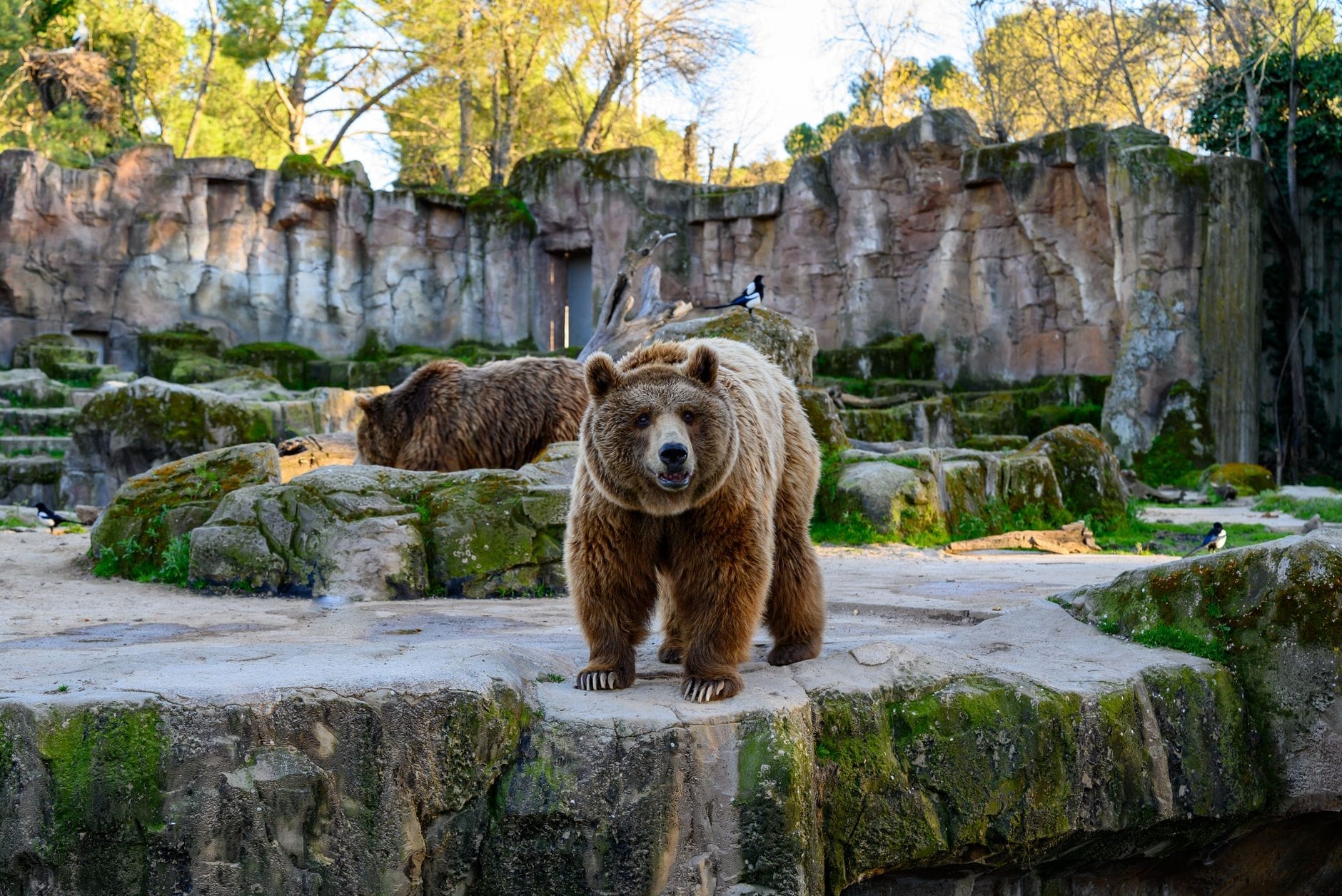
The primate areas house gorillas, chimpanzees, and various smaller primates in enclosures that include both indoor and outdoor sections. The bear habitats, polar bear exhibits, and big cat zones are located in separate sectors of the park and require deliberate navigation. On weekday mornings, you can observe feeding routines in several areas, which attract small crowds but offer some of the most engaging wildlife observation of the day.
The bird collection is often underestimated. The free-flight aviary lets visitors walk through an enclosed tropical habitat where macaws, toucans, and other birds move at close range. Children tend to react strongly here, particularly because the scale of the birds is unexpected at arm's length.
The Aquarium: Spain's First Tropical Marine Exhibit
The Aquarium section, a tropical marine aquarium, is housed in a purpose-built indoor building that provides immediate relief from outdoor heat on summer days.[1][2] The central feature is a large circular shark tank with floor-to-ceiling glass panels that allow full 360-degree viewing. Rays, large bony fish, and several shark species share the tank, and the feeding demonstrations, when scheduled, draw the largest indoor crowds of the day.
Adjacent tanks cover tropical reef ecosystems, jellyfish, seahorses, and freshwater species from South America and Southeast Asia. The lighting in the jellyfish zone is handled with particular care, using blue-spectrum illumination that makes photography deeply rewarding even with a smartphone. This is one area where afternoon visits work well, as natural light from the skylights is less harsh and the crowds from morning tour groups have typically thinned.
💡 Local tip
For photography in the aquarium, turn off your flash entirely. Flash reflects off the glass and ruins shots. Use night mode or a wide aperture setting if your phone allows manual control. The jellyfish tank in particular rewards patience: hold still for 10–15 seconds and the subjects drift into frame naturally.
Dolphin and Sea Lion Shows
The zoo operates dolphinarium and sea lion demonstration areas with scheduled performances throughout the day. These shows attract the largest crowds in the park, and seating fills up 15 to 20 minutes before start time on weekends and during school holiday periods. If you want a central seat rather than a steep side angle, arrive early and position yourself in the mid-tier rows where you're close to eye level with the pool surface.
Attitudes toward cetaceans in captivity vary considerably among visitors, and this aspect of the zoo is worth factoring into your decision. The performances are polished and children respond to them enthusiastically, but travelers with strong views on animal welfare may find this section uncomfortable. The rest of the zoo operates more in line with contemporary zoological standards for mammal and primate welfare.
Best Time to Visit and Seasonal Considerations
Spring (April to May) and early autumn (September to October) offer the most comfortable conditions for a full day at the zoo. Temperatures across Madrid in these months are typically mild, and animals in outdoor enclosures are more active than in summer heat. The broader context of Madrid's seasonal patterns applies directly here: summer days regularly exceed 35°C, and spending five hours in a largely outdoor environment under direct sun is a physically demanding proposition for adults, let alone small children.
If you do visit in July or August, arrive when the zoo opens, cover the outdoor sections in the first two to three hours, then retreat to the aquarium building through the middle of the day. Bring more water than you think you'll need. The zoo has food and drink concessions but they are priced at attraction rates, and the queue times in peak season can be long.
Weekday mornings outside school holiday periods are the quietest times. On weekend afternoons in spring, the combination of local Madrid families and tourist visitors creates serious crowd density at the popular enclosures, particularly the great apes, big cats, and the aquarium. If you have flexibility, a Tuesday or Wednesday morning in April or October is the closest thing to a private experience this attraction can offer.
ℹ️ Good to know
The zoo sits within Casa de Campo, Madrid's largest urban park. Arriving slightly early and walking through the park before the zoo opens adds a pleasant 20-minute buffer and gives you a sense of the broader landscape the zoo occupies.
Practical Details: Accessibility, Food, and What to Bring
The zoo's internal pathways are paved and largely flat, making stroller and wheelchair movement manageable across most of the site. Some elevated viewing platforms and certain indoor exhibit areas have steps, so visitors with mobility requirements should contact the zoo directly before visiting for specific accessibility information. The EMT bus line 33 uses low-floor vehicles, which simplifies access compared to the 900-meter walk from the metro station.
There are multiple food concessions and a restaurant on site. Bringing your own snacks and drinks is permitted and strongly recommended if you're watching budget or visiting with picky eaters. The zoo does not permit outside alcohol, but water bottles, sandwiches, and fruit are all fine. There are shaded picnic areas near the central section of the park.
Comfortable walking shoes are essential. The 20-hectare site means you'll cover significant ground over a full visit. Sun protection (hat, sunscreen) is critical from May through September. Families planning a full day in this part of Madrid might also consider combining the trip with a visit to Parque de Atracciones de Madrid, the theme park that also sits within Casa de Campo, on a second day rather than combining both in one visit, which tends to be too much for younger children.
Insider Tips
- The zoo map available at the entrance is worth picking up even if you've viewed the site plan online. Distances between zones are larger than they appear on screen, and the printed map helps you prioritize which sections to visit first based on your group's interests.
- Feeding schedules for specific animals (big cats, bears, primates) are posted at enclosure entrances and on boards near the main entrance. These are not always listed on the official website in advance, so check on arrival and plan your route around them.
- The area directly in front of the giraffe paddock is best in the first hour after opening. Giraffes tend to be closest to the fence line before the temperature climbs and they retreat to shaded areas mid-morning.
- If you're visiting with teenagers who are less enthusiastic about a traditional zoo day, the aquarium building tends to land better with that age group than the outdoor enclosures, particularly the shark tank and the larger interactive displays.
- Purchasing a combined ticket or annual pass through the official website can represent significant savings for Madrid residents or visitors planning to return. Even for single visits, the online purchase price is meaningfully lower than the gate price.
Who Is Zoo Aquarium de Madrid For?
- Families with children aged 3 to 12, for whom the combination of large mammals, birds, and the aquarium offers genuine variety across a full day
- Animal enthusiasts wanting to see African and Asian megafauna in a European urban setting, particularly the giraffe and rhino enclosures
- Visitors looking for a structured outdoor activity in a park environment, away from museum and monument crowds
- Groups that include both young children and adults, given the range of experiences from educational displays to live demonstrations
- Travelers in Madrid during hot months who want an outdoor attraction with substantial indoor air-conditioned sections to retreat to midday
Nearby Attractions
Other things to see while in Moncloa & Argüelles:
- Casa de Campo
Once a royal hunting ground reserved for Spanish kings, Casa de Campo is now Madrid's largest public park, covering 1,535.52 hectares west of the Royal Palace. Free to enter year-round, it offers a lake, forest trails, a cable car connection, and two family attractions, all within reach of the city centre.
- Ermita de San Antonio de la Florida
A small neoclassical hermitage beside the Manzanares River holds one of the most extraordinary ceiling fresco cycles in Spain, painted by Francisco de Goya in 1798. Entry is free, crowds are light, and the painter himself is buried beneath the dome he decorated.
- Madrid Río
Madrid Río is a roughly 150-hectare linear park stretching about 7 kilometres along the Manzanares River, built on top of the buried M-30 motorway. Free to enter and open around the clock, it offers cycling paths, playgrounds, riverside promenades, and views of the Royal Palace — all within walking distance of central Madrid.
- Faro de Moncloa
At 92 metres above street level, the Faro de Moncloa observation deck delivers sweeping 360-degree views of Madrid for as little as €4. Built in 1992, this slender 110-metre tower is one of the most affordable viewpoints in the city, and one of the least crowded.