Capo Comino Dunes & Beach: Sardinia's Wild East Coast Sandbelt
A 3-kilometre stretch of white sand and wind-sculpted dunes on Sardinia's eastern coast, near Siniscola. The shallow sea, open access, and historic shipwrecks offshore make it one of the Nuoro province's most distinctive beaches.
Quick Facts
- Location
- Siniscola (NU), Baronia coast, eastern Sardinia
- Getting There
- By car via SS125 south from Siniscola (~9 km); no regular public transit to the beach
- Time Needed
- Half day minimum; full day if swimming and walking dunes
- Cost
- Free entry; seasonal paid parking applies
- Best for
- Beach walks, snorkelling, families, nature photography
- Official website
- www.sardegnaturismo.it/en/explore/capo-comino
What Capo Comino Actually Is
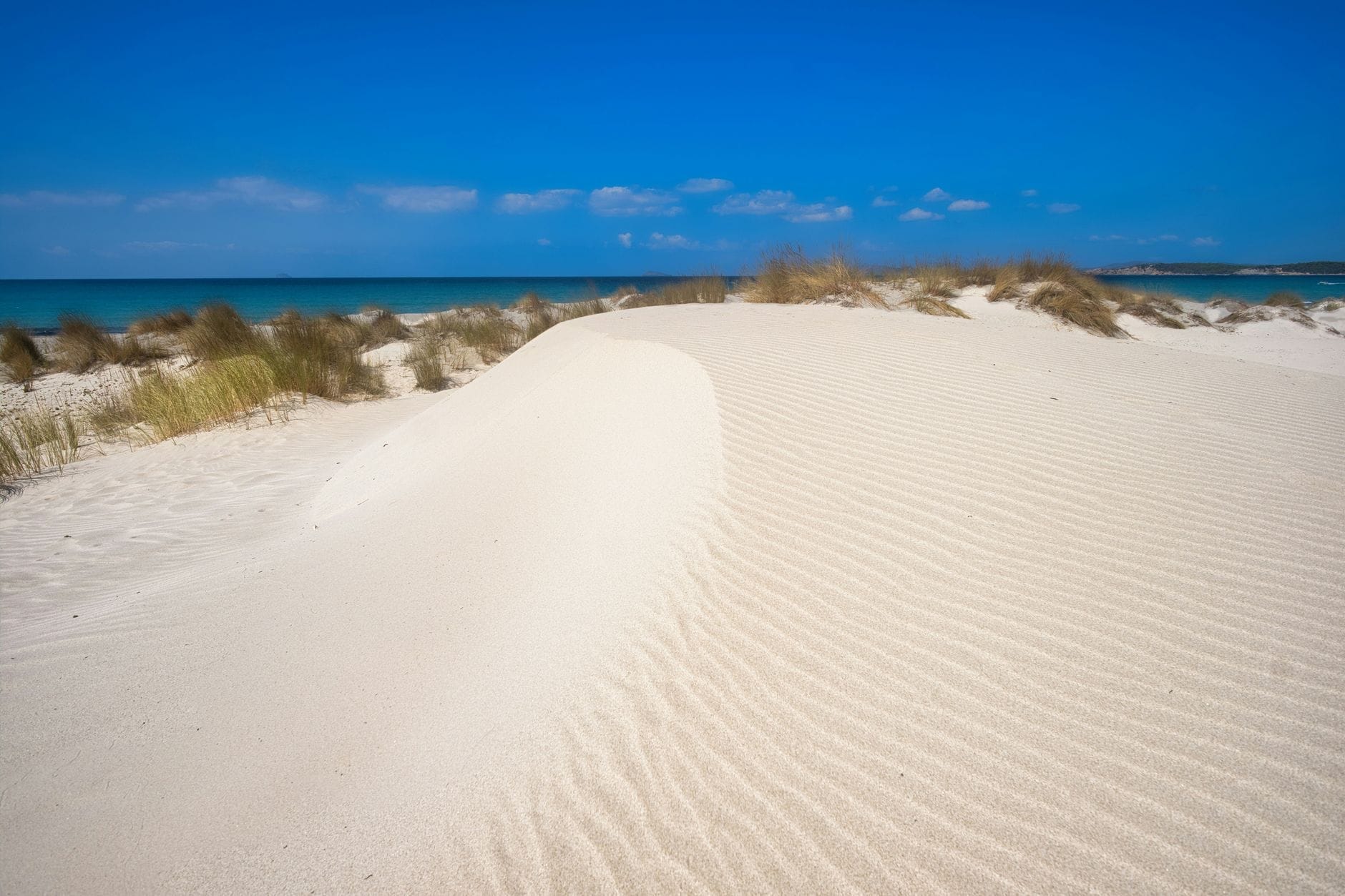
Capo Comino is a low headland and beach system on Sardinia's central-eastern coast, administered by the municipality of Siniscola in the province of Nuoro. The full stretch, which includes the adjacent S'Ena 'e Sa Chitta shoreline, runs roughly 3 to 5 kilometres, including adjacent stretches, and is up to about 100 metres wide at its broadest central section. The defining feature is not the sea, which is calm and exceptionally shallow, but the dunes: broad, pale ridges of fine quartz sand that rise behind the waterline and are stabilised in parts by low coastal scrub. The formal Italian name is Spiaggia di Capo Comino, and the area is listed directly on both Sardegna Turismo and the national Italia.it portal.
This is public land with free access at all hours. There are no gates, no entry fees, and no formal visiting hours. What changes by season is the level of service around it: parking areas, beach bars, and hire kiosks operate in summer, mostly from June through September, with hours and prices set locally rather than by any official tariff.
💡 Local tip
Arrive before 9 a.m. in July and August to claim a spot near the water before the central car park fills. The beach is wide enough that crowding is rarely oppressive, but the shade under the dune vegetation disappears fast once the sun climbs.
The Landscape: Dunes, Sand, and Shallow Sea
The sand at Capo Comino is almost white, fine-grained, and hot underfoot from mid-morning onward in summer. It compacts toward the waterline into a firm, walkable surface. The dunes behind the beach are the main ecological feature: not dramatic cliff-faces, but long, rolling ridges patched with sea rocket, sea holly, and low juniper that hold the sand in place and give the shore its relatively preserved character compared to more heavily developed stretches of the Sardinian coast.
The sea here is shallow for a long way out, which is partly what made this stretch attractive to the film industry and which makes it well suited to young children and non-swimmers who want to wade. The water runs green and then blue-green as depth increases, with visibility that is typically good in the absence of onshore wind. The seabed is sandy without significant rock or posidonia meadow close to the shoreline, which means entry is easy and barefoot-friendly.
Wind is a real factor on this coast. The Maestrale, the northwest wind that sweeps much of Sardinia, reaches the eastern coast in modified form, but local afternoon breezes can pick up noticeably from early afternoon. This cools the beach pleasantly in summer but can drive sand into food, eyes, and camera lenses on more exposed days. Mornings are consistently calmer.
Tickets & tours
Hand-picked options from our booking partner. Prices are indicative; availability and final rates are confirmed when you complete your booking.
Dolphin watching RIB tour to Capo Figari from Olbia
From 72 €Instant confirmationFree cancellationVineyard Guided Tour and 7 Wine Tasting in Palau
From 84 €Instant confirmationFree cancellationFull-Day Sailboat Tour in La Maddalena Archipelago from Cannigione
From 112 €Instant confirmationFree cancellationHiking excursion to the Devil's Saddle
From 35 €Instant confirmationFree cancellation
History Below the Surface: Film Sets and Shipwrecks
The beach carries an unlikely cultural footnote. In 1974, director Lina Wertmüller filmed Travolti da un insolito destino nell'azzurro mare d'agosto here, a film that went on to become one of the more discussed Italian political comedies of its decade. Guy Ritchie's 2002 remake Swept Away, starring Madonna, used the same location. Neither film brought lasting infrastructure to the area, but the connection is noted in regional listings.
Offshore, the underwater record is more substantial. The seabed near Capo Comino contains the remains of a Roman ship from the age of Emperor Nero, making this one of several sites along the Sardinian east coast where ancient maritime history is literally submerged beneath the swimming water. More recent wrecks include a ship from 1942 often referred to locally as Comandante Bafile, and a French fighter aircraft that crashed here in 1963. Dive operators from Cala Gonone and the surrounding area offer access to some of these sites.
For more context on the wider east coast marine environment, the guide to Cala Gonone covers the area's diving and boat-trip infrastructure in detail.
How the Beach Changes Through the Day
Early morning at Capo Comino is close to silent. Between 7 and 9 a.m., the light comes in low from the southeast, turning the shallow water amber near the shore and pale blue further out. The sand is cool, the car park is largely empty, and the only sounds are the small waves and occasional bird calls from the scrub behind the dunes. This window is the best for photography, for walking the full length of the beach, and for anyone who finds the summer crowds of Italian beaches tiring.
From 10 a.m. onward in peak season, Italian families and campers from the nearby sites begin to arrive steadily. By midday the central section, closest to the main access point, is well occupied. The flanks of the beach, particularly toward the southern end near the headland itself, remain quieter because the walk from the car park is longer. The water temperature in July and August typically reaches 24 to 26 degrees Celsius, which draws swimmers and snorkellers in numbers.
Late afternoon brings a shift. Some families leave around 5 p.m. The light softens, the breeze often settles, and the remaining visitors tend to be adults. This is the second-best window for photographs: the dunes cast long shadows eastward and the water picks up a warmer tone. Sunset itself is not visible from the beach because the shoreline faces east and the sun sets behind the land, but the afterglow on the water is worth staying for.
ℹ️ Good to know
Capo Comino faces east. Sunrise over the sea is spectacular from the beach in clear weather. Sunset, however, happens behind you, to the west. Plan accordingly if light is your primary interest.
Getting There and Moving Around
A car is effectively required to reach Capo Comino. The beach sits roughly 15 kilometres east-southeast of Siniscola town along the SS125 Orientale Sarda and the coastal access road, with a signed turn-off toward the coast. The road to the beach is paved but narrow in sections, and in high summer it sees significant two-way traffic. There is a main car park near the central beach access point, which is paid and seasonal. Additional roadside parking exists but fills quickly in July and August.
From Posada, a smaller coastal town to the north, the approach follows signs toward La Caletta and then continues south along the coast road to Capo Comino. Neither Siniscola nor Posada is well connected to the beach by public bus, and no regular shuttle service is documented. Visitors arriving without a car should inquire locally about taxi availability from Siniscola.
Renting a car for this stretch of coast is strongly advisable. The guide to getting around Sardinia covers car hire logistics, road conditions on the SS125, and what to expect on eastern Sardinian driving routes.
When to Visit and What to Expect by Season
The beach is accessible year-round, but the experience varies sharply by season. In July and August, the central stretch is busy, the car park fills by 10 a.m., and beach bars are operational. The sea is warm and the weather near-certain. These are also the most expensive weeks for any accommodation in the surrounding area.
May, June, and September offer a more open version of the same beach. Air temperatures along this coast in May and June range from the high teens to mid-twenties Celsius, which is comfortable for walking and light swimming. The sea warms more slowly than the air, so early-season swimmers should expect water temperatures closer to 18 to 20 degrees in May. By September, the sea retains its summer warmth and crowds thin significantly after the Italian school year begins in mid-September.
October through April, the beach has almost no services and the dunes are largely undisturbed. Winter visits are possible on calm days and the landscape has a different quality: greys and greens instead of bleached white, with the sea often darker and more textured. These months see the highest rainfall on Sardinia's east coast and strong wind events are more frequent.
For a fuller picture of seasonal patterns across the island, the best time to visit Sardinia guide breaks down weather, crowds, and pricing month by month.
Photography, Wildlife, and the Dune Environment
The dune system at Capo Comino is ecologically fragile. The low vegetation that stabilises the sand, including sea bindweed, marram grass, and various halophytic shrubs, is easily damaged by foot traffic. Walking on the dunes themselves, particularly the upper ridges, erodes the plant cover and accelerates sand movement. Most visitors stay on the beach and the designated paths, which is the correct approach.
For photographers, the best angles are from the waterline looking back toward the dune crests, particularly in the first and last two hours of daylight. A wide-angle lens captures the full scale of the sand expanse. The water's colour gradient from pale green to deep blue is clearest at mid-morning when the sun is high enough to illuminate the seabed but before the midday haze reduces contrast. Polarising filters improve results significantly in these conditions.
Bird activity in the dune scrub is most noticeable in spring, when migrating species pass through the coastal corridor. The wetland areas and lagoons nearby attract wading birds, and Capo Comino's position on the east coast makes it a secondary stopover point. This is not a designated birdwatching site with hides or formal management, but patient observers with binoculars will find the scrub zone productive.
Practical Notes for Visitors
There are no toilets on the beach outside the seasonal facilities attached to beach bars, which typically operate from June through early September. Outside those months, plan accordingly. Shade is extremely limited on the beach itself; the dune vegetation provides some shelter but requires walking off the main sand. A beach umbrella and a generous sunscreen are practical necessities in summer, not optional extras.
The beach has no wheelchair-specific infrastructure confirmed in any current public documentation. The terrain from the car park to the water is flat and sandy, which is navigable in dry conditions, but no official beach-access equipment such as mats or adapted facilities is documented. Visitors with specific accessibility requirements should contact the Siniscola municipality or local beach operators directly before planning a visit.
Water and food should be brought from Siniscola or Posada if visiting outside the main summer season. In-season, the beach bars sell drinks, snacks, and basic food. The nearest full supermarkets and pharmacies are in Siniscola town.
Insider Tips
- The southern end of the beach, nearest the actual Capo Comino headland, requires a longer walk from the car park and stays noticeably quieter even on busy August weekends. The extra 10-minute walk rewards you with more space and undisturbed sand.
- The offshore wrecks, including the 1942 Comandante Bafile, are accessible to scuba divers through operators based further south. Confirm access and conditions with dive centres in Cala Gonone before making plans around this specifically.
- Bring cash for the car park. The seasonal parking attendants on this stretch of coast typically do not accept card payments, and there are no ATMs near the beach.
- The beach faces directly east, which makes it ideal for watching sunrise from the waterline. In June and July, sunrise is before 6 a.m. and the beach is empty at that hour.
- Wind from the northwest can arrive suddenly on this coast in summer, typically from early to mid-afternoon. If you plan to snorkel, mornings are far more reliable for calm water and good visibility.
Who Is Capo Comino Dunes & Beach For?
- Families with young children, thanks to the exceptionally shallow and sandy seabed close to shore
- Beach walkers and photographers who want scale, space, and a dune backdrop without a long hike
- Scuba divers and snorkellers interested in historic underwater sites, particularly the offshore wrecks
- Travellers visiting in shoulder season (May, June, September) who want a beach that functions without the high-season pressure of more famous Sardinian coasts
- Anyone driving the SS125 Orientale Sarda as a day stop that combines a swim with genuine landscape interest
Nearby Attractions
Other things to see while in Ogliastra:
- Grotte Su Marmuri (Ulassai)
Grotte Su Marmuri is a vast living limestone cave carved into the rocky highlands above the village of Ulassai in Ogliastra, eastern Sardinia. With chambers reaching up to around 50 metres high, active stalactite formations, and a constant interior temperature of 10°C, it offers one of the most impressive underground experiences on the island. Entry is by guided tour only, lasting approximately 1.5 hours.
- Parco Nazionale del Golfo di Orosei e del Gennargentu
Covering roughly 74,000 hectares of rugged mountain, gorge, and coastal wilderness in central-eastern Sardinia, the area commonly referred to as Gennargentu National Park is the island's most ambitious proposed protected landscape. From the island's highest peak to sheer sea cliffs dropping into the Golfo di Orosei, this is where Sardinia's raw geography is on full display.
- Punta La Marmora
At 1,834 metres, Punta La Marmora is the highest point in Sardinia and the crown of the Gennargentu massif. The hike rewards those who make the effort with panoramic views across the island's rugged interior, a genuine sense of remoteness, and a perspective on Sardinia that most visitors never see.
- Rocce Rosse di Arbatax
The Rocce Rosse di Arbatax are a formation of deep vermillion porphyry cliffs rising up to about 15 metres from the Tyrrhenian Sea on Sardinia's Ogliastra coast. Free to visit year-round, they sit steps from the port and the Trenino Verde station, making them one of the more accessible natural landmarks on the island's eastern shore.