Berghain / Panorama Bar: Berlin's Most Legendary Techno Club, Explained
Housed in a former DDR-era power plant near Ostbahnhof, Berghain / Panorama Bar is the nucleus of Berlin's techno scene and one of the most discussed nightclubs on earth. This guide covers what the experience is actually like, how the door works, and who should probably skip it.
Quick Facts
- Location
- Am Wriezener Bahnhof, 10243 Berlin (Friedrichshain/Kreuzberg border)
- Getting There
- S-Bahn: Ostbahnhof (S3, S5, S7, S9) — approx. 10-minute walk
- Time Needed
- 4–12+ hours; many visitors stay well into the following day
- Cost
- Cover charge at the door; amount varies by event — check berghain.berlin for current program
- Best for
- Serious techno and house music fans, night owls, architecture enthusiasts
- Official website
- www.berghain.berlin/en
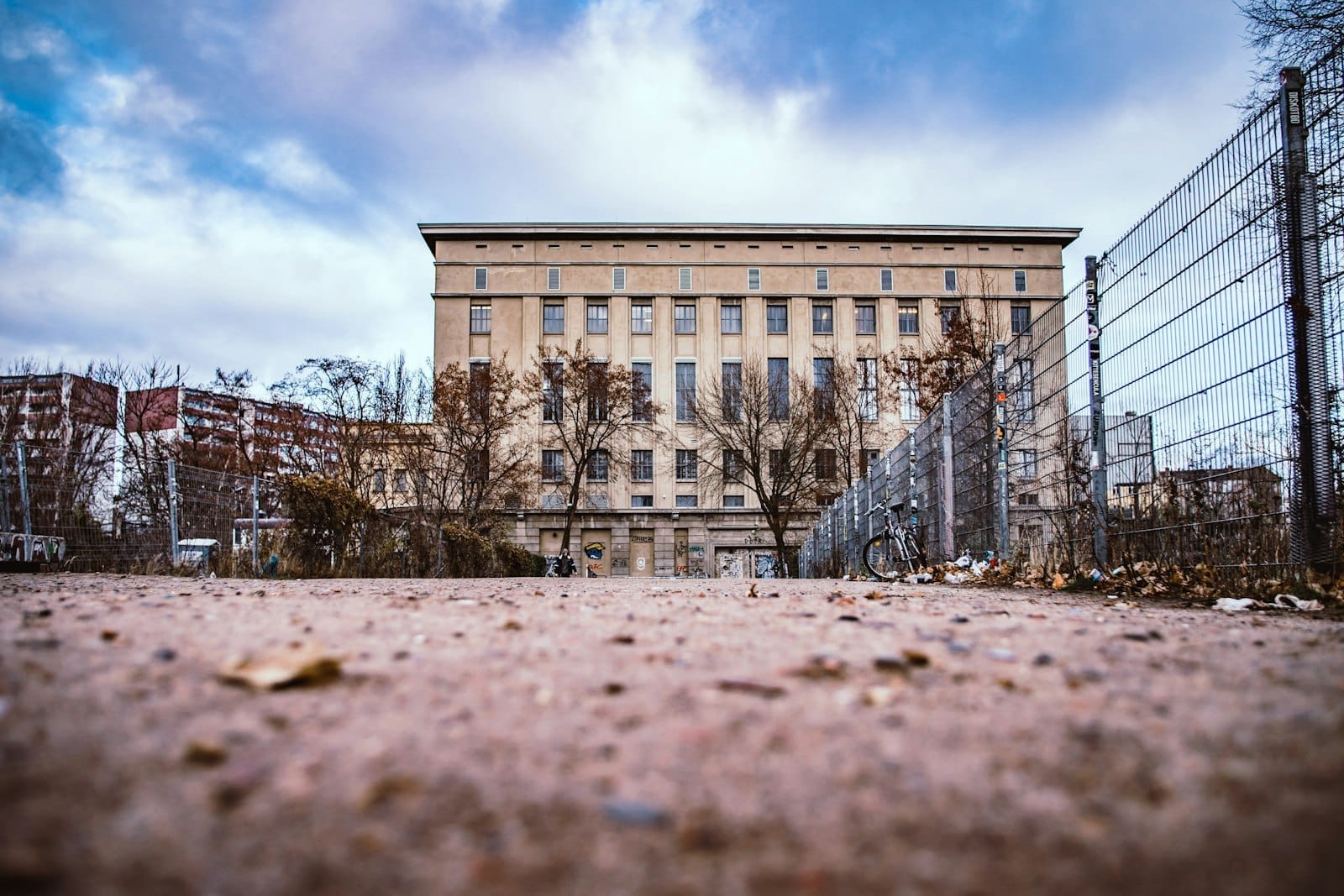
What Berghain Actually Is
Berghain / Panorama Bar is a nightclub complex occupying a decommissioned former thermal power plant at Am Wriezener Bahnhof in Friedrichshain, on the eastern edge of Berlin near the Friedrichshain-Kreuzberg border. It opened in 2004, founded by Norbert Thormann and Michael Teufele as the spiritual successor to the club Ostgut, which had operated nearby from 1998 until its closure in 2003. The name merges the two districts it straddles: Friedrichshain and Kreuzberg.
The complex holds roughly 1,500 people across multiple spaces. The main Berghain room on the ground floor is given over to techno, and Panorama Bar one floor above programs house music. Additional spaces including Säule and a seasonal outdoor garden round out the venue. German courts ruled in 2016 that Berghain qualifies as a cultural institution under tax law, which says something about its standing in German public life beyond mere entertainment.
For context on Berlin's broader nightlife landscape and how Berghain fits into it, the Berlin nightlife guide covers the full spectrum from early evening bars to underground club culture across the city.
The Building: Industrial Architecture Worth Noticing
From the outside, Berghain is deliberately unprepossessing: a vast concrete block, stripped of signage, sitting at the end of a wide gravel approach path beside rail infrastructure. The queue, when you join it, typically forms along this path. At night, the bass is audible from the street, but the building gives little away. There are no decorative lights, no visible branding on the facade. This opacity is intentional and is part of the club's identity.
Inside, the scale of the former power plant becomes apparent. The Berghain main room has a ceiling height that dwarfs most club spaces, with industrial fixtures still in place and a sound system engineered by Funktion-One that was installed as a defining design element rather than an afterthought. Natural light filters into Panorama Bar through large windows during daytime hours, a feature that is genuinely unusual in club architecture and creates an experience quite different from a typical dark room.
ℹ️ Good to know
The building's DDR-era concrete structure was not renovated into a polished venue. The exposed pipes, unfinished surfaces, and industrial scale are the aesthetic. If you're expecting a conventional nightclub interior, the building itself will be a surprise.
Tickets & tours
Hand-picked options from our booking partner. Prices are indicative; availability and final rates are confirmed when you complete your booking.
Skip-the-line ticket for Gemaldegalerie Berlin
From 14 €Instant confirmationPanoramapunkt Berlin ticket with skip-the-line option
From 9 €Instant confirmation1-Hour Berlin Spree River Cruise with On-Board Guide
From 21 €Instant confirmationFree cancellationSamurai Experience Berlin skip-the-line ticket
From 15 €Instant confirmation
How the Hours and Schedule Work
Berghain does not operate on fixed daily hours. Events are listed individually on the official program page at berghain.berlin, and the primary regular event is Klubnacht, which typically begins on Friday or Saturday night around 22:00–23:59 and continues through Sunday. The club does not announce an official closing time for these events; sessions can and regularly do run until Monday morning. If you are planning to visit, check the program in advance for the specific event, start time, and whether Panorama Bar is running concurrently or as a separate booking.
There are also special events, live performances, and gallery openings at the venue, some of which take place outside the weekend club format. The Halle am Berghain space hosts concerts and art exhibitions under different conditions than the club nights, so the venue is not exclusively a weekend nightlife destination.
⚠️ What to skip
Do not assume the club is open on a given weekend without checking berghain.berlin. Events are sometimes cancelled or rescheduled, and some weekends see different formats than the standard Klubnacht.
The Door: What to Know Before You Queue
The door selection process at Berghain is, by now, one of the most discussed aspects of any nightclub in the world. The club employs a group of door staff led by the well-known selector Sven Marquardt, and entry is not guaranteed regardless of how long you wait. Rejection is common and is not accompanied by explanation. This is the single fact most likely to affect a first-time visitor's experience, and it is worth taking seriously rather than dismissing as myth.
What is consistently observed: arriving in a very large group significantly reduces your chances. Engaging door staff in conversation, explaining yourself, or asking why you were rejected does not help. Dressing in a way that signals you are treating the visit as a spectator experience rather than a genuine participation in the club culture is widely cited as a factor. None of this is codified into rules by the club, and the door staff exercise genuine discretion. Berghain is not the right destination if the prospect of rejection at the door would significantly damage your evening.
Timing matters in a practical sense. Arriving in the very early hours of Saturday or Sunday morning, after most of the initial crowd has entered, can sometimes work in a visitor's favor, though this is not a reliable formula. The queue itself can be long, cold in winter, and uncomfortable. Wear appropriate clothing for standing outside in Berlin's weather.
💡 Local tip
Go alone or in a pair. Keep conversation between your group quiet while queuing. Dress practically rather than to impress. These are the most consistent observations from people who have made it through the door repeatedly.
Inside: What the Experience Is Like
The Berghain main room operates with no natural light and a strictly enforced no-photography policy. Phones must be covered with stickers provided at the cloakroom. This is not performative: the no-photography rule is consistently enforced and is central to what makes the space function the way it does. People behave differently when they know the room will not appear on social media, and that behavioral shift is the actual product Berghain is selling.
The sound system is justifiably renowned. Berghain's techno programming operates at high volume, with a mix weighted toward bass frequencies that you feel physically. Resident DJs including Ostgut Ton label artists program long sets, often four to eight hours, and the club culture is built around immersive, continuous listening rather than set-to-set variety. Panorama Bar upstairs is audibly and atmospherically different: the house and disco-influenced programming, combined with the daylight entering through the upper-level windows during morning hours, creates a genuinely distinct experience from the main floor.
The outdoor garden, open seasonally, provides a rare moment of ambient noise, natural light, and the particular disorientation of standing in Berlin daylight after hours inside. The venue has a bar, and people move between spaces freely once inside. The crowd at Berghain is international and draws serious music listeners from across Europe and further afield, alongside Berlin regulars.
Berghain is located in Friedrichshain, one of Berlin's most historically layered eastern districts. The surrounding area near Ostbahnhof includes remnants of post-reunification industrial redevelopment that give the neighborhood its specific atmosphere.
Getting There and Practical Details
The nearest S-Bahn station is Ostbahnhof, served by the S3, S5, S7, and S9 lines. From the station, the walk to the club takes a short time. Berlin's U-Bahn does not run to this specific location, but the S-Bahn runs through the night on weekends, making Ostbahnhof accessible at the hours you would actually be arriving or leaving. Taxi and rideshare pickup is possible on the street outside, though late-night demand can mean longer waits.
For navigating Berlin's broader public transport system, the getting around Berlin guide covers BVG ticketing, night bus and S-Bahn schedules, and how to use the network efficiently.
Admission pricing is not published as a fixed figure and varies by event. Expect a cover charge paid at the door in cash; it is advisable to have euros on hand, as card payment at the door is not guaranteed. Inside, the bar accepts card or cash depending on the current setup. The cloakroom has a fee. Budget for the evening accordingly.
Accessibility at the venue is limited by the industrial building's multi-level layout and large stairways. The official website does not detail step-free access, lifts, or accessible toilet provision. Visitors with mobility requirements should contact the club directly before planning a visit.
If you are building a broader Berlin itinerary around the nightlife and eastern districts, the Berlin on a budget guide has practical notes on managing costs across transport, entry fees, and food throughout a longer stay.
Who Should Skip Berghain
Berghain is not a general Berlin sightseeing attraction, and treating it as one is likely to result in a bad experience for you and a rejected entry. If you have no prior interest in techno or house music, if you want to document your visit on social media, or if you are visiting Berlin primarily for cultural landmarks, there are far better uses of your limited time. The East Side Gallery, the Topography of Terror, and Museum Island all offer significant experiences without requiring you to stand in a queue at 3am in uncertain weather with uncertain odds of getting in.
Travelers who want to see more of Friedrichshain's cultural and historical layers during daytime hours should consider the East Side Gallery and the architectural length of Karl-Marx-Allee, both accessible without queuing or cover charges.
Berghain is also genuinely unsuitable for light sleepers who want to feel rested the next day, travelers with early morning commitments, or anyone who finds sustained high-volume sound physically uncomfortable. The club's value proposition is specific: long, continuous, high-quality techno programming in an extraordinary industrial space, experienced with a self-selecting crowd that has cleared the door process. If that sounds compelling, it may well be worth your night. If it sounds like work, it is.
Insider Tips
- Check the official program page at berghain.berlin before your trip, not just on the day. Special events sometimes replace the standard Klubnacht format, and the lineup affects how the crowd and atmosphere will feel.
- The cloakroom stickers for your phone camera are non-negotiable and are applied at entry. If you have a phone case with a built-in camera cover, it can save some fumbling. More importantly: accept the no-photography norm genuinely rather than as a rule to work around. People notice.
- If you are rejected at the door, leave without comment or argument and move on. The same door staff will not change their decision. The evening need not end: Berghain's neighbors in the area around Ostbahnhof include other clubs and bars that may be running on the same night.
- Panorama Bar is distinct enough from the main room to be worth experiencing on its own terms. If you are less interested in hard techno and more drawn to house music and the unusual combination of a club space with natural daylight, the upper floor may be the more memorable part of the visit.
- Arriving around 6am to 8am on a Sunday, when the initial wave of the night has settled and some people have left, can mean a shorter queue and a particular atmosphere inside: the outdoor garden and the light in Panorama Bar at that hour are unlike anything in conventional nightlife.
Who Is Berghain / Panorama Bar For?
- Techno and house music enthusiasts who follow the genre seriously
- Night-to-morning endurance dancers comfortable with long, immersive sets
- Architecture and industrial design observers interested in adaptive reuse of DDR-era structures
- Travelers specifically exploring Berlin's post-reunification cultural identity
- Solo travelers or small groups comfortable with the social dynamics of the door process
Nearby Attractions
Other things to see while in Friedrichshain:
- East Side Gallery
The East Side Gallery is a 1,316-metre stretch of the former Berlin Wall painted by 118 artists from 21 countries in 1990. Free to visit at any hour, this protected memorial in Friedrichshain is the longest surviving section of the Wall and one of the most significant open-air art sites in the world.
- Karl-Marx-Allee
Karl-Marx-Allee is Karl-Marx-Allee is a 2.3-kilometre stretch of monumental East German architecture running through Friedrichshain and Mitte, built between 1949 and 1961 as a showcase of socialist urbanism. as a showcase of socialist urbanism. Free to walk at any hour, it offers one of the most intact and visually striking examples of Stalinist classicism outside Russia, with wide sidewalks, ornate residential towers, and landmarks like Kino International still operating today.
- Oberbaumbrücke
Oberbaumbrücke is a double-deck brick bridge over the River Spree, connecting Friedrichshain and Kreuzberg since 1896. Its neo-Gothic towers, resident U-Bahn line, and position on the former Berlin Wall border make it one of the city's most historically loaded and visually striking crossings. Entry is free, and it's open around the clock.
- RAW-Gelände
RAW-Gelände is a sprawling former railway repair works in Friedrichshain that has been reinvented as one of Berlin's most charismatic open cultural complexes. Across more than 70,000 square metres of semi-derelict industrial buildings, the site hosts nightclubs, street art, beach bars, skate facilities, and weekend markets. Entry to the outdoor grounds is free, and the gates stay open around the clock.