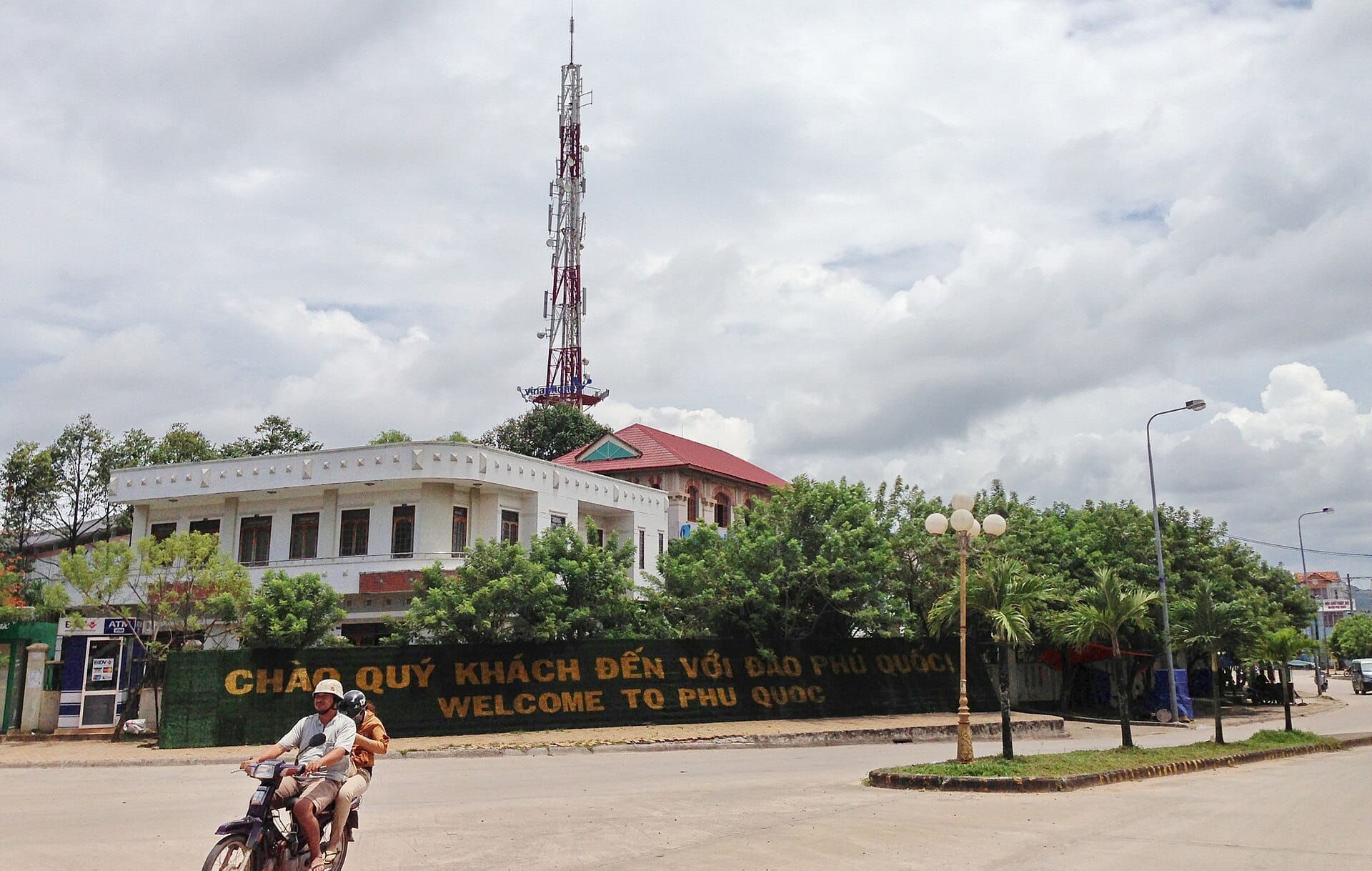
Duong Dong is the beating heart of Phu Quoc Island, home to its busiest markets, most concentrated restaurant scene, and the majority of the island's practical infrastructure. It sits on the central-west coast, straddling the Duong Dong River, and serves as the launchpad for almost every corner of the island.
Duong Dong is Phu Quoc's main town and its most densely layered neighborhood: part fishing community, part tourist hub, part local market district. It's where the island's daily life is most visible, and where the gap between Vietnamese Phu Quoc and resort Phu Quoc is at its narrowest.
Orientation
Duong Dong occupies the central-west coast of Phu Quoc Island, roughly midway between the northern wilderness and the southern resort clusters. The Duong Dong River bisects the town, with the older fishing quarter and the night market sitting at its mouth where it meets the sea. Tran Hung Dao Street, the island's main commercial artery, runs north-south through the center and is the axis around which most of the town's activity organizes itself.
To the north, Duong Dong gives way to quieter residential lanes and eventually to the forested edges of Phu Quoc National Park. To the south, Tran Hung Dao Street stretches down toward the Long Beach strip, where the resort zone begins in earnest. The Duong Dong Market and the night market cluster near the river mouth on the northern bank, while the newer commercial development, hotels, and tour operator offices spread east along 30 Thang 4 Street.
Understanding where Duong Dong sits relative to the rest of the island matters for planning. It's within easy reach of Long Beach to the south, the Phu Quoc Night Market right at its center, and the remote northern beaches if you're willing to rent a scooter. Phu Quoc International Airport is roughly 10 kilometers to the southeast, making Duong Dong the first substantial town most visitors pass through on arrival.
Character & Atmosphere
Duong Dong operates on a rhythm that is distinctly Vietnamese before it is distinctly tourist. Early mornings around the Duong Dong Market are the clearest evidence of this: the lanes around the covered market fill before 6 a.m. with vendors selling live seafood, piles of morning glory, fresh herbs, and the thick, amber fish sauce that Phu Quoc is famous for producing. The smell of fermented fish and charcoal smoke mixes with sea air. Motorbikes outnumber pedestrians, and the language you hear is almost entirely Vietnamese.
By mid-morning, the market thins and the town shifts into its quieter daily mode. The streets along Tran Hung Dao south of the river feel more international: tour operators, pharmacies, ATMs, convenience stores, and guesthouses alternate with local noodle shops. The light in the late afternoon turns golden and flat over the river mouth, and the Dinh Cau Temple headland catches it particularly well. This is when locals gather along the waterfront and the temple's surrounding area becomes a place for quiet sitting rather than active commerce.
After dark, Duong Dong changes again. The night market along Bach Dang Street opens around 5 p.m. and draws a large mixed crowd of tourists and Vietnamese families. Vendors set up grills, seafood tanks appear on the pavement, and the whole strip becomes dense with foot traffic by 7 p.m. Further back from the market, the streets near the river get noticeably quieter and darker. The contrast between the lit-up market zone and the lanes just a few blocks inland is sharp enough that first-time visitors sometimes find it disorienting.
ℹ️ Good to know
Duong Dong is genuinely a working town first. The market area, the fishing pier, and the temple district are not staged for visitors. This is one of the few places on Phu Quoc where you get a clear sense of what the island looked like before large-scale tourism arrived.
What to See & Do
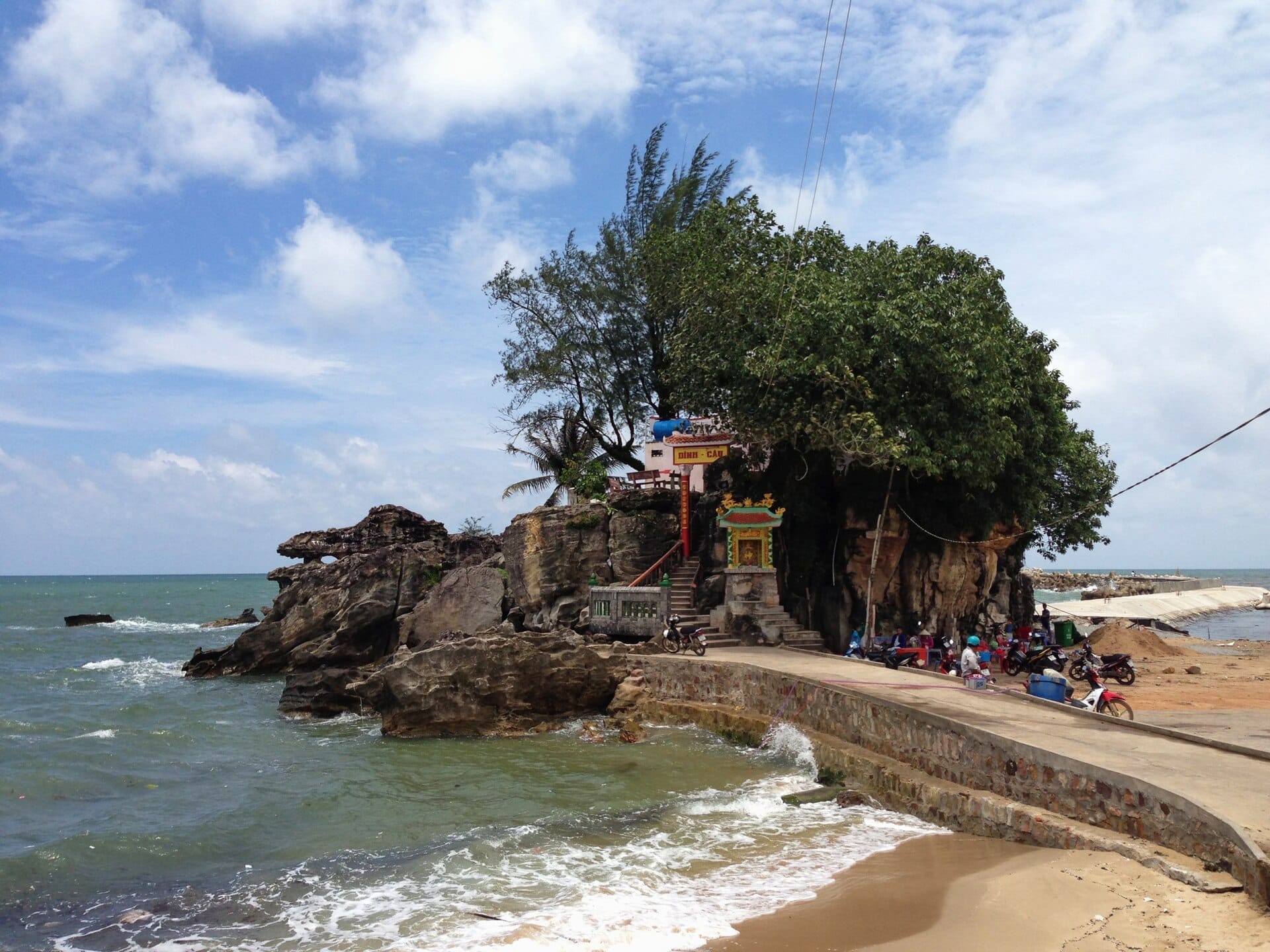
The Dinh Cau Temple is the neighborhood's most distinctive landmark, perched on a rocky promontory at the mouth of the Duong Dong River. Built in the early 20th century, the temple honors the goddess Thien Hau and serves as a spiritual anchor for the island's fishing community. Visiting in the late afternoon, when fishing boats return and the light drops low over the water, gives context that a midday visit simply doesn't. The small surrounding park fills with locals, and the stone steps down to the waterfront offer one of the better unobstructed views of the river and the South China Sea beyond.
The Duong Dong Market itself is worth at least one early-morning visit. The covered section sells produce, dried goods, and fish sauce in bulk. The outer lanes spill over with fresh seafood laid on ice, and the small food stalls on the eastern perimeter serve bun quay, a local Phu Quoc noodle dish where soup and noodles are kept separate and combined at the table. This is one of the cheapest and most authentic eating experiences in the town.
For context on the island's difficult history, the Phu Quoc Prison, also called Coconut Tree Prison, is located in the An Thoi area to the south but is frequently visited as a day trip from Duong Dong. It documents the conditions of Vietnamese prisoners of war held here during the American War period and is one of the most sobering sites on the island. Closer to the town center, the fishing pier off Bach Dang provides a quieter vantage point for watching the working life of the port, particularly in the early morning when boats are unloading.
Dinh Cau Temple: best visited at dusk when fishing boats return
Duong Dong Market: arrive before 7 a.m. for the most active trading
Waterfront walking path along Bach Dang Street near the river mouth
Fish sauce factory tours: several producers in and around Duong Dong offer free or low-cost walkthroughs
Day trips to Long Beach, Ong Lang, and northern beaches, all accessible by scooter from here
💡 Local tip
Rent a scooter from one of the guesthouses along Tran Hung Dao Street and use Duong Dong as your base for island-wide exploration. Most of Phu Quoc's major beaches and attractions are within 30-45 minutes by road.
Eating & Drinking
Duong Dong has the most varied food scene on the island, covering everything from market stalls charging under 30,000 VND for a bowl of noodles to mid-range seafood restaurants where a full table spread runs 300,000 to 600,000 VND per person. The concentration around the night market and Tran Hung Dao Street means most visitors eat well without straying far from their accommodation.
The Phu Quoc Night Market on Bach Dang Street is the most visible eating destination and works on a simple model: choose your seafood from the display tanks, agree on a price, and the vendor cooks it to order. Grilled scallops with spring onion and peanut oil, whole crab, and skewers of fresh-caught fish are the standard lineup. Prices are negotiable and the quality is generally reliable, though the most tourist-facing stalls tend to overcharge by default. Walking the full length of the market before choosing where to sit is worth the extra few minutes.
Away from the market, the streets running east from Tran Hung Dao toward the older residential lanes offer more consistent local pricing. Small pho shops and com tam (broken rice) stalls open from early morning and serve rice-based dishes through lunchtime. Several Vietnamese-style coffee shops line the river road, serving the thick drip coffee that is common across southern Vietnam, usually over ice. In the evenings, some of the better sit-down seafood restaurants on and around Tran Hung Dao offer set menus that include steamed fish, clams, and Phu Quoc pepper crab.
The bar scene in Duong Dong is modest. A handful of beach bars operate near the waterfront, and there are a few Western-facing places along Tran Hung Dao that stay open past midnight. Duong Dong is not a nightlife destination in the way that beach resort strips sometimes are. Most visitors, local and foreign alike, wrap up the evening at the night market and move on early.
Getting There & Around
Phu Quoc International Airport is approximately 10 kilometers southeast of the Duong Dong town center. Taxis and ride-hailing apps cover the route in 15 to 20 minutes depending on traffic. Fixed-rate airport taxis are readily available at arrivals, and the fare to Duong Dong is standardized. Grab operates on Phu Quoc and tends to be slightly cheaper than metered taxis for this route.
Within Duong Dong, most points of interest are walkable. The distance from the Dinh Cau Temple at the river mouth to the southern end of the main market is under 10 minutes on foot. The night market on Bach Dang Street is a 3-minute walk from the temple. For longer journeys, scooter rental is the practical choice. Most guesthouses arrange this for 100,000 to 150,000 VND per day. For those traveling south to An Thoi, scooters keep the journey under 30 minutes and give flexibility that shared taxis don't.
Travelers heading to the far north of the island, toward Ham Ninh or the national park trails, should plan for 45 minutes to an hour by scooter on roads that narrow significantly past the town limits. The guide to getting around Phu Quoc covers the full transport picture including car hire, taxis, and the limited public bus options that connect Duong Dong to other parts of the island.
⚠️ What to skip
The roads in and around Duong Dong become congested during peak evening hours, particularly along Tran Hung Dao and the lanes approaching the night market. If you're arriving by taxi for dinner, expect delays between 6 and 8 p.m. during high season (November to April).
Where to Stay
Duong Dong has the widest range of accommodation on Phu Quoc, from budget guesthouses on residential lanes to mid-range hotels along Tran Hung Dao. Travelers who prioritize access to food, markets, and island-wide transport over beachfront proximity will find it suits them well. The trade-off is clear: you're a 10-15 minute scooter ride from the nearest swimmable beach at Long Beach, rather than stepping out of a resort directly onto sand. The full guide to where to stay in Phu Quoc covers the differences between Duong Dong, Long Beach, Ong Lang, and the southern resort zones.
The blocks between Tran Hung Dao and the river, roughly between the night market and the market district, offer the most central location with easy walking access to both. This area is noisier at night, particularly on weekends when the market runs late. Travelers who are light sleepers should look for accommodation on the quieter lanes one or two blocks east of the main road, where traffic and market noise drop noticeably.
For a quieter stay with still-central access, the residential streets north of the market district and south of the temple area offer guesthouses and small hotels that balance proximity to the town's activity with enough distance to avoid the worst of the noise. These same streets give quick access to the waterfront walking path and the Dinh Cau Temple area. Travelers interested in the beach-resort end of the island should compare options against staying directly on Ong Lang or at one of the Long Beach properties, which eliminate the short commute to the water entirely.
Day Trips and Wider Connections
Duong Dong's central position makes it the most practical base for exploring the whole island. To the south, the Hon Thom Cable Car and the VinWonders Phu Quoc theme park are accessible in about 40 minutes by road. The cable car departs from An Thoi and crosses to Hon Thom Island, one of the longer gondola crossings in the world by length.
To the north and inland, the Phu Quoc National Park covers roughly half the island and contains trails, streams, and forest that feel genuinely remote despite their proximity to the main town. The entry points closest to Duong Dong are reachable by scooter in under 20 minutes. Island-hopping tours that depart from the An Thoi archipelago can usually be booked directly from guesthouses and tour operators in Duong Dong. For a detailed overview of what the beaches around the island offer, the Phu Quoc beaches guide covers conditions, access, and what each zone suits.
TL;DR
Duong Dong is Phu Quoc's main town: the most practical base for island-wide exploration, with the best access to markets, food, and daily transport.
Best suited to travelers who want a mix of local atmosphere and convenience, rather than pure beachfront isolation.
The night market, Dinh Cau Temple, and Duong Dong Market are the neighborhood's three anchor experiences, and each works best at a specific time of day.
Noise and congestion are real drawbacks in the most central blocks, particularly in high season. Accommodation choices within the neighborhood make a meaningful difference.
Not ideal for travelers whose priority is waking up next to the sea: Long Beach and Ong Lang are better choices for resort-style beach access.
Phu Quoc has two distinct seasons: a dry season from November to April, which offers the most reliable conditions for beaches and water activities, and a rainy season from May to October, which brings fewer crowds and lower prices but less predictable weather and sometimes rough seas.
Phu Quoc has no island-wide public bus network. Getting around means choosing between motorbike rental, Grab, metered taxis, VinBus on specific routes, or hiring a private driver. This guide explains each option with honest advice on what works where.
Phu Quoc has beaches spread around the island with very different characters. Sao Beach delivers the most photogenic white sand. Long Beach is the most convenient. Ong Lang offers rocky coves and a quieter atmosphere. This guide compares each main beach to help you choose based on your priorities.
The An Thoi archipelago sits south of Phu Quoc and contains around 20 small islands in the Gulf of Thailand. Day tours depart from An Thoi pier and visit several islands for snorkeling, swimming, and lunch. This guide covers what to expect, how to choose a tour, and the best conditions for going.
Phu Quoc's main draws span beaches, a large national park, island hopping, a wartime prison museum, a night market, and an entertainment cluster in the north. This guide covers the island's key attractions across all categories, with honest notes on what each involves and who it suits.
Phu Quoc has no island-wide public transport, so where you stay determines your daily logistics. Duong Dong is the most central base. Long Beach covers the widest range of accommodation. Ong Lang suits eco-resort travelers. The Ganh Dau north and An Thoi south are best if you're visiting the Vinpearl complex or Sunset Town specifically.