Phu Quoc National Park: Protected Forest in the Island's Interior
Phu Quoc National Park covers roughly 31,400 hectares — the majority of the island's land area. Established in 2001 and part of a UNESCO-recognized biosphere reserve, it protects one of the most biodiverse tropical forest ecosystems in southern Vietnam, with over 1,160 plant species and 210 animal species including rare mammals and endemic birds.
Quick Facts
- Location
- Covers northern and central Phu Quoc; main trailheads and visitor facilities in the north
- Getting There
- Motorbike from Duong Dong (20–40 min depending on trailhead); no public transport
- Time Needed
- Half a day for a single trail; a full day if combining multiple trails or the waterfall
- Cost
- No entrance fee to the park itself; some guided trek operators charge separately
- Best for
- Nature lovers, hikers, birdwatchers, travelers who want a complete break from beach tourism
What the Park Is
Phu Quoc National Park was established in 2001 and covers approximately 31,422 hectares — roughly 70 percent of the island's land area. The protected zone encompasses the mountainous forested interior of the island, running from the north down through the centre, as well as surrounding marine areas. In 2006, the park was incorporated into the Kien Giang Biosphere Reserve, which UNESCO recognized as a World Biosphere Reserve. This designation reflects not just the park's size but the unusual intactness of its ecosystem relative to comparable forests in the region, most of which have been significantly degraded.
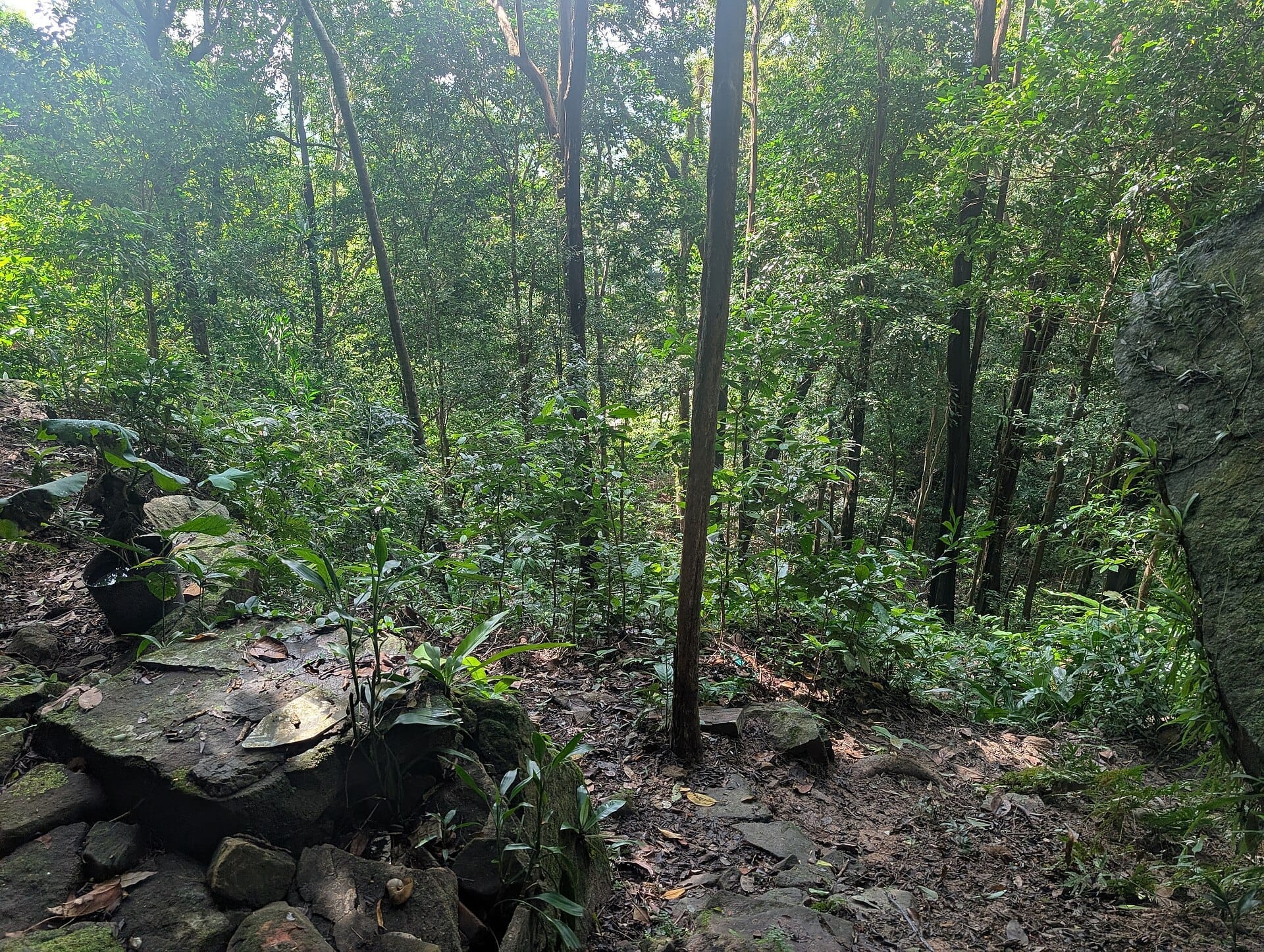
From the coast, the national park is visible as the forested ridgeline that forms the island's backbone. What you cannot see from Long Beach or the resort strip is how dense and genuinely wild the interior is. The cross-island road from Duong Dong to Ham Ninh on the east coast passes through the park and gives a clear sense of scale — for stretches of 10–15 minutes, the road is entirely enclosed in forest with no development visible in either direction.
The Biodiversity
The park has recorded over 1,164 plant species, including 12 endemic species found nowhere else on Earth. Animal diversity is significant: over 210 species documented, including 30 mammal species, 119 bird species, 47 reptile species, and 14 amphibian species. Among mammals, silvered langurs (also called black-shanked douc or silver leaf monkeys) are among the most frequently spotted — social animals that move in troops through the mid-canopy and are most active in the early morning. Great hornbills, with their large yellow-and-black casques, are present and audible before they're visible. Several species within the park are listed as vulnerable or endangered under international conservation frameworks.
The marine portion of the biosphere reserve extends around the island's coastline and includes coral reef areas and seagrass beds. These are not managed as a separate visitor destination but are part of the same protected ecosystem.
Tickets & tours
Live prices and dates from our booking partner. If you book, we may earn a commission at no extra cost to you.
Phu Quoc Island southern discovery tour with lunch
From 125 €Instant confirmationFree cancellationPrivate transfer between Phu Quoc Airport and Duong Dong Town
From 12 €Instant confirmationFree cancellationPhu Quoc 4 islands speedboat tour with cable car ride and lunch
From 62 €Instant confirmationFree cancellationGuided tour of Phu Quoc Island with visit to a local distillery
From 26 €Instant confirmationFree cancellation
Trails and Trekking
Several marked trails provide access to different parts of the forest. The Ganh Dau trail in the north of the park is among the most accessible for independent walkers — it passes through old-growth sections where the tree canopy is high and well-established, with clearly visible buttress roots and the density of a forest that has not been logged in decades. Trail lengths range from 500 metres to 5 kilometres depending on how far in you go. The Suoi Da Ngon trail, roughly 10 kilometres, is a longer option that works well for beginner trekkers and is described as suitable for children over 8. The Ham Ninh Mountain trail is the most challenging option with the most rewarding views, looking out over the east coast from the ridgeline.
💡 Local tip
Start any trek before 8am. The forest temperature is significantly cooler in the early morning, bird activity is highest, and the light through the canopy is at its most atmospheric. By 10am, heat and humidity make sustained walking considerably harder.
Suoi Tranh Waterfall
Suoi Tranh is the park's most visited feature for casual day-trippers — a waterfall accessible by road rather than a full hike, with a short walk from the parking area. It functions as a low-effort introduction to the park for visitors who aren't planning to trek. The waterfall is most impressive toward the end of the wet season (October–November) when water levels are at their highest; in the dry season it reduces to a trickle over the rocks. Even at lower flow, the surrounding forest and the swimming hole below the falls make it a pleasant stop.
Getting There and Practical Notes
There is no entrance fee to the national park. The main access points are by motorbike from Duong Dong, with travel times of 20–40 minutes depending on the trailhead. There is no regular public transport. Local tour operators in Duong Dong organize half-day and full-day guided treks with pick-up from hotels; if wildlife spotting is your primary interest, a guide is strongly recommended. For context on dry versus wet season conditions and what each means for a forest visit, the best time to visit guide covers this in detail.
Managing Expectations
The national park is a genuinely significant natural area, but it should not be approached like a managed wildlife reserve with guaranteed animal sightings. Wildlife encounters depend heavily on timing, route, and luck. A morning forest walk without a guide through a popular trail is more likely to yield birdwatching, forest atmosphere, and botanical interest than a close encounter with langurs or hornbills. Arrange a guided trek if specific wildlife sightings are your primary goal.
Insider Tips
- The Ganh Dau trail in the north of the park is one of the most accessible entry points for visitors without a guide. The forest here is genuinely old-growth in sections — large-canopy trees with visible buttress roots — and you don't need to go far from the trailhead to feel properly inside the forest rather than on its edge.
- Start any trek before 8am. The forest is significantly cooler in the early morning, bird activity is at its highest, and the light through the canopy is at its most atmospheric. By 10am, humidity and heat make sustained walking considerably less pleasant.
- A local guide is not strictly required for the marked trails, but it is worth having for wildlife spotting. The silvered langurs (black-and-silver leaf monkeys) and great hornbills present in the park are easy to miss without someone who knows where to look. Tour operators in Duong Dong offer half-day guided treks.
- Suoi Tranh Waterfall is accessible by road and functions as a low-effort entry point to the park for visitors who aren't planning to trek. It's particularly impressive toward the end of the wet season (October–November) when water levels are high. In the dry season it reduces to a trickle.
- The drive through the park's interior — via the road connecting Duong Dong to Ham Ninh — passes through some of the most forested sections of the island. Even without stopping to hike, this route gives you a real sense of the park's scale and density compared to the resort coast.
Who Is Phu Quoc National Park For?
- Birdwatchers and wildlife enthusiasts who want access to one of southern Vietnam's most intact forest ecosystems and its genuinely rare species
- Hikers who want a half-day or full-day trail with proper forest cover, elevation change, and genuine biodiversity rather than a managed nature walk
- Travelers spending a week or more on Phu Quoc who have covered the beaches and want to see a completely different environment
- Anyone interested in Phu Quoc's pepper farming culture, which exists at the edges of the national park and is visible along several of the routes into the interior
- Families with older children who want a nature activity with some substance — the waterfall trail and shorter forest paths are suitable for children comfortable with moderate walking in heat
Planning a trip? Discover personalized activities with the Nomado app.