Ham Ninh Fishing Village: Fresh Crab on Phu Quoc's East Coast
Ham Ninh is a working fishing village on Phu Quoc's east coast, ~20km from Duong Dong. It's known for its wooden pier lined with floating seafood restaurants, its green crab, pearl farming, and an unhurried atmosphere that stands apart from the west-coast resort strip.
Quick Facts
- Location
- East coast of Phu Quoc, Ham Ninh Commune — ~20km from Duong Dong
- Getting There
- Motorbike or taxi via TL47 road, ~20–40 min from Duong Dong; no entrance fee
- Time Needed
- 2–4 hours; a half-day is enough for the pier, a seafood meal, and a pearl farm visit
- Cost
- Free to visit; seafood priced by weight at pier restaurants — ask before ordering
- Best for
- Seafood lovers, motorbike explorers, travelers wanting an east-coast contrast to the resort strip
What Ham Ninh Actually Is
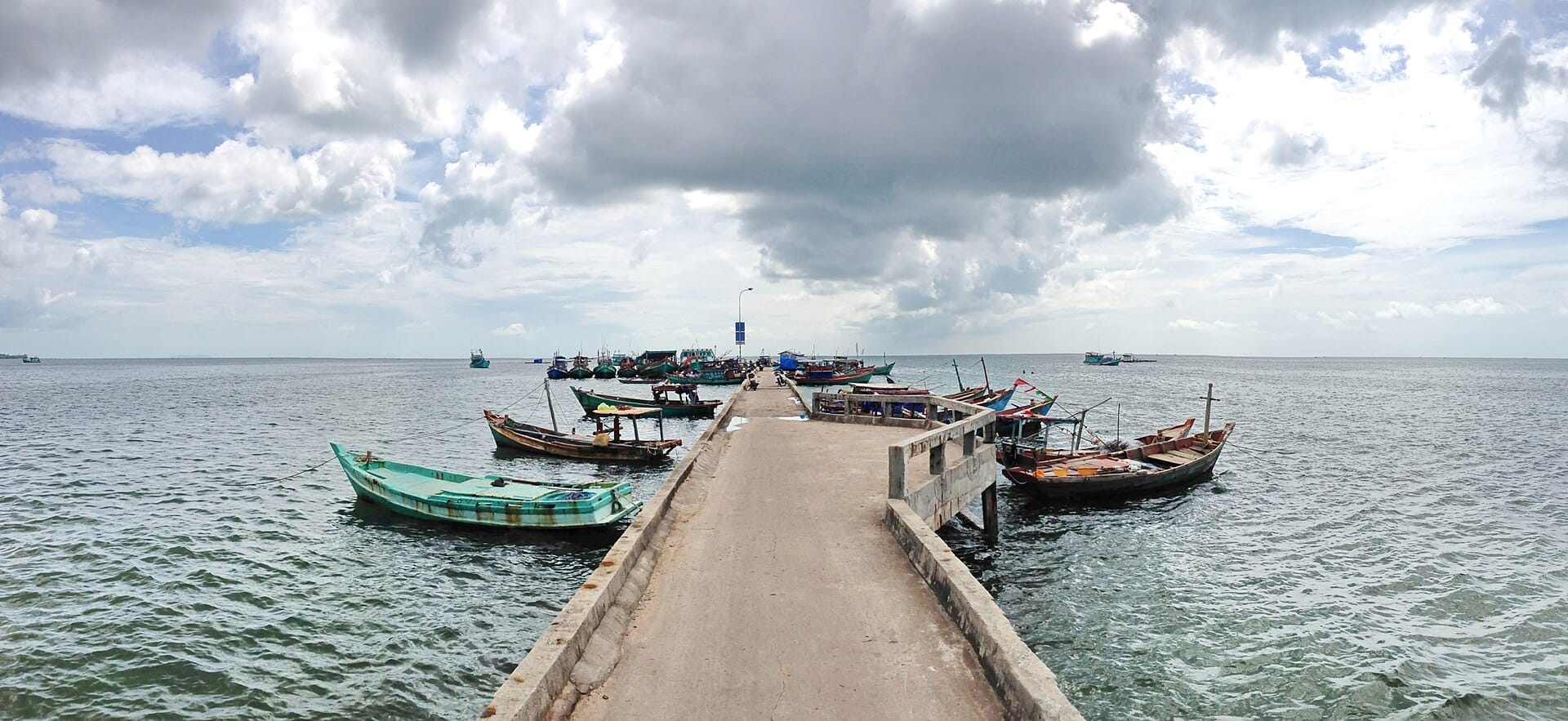
Ham Ninh is a working fishing village on the eastern shore of Phu Quoc, roughly 20km from Duong Dong across the island's interior. The community has been here for generations — fishing, crabbing, and pearl farming — and it remains visibly that: a place where the daily rhythm is determined by the tides and the catch rather than the tourist calendar. The atmosphere is quieter and more lived-in than anything on the west coast, and the coastline looks entirely different: the Ham Ninh mountain range rises behind the village, and the East Sea stretches in front of it, with shallow, seagrass-rich water rather than the open-water blues of Long Beach.
Most visitors come specifically to eat — the village's floating seafood restaurants have built a reputation across Phu Quoc that draws locals and tourists alike. But the draw isn't just the food. Ham Ninh offers a genuine contrast to the resort infrastructure of Long Beach, and the cross-island drive to reach it is one of the more scenic motorbike rides on the island. For travelers who have been on the west coast for a few days and want to see a different face of Phu Quoc, a half-day here delivers that clearly.
The Wooden Pier
The pier is Ham Ninh's most recognizable feature: a long wooden jetty that extends out over the water on stilts, flanked on both sides by floating restaurants and simple wooden structures where the catch is offloaded and sorted. It's the kind of pier you can hear before you see — the creak of planks underfoot, the knock of wooden boats against the pilings, the shouts of vendors and the slap of fish. In the early morning, when the fishing boats are coming back in, the pier is at its most active and most photogenic.
The restaurants that line the pier operate directly over the water, with open sides that let in the sea breeze and give every table an unobstructed view across the bay toward the mountain. You sit close enough to the water to watch the boats maneuver, and close enough to the kitchen to see the crab being pulled live from the tank. It's not a polished restaurant experience — the furniture is functional, the tablecloths are plastic, and the flies are ambient — but the context is real, and that matters here.
💡 Local tip
Walk the full length of the pier before sitting down at the first restaurant you reach. The quality of what's in the tanks varies between establishments, and different places specialize in different things. The pier is short enough that the whole circuit takes under five minutes.
Tickets & tours
Live prices and dates from our booking partner. If you book, we may earn a commission at no extra cost to you.
South Phu Quoc fishing and snorkeling tour with lunch
From 171 €Instant confirmationFree cancellationSunset squid fishing experience with dinner in Phu Quoc
From 11 €Instant confirmationFree cancellationPhu Quoc 3 islands boat tour with lunch and fishing
From 26 €Instant confirmationFree cancellationPhu Quoc sunset cruise and night squid fishing tour with dinner
From 159 €Instant confirmationFree cancellation
The Green Crab and What to Order
Ham Ninh's reputation rests on its green crab, locally known as cua bien. The meat is firm, distinctly sweet, and richer in flavour than the mud crabs common in other parts of Vietnam. The standard preparation is steaming, which preserves the natural flavour, though grilling over charcoal is also available and adds a smokiness that works well with the larger specimens. Both are worth trying if you're ordering for a group. At most restaurants, the crab is priced by weight and comes out of the live tanks directly before cooking — ask to confirm the weight before you agree.
Beyond crab, the pier restaurants serve the full range of what the boats bring in: grilled shrimp, squid stir-fried with salt and chilli, steamed clams, baked fish, and seafood hotpot. The freshness varies with the season and the morning's catch; what's out on display or in the tanks is a reliable indicator of what's genuinely fresh that day. Pointing and asking is more effective than studying the menu.
ℹ️ Good to know
Morning visits — roughly 8am to 11am — give you access to the freshest catch as boats return from overnight trips. By early afternoon, the best selections are often gone. If you're making the drive specifically for a meal, timing it for late morning gives the best combination of freshness and choice.
A few restaurants on the pier have built a particular following: Be Ghe and the Thuan Kieu floating restaurants are among the most established, known for their crab selection and the floating-platform setup that puts you directly above the waterline. None of these are fine dining — they are functional, informal, and cheap relative to what you'd pay for equivalent seafood quality anywhere else on the island.
Pearl Farming on the East Coast
Phu Quoc has a long history of pearl cultivation, and the waters off the east coast around Ham Ninh are among the island's more productive areas for it. Pearl farms here are typically informal operations where visitors can watch the cultivation and harvesting process and, in most cases, purchase finished jewelry at the farm. The process — from how the oysters are seeded and suspended in the water to how the pearls are extracted and graded — is genuinely interesting to see once. Ham Ninh is one of the more accessible places on the island to do this, with several farms reachable from the village road. Phu Quoc pearls are widely available at markets across the island (the Phu Quoc Night Market sells many), but buying directly at a farm typically means better prices and the ability to see what you're getting.
Farm visits are usually informal — look for signs as you approach Ham Ninh from Duong Dong. Most farms don't require advance booking and welcome walk-in visitors during daylight hours. The actual pearl inspection and purchase is the main draw; the cultivation explanation, often delivered via a brief guided walkthrough, gives useful context even if the detail is limited.
The Drive and the East Coast Setting
Getting to Ham Ninh is half the experience. The standard route follows the TL47 road eastward from Duong Dong, crossing the island through a mix of pepper farms, forested hills, and small hamlets before descending to the coast at Ham Ninh Bridge. The drive takes roughly 20–40 minutes by motorbike, depending on pace, and the road is in reasonable condition throughout. For travelers comfortable on two wheels, renting a motorbike for the day and making Ham Ninh the centrepiece of a cross-island loop is one of the better ways to spend a morning on Phu Quoc. The getting around guide covers the practicalities of motorbike rental if you haven't already arranged one.
The east coast at Ham Ninh has a character entirely unlike the west. The water here is shallower, with seagrass beds that give it a greener, more opaque quality — not ideal for open swimming but interesting to wade through, and home to small marine life including sea urchins and, in the dry season, occasional starfish in the shallows. The Ham Ninh mountain range forms a backdrop behind the village that makes early-morning and late-afternoon photography here significantly better than at midday.
If you're already making the drive east, consider extending it toward Starfish Beach further north along the coast, or combining the trip with a pass through the edges of Phu Quoc National Park on the return. The combination of a morning at Ham Ninh for seafood and an afternoon on the western beaches makes for a complete cross-island day.
Getting There and Practical Notes
Ham Ninh sits on the east coast, ~20km from Duong Dong. The main route is the TL47 road eastward; after crossing Ham Ninh Bridge, the village is immediately in front of you. There is no entrance fee. The best time to visit is during the dry season from November to April, when the weather is stable, the sea is calm, and the fishing season is at its most productive. July and August bring typhoon conditions and rough seas on the east coast — the village is accessible but the experience is substantially diminished. For more context on seasonal timing across the island, the best time to visit Phu Quoc guide covers this in detail.
Motorbike is the most practical way to get here — it gives you the flexibility to stop along the route, explore the pier at your own pace, and continue to other east-coast destinations afterward. Taxis and Grab are also available from Duong Dong if you prefer not to ride. There is no reliable public transport on this route. Parking near the pier is informal and plentiful; vendors along the roadside near the jetty entrance are used to self-drive visitors.
Who Should Skip Ham Ninh
Travelers who don't eat seafood will find very little reason to make the drive — the pier and the landscape are interesting, but they're not compelling enough on their own to justify a 40-minute round trip. Ham Ninh also doesn't suit visitors with very limited time and a long list of other priorities: it's a half-day stop, and if your day is already full, the west coast has enough to keep you occupied. Those looking for beach swimming specifically should note that the east coast water here is not the clear, inviting swimming water of Sao Beach or the western shoreline — the shallower, seagrass-rich conditions are interesting but not what you'd choose for a swim.
If seafood is the goal but the drive feels like too much, the Phu Quoc Night Market in Duong Dong has a solid seafood section with fresh grilled options — less atmospheric than the Ham Ninh pier, but far more convenient for anyone staying on the west coast.
Insider Tips
- Arrive by 9–10am if seafood freshness is your priority. Fishing boats return in the early morning, and the live tanks at the pier restaurants are at their fullest and most varied before midday. By early afternoon the best selections are often sold out.
- Walk the full length of the pier before sitting down at a restaurant. Each establishment has different tanks and a different selection on display — some specialize in crab, others in shrimp or fish. The whole pier takes under five minutes to walk, and the difference in what's available between one end and the other can be significant.
- If you're on a motorbike, take the TL47 road slowly on the way out or back. The interior section of Phu Quoc between Duong Dong and the east coast passes through pepper plantations, secondary forest, and small hamlets that most west-coast visitors never see. It's one of the more underrated aspects of the east-coast trip.
- Pearl farm visits near Ham Ninh are informal and don't require booking — look for signs along the road as you approach the village. Most farms welcome walk-ins during daylight hours. If you're interested in buying, prices at the farm are typically lower than at markets in Duong Dong, and you can inspect the pearls directly in natural light.
- The late afternoon (4pm–6pm) is the other strong time window, particularly for photography. The low sun catches the pier structures, the wooden boats, and the mountain behind the village in a way that the harsh midday light doesn't. The restaurants are less crowded than at lunch, and the atmosphere is calmer.
Who Is Ham Ninh Fishing Village For?
- Seafood lovers who want to eat what was caught that morning in an actual working fishing village rather than a tourist-oriented restaurant
- Motorbike riders and self-drive explorers who want a scenic cross-island route and a proper reason to stop on the east coast
- Travelers curious about Phu Quoc's traditional industries — fishing, crabbing, and pearl farming — and how the island's communities outside the resort zones actually function
- Photographers interested in maritime scenes, traditional wooden architecture, early-morning fishing activity, and the east-coast mountain backdrop
- Anyone staying on Phu Quoc for more than two or three days who wants a genuine half-day contrast to the resort infrastructure of Long Beach and the west coast
Planning a trip? Discover personalized activities with the Nomado app.